Africa's Tech Industry: Leapfrog, Mobile Money, and the Continent That Skipped the Landline
Abstract
Africa entered the computing age late, unevenly, and (in one critical domain) faster than anywhere else on earth. For most of the twentieth century, the continent’s 54 nations had minimal computing infrastructure: a handful of mainframes in colonial capitals, universities dependent on donated equipment, and telephone networks so sparse that sub-Saharan Africa still had about one line per hundred people in 1990. Then, between roughly 2000 and 2015, something unexpected happened. Mobile phones spread faster across Africa than anywhere else in history. A Kenyan telecommunications company built a mobile money system that gave millions of people who had never had a bank account a way to save and send money. Nairobi became “Silicon Savannah.” Lagos became the fintech capital of a continent whose billion-dollar startups are almost all payment companies. The continent that the technology industry had written off as an afterthought became, for a specific class of problem (financial inclusion, mobile services, leapfrog infrastructure) the world’s most interesting laboratory.
The Computing Void: 1950s–1980s
When the first electronic computers arrived in Europe and the United States in the late 1940s and early 1950s, sub-Saharan Africa was almost entirely under colonial administration. Computing infrastructure followed colonial capital: such machines as existed served colonial governments, extractive industries, and (in a handful of cases) universities established by colonial powers.
Punched cards came first. Hollerith machines were running in South Africa by 1921 and an IBM subsidiary opened there in 1952; the continent’s first computer was probably one installed in newly independent Morocco in 1957, and a research institute in French Algeria received an IBM in 1959. The first electronic computers in sub-Saharan Africa appeared in South Africa from 1959; an IBM 305 RAMAC arrived that year, though a 1978 activist survey names a British machine as the country’s first. The University of the Witwatersrand took delivery of an IBM 1620 in 1960, the first computer at a South African university, run by Derek Henderson, who became the country’s first professor of computer science. East Africa’s first computer went to the railway. The British Tabulating Machine Company had opened a Nairobi office in Gilfillan House in the mid-1950s, selling, renting and running punched-card equipment, and in 1960 its successor ICT installed an ICT 1202 drum computer for the East African Railways in a wooden hut on stilts near Nairobi station. The Kenyan-born engineer Jitze Couperus, who later worked for Control Data, recorded how it ended after independence: a puff adder had crawled through the ventilation onto the warm drum overnight, the policeman who started the machine each morning shot at it, and the bullet wrecked the drum. No replacement existed in Kenya. The transistorised ICT 1500 that followed was already on its way, and to avoid import duty on the wreck, which ICT owned, the 1202 was formally exported: taken to Mombasa, towed beyond the three-mile limit on a barge and tipped overboard.
North Africa, more closely integrated into European computing markets through French and British colonial ties, followed on a comparable timeline: a 1968 paper from Cairo’s Institute of National Planning dates Egypt’s first research computer installation to 1960 and reports that by 1968 virtually all of the country’s researchers had access to a digital computer.
The pattern was stark. By 1970 South Africa, by far the continent’s largest user, had an estimated 400 computers; the United States had tens of thousands. Outside South Africa and Egypt, machines were confined to a small number of capitals where colonial-era universities and government bureaucracies had established themselves. Independence, which swept across sub-Saharan Africa from Ghana in 1957 to Namibia in 1990, did not immediately change the infrastructure equation. Newly independent governments inherited the communication and computing systems their colonizers had built, systems designed to extract resources and administer populations, not to develop indigenous technology capacity.
Patent records show that people on the continent had been inventing information technology long before. Selim Haddad of Cairo received a US patent for Arabic typewriter types in 1899; Louis Laforêt, a schoolmaster in Hammamet, Tunisia, patented a mechanical question-answering box in Paris, London and Berlin around 1912; and two Ethiopians in London, Ayana Birrou and Alem Work Bayana, patented Amharic typefaces in 1931, the start of the Ethiopian typewriter that Olivetti built from the early 1950s. Several African-born computer scientists made their careers abroad, among them Seymour Papert from South Africa, Shiraz Shivji from Tanzania and Mohamed Atalla from Egypt.
The Cold War shaped even this limited computing landscape. The United States, the Soviet bloc, France, and Britain competed for influence through development aid programs that occasionally included technology transfers, and France kept privileged ties with its former colonies. None of these interventions built self-sustaining technical ecosystems. They built dependencies.
South Africa: The Isolated Exception
South Africa occupied a peculiar position in African computing history: the continent’s most technically advanced country, and the one whose technology story was most deeply contaminated by what it had been used for.
The apartheid government, which governed South Africa from 1948 to 1994, understood data management as a tool of racial control. The Population Registration Act of 1950 required every South African to be classified by race and given an identity number. From 1952 black South Africans over sixteen also had to carry a reference book, the dompas (“dumb pass”), which determined where they could live, work, and travel. Administering this system for a population of millions required databases and data processing equipment at a scale unusual for the era.
IBM supplied South Africa’s apartheid government with the mainframe infrastructure that made population registration operationally possible: it rented a System/370 to the Department of the Interior, which used it for the identity system covering the roughly seven million people the state classified as non-black. Britain’s ICL supplied the machines behind the passbook records of the 16 million classified as black. The registers tracked racial classification, movement, and administrative status, and they were the computational backbone of apartheid’s enforcement apparatus.
IBM and Apartheid
Anti-apartheid campaigners documented IBM’s role through the 1980s divestment movement, and in 2002 South African plaintiffs organized by the Khulumani Support Group sued IBM, Ford, and other multinationals in US federal court for aiding apartheid crimes. IBM maintained it was selling general-purpose computing equipment with no control over its application, the same argument that had followed its German subsidiary Dehomag’s punched-card machines through the Nazi era. The United Nations imposed a mandatory arms embargo on South Africa in 1977; computing equipment was not covered. IBM announced its withdrawal in October 1986, selling its South African subsidiary to a company set up for its local employees, after sustained shareholder and public pressure. The Khulumani case ran fourteen years and ended in 2016 without a finding against IBM: the court held that the plaintiffs had not shown a close enough connection between conduct in the United States and the abuses in South Africa.
Despite (or because of) apartheid’s administrative demands, South Africa built genuine technical capacity. The country had a functioning university system, engineering graduates, and by the 1980s a domestic IT services industry. The CSIR, founded in 1945, conducted real research. Naspers, founded in 1915 as a newspaper publisher, pivoted into pay television (DStv) and later into technology investments, eventually becoming one of the largest technology investment companies in the world through its early bet on Tencent.
The paradox was bitter: South Africa emerged from apartheid in 1994 with the continent’s most developed IT infrastructure and a technical workforce built partly on the labor of the system that infrastructure had served.
The Infrastructure Gap
The defining constraint on African technology for most of the twentieth century was not talent or ideas; it was infrastructure. Specifically: telephone lines.
In 1990, sub-Saharan Africa had about one fixed telephone line per 100 people; the ITU’s developed regions had 44. Building fixed-line telephone infrastructure requires enormous capital, years of construction, and political stability that much of post-colonial Africa did not consistently have. Landlines required reliable electricity, physical cable, exchange buildings, and maintenance networks. Countries that had not built this infrastructure by 1990 were falling further behind each year, not catching up.
The consequence was that when the internet emerged in the early 1990s, most of Africa could not access it. Internet connectivity in the mid-1990s required a working telephone line. Most Africans did not have one.
The intercontinental fiber cables of the late 1980s and 1990s (TAT-8, FLAG, SEA-ME-WE) largely bypassed sub-Saharan Africa. West Africa got its first modern submarine fiber, SAT-3/WASC, in 2002; East Africa had none until 2009. Connection to the internet from Nairobi in 2000 meant an expensive, slow satellite uplink. As late as 2007, all of Africa’s international links together carried about 28 Gbit/s, against more than 3,000 Gbit/s for Europe.
The Mobile Leapfrog
The transformation began with a technology that did not require the infrastructure Africa lacked.
Mobile phones do not need telephone poles, copper wire, or exchange buildings. They need towers, which can be solar-powered in areas without reliable electricity grids, and radio spectrum, which governments could license. A mobile phone network could be built in a fraction of the time and cost of fixed-line infrastructure, and it could cover rural populations that fixed-line systems had never reached.
Between 2000 and 2010, mobile phone penetration in sub-Saharan Africa increased from roughly 2% to over 40%. The growth rate was the fastest of any technology adoption in the continent’s history. By 2010, there were more mobile phone subscriptions in sub-Saharan Africa than in the United States. People who had never owned a landline, never had a bank account, and lived without reliable electricity had mobile phones.
This created the conditions for the most significant technology innovation Africa had produced: M-Pesa.
M-Pesa: The Money That Lived in a Phone
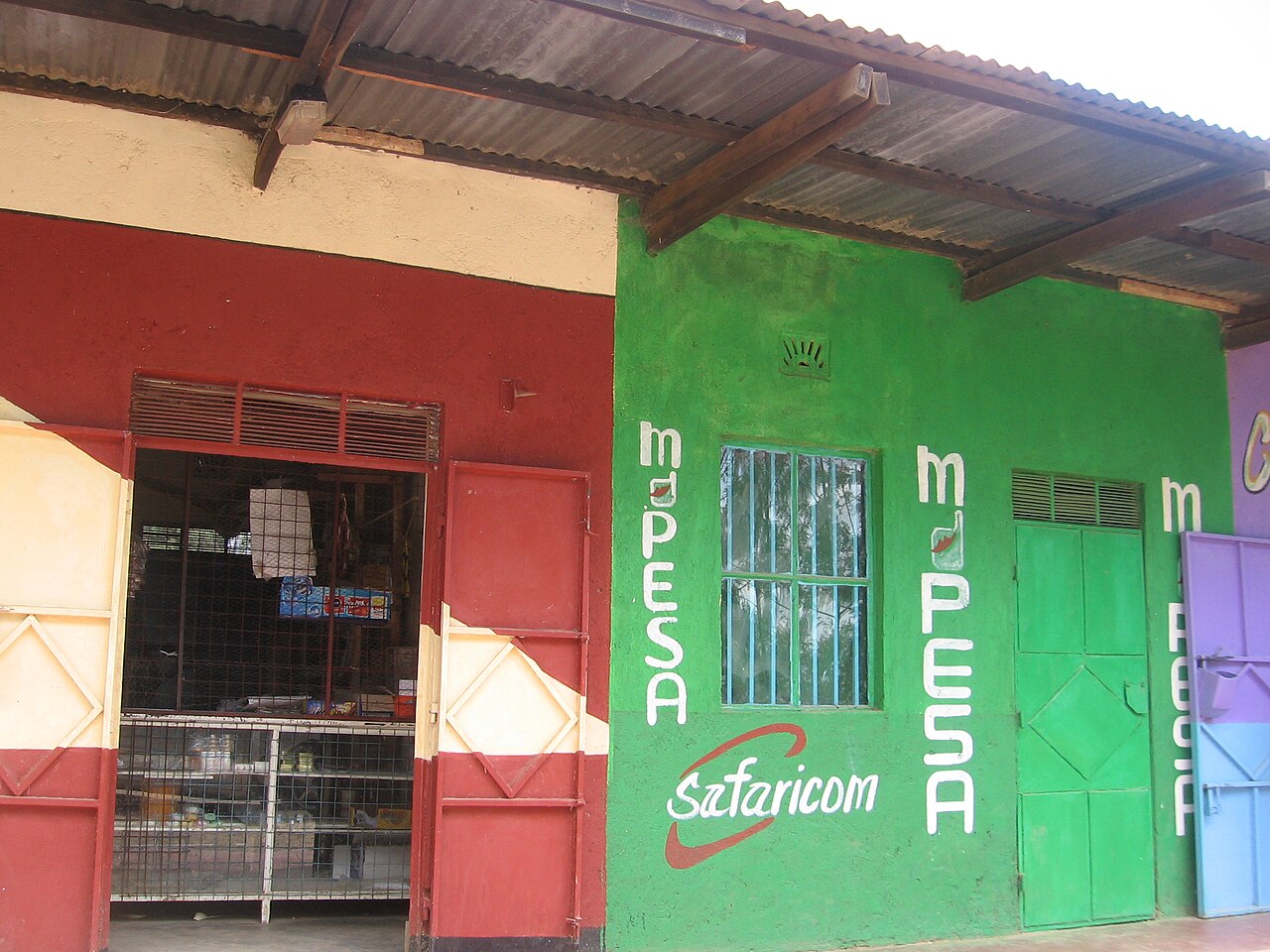
Safaricom, the dominant Kenyan mobile operator, launched M-Pesa on March 6, 2007. “M” stood for mobile; “Pesa” was Swahili for money. The product allowed users to store money in an account linked to their SIM card, and to send money to any other M-Pesa user by text message. Deposits and withdrawals happened through a network of agents, small shops, airtime vendors, and informal merchants who were authorized to exchange cash for M-Pesa balance and back again.
The design was deceptively simple. It required no internet connection, no smartphone, no bank account, no credit history. It worked on any mobile phone capable of receiving a text message. The agent network (which reached rural areas that had no banks within fifty kilometers) made cash-in and cash-out physically accessible.
Safaricom had set an internal target of one million customers in the first year. M-Pesa passed two million by March 2008. By the end of 2011 it had about 15 million active customers, more than half of Kenya’s adults. M-Pesa passed 50 million monthly active customers in September 2021, when it ran in seven countries (Kenya, Tanzania, Mozambique, the Democratic Republic of Congo, Lesotho, Ghana, and Egypt), and in the year to March 2025 it moved $450.8 billion across its seven markets, which by then included Ethiopia.
Myth: Almost half of Kenya’s GDP flows through M-Pesa
The Central Bank of Kenya reported that transfers equal to 43.5% of GDP passed through M-Pesa in 2012, and the press turned this into “43% of GDP is channelled through M-Pesa.” The figure adds up money flowing both into and out of accounts, so it double-counts, and transaction value is not comparable to GDP, which measures output. By CGAP’s reading of central-bank data, mobile money carried 6.6% of the value moving through Kenya’s national payment system in 2013, though two-thirds of the transactions by count. See Myths and Misconceptions.
Why M-Pesa Worked in Kenya
The conditions that made M-Pesa successful in Kenya were specific: a single dominant mobile operator (Safaricom held roughly 70% market share, giving M-Pesa network effects), a sympathetic regulator (the Central Bank of Kenya allowed M-Pesa to operate without requiring a full banking license), a high proportion of the population receiving urban remittances from rural family members (the “send money home” use case was immediately compelling), and active support from Vodafone, which provided technical backing. When M-Pesa was introduced in Tanzania, South Africa, and later India, the same formula did not produce the same results, regulators were more restrictive, operators had less dominance, or incumbent banking systems were more developed.
For many users M-Pesa was the first financial service they had ever had. Merchants who had kept cash in mattresses could store value securely. Rural farmers could receive payment for crops without traveling to town. Parents could pay school fees from a different city. Economists Tavneet Suri (MIT) and William Jack (Georgetown) estimated in 2016 that access to M-Pesa raised household consumption and lifted about 194,000 Kenyan households, 2% of the total, out of poverty.
It also created an ecosystem. M-Shwari, launched in 2012, offered savings and micro-loans through M-Pesa, using transaction history to assess creditworthiness without a credit bureau. M-Akiba allowed Kenyans to purchase government bonds through M-Pesa for as little as 3,000 Kenyan shillings (roughly $30). The platform became infrastructure.
The conceptual influence extended globally. Mobile money programs modeled on M-Pesa were launched in Tanzania, Ghana, Rwanda, Mozambique, and later in Bangladesh, Pakistan, and Afghanistan. The World Bank cited M-Pesa as evidence that digital financial services could reach populations that traditional banking had permanently written off.
Silicon Savannah: Nairobi’s Innovation Ecosystem
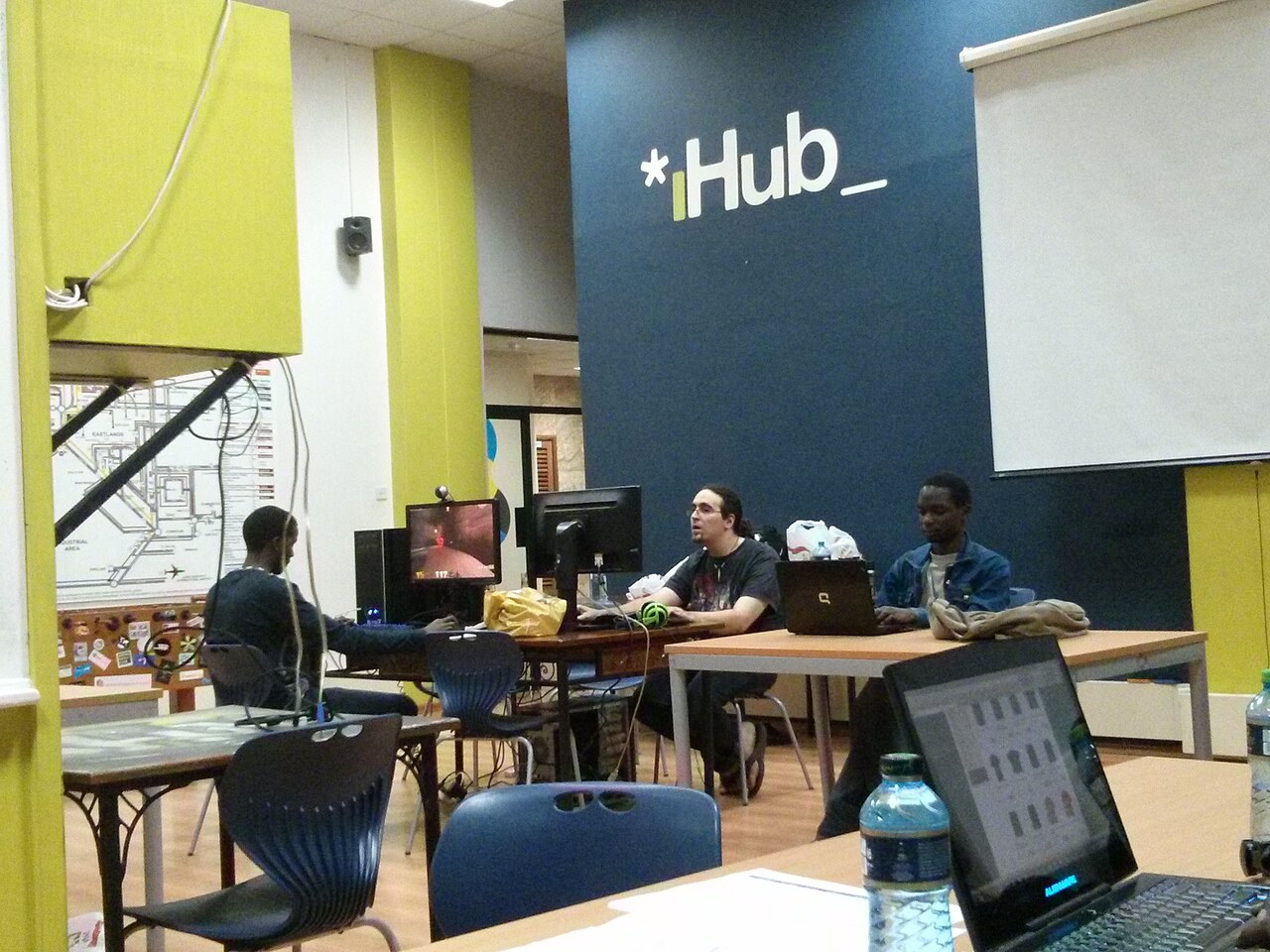
The mobile money revolution generated data, entrepreneurs, and investment that accumulated in Nairobi, producing what observers began calling “Silicon Savannah”, an awkward portmanteau that nonetheless identified something real.
iHub, opened in Nairobi in March 2010 by tech blogger and entrepreneur Erik Hersman, was the physical catalyst. Hersman, an American who had grown up in Kenya and Sudan, established iHub as a co-working space and community hub for Kenyan technology entrepreneurs. The concept borrowed from San Francisco’s co-working scene but adapted it for Nairobi’s conditions: affordable rent, reliable internet (rare enough in Nairobi in 2010 to be a significant amenity), and a community of developers who had previously worked in isolation.
iHub grew out of the team behind Ushahidi, the tool that had already made Kenya’s technology scene internationally visible. Founded in January 2008 by Ory Okolloh, a Kenyan lawyer and blogger, along with Erik Hersman, Juliana Rotich, and David Kobia, Ushahidi (Swahili for “testimony”) was built within days during Kenya’s post-election violence crisis. The 2007 presidential election had produced disputed results and then ethnic violence that killed over a thousand people; international media could not cover it comprehensively. Ushahidi aggregated crisis reports submitted by citizens via SMS and email and plotted them on a Google Map in real time, creating a crowd-sourced crisis map that journalists, aid workers, and observers worldwide could consult.
Ushahidi was used subsequently to map the 2010 Haiti earthquake response, oil spill reports in the Gulf of Mexico, election monitoring in Uganda and Sudan, and crisis documentation in Libya and Syria. The software was open-source and free. The nonprofit its founders built around it, Ushahidi, became a model for civic technology originating in the Global South and spreading north.
The iHub ecosystem grew through the 2010s into incubators, accelerators, and significant investment activity. m:lab East Africa, Nailab, and GSMA’s Ecosystem Accelerator program funded dozens of startups. Twiga Foods, founded in 2014, built a supply chain platform connecting smallholder farmers to urban retailers using mobile money and logistics technology. Sendy created a courier network for the gig economy. Cellulant, founded in 2004, built payment infrastructure across 35 African countries.
The Lagos Tech Scene
West Africa produced a different technology ecosystem, larger in population base and financial ambition, centered on Lagos, Nigeria.
Nigeria’s technology story could not begin with mobile money: its dominant mobile operators were foreign-owned and its regulatory environment was more fragmented than Kenya’s. Instead, Nigeria’s foundational infrastructure came from Interswitch, founded in 2002 by Mitchell Elegbe, which built the switching infrastructure that connected Nigeria’s banks and ATMs into a functional network. Before Interswitch, a customer of one bank could not use another bank’s ATM. Interswitch’s Verve card (launched in 2009, and billed by Interswitch as Africa’s largest domestic card scheme) gave millions of Nigerians access to electronic payments for the first time.
The fintech explosion that followed was shaped by Nigeria’s specific characteristics: a population of over 200 million with one of the world’s youngest demographics, an enormous informal economy transacting in cash, a diaspora sending billions in remittances annually, and a banking sector that excluded roughly 60% of adults.
Paystack, founded in 2015 by Shola Akinlade and Ezra Olubi, built payment APIs for Nigerian businesses, allowing websites and apps to accept card payments with minimal friction. The comparison to Stripe (which later acquired Paystack) was explicit: Paystack’s founders wanted to be the payment infrastructure for Africa’s growing e-commerce sector. Stripe acquired Paystack in October 2020 for an undisclosed price reported at over $200 million, one of the largest acquisitions of an African technology company to that point, and Stripe’s biggest acquisition at the time.
Flutterwave, founded in 2016 by Olugbenga Agboola and others, built cross-border payment infrastructure for African businesses, handling transactions in multiple African currencies and connecting African merchants to international payment networks. It became a unicorn (valued above $1 billion) in March 2021. Opay, backed by Chinese investors, built a super-app that combined payments, motorcycle hailing, and food delivery and by 2026 reported 45 million users in Nigeria.
The pattern in Lagos was clear: fintech dominated because the unmet need was enormous. Over 60% of sub-Saharan Africans lacked access to formal financial services in 2015. Building infrastructure to serve them was both a social good and a large commercial opportunity. This convergence attracted global investors who had mostly ignored Africa: Tiger Global, SoftBank’s Vision Fund, Sequoia, and Stripe all made significant African technology investments in the 2020s.
Andela, co-founded in 2014 by Jeremy Johnson, Iyinoluwa Aboyeji, and Christina Sass (among others, with the Chan Zuckerberg Initiative leading its 2016 Series B), addressed a different problem: the brain drain that continuously drained African technical talent toward European and American employers. Andela’s model was to identify high-potential software developers across Africa, train them intensively, and place them on remote software engineering teams for global technology companies. The bet was that African engineers could compete at global standards if given infrastructure and access to opportunities. Andela built a talent network the company puts at over 100,000 engineers, opened placements beyond Africa after 2021, and reached a valuation of $1.5 billion in a 2021 funding round led by SoftBank.
The Continent’s Tech Geography Expands
Kenya and Nigeria captured the most international attention, but significant technology activity developed across the continent.
South Africa (with its head start in IT infrastructure) built a substantial technology sector centered on Cape Town and Johannesburg. Naspers, the company that had invested $32 million in Tencent in 2001 (becoming a stake worth over $200 billion at its peak), spun off its technology holdings as Prosus in 2019 and became one of the world’s largest technology investment companies. Cape Town’s tech scene produced Yoco (payments for small merchants), Luno (cryptocurrency exchange with 10 million users), and Ozow (instant EFT payments). Takealot, South Africa’s dominant e-commerce platform, came under Naspers control in stages: a 46.5% shareholding through the 2015 merger with Kalahari.com, then roughly 96% after buying out Tiger Global at the end of 2017.
Egypt became one of Africa’s largest technology markets and a significant hub for IT outsourcing, drawing on an educated engineering workforce and favorable time-zone positioning relative to European clients. Instabug (app testing), Swvl (bus booking, later public transport), and MaxAB (food distribution) emerged from Cairo’s tech ecosystem. Flat6Labs established itself as the leading startup accelerator, with programs in Cairo, Tunis, Abu Dhabi, and Saudi Arabia.
Ghana developed a growing technology scene in Accra, anchored by Meltwater Entrepreneurial School of Technology (MEST), founded in 2008 by Jørn Lyseggen, the Norwegian founder of the media-monitoring company Meltwater, to train African software entrepreneurs. Ghana’s political stability and English-language base made it attractive for international technology investment. Zeepay (mobile money remittances) and Hubtel (business payments) established themselves as regional fintech leaders.
Rwanda pursued technology as a deliberate national development strategy under President Paul Kagame. The government built fiber optic infrastructure across the country, established the Kigali Innovation City project, and attracted Zipline (the drone delivery company) to launch its first operations from a distribution centre in Muhanga in late 2016. Zipline’s drones delivered blood products to rural hospitals; a 2022 study found the service cut blood-unit expirations by roughly two-thirds (about 67%). The humanitarian impact was immediate and measurable.
The Submarine Cable Revolution
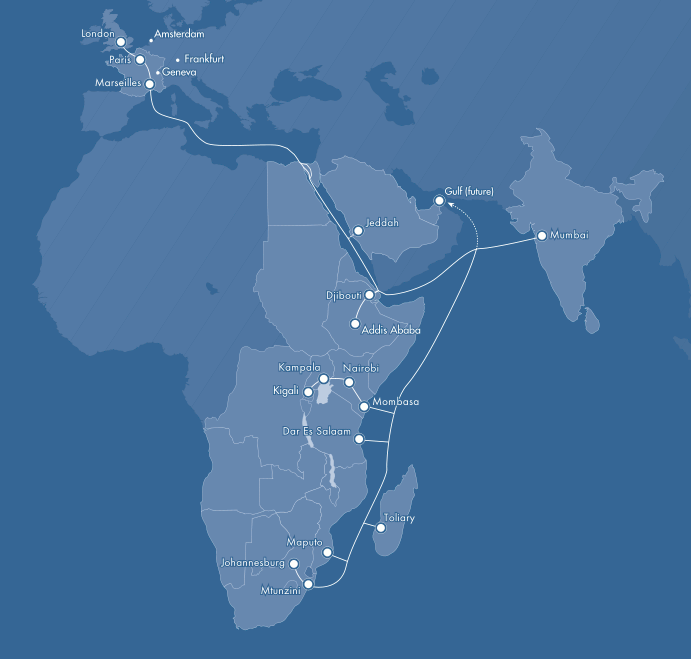
A structural constraint on African internet for most of the 1990s and 2000s was bandwidth. Apart from SAT-3/WASC on the west coast (2002), sub-Saharan Africa had almost no modern submarine fiber until 2009, and the east coast had none.
SEACOM, a privately financed consortium, laid the first major submarine cable serving East Africa, launching on 23 July 2009 with a design capacity of 1.28 terabits per second. The effect on prices was immediate: a monthly international E1 link in Kenya cost US$7,500 in 2007 and US$1,290 by the end of 2009, a fall of over 80%. Applications that had been technically possible but economically infeasible (video calls, cloud services, streaming) became viable.
EASSy (East Africa Submarine System, 2010), WACS (West Africa Cable System, 2012), and ACE (Africa Coast to Europe, 2012) followed SEACOM. By 2023, more than two dozen submarine cables served the African coastline. Google’s Equiano cable, named after Olaudah Equiano, the eighteenth-century freed slave and abolitionist, ran 15,000 km from Portugal to Cape Town with landings in Togo, Nigeria, Saint Helena, and Namibia; the landings were completed in 2022 and Google launched it that September. It added bandwidth specifically aimed at enabling African cloud computing.
Local cloud infrastructure followed. Microsoft opened Azure regions in Johannesburg and Cape Town in 2019 (the Cape Town one is restricted to in-country disaster recovery), Amazon Web Services opened its Cape Town region in April 2020, and Google Cloud’s Johannesburg region, its first on the continent, opened to customers in January 2024. Before 2019, African cloud workloads ran in European or American data centers.
Dead End: The “Africa Rising” Narrative
A note of caution is warranted about the story of African tech.
The “Africa Rising” narrative, the thesis that economic growth and technology adoption would transform the continent into the world’s next major growth market, was a genuine phenomenon and a genuine oversimplification simultaneously. Technology investment in Africa grew from under $500 million annually in 2015 to over $5 billion in 2021, and the venture capital community that had ignored Africa discovered it. The unicorn count stayed small in absolute terms: nine companies valued above $1 billion by the end of 2024, eight of them fintechs, after Moniepoint and Tyme joined Interswitch, Flutterwave, Opay, Wave, Andela, Chipper Cash, and MNT-Halan.
Then the global funding environment contracted. As rising interest rates deflated technology valuations globally, African tech funding fell from a peak of $6.5 billion in 2022 to $3.5 billion in 2023, a 46% drop by Partech’s count. Layoffs at Jumia (the pan-African e-commerce company), Andela, Wave, and dozens of smaller startups revealed the extent to which the boom had been driven by global capital flows rather than sustainable business models.
Structural Constraints That Persist
Despite genuine progress, the technology sector in Africa operates against structural constraints that have not resolved. Electricity reliability remains poor across much of the continent: in Nigeria, companies routinely budget for diesel generators as primary power sources. Regulatory fragmentation (54 countries with 54 different regulatory regimes for fintech, data protection, and spectrum licensing) imposes overhead on every company attempting to scale pan-African. Currency devaluation risk is severe: a Nigerian tech company that raises dollars but earns naira faces existential exposure to exchange rate fluctuation, as Flutterwave and others discovered after the naira lost 70% of its value between 2021 and 2024. Brain drain continues: African universities produce engineers who depart for Europe and America, where salaries are ten to fifty times higher, leaving the continent’s tech sector perpetually understaffed.
The failure of Jumia (backed by Rocket Internet, listed on the New York Stock Exchange in 2019, and hailed as “Africa’s Amazon”) was instructive. Jumia had the capital, the brand recognition, and the first-mover advantage. What it lacked was the logistics infrastructure to make e-commerce economically viable across African markets with poor roads, informal addresses, and cash-dependent consumers. Amazon in the United States built its advantage on logistics infrastructure that already existed. Jumia had to build the infrastructure and the marketplace simultaneously, with limited capital, against competitors adapting to each local market’s specific conditions. Jumia retreated market by market: out of South Africa and Tunisia in 2024 and out of Algeria in early 2026, down to eight countries and a fraction of its peak valuation.
The honest account of African technology is that its successes are real and significant, and that they exist alongside persistent failures rooted not in insufficient entrepreneurship or talent, but in the structural legacies of colonialism, infrastructure neglect, and capital access disparities that no startup can dissolve.
Influence Abroad
M-Pesa’s influence on financial technology has been genuinely global. The concept of mobile money, agent networks, and airtime-as-currency has shaped fintech development from Southeast Asia to Latin America. Ushahidi’s crowd-sourced crisis mapping was used in more than 160 countries. Zipline’s drone delivery model has since been adopted in Ghana, Nigeria, Japan, and the United States.
📚 Sources
- El Kafrawy, M.: “An Introduction to Digital Computers”, Institute of National Planning, Cairo, April 1968 (first computer installation in 1960; researchers’ access by 1968)
- Suri, Tavneet & Jack, William: “The Long-Run Poverty and Gender Impacts of Mobile Money” — Science 354(6317): 1288–1292 (2016)
- Heinz Nixdorf MuseumsForum blog, “Ein Computer in Kenia” (19 May 2020) (punched cards in South Africa, Morocco 1957, Algeria 1959, BTM in Nairobi, the ICT 1202 and Couperus’s account of its end)
- Heinz Nixdorf MuseumsForum blog, “Uvumbuzi – Informatik-Ideen aus Afrika” (28 July 2026) (Haddad, Laforêt, Birrou and Bayana, the emigrant computer scientists)
- Mas, Ignacio & Radcliffe, Dan: “Mobile Payments Go Viral: M-PESA in Kenya” — The Capco Institute Journal of Financial Transformation 32 (2011) (first-year target of one million customers)
- Hersman, Erik: “Mobilizing Tech Entrepreneurs in Africa” — Innovations: Technology, Governance, Globalization (2012), MIT Press
- Okolloh, Ory: “Ushahidi, or ’testimony’: Web 2.0 tools for crowdsourcing crisis information” — Participatory Learning and Action 59: 65–70 (2009)
- Alliance for Affordable Internet (A4AI): “Affordability Report 2021”
- Venture capital — Wikipedia
- Lipton, Merle: Sanctions and South Africa: The Dynamics of Economic Isolation (1988), The Economist Intelligence Unit
- “Interswitch to extend Verve card use in Africa to up unicorn status” — The Africa Report (2019)
- Bright, Jake: “Nigeria’s Interswitch confirms $1B valuation after Visa investment” — TechCrunch, 11 November 2019
- GSMA: “The Mobile Economy: Sub-Saharan Africa 2023”
- International Telecommunication Union (ITU): “Measuring Digital Development: Facts and Figures 2023”
- Internet in Africa — Wikipedia (submarine cable landings and their effect on bandwidth pricing)
- SEACOM — Wikipedia (the 2009 East African submarine cable)
- Miller, Chris: Chip War: The Fight for the World’s Most Critical Technology (2022), Scribner
- Bright, Jake: “Diving deep into Africa’s blossoming tech scene” — TechCrunch, 31 May 2019
- Ndemo, Bitange & Weiss, Tim (eds.): Digital Kenya: An Entrepreneurial Revolution in the Making (2017), Palgrave Macmillan
- “When computers came to Wits” — University of the Witwatersrand
- “IBM pulls out of South Africa” — UPI, 22 October 1986
- “Apartheid victims lose 14-year legal battle against Ford and IBM” — GroundUp
- “M-Pesa celebrates reaching 50 million customers” — Vodacom Group
- “M-PESA exceeds $450 billion in transaction value” — ITWeb Africa
- Equiano (submarine communications cable) — Wikipedia
- “Google launches first African cloud region in Johannesburg, South Africa” — Data Center Dynamics (January 2024)
- Verve International — Wikipedia (2009 launch of Africa’s first domestic card scheme)
- Jumia Technologies: Fourth Quarter 2024 Results (South Africa and Tunisia exits)
- “Computing Apartheid: The Role of U.S. Computer Companies” — Corporate Information Center Brief, June 1978 (African Activist Archive) (an estimated 400 computers in South Africa by 1970)
- “South Africa: IBM, ICL Accused of Apartheid Collaboration” — allAfrica, 15 November 2002 (IBM System/370 for the Interior Department’s register of seven million non-black South Africans; ICL and the passbook records of 16 million)
- “How did the Natives (Abolition of Passes and Co-ordination of Documents) Act of 1952 change pass laws?” — Britannica
- ITU: “MDG – ICT Story Line” (fixed lines per 100 people in 1990)
- Gray, Vanessa: “The un-wired continent: Africa’s mobile success story” — ITU (2006)
- SAT-3/WASC — Wikipedia (2002 West African submarine cable)
- “The M-PESA wonder: How it all begun” — Safaricom Newsroom (two million customers a year after launch)
- “10 Myths About M-PESA: 2014 Update” — CGAP (the GDP comparison and the national-payments share)
- “Study: Mobile-money services lift Kenyans out of poverty” — MIT News, 8 December 2016
- “Kenya’s Cellulant eyes faster growth with new leader” — African Business, May 2021
- “Stripe acquires Nigerian start-up Paystack in $200m deal” — FinTech Futures
- “OPay hits 45 million users” — Nairametrics, 1 June 2026
- “Andela Announces $200M Investment Led by SoftBank” — Business Wire, 29 September 2021
- Flat6Labs: Locations
- Nisingizwe, M. P. et al.: “Effect of unmanned aerial vehicle (drone) delivery on blood product delivery time and wastage in Rwanda” — The Lancet Global Health (2022)
- World Bank Digital Development Toolkit: “Broadband in Kenya” (E1 link prices before and after the 2009 cables)
- Microsoft Learn: List of Azure regions (South Africa West access restrictions)
- Partech: “2023 Africa Tech Venture Capital Report”
- “Africa’s tech scene gets nine unicorns strong” — BusinessDay (Nigeria)
- “Jumia ends Algeria operations in latest profitability drive” — Techpoint Africa
- Ushahidi: Features (deployments in more than 160 countries)
- Zipline (drone delivery company) — Wikipedia (countries of operation)
- Image: M-Pesa Kenyan Kiosk.JPG by Realt0n12 (CC BY-SA 3.0), via Wikimedia Commons
- Image: People setting up for a LAN Party at iHub in Nairobi.jpg by Hilary Murugu (CC BY-SA 4.0), via Wikimedia Commons