The Von Neumann Architecture
Abstract
This article explores the Von Neumann architecture, a fundamental design framework for modern computers. Developed in the mid-1940s and named after John von Neumann, this “stored-program” concept revolutionized computing by treating instructions and data interchangeably within the same memory. It is also one of the most contested attributions in the history of technology: the engineers who actually built the machine believed (with considerable justification) that the credit belonged to them.
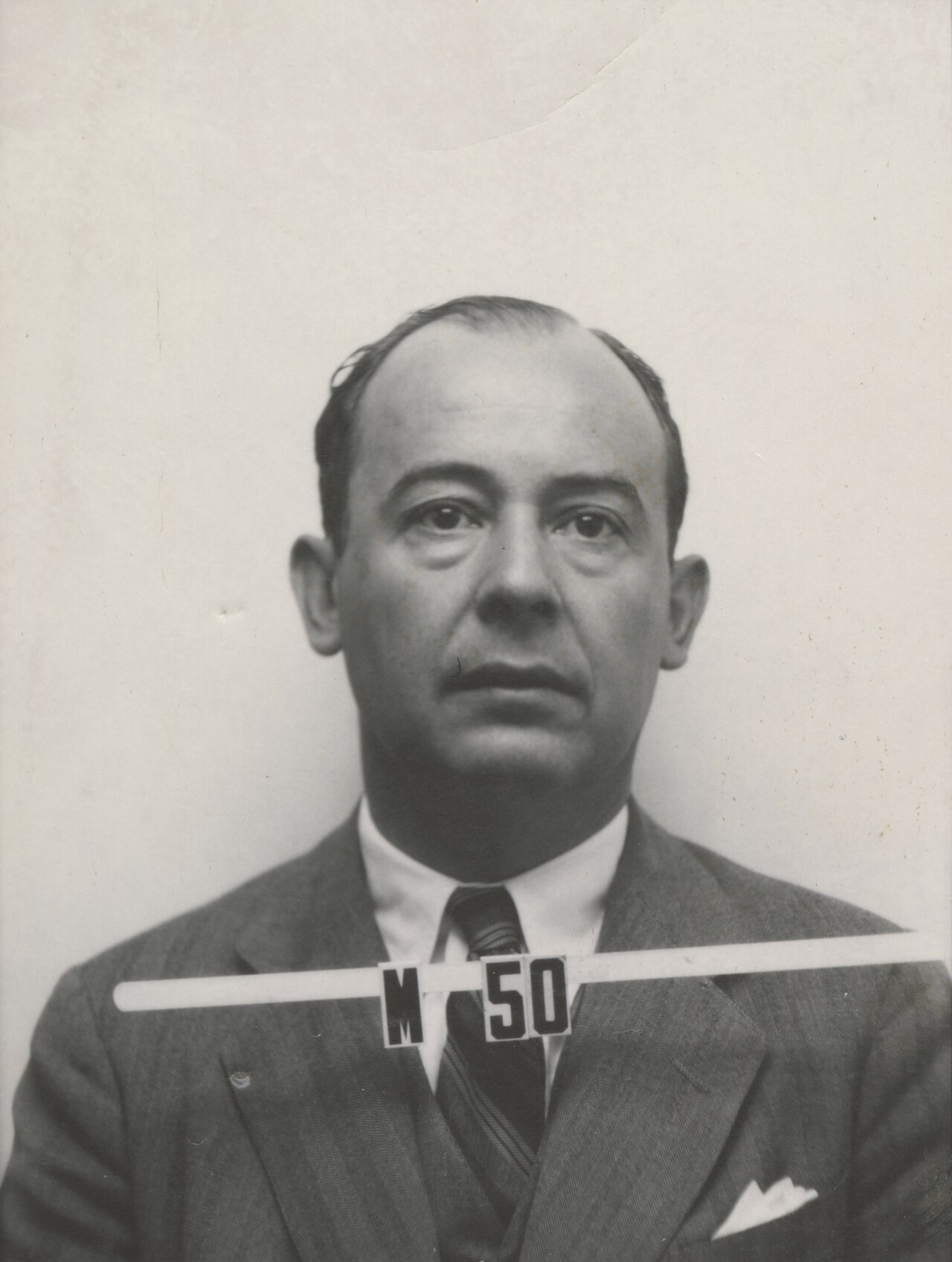
The Man: A Mind Without Parallel
John von Neumann (1903–1957) was, by almost any measure, the most broadly brilliant mathematician of the twentieth century. Born in Budapest to a wealthy Jewish banking family, he demonstrated freakish mathematical talent as a child, reportedly memorizing phone books for amusement. By his mid-twenties he had made fundamental contributions to set theory, quantum mechanics, and game theory.
When the Nazi threat made Europe dangerous, von Neumann emigrated to the United States in 1933, joining the newly founded Institute for Advanced Study (IAS) in Princeton, the same institution that would shelter Albert Einstein. During World War II, he became a key figure in the Manhattan Project, applying his computational skills to the complex implosion calculations required for the plutonium bomb. It was this wartime experience (grappling with calculations that exceeded all available computational capacity) that brought him into direct contact with the engineers building the next generation of computers.
The Revolution: The Stored-Program Concept
Before the architecture that would bear von Neumann’s name, computers like the ENIAC were effectively fixed-purpose machines. To change a task, operators had to physically rewire circuits or manually set hundreds of switches, a slow and error-prone process that could take days.
In June 1945, von Neumann circulated a document titled “First Draft of a Report on the EDVAC.” In it, he described with mathematical precision a machine where both instructions (the program) and data were stored in the same read-write memory. This single insight (that a program was just another kind of data) unlocked the concept of the general-purpose computer: a machine that could be transformed from a calculator to a word processor to a chess engine simply by loading new instructions.
The Fetch-Decode-Execute Cycle
The Von Neumann model operates through a continuous loop: the Control Unit (1) fetches the next instruction from memory, (2) decodes it to determine what operation is required, and (3) executes it via the Arithmetic Logic Unit. The result is written back to memory, and the cycle begins again. Every program ever run on a conventional computer (from the first payroll software to modern AI models) executes through some variation of this loop.
The Core Components
The architecture is defined by several key functional units:
- Central Processing Unit (CPU): The “brain” of the computer, consisting of:
- Arithmetic Logic Unit (ALU): Performs mathematical calculations and logical operations.
- Control Unit (CU): Fetches instructions from memory, decodes them, and directs data flow.
- Memory Unit: A single storage area holding both program instructions and the data being processed. This unified space is the architecture’s defining feature.
- Input/Output (I/O) Mechanisms: The interface through which the computer interacts with the outside world, keyboards, printers, punch card readers, and all their modern successors.
The Controversy: Whose Architecture Is It?
A Disputed Legacy
The “Von Neumann architecture” is one of history’s most contested names. The engineers who actually designed and built the EDVAC (J. Presper Eckert and John Mauchly) had developed the stored-program concept independently and in detail before von Neumann became involved. Von Neumann’s “First Draft” was based heavily on conversations with the EDVAC team. The document was circulated as a working memo, without listing Eckert and Mauchly as co-authors, and it carried only von Neumann’s name. When it spread through the computing community, the attribution stuck.
Eckert and Mauchly were furious. The episode had direct legal consequences: the premature public disclosure undermined their ability to patent their own inventions, contributing to the eventual invalidation of their ENIAC patent in 1973, a ruling that, ironically, also credited John Atanasoff of Iowa State College as a prior inventor of key computing concepts.
Von Neumann never publicly acknowledged the dispute during his lifetime. The architecture continues to bear his name, though many historians argue it should more accurately be called the EDVAC architecture or the Eckert-Mauchly-von Neumann architecture.
Parallel Development: Britain Races Ahead
The stored-program concept was not developed in a vacuum, nor only in America. Working largely in parallel (and in some cases, independently arriving at the same ideas) British engineers produced the first operational stored-program computers:
- Manchester Baby (SSEM), June 1948, built by Freddie Williams and Tom Kilburn at the University of Manchester, it was the first machine to successfully execute a stored program.
- Cambridge EDSAC, May 1949, built by Maurice Wilkes at Cambridge, it was the first practical stored-program computer used for real scientific work.
Both teams were aware of von Neumann’s “First Draft” and drew on it, but the Manchester and Cambridge efforts advanced faster than the American EDVAC, which was not operational until 1951. The British contributions are frequently underemphasized in American-centric histories.
Von Neumann’s theoretical framework also built directly on Alan Turing’s earlier concept of the Universal Turing Machine, an abstract mathematical model that proved any computation could be expressed as a sequence of instructions on a tape. The Von Neumann architecture is, in a sense, the physical realization of Turing’s abstract idea. See Alan Turing and the Enigma for the full story.
The Von Neumann Bottleneck
While revolutionary, the architecture introduced a significant structural challenge: the Von Neumann Bottleneck. Because a single communication path (bus) connects the CPU to memory, the CPU must frequently sit idle, waiting for instructions or data to arrive.
    THE VON NEUMANN BOTTLENECK

       +-----------+           +------------+
       |    CPU    | <---Bus---> |   Memory   |
       | (ALU/CU)  |           | (Data & Inst)|
       +-----------+           +------------+
                    ^
                    |
          Only one transfer at a time.
          As CPUs accelerated, this gap widened.
As processor speeds increased exponentially through the 1970s and 1980s, the bottleneck grew more severe. Memory access speeds improved far more slowly than computation speeds (a divergence known as the “Memory Wall.” The engineering responses to this constraint) CPU caches, instruction pipelining, out-of-order execution, branch prediction, now constitute much of the complexity inside a modern processor.
Von Neumann vs. Harvard Architecture
One structural response to the bottleneck was the Harvard Architecture, which uses physically separate storage and signal pathways for instructions and data. This allows the CPU to fetch the next instruction while simultaneously accessing data, eliminating one source of waiting. Harvard architecture is now standard in microcontrollers and Digital Signal Processors (DSPs), where predictable timing is critical. Modern “Von Neumann” CPUs, paradoxically, often use separate L1 instruction and data caches, a Harvard-style split at the cache level, even while remaining Von Neumann in their main memory model.
Dead End: The Alternatives That Didn’t Win
The Von Neumann model was not the only serious architectural proposal of the era. Several alternatives attracted significant research investment before being abandoned:
Dataflow Machines. Rather than a central control unit fetching instructions in sequence, dataflow architectures executed instructions as soon as their input data became available, a fundamentally parallel model. MIT and Manchester invested heavily in dataflow research through the 1970s and 1980s. The approach proved extremely difficult to program efficiently, and the rise of superscalar Von Neumann processors (which extracted parallelism automatically from sequential code) made dataflow machines commercially unviable by the early 1990s.
Reduction Machines. These architectures, closely tied to functional programming languages like Lisp, executed programs by repeatedly simplifying (“reducing”) expressions rather than executing sequential instructions. They promised elegant handling of recursion and parallelism but suffered from high overhead and poor performance on conventional tasks. See The Lisp Machine Era for the related story of hardware optimized for a specific programming paradigm.
Both paths illuminate a recurring theme: the Von Neumann model won not because it was theoretically optimal, but because it was good enough and benefited from massive, compounding investment in a single direction. Once the ecosystem (compilers, operating systems, software libraries) was built around the sequential model, the switching cost of any alternative became prohibitive.
Legacy: The Blueprint of the Digital Age
Despite decades of challenges, the Von Neumann model remains the conceptual foundation for virtually every modern desktop, laptop, and server. This architectural stability created the necessary platform for The Integrated Circuit Revolution and The Microprocessor Revolution: hardware improvements could focus on raw speed and density without reinventing the fundamental logic of program execution.
The architecture’s deepest achievement may be philosophical. By encoding the instruction set as data (modifiable, storable, transmissible) von Neumann (and Eckert, and Mauchly, and Turing, and Wilkes) gave humanity a machine that could be reprogrammed to become any machine. Every application ever written is a testament to that single insight.
📚 Sources
- Von Neumann, John: “First Draft of a Report on the EDVAC” (1945), reprinted in IEEE Annals of the History of Computing, Vol. 15, No. 4, 1993
- Eckert, J. Presper & Mauchly, John: ENIAC Patent Dispute — Honeywell Inc. v. Sperry Rand Corp., U.S. District Court (1973)
- Wilkes, Maurice: Memoirs of a Computer Pioneer (1985), MIT Press
- Dyson, George: Turing’s Cathedral: The Origins of the Digital Universe (2012), Pantheon Books — detailed account of IAS and EDVAC development
- Aspray, William: John von Neumann and the Origins of Modern Computing (1990), MIT Press
- Lavington, Simon: A History of Manchester Computers (1975), NCC Publications — Manchester Baby and SSEM
- Image: John von Neumann Los Alamos identity badge photo.jpg by Los Alamos National Laboratory (Attribution), via Wikimedia Commons