The UK Computing Industry: From Bletchley to DeepMind
Abstract
Britain built the first programmable electronic computer, Tommy Flowers’s Colossus of 1944, and kept it secret for thirty years. It ran the first stored program (Manchester, 1948), the first business computer (LEO, 1951) and, in 1985, the first ARM processor, an Acorn design whose descendants now run almost every smartphone. In between came a state-sponsored national champion, ICL, that ended up Japanese-owned; cheap home computers from Sinclair and Acorn on which a generation learned to program; and a line of research from Alan Turing’s 1936 paper to DeepMind’s AlphaGo in 2016. Again and again the commercial value of British inventions was captured elsewhere.
Colossus at Bletchley Park
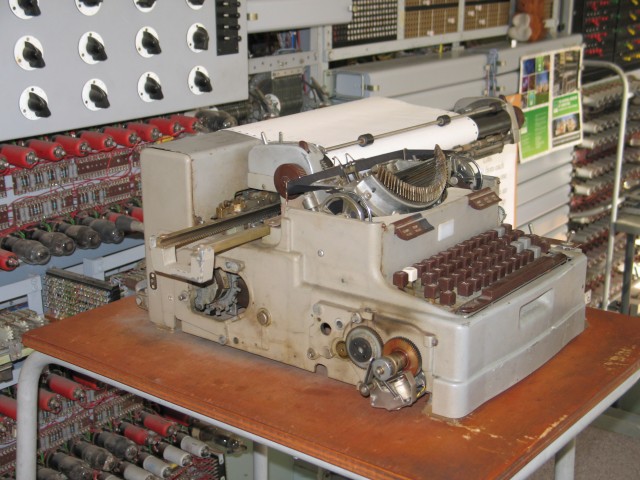
Colossus was built at Bletchley Park in 1943–44 by Tommy Flowers, a Post Office engineer who had spent his career building telephone switching systems from vacuum tubes. The problem it solved was the Lorenz cipher, the teleprinter encryption system used by the German High Command for strategic communications, a harder problem than Enigma, which Alan Turing’s Bombe machines had cracked. Lorenz messages were encrypted by a machine with twelve rotor wheels, producing a keystream of enormous complexity. Breaking them required statistical tests over billions of character positions, far too many to do by hand.
Flowers’ insight was to build a machine that held the known cipher wheel patterns as electronic states rather than mechanical settings. Bletchley’s management doubted that some 1,800 valves could work reliably together and left him to proceed on his own; W. G. Radley, director of the Post Office research station at Dollis Hill, backed him, and Flowers also put in some of his own money. The first Colossus, with about 1,500 valves, ran at Dollis Hill in November 1943 and began work at Bletchley in February 1944; the first improved Mark 2, with about 2,400 valves, went into service on 1 June 1944, just before D-Day. Ten were in use by the end of the war.
All but two of the machines were dismantled after the war; the last two ran at GCHQ until 1959 and 1960. Flowers received a £1,000 award, less than he had spent, and was bound by the Official Secrets Act; his work was acknowledged publicly only from the mid-1970s. He died in 1998.
The Classification Cost
British engineers who had worked on Colossus could not use that experience publicly, and for three decades histories of computing began with the American ENIAC (1945), a general-purpose machine that was publicly announced in 1946, patented by its builders, and became the starting point of a commercial industry. Colossus was built for one task, but it came first.
Manchester and Cambridge: The Academic Machines
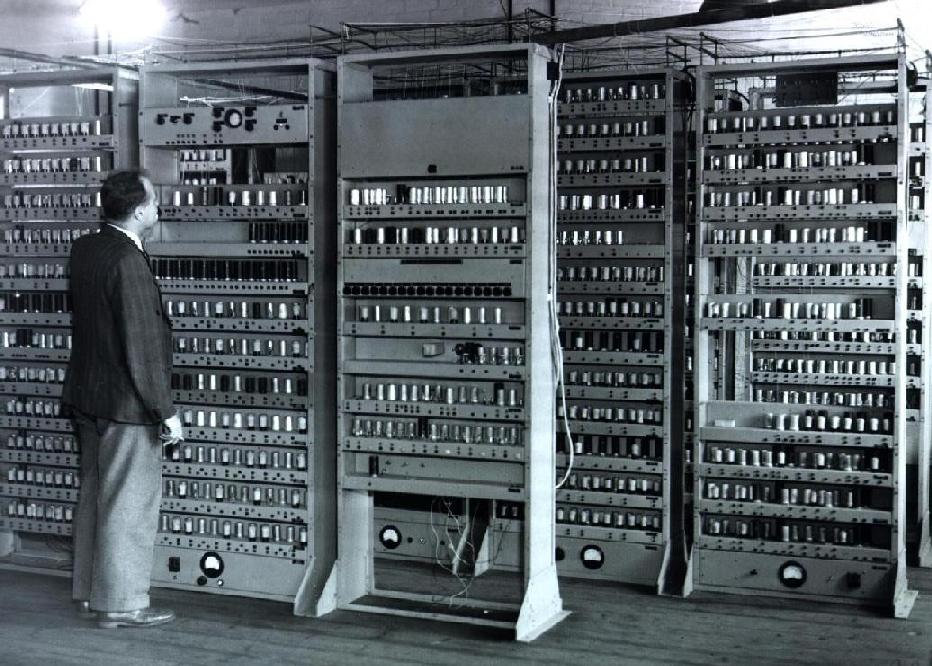
At the University of Manchester, Freddie Williams and Tom Kilburn built the Manchester Baby (Small-Scale Experimental Machine) in June 1948, the world’s first computer to run a stored program, executing a program held in electronic memory rather than set up by physical plugboard or punch card. The distinction matters: the stored-program architecture, in which instructions and data occupy the same memory and a program can modify itself, is the architecture of every computer built since. Manchester ran its first stored program on 21 June 1948, about ten months before Cambridge.
At Cambridge, Maurice Wilkes built EDSAC (Electronic Delay Storage Automatic Calculator), which ran its first program on 6 May 1949, a more practical machine designed explicitly as a tool for scientific computing rather than as an experiment. In his memoirs Wilkes recalled realizing in 1949, on the stairs of the laboratory, that “a good part of the remainder of my life was going to be spent in finding errors in my own programs.”
Manchester’s computing department under Kilburn and Cambridge’s Mathematical Laboratory under Wilkes trained the first generation of British computer engineers.
The First Commercial Computers
Britain also built the first computer for business. J. Lyons & Co., the tea-shop and catering company, sent two managers to the United States in 1947; on their return its systems chief John Simmons put £2,500 into Wilkes’s EDSAC in exchange for the right to use its design. The resulting LEO (Lyons Electronic Office), built under John Pinkerton with about 6,000 valves and 64 mercury delay lines, impressed Princess Elizabeth on a visit on 15 February 1951 and ran its first regular business program on 5 September 1951, then the bakery valuations from 30 November. Lyons set up LEO Computers Ltd in November 1954; its LEO II and transistorised LEO III were sold to other firms before English Electric took it over in 1963.
Other machines show how many directions the young industry took. The Harwell Dekatron Computer, a relay and counting-tube machine at the Atomic Energy Research Establishment, began work in April 1951; as WITCH it taught computing at Wolverhampton from December 1957 to March 1973, and after restoration at The National Museum of Computing in 2012 it entered Guinness World Records as the oldest working digital computer. Ferranti’s game-playing Nimrod beat visitors at Nim in the Science Museum during the Festival of Britain in 1951. Elliott Brothers, an instrument maker dating back to the early nineteenth century, showed the Elliott 401 in London in April 1953 (the one-off machine then worked at the Rothamsted agricultural research station until 1965), sold ten Elliott 402s, one of them to Leitz in Wetzlar, and more than two hundred transistorised Elliott 803s. ICT, formed in 1959 from the punched-card makers BTM and Powers-Samas, delivered its first transistorised ICT 1301 to the University of London in April 1962 for £250,000; five tons and 7,350 transistors, it calculated in pounds, shillings and pence in hardware, and one, “Flossie,” has been restored to working order. At the top end Ferranti and Tom Kilburn’s team inaugurated the Atlas at Manchester on 7 December 1962, with 60,000 transistors and the first virtual memory (the “one-level store”); only IBM’s Stretch was faster. Three Atlases were built, and the Manchester machine ran until September 1971.
The Nationalization Era: ICL and the British Computer Industry
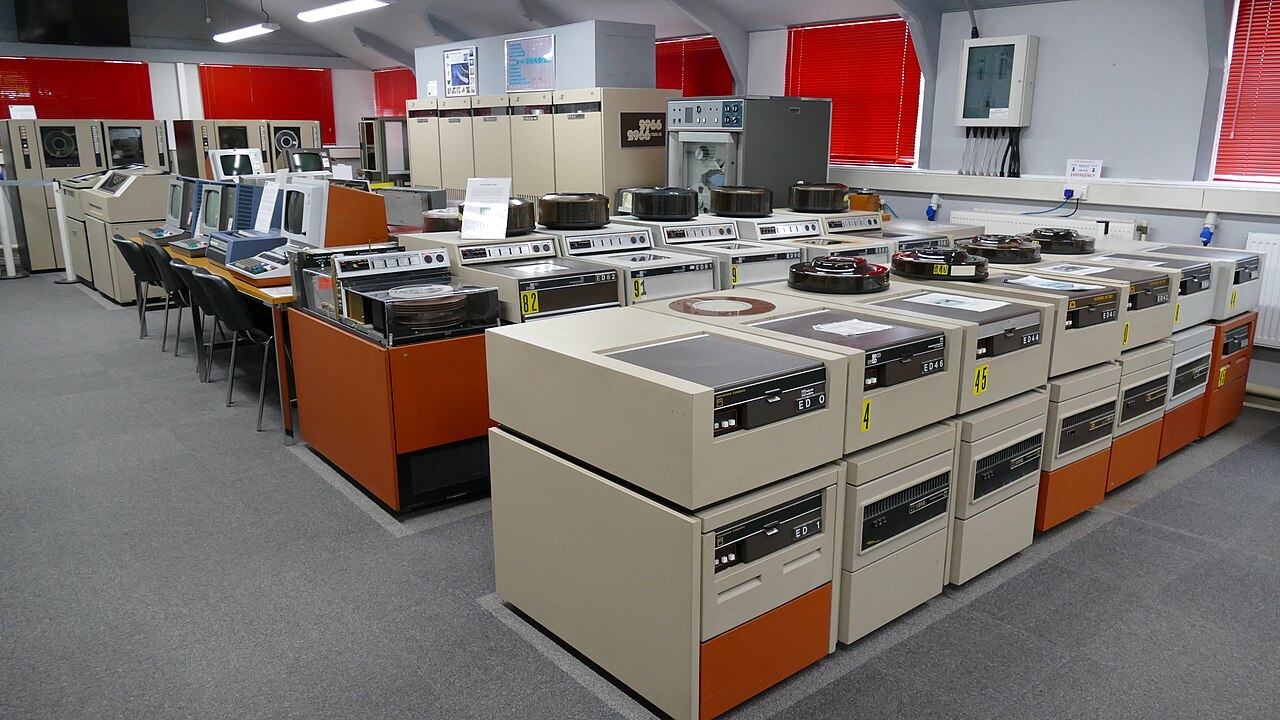
By the mid-1960s, Britain had a fragmented set of domestic computer manufacturers: English Electric, Ferranti, ICT, Plessey, and others. Each was too small to compete with IBM individually. The Labour government’s solution was to merge them. In 1968, International Computers Limited (ICL) was created from the combination of English Electric Computer and ICT, with government backing and a mandate to produce a British national champion in computing.
ICL did produce computers, the 1900 series and later the 2900 series were technically competent machines. British government departments, universities, and state-owned enterprises were encouraged to buy ICL over IBM. But the preferential public-sector market also shaped the company: its product plans followed the needs of government customers, and it remained small next to IBM abroad.
Fujitsu bought 80% of ICL in 1990 and the rest in 1998; ICL became Fujitsu’s British services arm, the builder of the Post Office’s Horizon system.
Warning
The ICL story is often cited as evidence that industrial policy cannot create technology companies. A narrower reading is that ICL got a protected domestic customer base, while the American companies that became global leaders (IBM, DEC, HP) competed hard with each other in the open market.
Sinclair: The Bedroom Computer
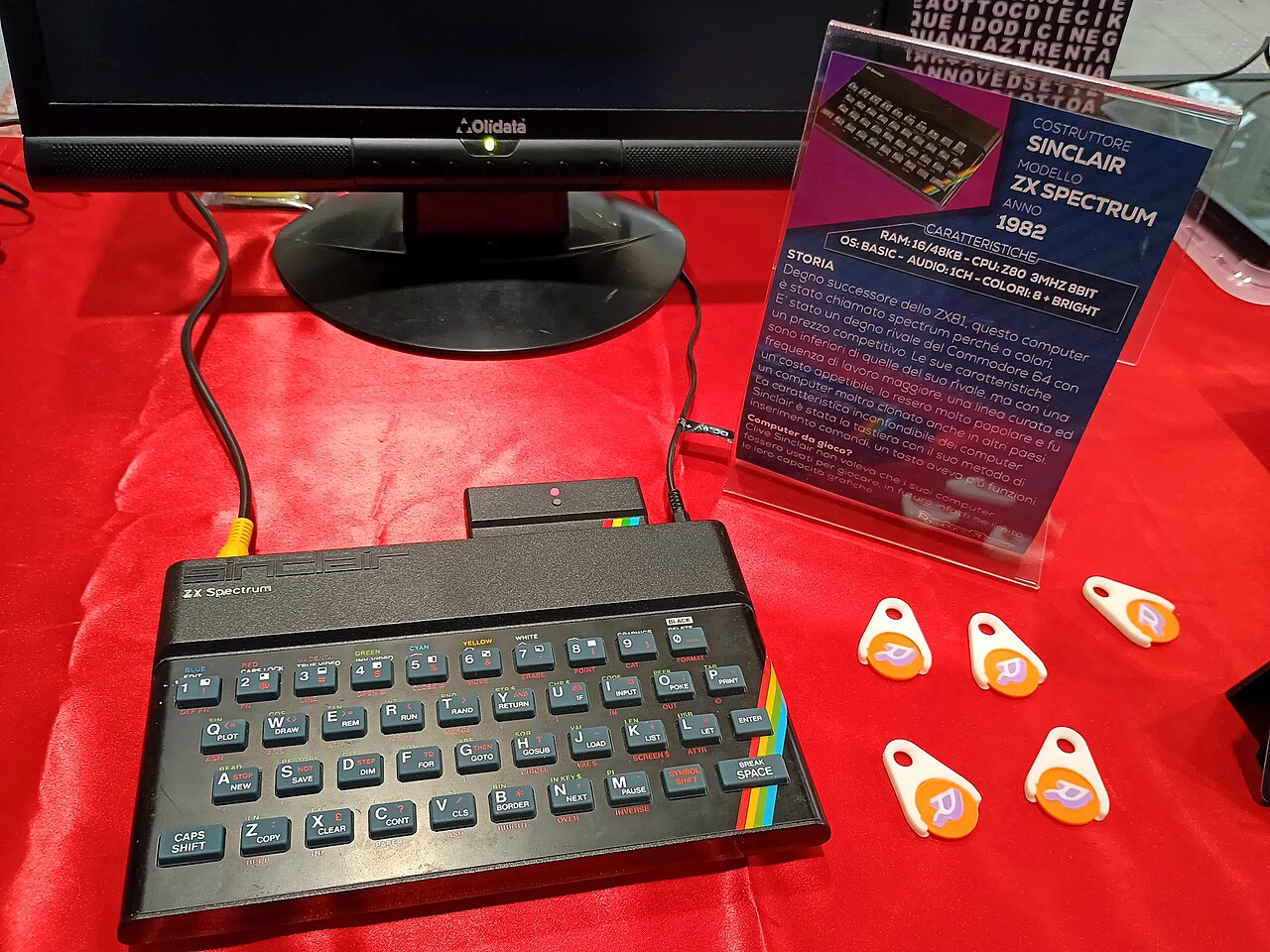
While ICL pursued the mainframe market, Clive Sinclair built a different kind of British computing industry, one that reached into living rooms.
Sinclair had been building consumer electronics since the 1960s: pocket calculators, miniature televisions, a kit-build amplifier. His computing ambitions crystallized with the ZX80 in 1980, a computer that sold for £99.95 assembled (or £79.95 as a kit). It had 1 KB of RAM, a membrane keyboard, and a BASIC interpreter in 4 KB of ROM. It was intended as a learning tool for people who had never touched a computer.
It sold about 50,000 units. The follow-on ZX81 (1981) sold over 1.5 million. Rivals followed fast. Dragon Data, a Swansea offshoot of the toy maker Mettoy, launched the Motorola 6809-based Dragon 32 in August 1982 at £199.50, built 30,000 that year, and went bankrupt in June 1984. Tangerine Computer Systems of Cambridge, founded on 1 October 1979, answered the Spectrum with the Oric-1 in January 1983 at £99.95; Oric sold 72,500 by September 1983, half of them in France, but filed for insolvency on 2 February 1985, the day after launching its third model, and roughly 350,000 Orics were built in all. The ZX Spectrum (April 1982), with 16 KB or 48 KB of RAM, colour graphics and a rubber keyboard, at £125 or £175, became the defining home computer of British 1980s childhood. Over five million were sold. An entire generation of British programmers learned to code on a Spectrum. The machine created the British video game industry: Ultimate Play the Game (later Rare) and Ocean Software both built their catalogues on it.
His attempt at a business computer, the QL (1984), and his electric C5 vehicle (1985) were commercial failures, and in 1986 he sold his computer business to Amstrad.
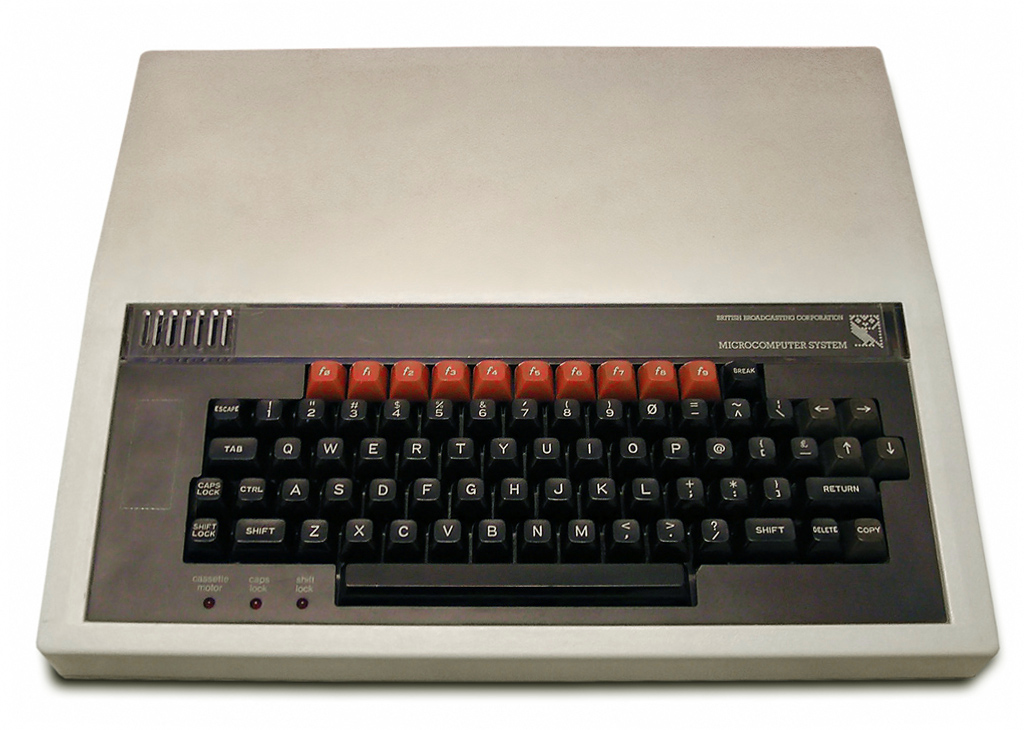
Acorn and the BBC Micro: A Nation Learns to Program
Sinclair’s competitor, Acorn Computers, took a different path to the same market, and along the way designed the ARM processor.
Acorn was founded in Cambridge in 1978 by Hermann Hauser and Chris Curry. Its early products were hobbyist machines, but its trajectory changed in 1980 when the BBC announced a Computer Literacy Project, a television program series designed to teach the British public about computing, to be accompanied by a recommended home computer. The BBC had been alarmed by its own 1978 documentary Now the Chips Are Down, and it found Sinclair’s 1 KB ZX80 too limited; of seven manufacturers contacted, six offered a machine. Acorn won the contract, by legend after its team assembled a working prototype of its planned “Proton” in three days and two nights. The BBC Micro (1981) was the result.
The BBC Micro launched on 1 December 1981 at £235 for the 16 KB Model A and £335 for the 32 KB Model B (later retail prices were £299 and £399), and from 11 January 1982 it starred in the ten-part series The Computer Programme, presented by Chris Serle and Ian McNaught-Davis. Both models were dearer than the Spectrum and more capable. It had expansion ports, a proper keyboard, and an operating system designed for education. British schools bought it in large numbers, helped by a government subsidy scheme: by the mid-1980s most British schools had one (the Heinz Nixdorf MuseumsForum gives 85 percent of primary and 65 percent of secondary schools buying Acorn machines), and between 1.5 and 2 million BBC Micros were sold, depending on the source.
The BBC Micro’s education argument was made again thirty years later by the Raspberry Pi, whose founders cited it directly; that machine is covered in The Open Hardware Movement.
For its next generation of machines Acorn wanted a faster processor than the 8-bit 6502 and found none of the available 16-bit chips satisfactory, so in 1983 it decided to design its own. The result went into the Archimedes of 1987.
The ARM Chip
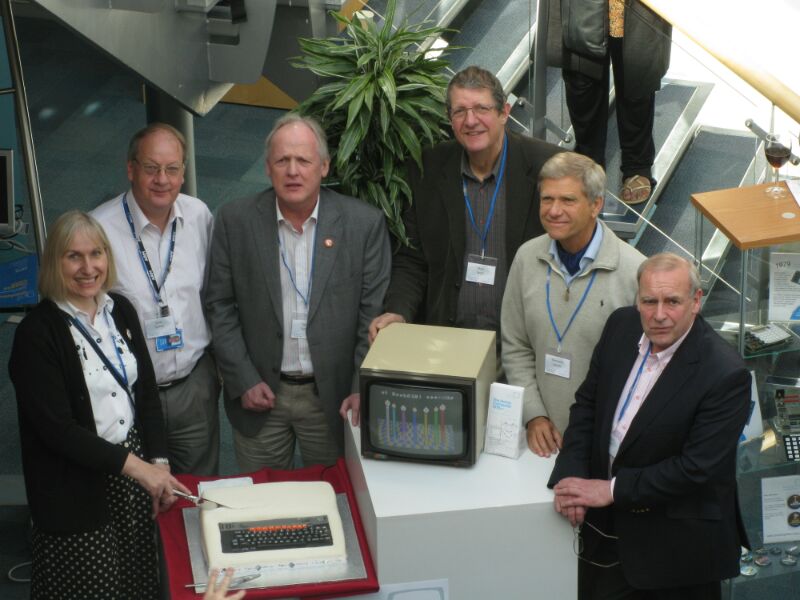
For a small home-computer maker, designing its own processor was a large gamble. The full story is told in The ARM Architecture; the essential facts are these:
Sophie Wilson, who had written BBC BASIC, designed the instruction set; Steve Furber led the chip design. Wilson’s simulator of the processor, written in BBC BASIC, ran on a BBC Micro. VLSI Technology fabricated the first chips, which arrived on 26 April 1985 and worked first time. When Furber tried to measure the chip’s power consumption, the meter read zero: the power supply was not connected at all, and the processor was running on leakage current from its signal pins. Low power had not been a design goal; it became ARM’s main selling point.
ARM (Acorn RISC Machine, later Advanced RISC Machines) was spun off as a joint venture between Acorn, Apple, and VLSI Technology in 1990. Apple needed a processor for the Newton PDA. ARM needed capital and distribution. The new company licensed its designs to chip manufacturers instead of making chips itself, a model that needed little capital. By the mid-2020s more than 250 billion ARM-based chips had shipped. Almost every iPhone, Android phone, iPad and Raspberry Pi, and a growing share of the world’s servers, run ARM designs.
Acorn itself was broken up in 1998–99. ARM, which started in 1990 with twelve engineers in a converted barn at Swaffham Bulbeck near Cambridge, was acquired by SoftBank for $32 billion in 2016 and returned to the stock market on Nasdaq on 14 September 2023, raising $4.87 billion at a $54.5 billion valuation.
The Software Industry: Games, Tools, and a Different Model
Its earliest notable firm sold software when software was normally given away free with the machine: Stephanie “Steve” Shirley founded Freelance Programmers in 1962, staffed it with home-working women programmers, and won contracts up to Concorde’s black-box flight recorder. As Xansa, the employee-owned company reached a valuation near $3 billion before Steria acquired it in 2007.
The British video game industry, seeded by Sinclair and Acorn’s home computers, produced some of the most influential games of the early era. Elite (1984), by David Braben and Ian Bell (published from Cambridge) was an early open-ended 3D space trading game; it fitted eight galaxies of 256 planets each into the BBC Micro’s memory by generating them procedurally from a few seed numbers. Lemmings (1991) came from DMA Design in Dundee. Grand Theft Auto (1997) came from the same studio, still in Dundee; DMA moved to Edinburgh in 2000 and was renamed Rockstar North in 2002.
The enterprise software industry produced Autonomy (Mike Lynch, Cambridge, 1996), which became one of Britain’s most valuable technology companies. HP bought it in 2011 for $11 billion, wrote off most of the price a year later alleging accounting fraud, and pursued Lynch in the courts; a US jury acquitted him of all criminal charges in June 2024, and he died two months later when his yacht sank off Sicily. Newcastle’s Sage became the leading accounting software for British small businesses.
DeepMind: The Thread Reaches AI
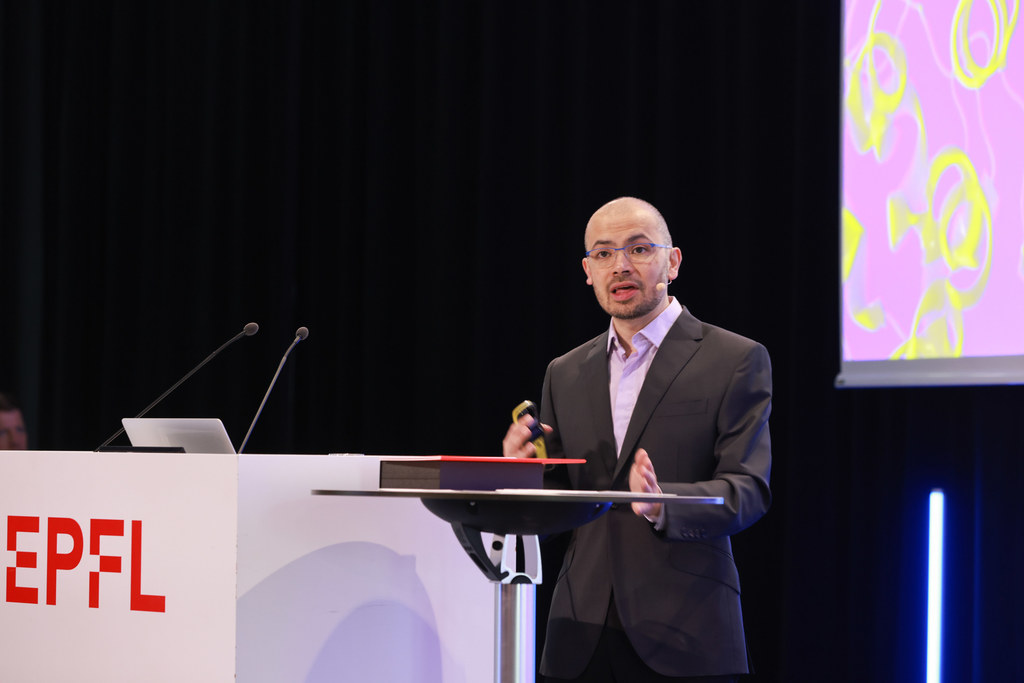
Demis Hassabis grew up in London, learned chess from his father at age four, reached master standard at thirteen with an Elo rating of 2300, and read Computer Science at Queens’ College, Cambridge, graduating in 1997. After graduation he co-founded a video game company (Elixir Studios), pursued a PhD in cognitive neuroscience at University College London, and in 2010 co-founded DeepMind in London with Shane Legg and Mustafa Suleyman.
DeepMind set out to build general learning systems, combining deep neural networks with reinforcement learning, in which agents learn from experience rather than from programmed rules; the reinforcement-learning side drew on the work of Richard Sutton and Andrew Barto.
Google acquired DeepMind in 2014 for £400 million. The acquisition terms included an unusual condition: DeepMind would stay headquartered in London with substantial autonomy, and Google agreed to set up an ethics and safety board to oversee the work. The board’s membership and proceedings were never made public. In March 2016 AlphaGo defeated Lee Sedol, one of the strongest Go players in the world, four games to one; the match was widely described as a “Sputnik moment” for AI, especially in China. In 2020 AlphaFold predicted protein structures at close to experimental accuracy in the CASP14 competition, and by 2022 its public database held predicted structures for more than 200 million proteins, nearly all known to science. In 2024 Hassabis and John Jumper shared the Nobel Prize in Chemistry with David Baker.
The Cambridge Effect
The Cambridge Computer Laboratory (now the Department of Computer Science and Technology) has been continuously productive since Wilkes’ EDSAC in 1949. ARM, Acorn, Autonomy, and numerous semiconductor and AI companies clustered in what became known as “Silicon Fen”, Cambridge’s counterpart to Silicon Valley, with far less venture capital. Microsoft opened a research laboratory there in 1997, where Tony Hoare worked after retiring from Oxford.
Dead End: The British Mainframe Ambition
The ambition of a vertically integrated British computer industry (hardware, software, operating system, and services) died in stages through the 1980s.
Ferranti had delivered the first commercially available general-purpose computer, the Ferranti Mark 1 (based on the Manchester machines), in February 1951; it sold its mainframe business to ICT in 1963 and by the 1980s made mainly military electronics. GEC (the British General Electric Company) had the resources for a computer division but concentrated on defence electronics. The British firms that stayed in computers sold mainly to their own government.
📚 Sources
- Heinz Nixdorf MuseumsForum blog, “Computer fürs Geschäft” (3 September 2021)
- Heinz Nixdorf MuseumsForum blog, “Der Großvater unter den Computern” (30 April 2021)
- Heinz Nixdorf MuseumsForum blog, “London 1951: Festival mit Computer” (1 May 2026)
- Heinz Nixdorf MuseumsForum blog, “Der Computer in der Baracke” (18 April 2023)
- Heinz Nixdorf MuseumsForum blog, “ICT 1301: Man nannte sie „Flossie“” (7 October 2022)
- Heinz Nixdorf MuseumsForum blog, “Europas erster Supercomputer” (2 December 2022)
- Heinz Nixdorf MuseumsForum blog, “Computer für die BBC” (11 January 2022)
- Heinz Nixdorf MuseumsForum blog, “Dragon – die digitalen Drachen aus Wales” (16 January 2026)
- Heinz Nixdorf MuseumsForum blog, “Der Mandarinen-Computer: Oric-1” (21 November 2025)
- Copeland, B. Jack (ed.): Colossus: The Secrets of Bletchley Park’s Codebreaking Computers (2006), Oxford University Press
- Lavington, Simon: A History of Manchester Computers (1998), British Computer Society
- Steve Furber — Computer History Museum Fellow profile
- “Unsung heroes of tech: ARM creators Sophie Wilson and Steve Furber”, The Register (3 May 2012) (the first ARM running on leakage current)
- Tommy Flowers — Wikipedia (Radley’s backing, valve counts, the £1,000 award, the two machines kept at GCHQ)
- Arm Holdings — Wikipedia
- Hassabis, Demis: Nobel Prize lecture, December 2024
- Agar, Jon: The Government Machine: A Revolutionary History of the Computer (2003), MIT Press
- Lean, Thomas: Electronic Dreams: How 1980s Britain Learned to Love the Computer (2016), Bloomsbury Sigma
- BBC Micro — Wikipedia (launch date, Model A/B prices, school adoption)
- DMA Design — Wikipedia (Dundee, move to Edinburgh, Rockstar North)
- Demis Hassabis — Wikipedia (chess, Cambridge, DeepMind)
- Manchester Baby — Wikipedia (first stored program, 21 June 1948)
- EDSAC — Wikipedia (first program, 6 May 1949)
- Image: Colossus Computer, Bletchley Park - geograph.org.uk - 1590878.jpg by Ian Petticrew (CC BY-SA 2.0), via Wikimedia Commons
- Image: EDSAC (25).jpg by Computer Laboratory, University of Cambridge (CC BY 2.0), via Wikimedia Commons
- Image: Sophie Wilson, Chris Turner, Steve Furber, Chris Serle, Hermann Hauser, Chris Curry (7020152153).jpg by Trevor Johnson (CC BY-SA 2.0), via Wikimedia Commons
- Image: Demis Hassabis.jpg by Alain Herzog (CC BY-SA 4.0), via Wikimedia Commons