Andy Bechtolsheim and Sun
Abstract
Andy Bechtolsheim is one of the few people in computing history who was present at two of its most consequential founding moments: he designed the SUN workstation that launched Sun Microsystems and helped define the Unix workstation market of the 1980s, and he wrote the first check to Google before the company was incorporated: $100,000 payable to “Google Inc.” before Google Inc. existed as a legal entity. He subsequently built Arista Networks into a dominant force in data center networking. His story is the story of a serial technical founder, an engineer who keeps building companies rather than managing them, who is worth roughly $29 billion and remains almost entirely unknown outside Silicon Valley.
Bavaria, Carnegie Mellon, and Stanford
Andreas von Bechtolsheim was born on September 30, 1955, at Hängeberg on the Ammersee in Bavaria. He grew up in a family with roots in the German landed nobility, though not a wealthy one. His father was an agricultural administrator. What his childhood provided, according to his own accounts, was time and space to be interested in things, particularly electronics. He built radio equipment as a teenager, took machines apart, and developed the engineer’s instinct for how things worked at the component level.
He took his engineering degree at the Technical University of Munich, then a master’s in computer engineering at Carnegie Mellon University in Pittsburgh, finishing in 1976. He moved on to Stanford as a PhD student in electrical engineering, spent five years there, never finished the degree, and built the machine that defined his career instead.
The computer landscape at research universities in the late 1970s was divided between two unsatisfying options. Minicomputers (VAXes, PDP-11s) were powerful but expensive, shared between many users on a time-sharing basis, and not personal in any practical sense. Microcomputers (the Apple II, the early CP/M machines) were personal but underpowered, running proprietary operating systems with limited software ecosystems. What researchers and engineers actually needed was a machine that combined personal computing’s direct access with minicomputer-class power and a serious operating system.
Bechtolsheim built one. Using a Motorola 68000 processor, which had just become commercially available and offered more performance per dollar than anything previously accessible at the component level, he designed a workstation he called the SUN, for Stanford University Network. The machine was intended as a node in a networked environment: capable of running Unix, connected to other machines by Ethernet, able to share file systems and computing resources across the network. The design was clean, capable, and significantly cheaper than any comparable commercially available system.
Stanford’s licensing office offered to manage the commercialization of the design. Bechtolsheim declined, retaining the right to commercialize it himself. He built multiple SUN boards and sold them to Stanford departments, departments that needed computing power and had been unable to afford minicomputers. The informal sales funded further development and demonstrated demand.
Sun Microsystems: “The Network Is the Computer”
In 1982, Bechtolsheim co-founded Sun Microsystems in Mountain View, California, with three partners: Scott McNealy, a Stanford MBA student who took over as CEO in 1984; Vinod Khosla, the company’s first CEO, who handled early strategy and fundraising; and Bill Joy, the Berkeley computer scientist who had written BSD Unix and the TCP/IP networking stack that made Unix usable on the internet.
The four founders divided responsibilities along the lines of their complementary strengths. McNealy ran the business: customers, operations, revenue. Khosla handled early fundraising and strategy. Joy owned software: the operating system, the relationship with the Unix community, and Sun’s technical standing with academic and research buyers. Bechtolsheim built the hardware. The division was clean enough that each founder could work in their domain without constant coordination.
Sun’s founding proposition was a bet on the future of computing that turned out to be correct. Not immediately (the company was commercially successful from early in its history, going public in 1986) but profoundly, at a timescale that the founders themselves anticipated. Their slogan was “The network is the computer.” The vision was that the future of computing was not isolated powerful machines but connected ones, networks in which computing resources, storage, and software were distributed across many machines and accessible from any node. Sun sold Unix workstations that were designed, from the start, to be networked.
Info
Sun’s SPARC (Scalable Processor Architecture) processor, introduced in 1987, was one of the early successful commercial implementations of RISC architecture (Reduced Instruction Set Computing). RISC designs executed a small, fast set of simple instructions rather than the large, complex instruction sets of competitors like Intel’s x86. The RISC versus CISC debate was one of the defining technical controversies of 1980s computer architecture. Sun’s bet on SPARC was vindicated commercially: the SPARC workstation line dominated the engineering workstation market for most of the late 1980s and early 1990s. The architecture itself was eventually outpaced by Intel’s x86 improvements, a story that played out across the entire RISC market.
By the late 1980s, Sun was the dominant supplier of workstations for engineers, scientists, and researchers worldwide. A Sun-3 or Sun-4 workstation was standard equipment in university computer science departments, financial institutions, and science laboratories. The company had revenues exceeding $1 billion by 1988, six years after founding. McNealy’s business management and Joy’s software strategy deserve significant credit, but the hardware that Bechtolsheim had designed at Stanford, and the follow-on designs he produced at Sun, were what customers were actually buying.
Departure and Granite Systems
Bechtolsheim left Sun in 1995. By then, the company was a large enterprise software and hardware vendor, with thousands of employees and a complex product portfolio. The engineering culture of its early years had been supplemented by, and in some areas replaced by, a corporate culture oriented toward managing existing product lines rather than building new ones. Bechtolsheim was a founder-engineer (someone who builds new things) not a product manager. The fit had become uncomfortable.
He founded Granite Systems, a small company focused on Gigabit Ethernet networking hardware. In 1995, the dominant networking standard was Fast Ethernet, running at 100 megabits per second. Gigabit Ethernet (ten times faster) was technically feasible but had not yet been commercialized. Bechtolsheim believed it would be necessary for the data-intensive networks that research institutions and eventually businesses were building.
Granite Systems was acquired by Cisco in 1996 for $220 million in Cisco stock, of which Bechtolsheim’s 60% ownership took the largest share. The timing was fortuitous: Cisco’s stock rose dramatically over the following three years, as the dot-com boom drove explosive demand for networking equipment. By 1998, Bechtolsheim’s stake from the Granite acquisition had grown substantially. He was not yet wealthy in the way that Sun’s founders had become, but he had resources and, more importantly, the freedom to act quickly when he saw something worth investing in.
The Google Check
In August 1998, Larry Page and Sergey Brin were graduate students in computer science at Stanford. They had been working for two years on a search engine they initially called BackRub, then Google, a play on “googol,” the mathematical term for 10 to the power of 100, reflecting their ambition to index the web’s vast quantity of information. Their key insight was PageRank: using the link structure of the web (which pages link to which other pages, and how authoritative those linking pages are) as a proxy for relevance. A page linked to by many authoritative sources was more likely to be genuinely useful than a page that had merely stuffed its text with search terms.
Stanford professor David Cheriton introduced them to Bechtolsheim, and they met on the deck of Cheriton’s house in Palo Alto, early one morning before Bechtolsheim needed to attend a Sun engineering meeting. Page and Brin gave a demonstration of the search engine. Bechtolsheim watched, asked some questions, and understood what he was seeing.
He went inside and returned with a check. It was made out for $100,000, payable to “Google Inc.” Google Inc. did not yet exist as a legal entity: Page and Brin were still operating informally out of Stanford and a rented house. They had to incorporate the company before they could deposit the check, which they did on September 4, 1998, moving soon after into Susan Wojcicki’s garage in Menlo Park. Cheriton, whose deck they had met on, wrote a $100,000 check of his own.
The check was the first outside investment in Google. By the 2004 IPO the stake was worth more than a billion dollars, and it kept growing with Alphabet for two more decades, making it one of the most profitable individual technology investments on record.
Info
Bechtolsheim has described his reasoning consistently: he evaluated Google as an engineer, understood the PageRank architecture, and recognized that it was structurally superior to the keyword-based search engines that dominated the market in 1998. The investment was $100,000, a small enough sum that it could be made quickly, without the weeks of due diligence that a larger investment would require. He has also noted that he did not want to miss an obvious opportunity by moving slowly. The decision took roughly thirty minutes from demonstration to check.
Arista Networks
In 2001 Bechtolsheim co-founded Kealia with Cheriton, a server company that developed high-density computing hardware for data centers. Sun Microsystems acquired Kealia in February 2004, and Bechtolsheim returned to Sun as senior vice president and chief architect, his first time back at the company he had co-founded. He left again to build the company that became Arista Networks, founded in 2004 under the name Arastra with Cheriton and networking engineer Kenneth Duda.
Arista’s premise was that the data center networking market (dominated by Cisco, which held an estimated sixty percent of the market and priced accordingly) was due for disruption. Cisco’s networking switches ran proprietary operating systems, expensive to license and difficult to automate. A data center engineer who wanted to programmatically configure hundreds of switches had to work with Cisco’s command-line interface, which had been designed for manual human operation, not for software automation.
Arista’s Extensible Operating System (EOS) was built on Linux, designed from the start for programmatic management. A data center operator could write software that configured, monitored, and troubleshot hundreds of Arista switches through well-documented APIs. The same software engineering practices that application developers used to manage their code could be applied to the network infrastructure.
The timing coincided with the explosive growth of cloud computing. Amazon, Microsoft, Google, and Facebook were building data centers at unprecedented scale, and their networking requirements were unlike anything that enterprise data centers had faced. They needed to deploy thousands of switches rapidly, configure them precisely, and change configurations continuously as their applications evolved. Arista’s automation-native design was exactly what cloud-scale operators needed.
Arista Networks went public in June 2014. The company grew consistently through the following decade as cloud providers chose Arista over Cisco’s higher-cost alternatives. Cisco sued in 2014 over patents and over the copying of its command-line interface; the International Trade Commission ruled against Arista in 2016, a jury the same year awarded Cisco no copyright damages, and the whole fight ended in August 2018 with Arista paying Cisco $400 million and agreeing to differentiate its interfaces. By 2023, Arista had a market capitalization exceeding $50 billion.
In March 2024 the SEC charged Bechtolsheim with insider trading: he had learned that Cisco was about to acquire Acacia Communications and traded Acacia options in the accounts of a relative and an associate the day before the July 2019 announcement, for profits of $415,726. Without admitting or denying the allegations, he settled for a $923,740 penalty and a five-year bar from serving as an officer or director of a public company.
Bechtolsheim’s pattern, build something technically superior to incumbents in a market where the incumbents have become complacent, make the key architectural decisions early, then let the market validate them, had worked three times: Sun, Granite, Arista. The workstation, the network chip, the data center switch. Each time, the architectural insight was essentially the same: a market dominated by expensive, proprietary hardware would eventually be disrupted by something cheaper, open, and more capable. Each time, Bechtolsheim was among the first to see it.
The Sun Microsystems story and the Unix workstation market are covered in The Unix Story; the network infrastructure context in The Connected World.
📚 Sources
- Southwick, Karen: High Noon: The Inside Story of Scott McNealy and the Rise of Sun Microsystems (1999), Wiley
- Vise, David A. & Malseed, Mark: The Google Story (2005), Delacorte Press
- Levy, Steven: In the Plex: How Google Thinks, Works, and Shapes Our Lives (2011), Simon & Schuster
- Arista Networks: S-1 Registration Statement (2014), SEC EDGAR
- Bechtolsheim, Andy: oral history interview by Douglas Fairbairn, 17 July 2015, Computer History Museum, catalog 102737929
- “SEC Charges Former Arista Networks Chairman Andy Bechtolsheim with Insider Trading” — SEC press release 2024-40, 26 March 2024
- “Cisco, Arista settle lawsuit” — Network World, August 2018 ($400 million settlement)
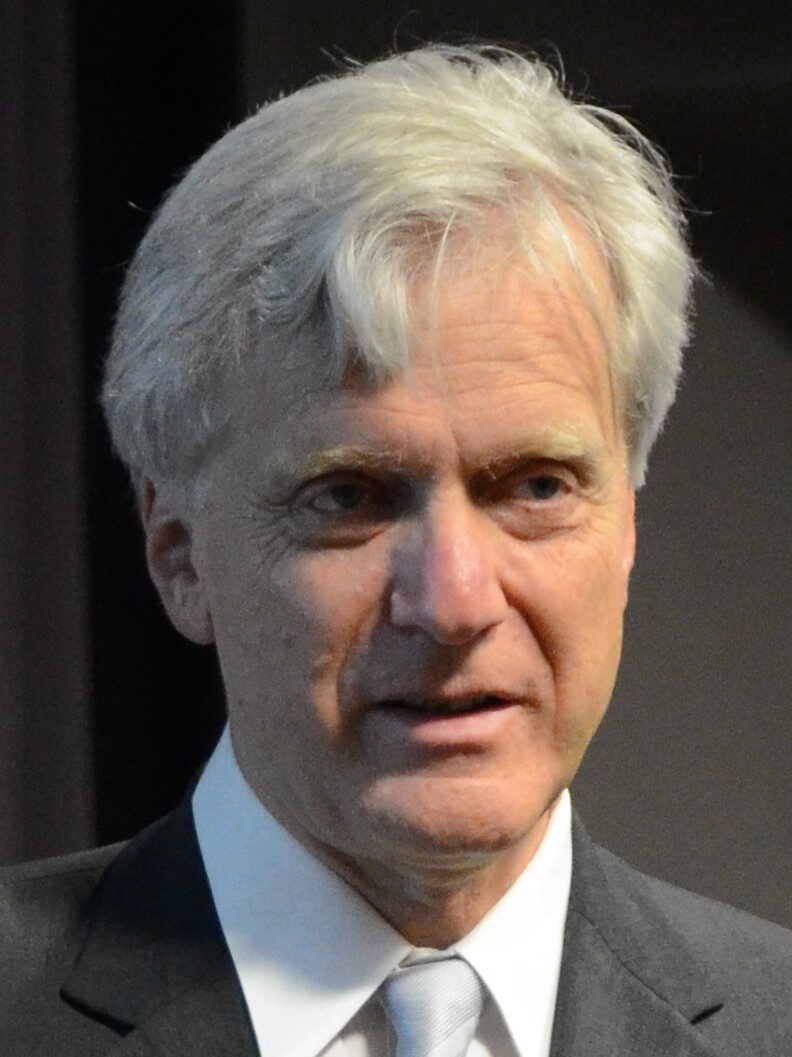
- Image: Andreas bechtolsheim (cropped).jpg by Norbert Stuhrmann (CC BY-SA 3.0), via Wikimedia Commons