AlphaFold
Abstract
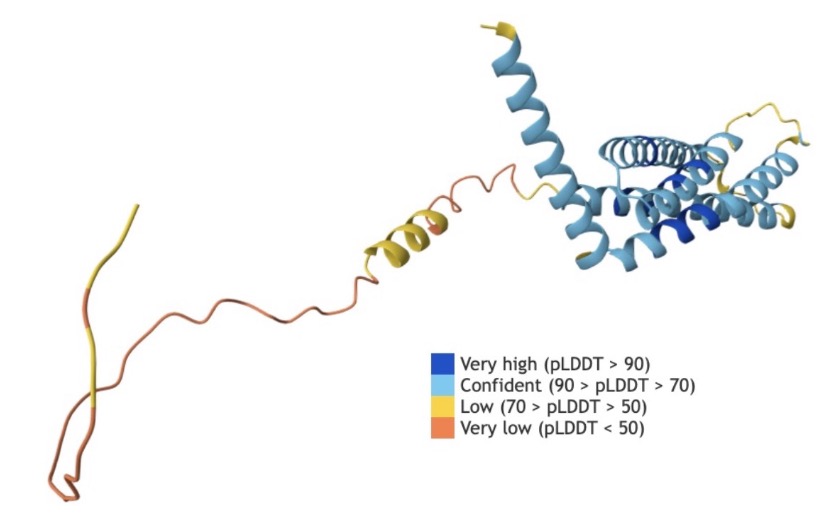
For half a century, predicting the three-dimensional shape of a protein from its sequence of amino acids was one of biology’s central unsolved problems: the shape determines what a protein does, and determining a single structure in the laboratory could take years. DeepMind’s AlphaFold won the CASP structure-prediction competition in 2018, and AlphaFold2 won it in 2020 with accuracy close to that of laboratory methods, leading the organizers to call the problem solved “in some sense.” In July 2021 DeepMind published the method and, with the European Bioinformatics Institute, began releasing predicted structures for nearly all of the 200 million proteins known to science, free. AlphaFold3 (2024) extended prediction to complexes of proteins with DNA, RNA and drugs, and the spin-off Isomorphic Labs set out to use it to design medicines. Demis Hassabis and John Jumper shared half of the 2024 Nobel Prize in Chemistry. AlphaFold predicts static structures; how proteins move, change shape and behave in cells remains largely open.
Anfinsen’s Riddle
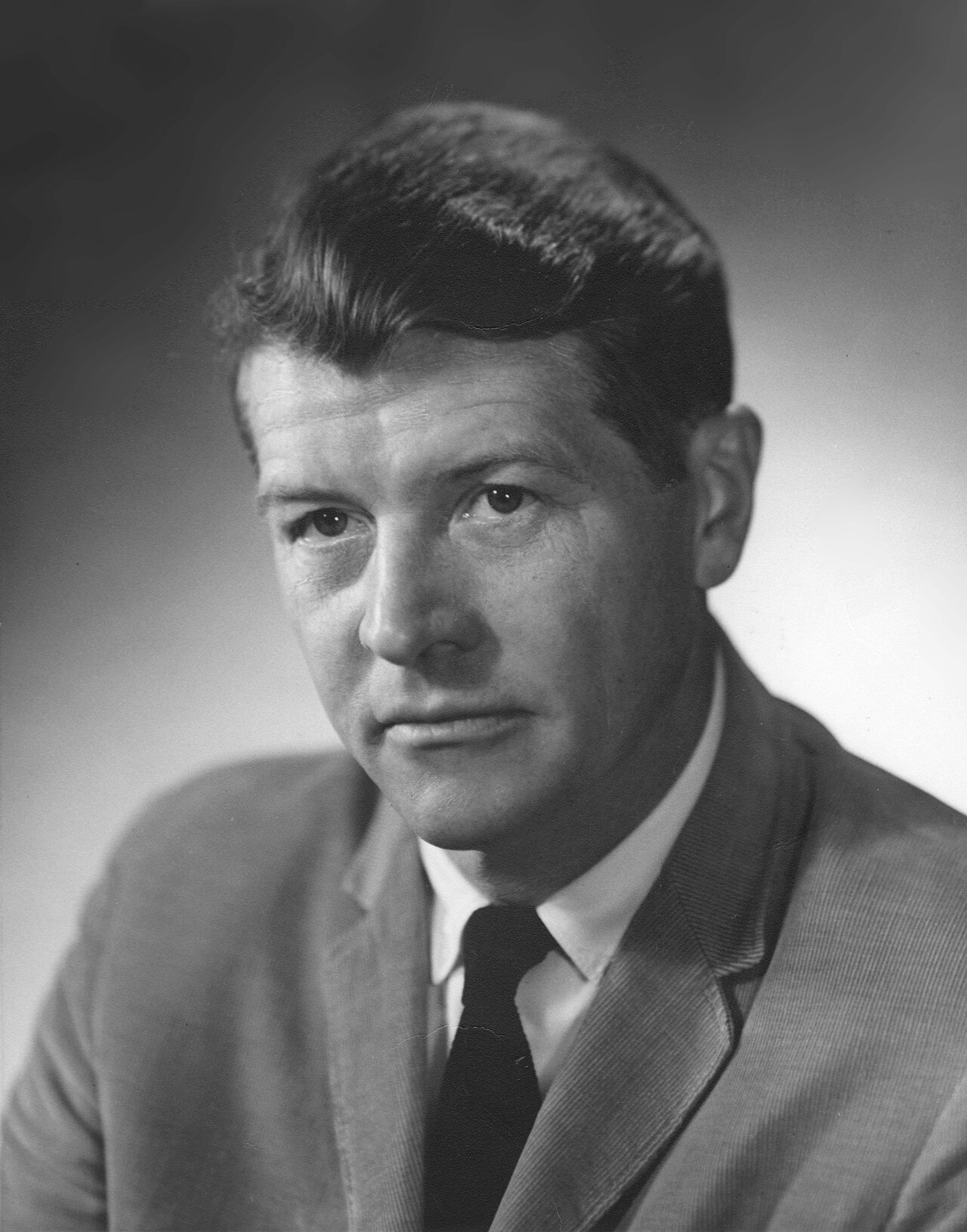
A protein is a chain of amino acids, from a few dozen to several thousand long, built in the cell according to the sequence of a gene. It does its work only after folding into a specific three-dimensional shape: an enzyme’s pocket fits the molecule it acts on, an antibody’s tip fits its target. In experiments on the enzyme ribonuclease in the 1950s and 1960s, Christian Anfinsen at the US National Institutes of Health showed that an unfolded protein refolds into the same shape on its own, so that all the information needed is in the sequence. He shared the 1972 Nobel Prize in Chemistry for it. If the sequence determines the structure, it should in principle be possible to compute the structure from the sequence.
In practice it was not. In 1969 Cyrus Levinthal pointed out that a protein chain has an astronomical number of possible shapes, so many that a protein could not find its folded state by trying them one by one even over the age of the universe, yet real proteins fold in milliseconds. Physics-based simulation was too slow for all but tiny proteins, even on specialized supercomputers such as D. E. Shaw Research’s Anton.
Structures were therefore determined experimentally, by X-ray crystallography (which requires coaxing the protein into a crystal), nuclear magnetic resonance and, from the 2010s, cryo-electron microscopy. Each structure could take months or years and cost a great deal. By 2020 the Protein Data Bank held about 170,000 structures, while sequencing had produced hundreds of millions of protein sequences with no known shape.
CASP
In 1994 John Moult and Krzysztof Fidelis started the Critical Assessment of Structure Prediction (CASP), a blind test held every two years. The organizers give teams the sequences of proteins whose structures have been determined in the laboratory but not yet published, and the predictions are compared with the real structures afterwards. Accuracy is measured with the GDT score from 0 to 100; around 90 is considered competitive with experiment. For two decades progress on the hardest targets, those with no similar known structure, was slow, with typical scores in the 30s and 40s.
DeepMind’s first AlphaFold entered CASP13 in 2018. It used deep neural networks to predict the distances between pairs of amino acids and then optimized a structure to fit them. In the free-modelling category of novel folds it produced high-accuracy models for 24 of 43 domains, against 14 for the next-best method, and placed first. It was a clear advance, not yet at experimental accuracy.
AlphaFold2
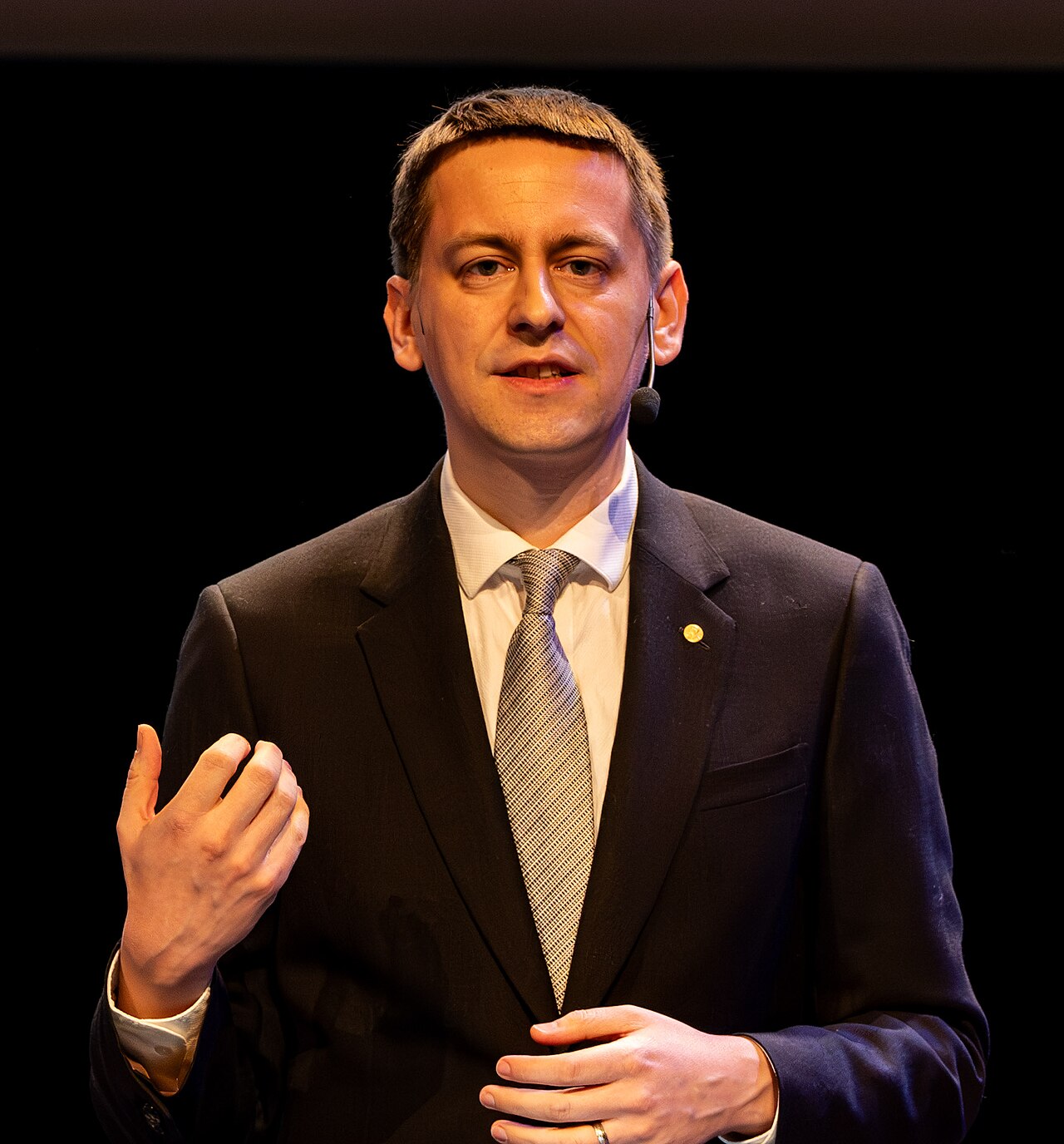
For the next round the team rebuilt the system almost from scratch under John Jumper, who had studied physics and mathematics at Vanderbilt and physics at Cambridge, worked on protein dynamics simulations at D. E. Shaw Research, and taken a PhD in chemistry at the University of Chicago with machine-learning methods for protein simulation.
AlphaFold2 begins with a multiple sequence alignment, a collection of related sequences of the same protein from many species. Amino acids that mutate together across evolution tend to touch in the folded structure, so the alignment carries information about the shape. The network’s central module, the Evoformer, uses attention to pass information repeatedly between a representation of the alignment and a representation of every pair of amino acids, refining its picture of which parts are close. A structure module then produces the three-dimensional coordinates of the atoms directly, and the network outputs a per-residue confidence score, pLDDT, that tells biologists which parts of the prediction to trust. The whole system is trained end to end on known structures.
At CASP14 in 2020 AlphaFold2 achieved a median GDT of about 92 across all targets. Moult said the problem of predicting the structure of a single protein chain had been “solved in some sense.” Several structures predicted for the competition had been hard to solve experimentally, and in at least one case AlphaFold’s model helped laboratory scientists finish their own determination.
Two Hundred Million Structures
On 15 July 2021 DeepMind published the AlphaFold2 method in Nature and released its code. The same day David Baker’s group at the University of Washington published RoseTTAFold, an openly available system built on similar ideas with accuracy approaching AlphaFold2’s. A week later DeepMind and the European Bioinformatics Institute (EMBL-EBI) launched the AlphaFold Protein Structure Database, starting with the human proteome and model organisms, and in July 2022 they expanded it to predicted structures for virtually all of the roughly 200 million proteins catalogued in UniProt (see Bioinformatics and the Human Genome). It is free, with no login. Within a few years more than two million researchers in over 190 countries had used it, in work on antibiotic resistance, neglected tropical diseases and enzymes that break down plastics.
Others followed. In November 2022 Meta released the ESM Metagenomic Atlas, 617 million predicted structures of proteins from environmental DNA samples, computed in two weeks with ESMFold, a model based on a protein language model rather than sequence alignments. Science named AI-powered protein structure prediction its Breakthrough of the Year for 2021.
AlphaFold3 and Isomorphic Labs
In November 2021 Alphabet set up Isomorphic Labs, led by Hassabis, to apply AlphaFold-style methods to drug discovery. In January 2024 it signed research agreements with Eli Lilly and Novartis worth up to about $3 billion in milestone payments, and in March 2025 it raised $600 million in its first external funding round, led by Thrive Capital.
In May 2024 DeepMind and Isomorphic published AlphaFold3, which predicts the structures of complexes of proteins with DNA, RNA, small molecules (such as drugs) and ions, the interactions that matter for designing medicines. It replaced the structure module with a diffusion model of the kind used in AI image generation, working directly on atomic coordinates.
AlphaFold3 was released without its code, usable only through a web server with daily limits and non-commercial terms. Scientists criticized Nature for publishing a method no one could reproduce, and on 11 November 2024 DeepMind released the code for academic use, with model weights available on request for non-commercial research. The episode showed the tension between DeepMind as a research laboratory and DeepMind as part of Google’s commercial AI strategy.
The Nobel Prize
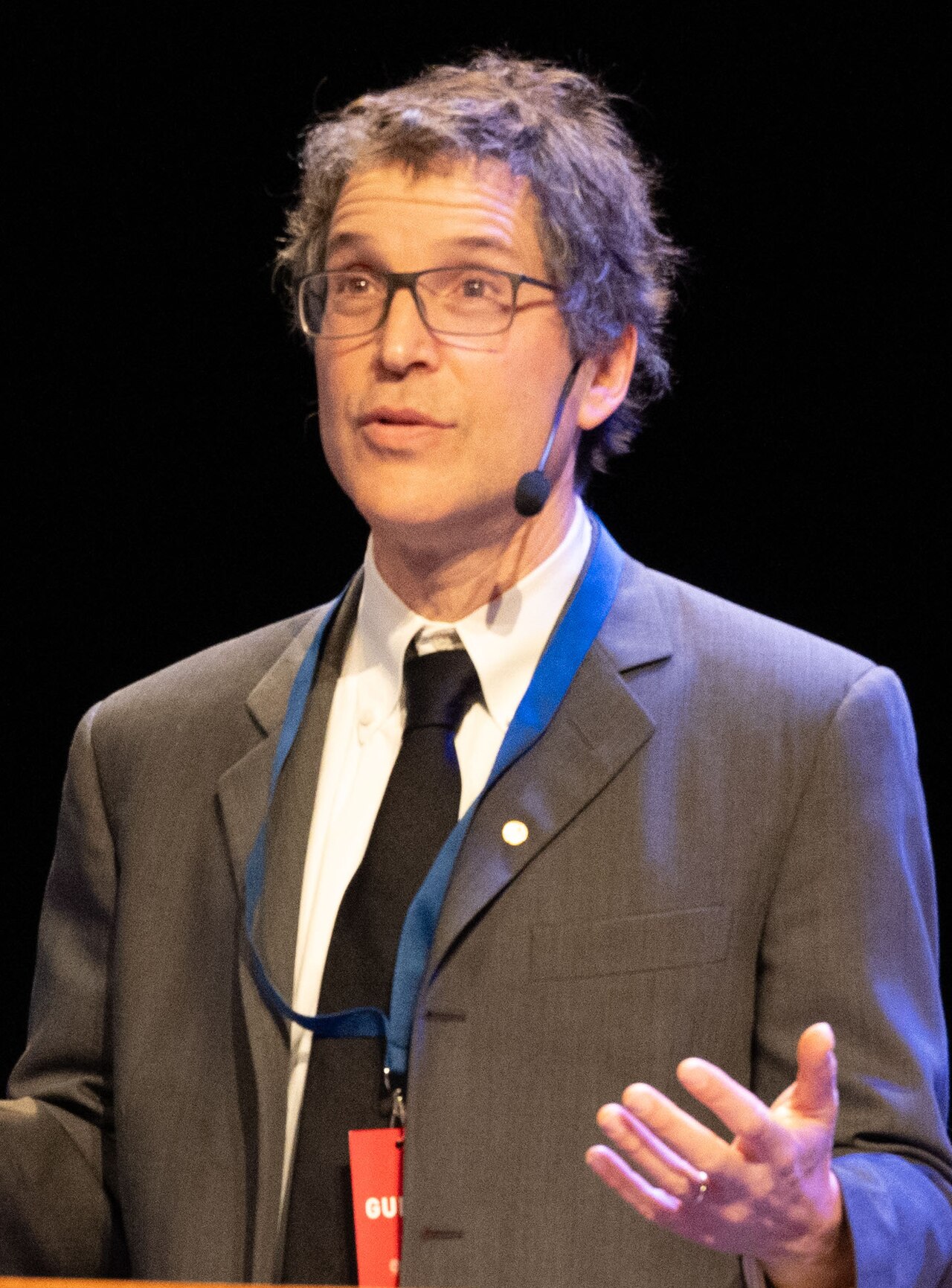
The 2024 Nobel Prize in Chemistry went half to David Baker “for computational protein design”, for his group’s work building new proteins from scratch with the Rosetta software and later with AI tools such as RFdiffusion, and half jointly to Demis Hassabis and John Jumper “for protein structure prediction.” It was among the first Nobel Prizes for work done with deep learning, announced a day after Geoffrey Hinton and John Hopfield received the Physics prize for neural networks. AlphaFold had already received the Breakthrough Prize and the Lasker Award in 2023.
For Hassabis it supported an argument he had made since founding DeepMind: that the methods developed for games such as Go, learning to search enormous structured spaces, could be turned to scientific problems.
CASP itself nearly did not survive the success. In 2025 its grant from the US National Institutes of Health, about $639,000 a year, was due to run out in August without renewal, and the University of California, Davis issued layoff notices to its staff. In July 2025 Google DeepMind made a one-time gift to fund the competition for about a year while it looked for stable support.
Dead End
The headline “protein folding solved” claimed more than AlphaFold does. AlphaFold predicts a protein’s most likely static shape. It does not simulate the folding process that Levinthal’s paradox asked about, and it captures only partly how proteins flex, switch between shapes or behave in the crowded interior of a cell. It is weaker on intrinsically disordered regions, which have no fixed shape, on the effects of single mutations, which matter for disease, and on proteins with few evolutionary relatives to align. It predicts structure, not function.
The physics-based route that the field had pursued for decades, simulating the atoms and letting the protein fold, was not made obsolete by AlphaFold, but it was overtaken for the task of predicting structures: learning from the 170,000 known structures and from evolution turned out to be far more effective than simulating physics from first principles. Molecular dynamics remains the tool for studying how proteins move, the question AlphaFold leaves open.
📚 Sources
- Jumper, J. et al.: “Highly accurate protein structure prediction with AlphaFold”, Nature 596 (2021)
- Senior, A. W. et al.: “Improved protein structure prediction using potentials from deep learning”, Nature 577 (2020) and AlQuraishi, M.: “AlphaFold at CASP13”, Bioinformatics (2019)
- Phys.org, “Developing an AI solution to 50-year-old protein challenge” (November 2020)
- CASP: Critical Assessment of Structure Prediction and Wikipedia: CASP
- AlphaFold Protein Structure Database (DeepMind / EMBL-EBI) and Wikipedia: AlphaFold
- Baek, M. et al.: “Accurate prediction of protein structures and interactions using a three-track neural network”, Science (2021) and TechCrunch, “Researchers match DeepMind’s AlphaFold2 protein folding power” (15 July 2021)
- AAAS, “Science’s 2021 Breakthrough: AI-powered Protein Prediction”
- Live Science, “Meta’s new AI just predicted the shape of 600 million proteins in 2 weeks” (November 2022)
- Fierce Biotech, “Alphabet’s Isomorphic stacks two new deals with Lilly, Novartis worth nearly $3B” (January 2024) and Isomorphic Labs, “Isomorphic Labs announces $600m external investment round” (31 March 2025)
- Google Blog, “AlphaFold 3 predicts the structure and interactions of all of life’s molecules” (May 2024) and Nature, “AI protein-prediction tool AlphaFold3 is now more open” (November 2024)
- Nobel Prize in Chemistry 2024, press release and popular information
- Lasker Foundation: AlphaFold and Chemistry World, “How AI protein structure prediction and design won the Nobel prize”
- EMBL, “Case study: AlphaFold uses open data and AI to discover the 3D protein universe”: users and countries
- Wikipedia: John M. Jumper and Wikipedia: Christian B. Anfinsen
- STAT, “AlphaFold developer Google DeepMind to fund CASP as NIH funding falls short” (21 July 2025) and Science, “Famed protein structure competition nears end as NIH grant money runs out” (2025)
- Image: John Jumper, 2024 Nobel Prize Laureate in Chemistry.jpg by Arthur Petron (CC BY-SA 4.0), via Wikimedia Commons
- Image: David Baker, 2024 Nobel Prize Laureate in Chemistry (cropped).jpg by Arthur Petron (CC BY-SA 4.0), via Wikimedia Commons