Steve Jobs and Apple
Abstract
Steve Jobs wrote no code that shipped and designed no circuits. His work was deciding what a product should be, cutting everything else, and pushing people until it existed. He co-founded Apple in 1976, was a multimillionaire at twenty-five, and was pushed out at thirty. He spent the next eleven years on NeXT, a computer company that sold about 50,000 machines, and Pixar, a graphics firm that lost money until Toy Story. Apple bought NeXT in 1997 and got Jobs with it. Over the next fourteen years Apple released the iMac, the iPod, the iTunes Store, the iPhone, the App Store and the iPad, and in 2011 became the world’s most valuable listed company. He died that October, at fifty-six.
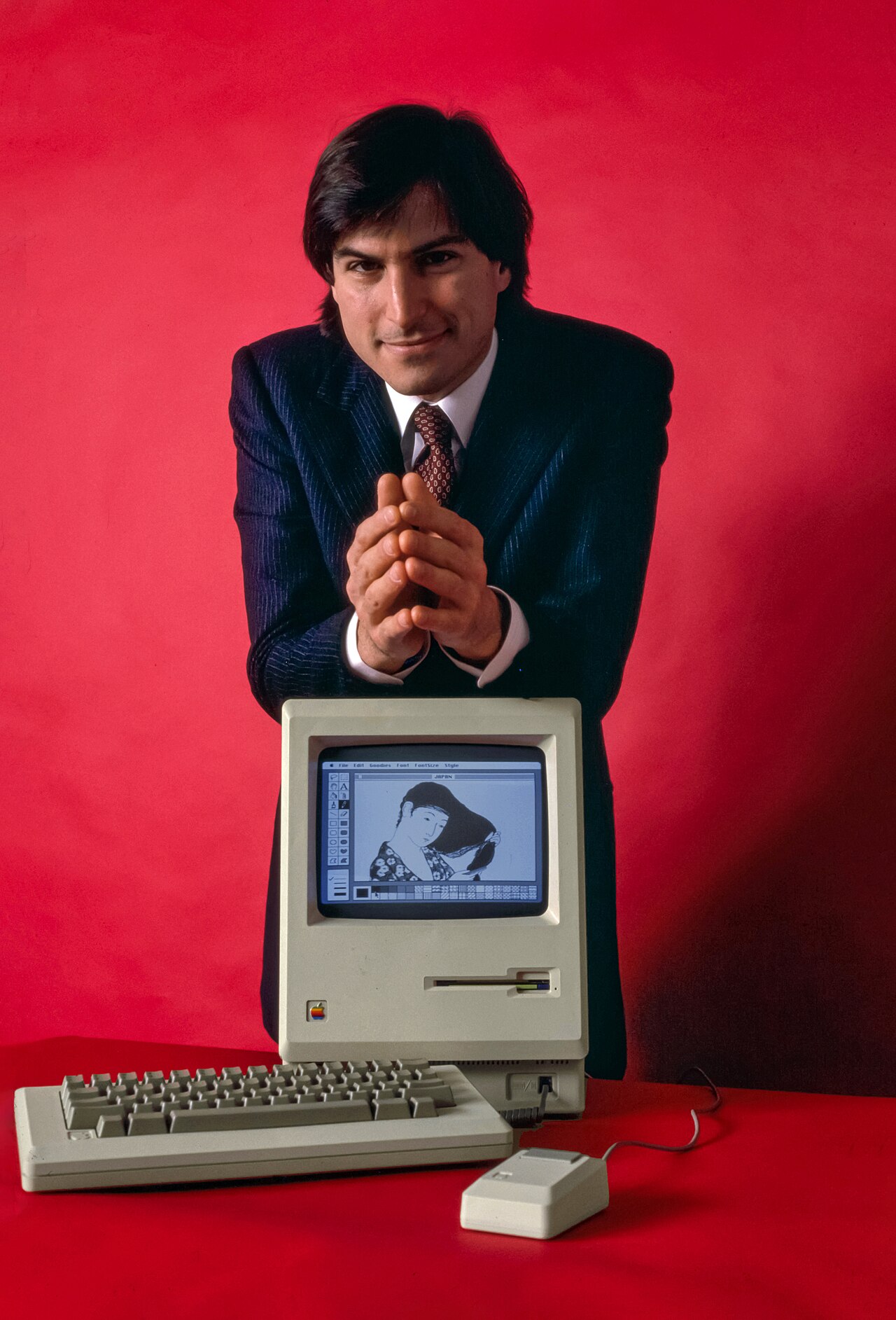
Adoption and Childhood
Steven Paul Jobs was born on February 24, 1955, in San Francisco. His biological parents were Joanne Schieble, a Wisconsin graduate student from a Catholic family of Swiss-German descent, and Abdulfattah “John” Jandali, a Syrian doctoral student in political science. Schieble’s father opposed the relationship, and she travelled to San Francisco to give birth and arrange a closed adoption. She wanted her son placed with college graduates. The lawyer and his wife who had been chosen withdrew when they learned the baby was a boy, so he went to Paul and Clara Jobs: a Coast Guard veteran and machinist who had dropped out of high school, and a bookkeeper. Schieble at first refused to sign the papers and only agreed after the couple promised to pay for the boy’s college education. That promise mattered seventeen years later.
The family settled in Mountain View and later in a three-bedroom house on Crist Drive in Los Altos, in the Santa Clara Valley that had not yet been called Silicon Valley. Paul Jobs rebuilt cars in the garage and gave his son a section of the workbench. Jobs later said his father taught him that the back of a cabinet should be finished as well as the front, even if no one would see it: the root of his later insistence that the inside of a Macintosh look tidy.
He was a difficult pupil, suspended several times. At thirteen, in 1968, he looked up Bill Hewlett’s number in the phone book, called him at home to ask for spare parts for a frequency counter, and came away with the parts and a summer job on a Hewlett-Packard assembly line. At Homestead High School in Cupertino a mutual friend introduced him to Steve Wozniak, who was nearly five years older and already designing computers on paper for fun.
Their first joint product was illegal. In October 1971 Esquire ran “Secrets of the Little Blue Box,” about phone phreaks such as John Draper who used a 2600-hertz tone to seize AT&T long-distance trunks. Wozniak built a digital blue box; Jobs, sixteen, found the customers, and they sold units to students in Berkeley dorms. Jobs later told his biographer that without the blue boxes there would have been no Apple: it was the first time they learned that two young men with a circuit board could take on a company the size of AT&T. In his last high-school years he also discovered LSD, which he later called one of the two or three most important things he had done in his life, and his first serious girlfriend, Chrisann Brennan.
Reed, Atari and India
Jobs enrolled at Reed College in Portland in September 1972 and dropped out after one semester, because he could not see what the degree was worth and it was eating his parents’ savings. He stayed around for another eighteen months as what he called a drop-in: sleeping on friends’ floors, returning Coke bottles for the five-cent deposit, walking seven miles on Sunday nights for a free meal at the Hare Krishna temple, and sitting in on courses he liked. One was calligraphy, taught by Robert Palladino. “If I had never dropped in on that single course in college,” he said in 2005, “the Mac would have never had multiple typefaces or proportionally spaced fonts.”
In February 1974 he returned to his parents’ house and was hired as a technician by Atari in Los Gatos. Nolan Bushnell called him “difficult but valuable”; colleagues complained about his hygiene, and he was moved to the night shift. In mid-1974 he went to India with his Reed friend Daniel Kottke to find the guru Neem Karoli Baba. When they reached the ashram in Kainchi they learned that he had died in September 1973. Jobs came back seven months later with a shaved head and Indian clothes, and took up Zen practice under Kōbun Chino Otogawa, at one point considering becoming a monk at Eihei-ji in Japan.
Back at Atari in 1975, Bushnell gave Jobs the job of designing a circuit board for the arcade game Breakout with as few chips as possible, expecting him to bring in Wozniak. Wozniak worked on it at night after his day job at HP and in four days cut the design to 45 TTL chips, against roughly 100 in a comparable game. Jobs told him Atari had paid $750 and handed him $375. According to Wozniak, the actual payment including the bonus for saved chips was about $5,000, and he only learned this ten years later. He said he would have given Jobs the money had he asked.
The Apple I and the Garage
In 1975 Wozniak started attending the Homebrew Computer Club and, by March 1976, had designed a computer around a single board: the processor, memory and a video terminal interface, needing only a keyboard and a television. He wanted to give the schematics away. Jobs wanted to sell boards. To raise money for the first batch, Wozniak sold his HP-65 calculator and Jobs his Volkswagen bus. On April 1, 1976, Apple Computer Company was founded by Jobs, Wozniak, and Ronald Wayne, an Atari colleague who received 10% to act as tiebreaker between the two Steves. Wayne withdrew twelve days later and was paid $800 for his stake, plus $1,500 a year later to waive any future claims. The name came from Jobs, who had just returned from an apple orchard on a commune in Oregon and thought “Apple” sounded friendly and came before Atari in the phone book.
Jobs planned to sell bare circuit boards for about $50. Paul Terrell of the Byte Shop in Mountain View instead ordered 50 fully assembled computers at $500 each, cash on delivery. That order turned a hobby project into a manufacturing business. About 200 Apple I boards were built. The whereabouts of some 60 to 80 are known today; in October 2014 the Henry Ford Museum paid $905,000 at a Bonhams auction for a working unit, at the time the highest price paid for an Apple I.
Myth: Apple was founded and built in Jobs’s garage
The garage on Crist Drive is Silicon Valley’s founding shrine, but co-founder Steve Wozniak has called the story “a bit of a myth.” In a 2014 interview he was blunt: “We did no designs there, no breadboarding, no prototyping, no planning of products. We did no manufacturing there.” Wozniak designed the Apple I at his cubicle at Hewlett-Packard; the garage was mostly used to stage finished boards before driving them to the Byte Shop. Daniel Kottke, who did work there, remembered Wozniak turning up “once a week with his latest code” and Jobs spending hours on the phone in the kitchen looking for investors. The myth endures because, as Wozniak put it, the garage “represents us better than anything else”, a good origin image, not an accurate one. Jobs himself told it at Stanford in 2005: “I started Apple in my parents’ garage when I was 20.” See Myths and Misconceptions.
The investor arrived in autumn 1976. Mike Markkula, a former Intel marketing manager who had retired in his early thirties on his stock options, put in his own money and secured a credit line, wrote the business plan, and brought in the venture capitalist Arthur Rock, who invested $60,000 and joined the board. In February 1977 Markkula hired Mike Scott from National Semiconductor as Apple’s first president, mostly to manage Jobs, which Jobs disliked from the start. The Regis McKenna agency took on the account; its art director Rob Janoff drew the rainbow apple with a bite in early 1977. (The bite was for scale and has nothing to do with Alan Turing: see Alan Turing and the Enigma.)
The Apple II and Real Money
Apple Computer Inc. was registered on 3 January 1977 with Markkula’s money behind it, and on 16 April 1977 Jobs and Wozniak, 22 and 26, showed the Apple II prototype at the stand nearest the entrance of the first West Coast Computer Faire in San Francisco. It went on sale that June at $1,298 with 4 KB of RAM; the maximum 48 KB brought the price to $2,638. The Apple II was Wozniak’s design. It produced color graphics with very few chips through a trick that exploited the color-burst timing of the NTSC television signal. Jobs argued for two expansion slots, Wozniak for eight; after Wozniak told him to “go get himself another computer,” it shipped with eight.
Jobs’s contribution was the box. He insisted on a molded plastic case that looked like a consumer appliance rather than a kit, and asked the designer Jerry Manock to take his cue from the Cuisinart food processors he had seen at Macy’s. He also refused to have a cooling fan, and hired Rod Holt from Atari to design a switching power supply that ran cool enough without one. The rainbow logo appeared on the case.
In 1979 VisiCalc, the first spreadsheet program, shipped for the Apple II, and accounting departments started buying the machine to run it. Apple’s revenue grew from $7.8 million in 1978 to $117 million in 1980. The company went public on 12 December 1980 and was valued at $1.78 billion that evening, the largest U.S. IPO since Ford Motor Company in 1956. Jobs, at twenty-five, was worth about $256 million.
Over the same years Jobs behaved badly at home. Chrisann Brennan gave birth to a daughter, Lisa, on May 17, 1978, when Jobs was 23, the age his own biological parents had been. He denied paternity for years and told people he was sterile, until a court-ordered paternity test established him as the father; by the time of the IPO he was paying child support. Brennan lived on welfare in Menlo Park while Apple prepared its IPO. Jobs had expected to be Time’s Person of the Year for 1982. The issue of 3 January 1983 instead named the personal computer “Machine of the Year,” and the accompanying profile, built partly on interviews with people who knew him, discussed his denial of Lisa. Jobs said he cried when he read it.
Xerox PARC and the Lisa
In December 1979, Jobs arranged for a delegation from Apple to visit Xerox PARC, the research center in Palo Alto that Xerox had built to, in Alan Kay’s phrase, “invent the future.” (The full story of what PARC created and why Xerox failed to commercialize it is told in The Xerox PARC Revolution.) The price of admission was the right for Xerox’s venture arm to buy 100,000 pre-IPO Apple shares for $1 million.
What he saw was the Alto: a computer with a bitmapped screen, a mouse, overlapping windows, icons, and menus, running Smalltalk. PARC had used such machines internally for years. Xerox had no plan to sell anything like it to the public. Jobs is quoted as saying to the PARC staff, “You’re sitting on a goldmine here. Why aren’t you doing anything with this?” PARC engineers later said he had not understood the networking or the object-oriented programming he had been shown. He had understood that the mouse and the windows were how people would use computers.
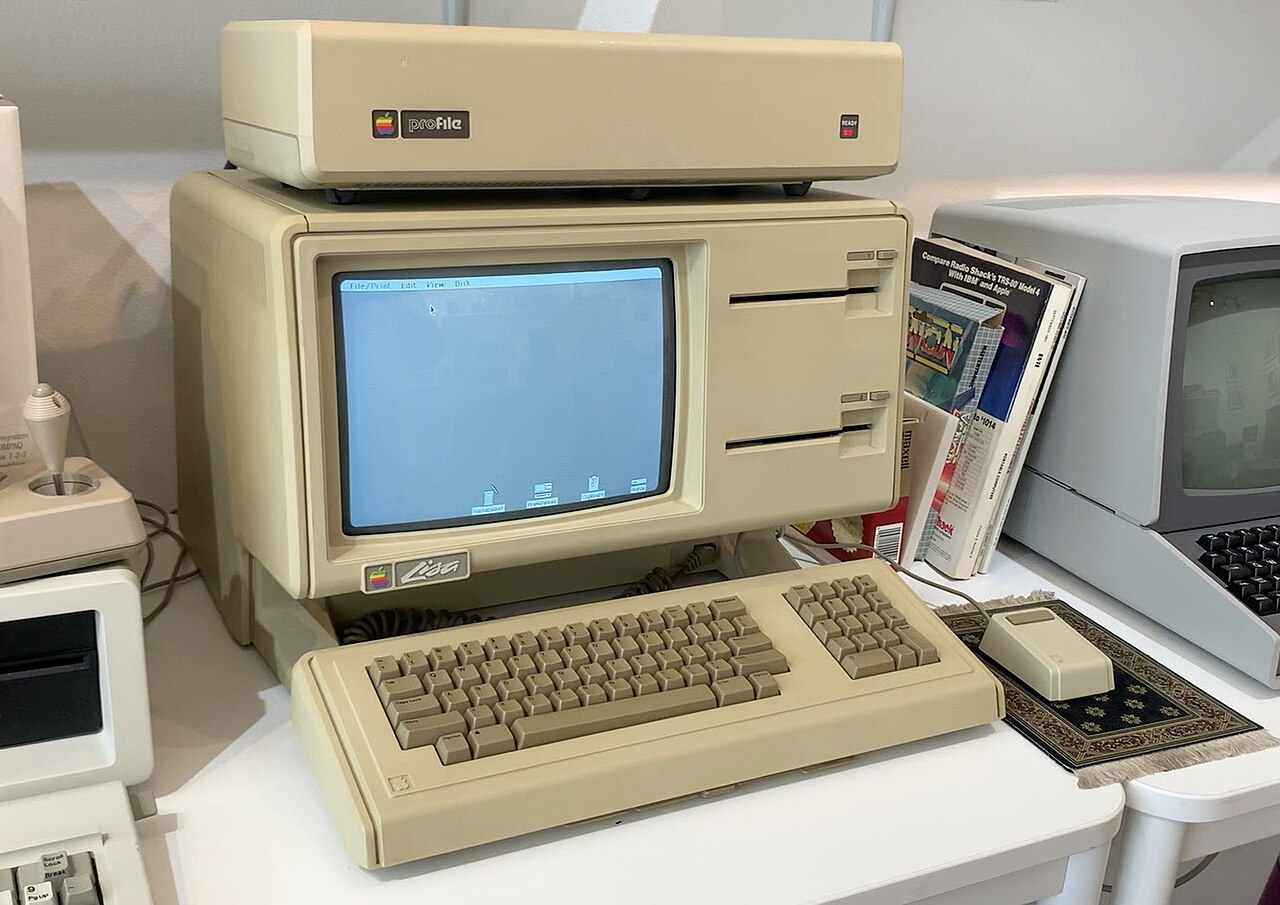
He returned to Apple and pushed the team working on the Lisa toward a graphical interface; several PARC engineers, Larry Tesler among them, followed to Apple. The Lisa, developed since 1978 under John Couch at a cost of some $50 million and announced on 19 January 1983, had a 5 MHz Motorola 68000, a megabyte of memory and seven office programs, but cost $9,995 (30,000 DM in Germany) against $7,545 for IBM’s PC XT. The machine carried the name of the daughter Jobs was still disowning; Apple’s marketing department produced the backronym “Local Integrated Software Architecture.” Apple sold perhaps 10,000 in two years (the Heinz Nixdorf MuseumsForum also gives 20,000), stopped production in April 1985, and in autumn 1989 had 2,700 unsold units buried in a landfill near Logan, Utah.
Myth: Steve Jobs (or Apple) invented the graphical user interface
Apple invented neither the GUI nor the mouse. The windows, icons, menus, and pointer Jobs saw at Xerox PARC in 1979 were built there through the 1970s, themselves descended from Douglas Engelbart’s 1968 “Mother of All Demos”, which first publicly showed the mouse, hypertext, and windowed editing. What Apple did was commercialize and refine the idea: turn an expensive research system few could use into the affordable, coherent Macintosh (1984) that brought the GUI to the public. The contribution was productization, not invention. See Myths and Misconceptions.
Taking Over the Macintosh
Jobs did not run the Lisa for long. In September 1980 Markkula and Scott reorganized Apple and moved him out of the project, giving him the title of chairman and little operational power. He went looking for something else to run and found the Macintosh, a small project started in 1979 by Jef Raskin, Apple’s publications manager, to build an inexpensive, appliance-like computer named after his favourite apple variety. In early 1981 Jobs took it over. Raskin left Apple the following year. Wozniak, who had shaped the early design, was on leave after crashing his small plane in February 1981, which made the takeover easier.
Jobs moved the team into its own building, flew a pirate flag over it, and told them they were the rebels inside Apple. He recruited the programmers Andy Hertzfeld, Bill Atkinson and Bud Tribble, the hardware designer Burrell Smith, the artist Susan Kare for the icons and fonts, and Joanna Hoffman for marketing. Tribble explained Jobs to new hires in 1981 with a phrase from Star Trek: Jobs had a “reality distortion field.” In his presence, schedules that were impossible came to seem merely difficult, and an idea he had rejected one week could come back as his own the next. The field worked often enough to get the Macintosh built, and failed often enough that the ship date slipped from 1982 to 1984.
He cared about details no customer would see. He wanted the circuit board laid out neatly, and had the signatures of the team members molded into the inside of the case. He rejected the beige of the early prototypes and argued for weeks about the radius of the corners of the windows. When Larry Kenyon reported that the machine took too long to boot, Jobs worked out how many lives ten seconds saved per boot would add up to across millions of users.
The Macintosh and the Ouster
In April 1983, Jobs recruited John Sculley, the president of Pepsi-Cola, as Apple’s CEO. Apple’s board wanted professional management; Jobs wanted a marketing partner. His pitch ended with the line that became famous: “Do you want to sell sugar water for the rest of your life, or do you want to come with me and change the world?” For two years the two ran Apple as self-described partners.
The Macintosh launched on January 24, 1984, at $2,495. Two days earlier, during Super Bowl XVIII, Apple ran its advertisement directed by Ridley Scott, in which a woman runs through a grey hall and throws a sledgehammer into a screen showing a Big Brother figure. The tagline: “On January 24th, Apple Computer will introduce Macintosh. And you’ll see why 1984 won’t be like 1984.” The board had disliked the commercial and told the agency to sell back the airtime; Chiat\Day resold thirty of the ninety seconds and kept the rest.
The interface was smooth and consistent in a way no earlier mass-market computer had been. The hardware was not: 128 kilobytes of RAM were too little for the software, the single floppy drive meant constant disk-swapping, and there were no expansion slots, which Jobs had ruled out so that users could not tinker. Business buyers found it limited. After a strong first hundred days, sales fell in the second half of 1984 far below Jobs’s projections. In 1985 he and Wozniak received the National Medal of Technology from President Ronald Reagan, in the first year it was awarded.
By spring 1985 Apple’s board had lost confidence in Jobs’s management of the Macintosh division. He had treated the Apple II group, which still earned most of the company’s money, as the past, and had missed his sales targets. Sculley moved to take the division away from him. Jobs responded in May 1985 by trying to organize the executives to remove Sculley instead. The board and the executive staff sided with Sculley, and Jobs was stripped of all operating responsibility. He was given an office in a building he called “Siberia.” He resigned on 17 September 1985 and sold all but one of his Apple shares. Sculley ran Apple until 1993, growing revenue roughly tenfold on the strength of the Macintosh and desktop publishing before the decline that ended his tenure.
At Stanford twenty years later Jobs gave his version: “I had just turned 30. And then I got fired. How can you get fired from a company you started?”
Management style
Jobs’s management in the early 1980s was harsh in ways he later acknowledged. He humiliated engineers in public, called work “shit” without saying what was wrong, cried and shouted in meetings, and took credit for ideas he had dismissed. After his return in 1997 he was as demanding, but had learned to keep a stable executive team around him for years, which he had never managed the first time.
NeXT
A week after resigning, Jobs founded NeXT with $7 million of his own money and a handful of Apple people, among them Bud Tribble, Joanna Hoffman, Rich Page and Susan Kare. Apple sued on September 23, 1985, accusing him of using inside information. “It is hard to think that a $2 billion company with 4,300-plus people couldn’t compete with six people in blue jeans,” Jobs said, and the suit was dropped before trial. The designer Paul Rand was paid $100,000 for the logo. The computer’s cube shape had a model: the black, LED-studded Connection Machine (1986). According to its designer Tamiko Thiel and to Joanna Hoffman, Jobs asked Hoffman to recruit Thiel to design his new machine, but she had already left for Europe to become an artist. Ross Perot invested $20 million in 1987 and joined the board, and in 1989 Canon paid $100 million for 16.67%, which valued a company that had not yet shipped a product at about $600 million.
Jobs unveiled the machine at Davies Symphony Hall in San Francisco on 12 October 1988. The NeXT Computer came in a magnesium cube one foot on each side and cost $6,500, at first sold only to universities. It had no floppy drive; instead it used a 256 MB magneto-optical drive made by Canon, which Jobs had talked down to a $50 retail price per disk. It had a grayscale screen, a Motorola digital signal processor for sound, built-in Ethernet, and NeXTSTEP, a Unix operating system on the Mach kernel with a graphical interface drawn in Display PostScript and a development toolkit written in Objective-C. Universities bought it. The broader market did not.
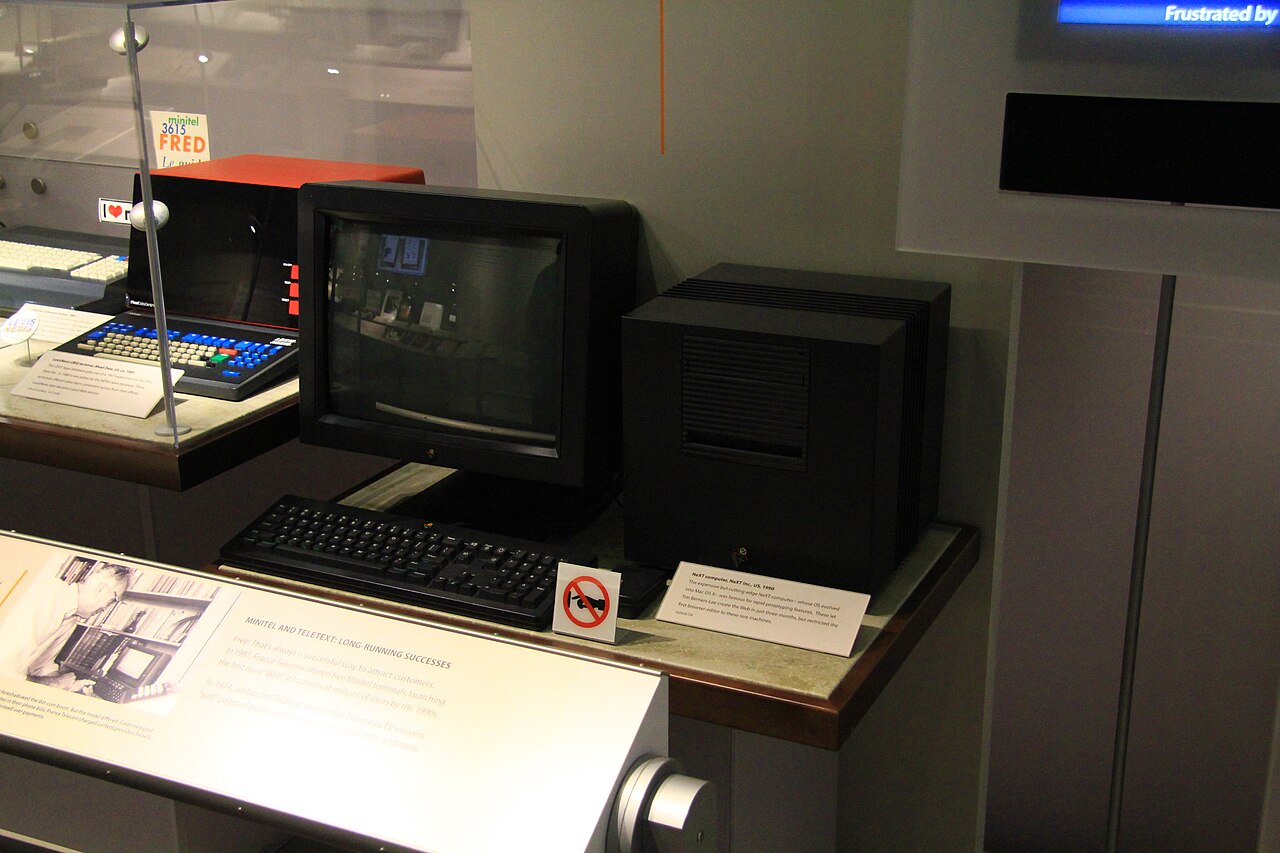
Deliveries began in 1989, and the NeXTcube with a hard disk followed in September 1990 at $9,999. Jobs called it the first “interpersonal” computer because its mail program could carry voice, images and graphics. NeXT never sold more than about 50,000 machines in total, and in 1993 it stopped making hardware and released NeXTSTEP for Intel PCs. The software had a following out of proportion to the sales. At CERN, Tim Berners-Lee wrote the first web browser and web server on a NeXT in 1990; at id Software, John Carmack and his colleagues developed Doom and Quake on NeXT workstations. NeXT made its first annual profit, $1.03 million, in 1994, and in 1996 released WebObjects, a framework for building web applications.
Pixar
In 1986 Jobs bought the Graphics Group, the computer division of Lucasfilm, which George Lucas was selling to raise cash during his divorce. The deal cost Jobs $10 million: $5 million to Lucasfilm for the technology and $5 million invested in the new company. He renamed it Pixar.
For years Pixar was a hardware company that sold the $135,000 Pixar Image Computer to studios, hospitals and intelligence agencies, and it lost money every year. Jobs covered the losses from his own pocket, around $50 million in total, and several times considered selling. The creative team under Ed Catmull and John Lasseter kept making short films and animated commercials. Lasseter’s Tin Toy won the Academy Award for animated short film in 1989. In 1991 Disney contracted Pixar to make three feature films.
The first was Toy Story, released in November 1995, the first entirely computer-animated feature film, with Jobs credited as executive producer. Jobs timed Pixar’s IPO for the week after the premiere. He owned about 80% of the company, and the IPO made him a billionaire, for the first time richer from Pixar than he had ever been from Apple.
Catmull, who worked with him for 26 years, described the way he disagreed with Jobs: “I would say something to him and he would immediately shoot it down because he could think faster than I could.” Catmull would come back a week later with a counterargument, and again the week after. About a third of the time Jobs came round, about a third of the time Catmull decided Jobs had been right, and in the remaining third Jobs let him do it his way. Jobs left the films themselves to the directors.
When the Disney contract ran out, talks with Disney’s CEO Michael Eisner failed, and in January 2004 Jobs announced he would never deal with Disney again. Bob Iger replaced Eisner in October 2005 and reopened talks within weeks. On January 24, 2006, Disney agreed to buy Pixar in an all-stock deal worth $7.4 billion. Jobs became Disney’s largest individual shareholder, with about 7% of the company, and joined its board.
Family
In 1986, after his adoptive mother Clara died of lung cancer and with the permission of his father, Jobs traced his birth mother. Joanne Schieble, by then Joanne Simpson, told him she had been pressured into the adoption and apologized repeatedly. She also told him that he had a full sister. Six months after his birth Schieble had married Jandali after all, and their daughter Mona had grown up without knowing about her brother. Mona Simpson was a novelist in New York. The two met there, went for a long walk, and stayed close for the rest of his life. “I can’t imagine a better sister,” Jobs said. Simpson also brokered a working relationship between Jobs and Lisa Brennan, whose name Jobs had changed on her birth certificate to Lisa Brennan-Jobs when she was nine. Jobs refused to meet Jandali, who by then worked in a restaurant in Sacramento. Jandali told Simpson he had once managed a Mediterranean restaurant near San Jose where “all of the successful technology people used to come.” Jobs had eaten there and remembered the manager: “We shook hands.”
In 1989 Jobs gave a talk at the Stanford Graduate School of Business and noticed a student in the front row, Laurene Powell. He met her in the parking lot afterwards and asked her to dinner. He proposed on New Year’s Day 1990, and they married on March 18, 1991, in a Buddhist ceremony at the Ahwahnee Hotel in Yosemite, conducted by Kōbun Chino Otogawa, with fifty guests and a vegan wedding cake shaped like Half Dome. Their son Reed was born in 1991, followed by Erin in 1995 and Eve in 1998. Paul Jobs died in March 1993.
The Return
By 1996 Apple was losing money and had failed for years to finish a modern operating system to replace the aging Mac OS. Apple’s leading candidate was Be Inc.’s BeOS, and that negotiation collapsed over price (see Dead End: BeOS). On December 20, 1996, Apple announced it would buy NeXT instead, for $427 million in cash, shares, stock options and assumed debt, to use NeXTSTEP as the foundation of a new Mac operating system. The deal closed in February 1997 and brought Jobs back as an adviser to CEO Gil Amelio.
The company was close to collapse: revenue had fallen from $11.1 billion in 1995, with $400 million profit, to $7.1 billion in 1997 with a loss of about a billion. Jobs became de facto head in July 1997, when the board removed Amelio, and interim CEO on 16 September 1997. He called himself the “iCEO,” drew a salary of $1 a year, and replaced most of the board that had sided against him in 1985. When Michael Dell was asked at a Gartner symposium on 6 October 1997 what he would do with Apple, he answered “I’d shut it down and give the money back to the shareholders.” Jobs called the remark rude at a company meeting and added: “We’re coming after you, buddy.” In 2006, when Apple’s market value passed Dell’s, Jobs sent the whole company an email: “Team, it turned out that Michael Dell wasn’t perfect at predicting the future.”
At Macworld Boston on August 6, 1997, Jobs announced a deal with the enemy: Microsoft would invest $150 million in non-voting Apple stock, commit to releasing Microsoft Office for the Mac for five years, and settle the companies’ long-running patent disputes; Internet Explorer would become the Mac’s default browser. When Bill Gates appeared on the giant screen above the stage, the audience booed. Jobs pushed back: “We have to let go of this notion that for Apple to win, Microsoft has to lose.” The $150 million was small next to Apple’s problems; the Office guarantee was not, because a Mac that could not open Word and Excel files was a Mac no business would buy.
In late September 1997 Apple launched “Think different,” its first major campaign after Jobs’s return, created by TBWA\Chiat\Day (art director Craig Tanimoto coined the slogan; Rob Siltanen wrote the “Here’s to the crazy ones” text with Lee Clow). Black-and-white footage of Einstein, Gandhi, Picasso, and other rule-breakers ran under narration by Richard Dreyfuss; Jobs had recorded a version himself and dropped it on the morning of the first broadcast, saying the ad was about Apple, not about him. Grammarians objected to “different”; Jobs wanted it colloquial, like “think big.” Apple had nothing new to sell yet, so the campaign advertised the brand itself. It ran until 2002 and won the 1998 Emmy for outstanding commercial.
Jobs cut Apple’s product line from dozens of models to four, drawn on a whiteboard as a two-by-two grid: consumer and professional, desktop and portable. Between March 1997, when he was still an adviser, and February 1998, Apple dropped the OpenDoc framework and the Cyberdog browser, the Pippin and the Newton, and he priced the Mac OS licensing program that had let clone makers undercut Apple’s own machines out of existence (Dead End: The Mac Clones). Employees told each other to avoid sharing an elevator with him. He made Jony Ive, a British designer at Apple since 1992, his closest collaborator, and in 1998 hired Tim Cook from Compaq to fix manufacturing and inventory. The iMac, announced in May 1998 and shipped that August in a translucent “Bondi Blue” enclosure, sold 800,000 units in its first five months. Apple earned $300 million in fiscal 1998 and $600 million and $800 million in the next two years. At Macworld in January 2000 Jobs dropped “interim” from his title.
Mac OS X, the Stores and Intel
The NeXT purchase paid off in software. NeXTSTEP, with its Mach kernel, Objective-C frameworks and developer tools, became Mac OS X, released in March 2001. Its open-source core, Darwin, was later the base of the iPhone’s operating system as well, and Objective-C remained Apple’s main programming language until Swift arrived in 2014.
Jobs distrusted the computer retailers whose untrained staff put Macs at the back of the shop. In 2000 he hired Ron Johnson, vice president of merchandising at Target, to build Apple’s own stores, and had a full prototype store built in a warehouse near the Cupertino campus, which they tore up and redesigned when they realized it was organized by product rather than by what customers wanted to do. Analysts predicted failure. The first two Apple Stores opened on May 19, 2001, at Tysons Corner, Virginia, and in Glendale, California, and the chain later added the Genius Bar for repairs and advice.
The PowerPC chips Apple had used since 1994 fell behind Intel’s on performance per watt, which mattered for laptops. Since 2000 a small team had secretly kept an Intel build of Mac OS X working, under the code name “Marklar.” At WWDC on June 6, 2005, Jobs announced the switch to Intel processors and revealed that every version of Mac OS X had been compiled for both architectures for five years. The first Intel Macs, the MacBook Pro and an iMac, were announced on January 10, 2006, and the transition was complete within the year.
iPod, iTunes, iPhone, iPad
In January 2001 Jobs described the Mac as the “digital hub” of a life full of digital cameras, camcorders and music players. Apple had shipped the iMac without a CD burner, at the moment when copying music was what people wanted computers for, and was catching up with iTunes. The obvious next device was a music player.
The iPod, launched on October 23, 2001, put “1,000 songs in your pocket,” using a Toshiba 1.8-inch hard disk and a mechanical scroll wheel; its hardware was led by Tony Fadell. It cost $399 and worked only with Macs at first. A Windows version of iTunes followed in October 2003, and from late 2004 the iPod held over 90% of the U.S. market for hard-disk music players and over 70% of all digital music players. The iTunes Music Store opened in April 2003 with tracks from the five major labels at 99 cents each. Jobs had persuaded the labels that the alternative was unchecked piracy (see Napster and the P2P Music Revolution), and that an online store would only be used on Macs, which made up a small share of the market. A million songs were sold in the first week. In February 2007 he published an open letter, “Thoughts on Music,” calling on the labels to drop copy protection; the store went DRM-free in 2009.
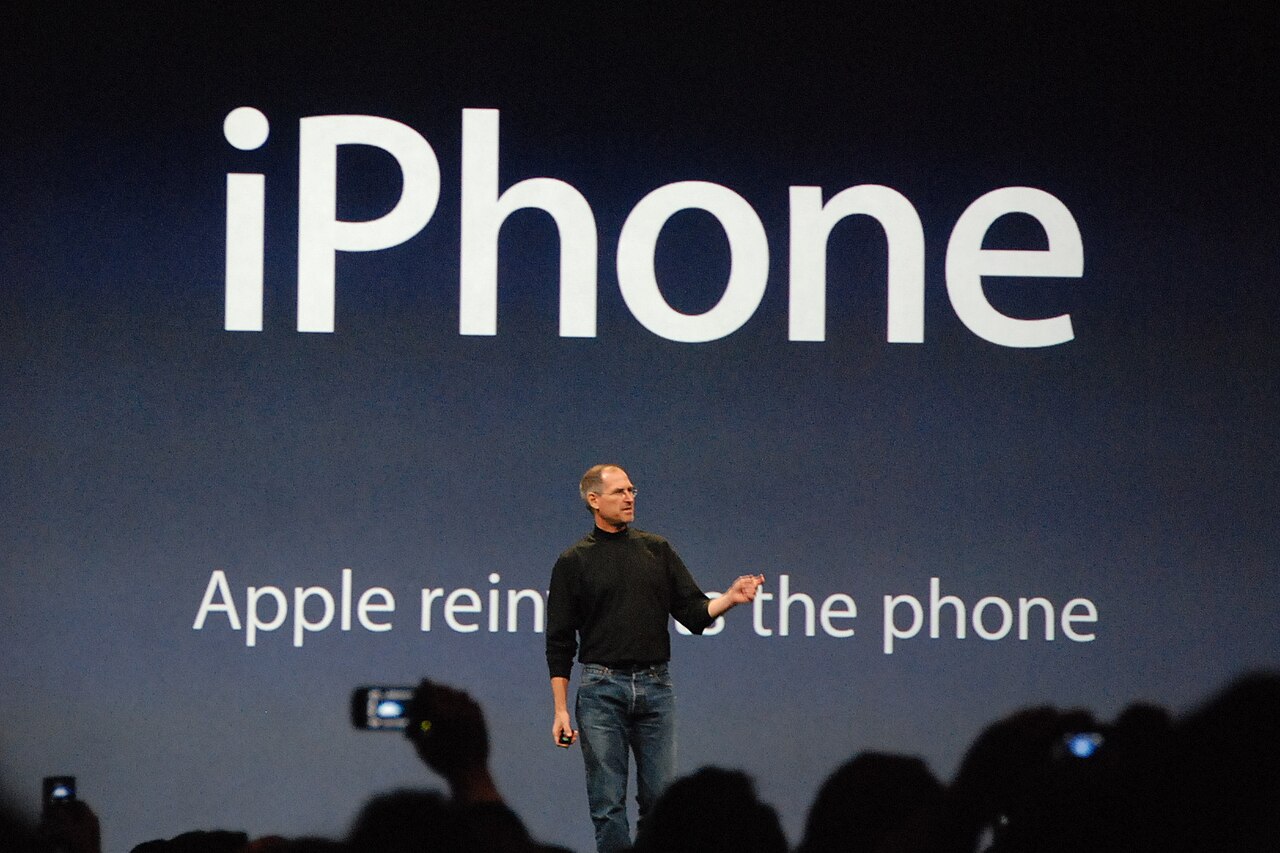
The iPhone was announced on January 9, 2007, at Macworld in San Francisco. Jobs said he was introducing three products: a widescreen iPod with touch controls, a revolutionary mobile phone, and a breakthrough internet communications device. He repeated the list. Then: “These are not three separate devices. This is one device. And we are calling it iPhone.” The demo unit on stage was a prototype that could only follow a particular sequence of steps without crashing. The phone went on sale in the United States on June 29, 2007, at $499 for the 4 GB model, exclusively on AT&T. It had no hardware keyboard, no stylus and, at first, no third-party apps; it ran a full web browser instead of the reduced mobile sites competitors used. Steve Ballmer laughed at the price in a television interview and called it “the most expensive phone in the world.” On the day of the announcement, Apple dropped “Computer” from its name and became Apple Inc.
Jobs at first wanted no outside software on the iPhone, arguing it would compromise security, and told developers to write web apps. Board member Art Levinson and others talked him round. The App Store opened in July 2008 with 500 apps, distributed through a single curated store with Apple taking 30% of revenue. In 2023 consumers spent about $89 billion on the App Store (see The Rise of the App Store).
The iPad, launched in April 2010, was older than the iPhone in conception. Jobs had asked for a tablet with a multi-touch screen around 2003, then decided the touchscreen work should go into a phone first. Tablet computers had existed for a decade without selling; Apple sold nearly 15 million iPads in the first nine months. In April 2010 Jobs published “Thoughts on Flash,” explaining why the iPhone and iPad would not run Adobe’s Flash Player: it was proprietary, drained batteries, and was designed for the mouse rather than for fingers. Within two years Adobe stopped developing Flash for mobile devices.
Working with Jobs
Jobs’s product method was editing. In product reviews he cut features, colors and models; he told an audience in 1997 that focus “means saying no to the hundred other good ideas,” and claimed to be as proud of what Apple had not done as of what it had. His keynotes at Macworld and WWDC, nicknamed “Stevenotes,” were rehearsed for days and usually saved one product for a closing “one more thing.” His uniform from the late 1990s was a black mock turtleneck by Issey Miyake, Levi’s 501 jeans and New Balance sneakers; he told Isaacson he liked having a signature style and not having to choose.
By the time of his death he was named as inventor or co-inventor on more than 300 United States patents and applications (MacRumors counted 313 in August 2011), covering devices and user interfaces but also power adapters, packaging, lanyards and the glass staircases of the Apple Stores; applications filed in his lifetime kept being granted for years afterwards. More than 200 of the 313 name him together with Jony Ive. His contribution to most of them was the look and feel.
Bill Gates, who competed with him for thirty years, said Jobs could “cast spells” on people: “I was like a minor wizard because he would be casting spells, and I would see people mesmerized, but because I’m a minor wizard, the spells don’t work on me.”
The same will produced controversies. In 2001 Jobs was granted options on 7.5 million Apple shares at $18.30, and in 2006 it emerged that the grant had been backdated to a day when the price was lower; at the $21.10 price on the actual day, he would have had about $20 million in additional taxable income. An internal investigation, completed on December 29, 2006, cleared Jobs of misconduct: he had not understood the accounting implications and had not profited, since the options were returned unexercised in 2003. Two former Apple executives later settled charges with the SEC. In 2005 Jobs attacked environmental campaigners at Apple’s annual meeting over their criticism of its e-waste record; weeks later Apple introduced free iPod recycling, and the next year extended take-back to every Mac buyer.
Dead End: Jobs’s Failures
Jobs’s record has more failures than the product launches suggest, and several came from the same qualities as the successes.
Apple III (1980). Apple’s first machine for business users was announced on May 19, 1980, at $4,340 to $7,800. Jobs insisted it have no fan or air vents, so it would run silently. The machine overheated and chips worked loose from their sockets (later analyses also blamed faulty automatic chip insertion); according to Apple lore recorded by Owen Linzmayer, customers were told to lift it a few inches and drop it to reseat them. The first 14,000 units were recalled and replaced. About 65,000 to 75,000 were sold before Apple discontinued the line in April 1984, while the Apple II it was supposed to replace kept selling.
Lisa (1983) and NeXT hardware (1988–1993). Both were technically ahead of their market and priced out of it, and between them they sold fewer than 70,000 machines.
Power Mac G4 Cube (2000). A computer suspended in a clear plastic enclosure about eight inches square, silent and fanless again, announced on July 19, 2000. It cost more than a Power Mac tower of similar speed, and early units developed visible cracks in the plastic from the molding process. Apple sold 150,000, one third of its forecast, and on July 3, 2001, announced that production was “suspended indefinitely.” The Museum of Modern Art collected one.
MobileMe (2008). Apple’s online sync service relaunched on July 9, 2008, and failed for weeks. In an internal email on August 4, Jobs admitted it had been launched too soon and was “not up to Apple’s standards.” At a meeting with the team he reportedly asked what MobileMe was supposed to do and, after the answer, “So why the fuck doesn’t it do that?” He replaced its head on the spot. It was replaced by iCloud in 2011.
iPhone 4 antenna (2010). The iPhone 4 used its steel frame as the antenna, and holding it a certain way dropped the signal. Jobs’s first response to a customer email was that people should not hold it that way. On July 16, 2010, he held a press conference, argued that all smartphones lost signal when held, and gave every buyer a free case.
The cancer delay (2003–2004). The most costly of his decisions concerned his own body, and is told below.
Stanford, 2005
On June 12, 2005, Jobs gave the commencement address at Stanford, the only one he ever gave. “Today I want to tell you three stories from my life. That’s it. No big deal. Just three stories.” The first was about dropping out of Reed and the calligraphy course (“you can’t connect the dots looking forward; you can only connect them looking backward”), the second about being fired from Apple, which he called “the best thing that could have ever happened to me,” the third about death: a year earlier a scan had shown “a tumor on my pancreas. I didn’t even know what a pancreas was.” He ended with the farewell message printed on the back cover of the final issue of Stewart Brand’s Whole Earth Catalog in the mid-1970s, below a photograph of an early-morning country road: “Stay Hungry. Stay Foolish.” The line is now usually attributed to Jobs, who credited it to Brand in the same paragraph. Above the stadium, a plane hired by the Computer TakeBack Campaign towed a banner: “Steve, don’t be a mini-player—recycle all e-waste.”
The Cancer and the End
In October 2003 a scan found a tumor on Jobs’s pancreas. It turned out to be an islet-cell neuroendocrine tumor, a rare and slow-growing form that can often be removed by surgery. Jobs refused surgery for nine months. He tried a vegan diet, acupuncture, herbal remedies, juice fasts and other treatments, and consulted a psychic. “I didn’t want my body to be opened,” he told Isaacson. In July 2004 he had a Whipple operation, which appeared to remove the tumor, and told employees by email that he was cured. Tim Cook ran the company while he recovered. Whether the delay shortened his life is disputed among oncologists; Isaacson reports that Jobs later regretted it.
The cancer had spread to his liver. From 2006 his weight loss at keynotes started rumors that Apple called a private matter, though shareholders argued that the health of a CEO this central to the company was their business. On August 28, 2008, Bloomberg accidentally published its prepared 17-page obituary on its wire service. At the next keynote Jobs put up a slide quoting Mark Twain: “The reports of my death are greatly exaggerated.” On January 14, 2009, he announced a six-month medical leave; in April he received a liver transplant at Methodist University Hospital in Memphis. Cook had offered him part of his own liver, since they shared a blood type. Jobs refused: “I’ll never let you do that.”
On January 17, 2011, he took a third leave. He still presented the iPad 2 on March 2 and iCloud at WWDC on June 6, and on June 7 showed the Cupertino city council his plans for a ring-shaped headquarters. On August 24, 2011, he resigned as CEO, writing to the board: “I have always said if there ever came a day when I could no longer meet my duties and expectations as Apple’s CEO, I would be the first to let you know. Unfortunately, that day has come.” He became chairman and named Tim Cook as his successor. That month Apple briefly passed ExxonMobil as the most valuable listed company in the world.
He died at his home in Palo Alto on October 5, 2011, from respiratory arrest related to the recurrence of the tumor, with his wife, children and sisters at his side. Mona Simpson said in her eulogy that his last words, after looking at his family and then past them, were “Oh wow. Oh wow. Oh wow.” Isaacson’s authorized biography, for which Jobs had given more than forty interviews and in which he had asked for no control over the text, appeared nineteen days later. At the memorial at Stanford, each guest was given a small brown box containing a copy of Paramahansa Yogananda’s Autobiography of a Yogi, the book Jobs had first read as a teenager and reread every year. He is buried in an unmarked grave at Alta Mesa Memorial Park in Palo Alto. In 2022 President Biden awarded him the Presidential Medal of Freedom posthumously.
For Apple’s hardware engineer, see Steve Wozniak: The Engineer’s Apple. For the Xerox PARC interface that shaped the Mac, see The Xerox PARC Revolution. For the personal computing context, see The Personal Computing Explosion. For the company after him, see Tim Cook and Apple.
📚 Sources
- Heinz Nixdorf MuseumsForum blog, “40 Jahre Apple II” (13 April 2017) (the 1977 incorporation, the West Coast Computer Faire, the Apple II price)
- Heinz Nixdorf MuseumsForum blog, “Apple Lisa – aus der Tiefe geholt” (19 January 2018) (Lisa’s development, price, sales and burial)
- Heinz Nixdorf MuseumsForum blog, “NeXT – der goldene Flop” (12 October 2018) (NeXT’s founding, financing, launch and end of hardware)
- Heinz Nixdorf MuseumsForum blog, “Der Apple, der die Firma rettete” (4 May 2018) (Apple’s figures 1995 to 2000, Jobs’s return, the iMac)
- Heinz Nixdorf MuseumsForum blog, “Happy Birthday, Apple!” (1 April 2016), “50 Jahre Apple” (2 April 2026), “Happy Birthday, Mike Markkula!” (11 February 2022) (the founding partnership, the IPO valuation) and “Steve Jobs (1955-2011)” (24 February 2025)
- Isaacson, Walter: Steve Jobs (2011), Simon & Schuster · adoption, Hewlett call, blue box, Reed, India, Breakout, Lisa Brennan, Macintosh team, the 1985 ouster, Pixar losses, cancer treatment and its delay, the transplant, the authorized-biography arrangement
- Kahney, Leander: Jony Ive: The Genius Behind Apple’s Greatest Products (2013), Portfolio/Penguin
- Price, David A.: The Pixar Touch: The Making of a Company (2008), Knopf
- Levy, Steven: The Perfect Thing: How the iPod Shuffles Commerce, Culture, and Coolness (2006), Simon & Schuster
- Jobs, Steve: Stanford Commencement Address (June 12, 2005) · Reed, calligraphy, “connect the dots,” being fired at 30, the pancreas scan, Whole Earth Catalog and “Stay Hungry. Stay Foolish.”
- Young, Jeffrey S., and William L. Simon: iCon: Steve Jobs, the Greatest Second Act in the History of Business (2005), Wiley
- Steve Jobs — Wikipedia · family background, Hewlett summer job, Atari and the Breakout payment, India and Neem Karoli Baba, Markkula and Rock, Mona Simpson, marriage and children, Pixar purchase terms and Disney deal, Catmull quote, return and “iCEO,” options backdating, e-waste banner, 346 patents, health history, transplant, last words, burial, honors
- Reality distortion field — Wikipedia · Bud Tribble’s 1981 coinage, Bill Gates’s “minor wizard” remark
- NeXT — Wikipedia · Perot and Canon investments, magneto-optical drive, 1994 profit, WebObjects, Doom and Quake, the December 1996 acquisition announcement
- Apple III — Wikipedia · the fanless design, 14,000 recalled units, sales and discontinuation
- Power Mac G4 Cube — Wikipedia · announcement, 150,000 sold, suspension in July 2001, MoMA
- MobileMe — Wikipedia · July 2008 launch, Jobs’s August 4 email and the team meeting reported by Fortune
- iPhone 4 — Wikipedia · the July 16, 2010 press conference and free cases
- Apple Store — Wikipedia · Ron Johnson’s hiring, the first stores on May 19, 2001
- Mac transition to Intel processors — Wikipedia · the June 6, 2005 announcement, “Marklar,” the first Intel Macs in January 2006
- Interview with Rob Janoff, designer of the Apple logo — Creative Bits · the logo’s design in early 1977 at Regis McKenna
- Steve Wozniak calls Apple’s garage ‘a bit of a myth’ — Engadget (2014) · Wozniak debunking the garage origin story
- Rekordpreis für Apple 1 — heise online (Oktober 2014) · Bonhams auction, $905,000 paid by the Henry Ford Museum
- Apple I — Wikipedia · production run and surviving units
- Ronald Wayne — Wikipedia · the 10% stake, the $800 and $1,500 payments
- Watch Steve Jobs Tell Michael Dell, “We’re Coming After You” — Slate (2014) · the October 1997 Dell exchange
- App economy recovered in 2023, with $171B in consumer spending — TechCrunch (2024) · App Store share $89.3 billion in 2023
- History of Apple Inc. — Wikipedia · Sculley recruitment and ouster, the August 1997 Microsoft deal
- Think different — Wikipedia · campaign credits, Dreyfuss narration, 1998 Emmy
- Thiel, Tamiko: “The Connection Machine CM-1/CM-2” · Jobs’s 1986 request via Joanna Hoffman and the NeXT Cube connection; also told in Geoffrey Cain, Steve Jobs in Exile (2026)
- OpenDoc — Wikipedia and Cyberdog — Wikipedia · both dropped in March 1997
- iPod — Wikipedia · U.S. market share from October 2004
- 1984 (advertisement) — Wikipedia · Chiat\Day resold 30 of the 90 seconds
- A Look at Steve Jobs’ 313 Apple Patents — MacRumors (25 August 2011) · patent count and the 200-plus shared with Jony Ive
- SEC Charges Former Apple General Counsel for Illegal Stock Option Backdating — SEC press release 2007-70 (24 April 2007) · Anderson’s settlement and the case against Heinen (settled 2008)
- Apple Offers Free Computer Take-Back Program — Apple Newsroom (21 April 2006) · free recycling with every new Mac
- Steve Jobs’ death greatly exaggerated; Bloomberg obit a mistake — Computerworld (2008) · the 17-page obituary of 28 August 2008
- Apple passes Exxon as most valuable US company — Washington Times (9 August 2011)
- Image: Apple Lisa Computer.jpg by Timothy Colegrove (CC BY-SA 4.0), via Wikimedia Commons
- Image: NeXTcube computer (1990) - Computer History Museum.jpg by Michael Hicks (CC BY 2.0), via Wikimedia Commons
- Image: Steve Jobs presents iPhone (cropped 3-2).jpg by Blake Patterson (CC BY 2.0), via Wikimedia Commons