Automata Theory and Computability
Abstract
Before there were computers, there was a theory of what computing is. Automata theory studies idealized machines (stripped down to the bare minimum that can still compute something) arranged in a ladder of increasing power: finite automata, pushdown automata, and at the top the Turing machine. Each rung recognizes a wider class of languages, and the ladder has a ceiling: problems no machine of any kind can solve. Built between the 1930s and 1960s by Turing, Kleene, Rabin, Scott, and Chomsky, this hierarchy is the theoretical spine of computer science. Every regular-expression engine, every compiler’s parser, and every argument about what software cannot do rests on it.
Why Idealized Machines?
A real computer is impossibly complicated to reason about: billions of transistors, caches, interrupts. Automata theory throws all of it away and asks a cleaner question, what is the simplest abstract device that can recognize a given kind of pattern? By defining machines with deliberately limited memory and structure, theorists could prove exactly what each class of machine can and cannot do. The payoff is a hierarchy in which computational power is precisely graded, and the boundaries between levels are mathematical theorems, not engineering accidents.
The ladder mirrors the Chomsky hierarchy of formal grammars: each kind of grammar that generates a language corresponds to a kind of automaton that recognizes it.
Finite Automata: Memory of Size Zero
The bottom rung is the finite automaton (FA), a machine with a fixed, finite set of states and no extra memory. It reads input one symbol at a time and changes state; if it ends in an “accepting” state, the input is accepted. That is all. With no scratch memory, an FA cannot even count without bound; it cannot tell whether a string has equally many opening and closing brackets.
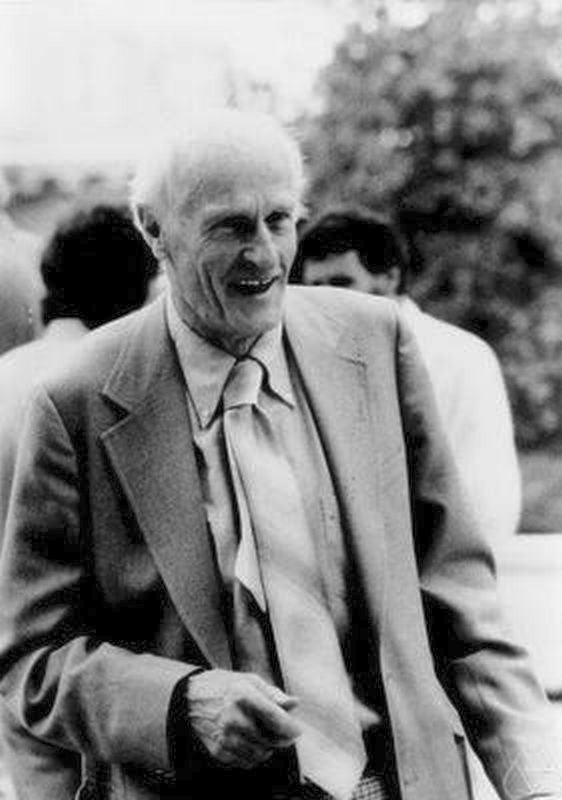
What it can recognize is exactly the regular languages. In a 1956 paper, Stephen Kleene proved the foundational equivalence: the languages describable by regular expressions are precisely those recognizable by finite automata (Kleene’s theorem). This is why the grep and regex engines in every programming language are, under the hood, finite automata.
Two refinements completed the picture:
- Determinism vs. nondeterminism. In 1959 Michael Rabin and Dana Scott published Finite Automata and Their Decision Problems, introducing the nondeterministic finite automaton (NFA) (a machine allowed to “guess” among several transitions) and proving the surprising result that NFAs are no more powerful than deterministic ones: every NFA can be converted to an equivalent DFA. Nondeterminism buys convenience, not capability. Rabin and Scott received the Turing Award in 1976 for this work.
- Minimization. The Myhill–Nerode theorem (John Myhill and Anil Nerode, 1958) characterizes exactly which languages are regular and gives the unique smallest DFA for any regular language, the theoretical basis for optimizing pattern matchers.
Pushdown Automata: Adding a Stack
Give a finite automaton one piece of unbounded memory (a stack) and you get a pushdown automaton (PDA). The stack lets the machine remember nested structure: it can push on an opening bracket and pop on a closing one, so it can finally verify balanced parentheses.
PDAs recognize exactly the context-free languages, the class Noam Chomsky tied to context-free grammars in the late 1950s and early 1960s. This is not an abstract curiosity: the syntax of essentially every programming language is context-free, which is why parsers (the front end of every compiler) are built on pushdown automata. The reason a compiler can catch a mismatched brace but needs a separate phase to catch an undeclared variable is precisely that brace-matching is context-free while variable scoping is not.
Turing Machines: The Top of the Ladder
Replace the stack with an unbounded read/write tape and you reach the Turing machine, Alan Turing’s 1936 model (see Alan Turing and the Enigma). With random access to unlimited memory, the Turing machine can compute anything the other automata can and far more; it recognizes the recursively enumerable languages, the top of the hierarchy.
The Church–Turing thesis asserts that the Turing machine captures everything mechanically computable: that any reasonable model of computation (Church’s lambda calculus, register machines, modern programming languages) is equivalent in power. No one has ever found a counterexample. This is why your laptop, for all its speed, can solve no class of problem that Turing’s 1936 paper machine could not: they are computationally equivalent (see Alonzo Church and Lambda Calculus).
The Ceiling: Undecidability
The ladder has a top, and above it lies the impossible. Turing proved that the halting problem (deciding whether an arbitrary program halts on a given input) cannot be solved by any Turing machine, and therefore by no algorithm at all. This is undecidability, the same wall Gödel hit from the side of logic. Whole families of practical questions (“does this program ever crash?”, “are these two programs equivalent?”) reduce to the halting problem and are thus provably unsolvable in general. Automata theory does not just tell us what we can compute; it draws the permanent boundary of what we cannot.
Within the computable region, a finer grading by resource cost (time and memory) opens up: that is the subject of complexity theory, which asks not “can it be done?” but “can it be done efficiently?”
⚠️ Dead End: The Pure-Symbolic Dream
Automata theory grew up entwined with an ambition that largely failed: that natural language, and even thought itself, could be captured by formal grammars and the automata that recognize them. Chomsky’s hierarchy was conceived partly as a model of human language syntax, and through the 1960s and 70s a great deal of AI and computational linguistics assumed that language understanding meant building the right grammar and parser (see The Chomsky Hierarchy).
It did not work for meaning. Natural language proved too ambiguous, context-dependent, and irregular to be pinned down by clean formal grammars; rule-based machine translation and parsing stalled for decades. The eventual breakthroughs in language technology came not from richer automata but from statistics and neural networks that learn patterns from data rather than from hand-written rules. The formal-language program remains triumphant for artificial languages (every compiler proves it daily) but the dream of reducing human language to an automaton was a dead end. The theory’s lasting power lies in defining the limits of mechanical computation, not in mechanizing meaning.
See also: The Busy Beaver Problem.
📚 Sources
- Stephen Kleene: Representation of Events in Nerve Nets and Finite Automata (1956), Automata Studies, Princeton
- Rabin & Scott: Finite Automata and Their Decision Problems (1959), IBM Journal of Research and Development
- ACM Turing Award: Michael O. Rabin and Dana S. Scott (1976)
- Alan Turing: On Computable Numbers, with an Application to the Entscheidungsproblem (1937), Proc. London Mathematical Society
- Hopcroft, Motwani & Ullman: Introduction to Automata Theory, Languages, and Computation (3rd ed., 2006), Pearson
- Wikipedia: Automata theory · Myhill–Nerode theorem · Kleene’s theorem
- Image: Stephen Cole Kleene.jpg by Konrad Jacobs, Erlangen, Copyright is MFO (CC BY-SA 2.0 de), via Wikimedia Commons