Dead End: OS/2
Abstract
OS/2 was the operating system IBM and Microsoft agreed in August 1985 to build together as the successor to MS-DOS. It offered protected memory and real multitasking years before Windows did, and its 32-bit version 2.0 (April 1992) could run DOS and Windows programs more reliably than DOS and Windows themselves. It lost anyway. Microsoft’s Windows 3.0 sold millions of copies in 1990 on hardware people already owned; Microsoft left the partnership and turned its OS/2 successor into Windows NT; and IBM’s consumer push with OS/2 Warp in 1994 was overtaken by Windows 95 the following year. IBM stopped selling OS/2 in December 2005. It survived for years in bank machines, subway ticket systems and checkout tills, and in 2005 Microsoft paid IBM $775 million to settle antitrust claims that included OS/2. Its history is the clearest case in personal computing of a technically stronger system losing a platform war.
The Partnership
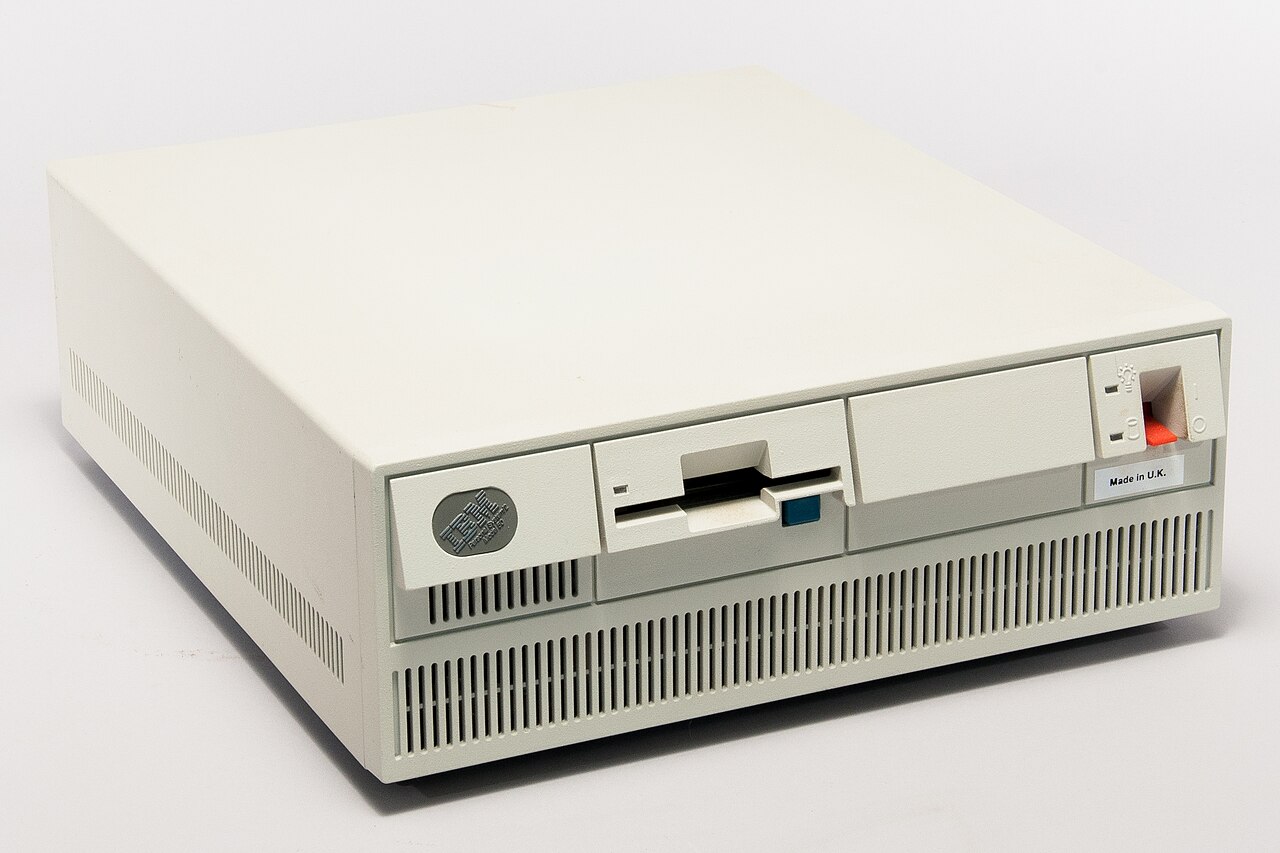
In 1981 IBM had let Microsoft keep the rights to MS-DOS, the operating system of the IBM PC. Microsoft licensed it to every clone maker, Compaq first among them, and IBM lost control of the standard it had created.
IBM set out to recover it. In August 1985 IBM and Microsoft signed a Joint Development Agreement for a new operating system, code-named CP/DOS, which IBM would control and Microsoft would help write. In April 1987 IBM announced it together with a new line of hardware, the PS/2, which used a proprietary expansion bus, Micro Channel, that clone makers could not copy without a license. The software was called OS/2.
From the start the two partners disagreed. IBM had promised customers that OS/2 would run on the Intel 286 processor in its existing AT computers, so the system was written for the 286’s protected mode, which separated programs in memory but could switch back to run old DOS programs only awkwardly. Microsoft wanted to target the Intel 386, which could run several DOS programs in virtual machines. The two companies also had very different cultures, and IBM’s process required large teams and extensive documentation; Microsoft programmers complained that IBM measured productivity in lines of code.
OS/2 1.0 shipped in December 1987. It ran programs in protected memory, so one crash could not take down the system, and it supported preemptive multitasking. It had no graphical interface: Presentation Manager arrived only with version 1.1 in October 1988, and it was hard to program for. Version 1.2 (1989) added the High Performance File System (HPFS), with long file names, and version 1.3 (December 1990) was the last 16-bit release and the last one Microsoft sold. OS/2 needed more memory than most PCs had, cost more than DOS, and had few applications.
The Split
While Microsoft worked on OS/2 it also kept developing Windows, its graphical shell for DOS. Mark Shavlik, who worked on OS/2 at Microsoft from 1986 to 1990, recalled that Windows 3.0, OS/2 and the future Windows NT were all in development at once, and that the OS/2 team “did not take them seriously because OS/2 was IBM+Microsoft, clearly the way forward.” The Windows team tested on small 386 machines with perhaps 4 megabytes of memory; the OS/2 team had “big beefy PCs.”
Windows 3.0, released in May 1990, sold millions of copies in its first year. It had no real process protection and was technically weaker than OS/2, but it ran on the PCs customers already owned and gave them a graphical interface for their existing DOS programs. Microsoft concluded that users wanted Windows, and the partnership came apart over how to position OS/2 against it. Microsoft had hired Dave Cutler from DEC in 1988 to build a new portable, 32-bit kernel, then planned as OS/2 3.0 (“NT OS/2”). After the split Microsoft gave it a Windows interface and sold it as Windows NT from 1993. IBM was left with OS/2 alone.
OS/2 2.0
IBM’s answer was OS/2 2.0, released in April 1992, the first 32-bit version. It ran DOS programs in protected virtual machines and Windows 3.0 programs using a licensed copy of Windows code, so that a crash in one program did not affect the others. IBM advertised it as “a better DOS than DOS and a better Windows than Windows.” Its Workplace Shell was an object-oriented desktop in which documents, printers and folders were objects that could be dragged onto each other, years ahead of Windows. It sold for $195 against $150 for Windows.
The slogan contained the problem. If OS/2’s main selling point was that it ran Windows programs well, developers had every reason to write Windows programs, and Microsoft’s Windows 3.1, released the same month, kept them doing so. OS/2 2.0 also needed more memory than most home PCs had, and drivers for common hardware were often missing.
Warp
IBM made one serious attempt at the consumer market. OS/2 Warp 3, released in October 1994, took its name from IBM’s internal code word, borrowed from Star Trek; Patrick Stewart was booked to host the launch, and Kate Mulgrew of Star Trek: Voyager replaced him. Warp ran in less memory than earlier versions, came with a “BonusPak” of applications including a fax program and an office suite, and included IBM’s own internet software with a web browser, “your on-ramp to the information superhighway”, before Microsoft’s operating systems did. IBM backed it with a large television campaign. A networking edition, Warp Connect, followed in mid-1995.
Warp was well reviewed, and at its peak OS/2 may have reached around five percent of the desktop market. Ten months after its release, on 24 August 1995, Microsoft launched Windows 95, which brought a new interface, 32-bit programs and Microsoft’s relationships with every PC maker. IBM’s PC division itself shipped Windows 95, and IBM signed its license only fifteen minutes before Microsoft’s launch event, after negotiations that its decision to promote its own software had prolonged. OS/2 Warp 4 (September 1996) added Java and speech recognition and was the last major release.
The Application Trap
Warning
OS/2 suffered from the chicken-and-egg problem of every new platform. Users did not buy OS/2 because there were too few native applications, and developers did not write them because there were too few users. Running Windows programs inside OS/2 seemed to solve this, but it confirmed Windows as the real target: anyone who needed Windows applications could simply buy Windows. Major business software, from Lotus 1-2-3 to WordPerfect, was written for DOS and Windows first.
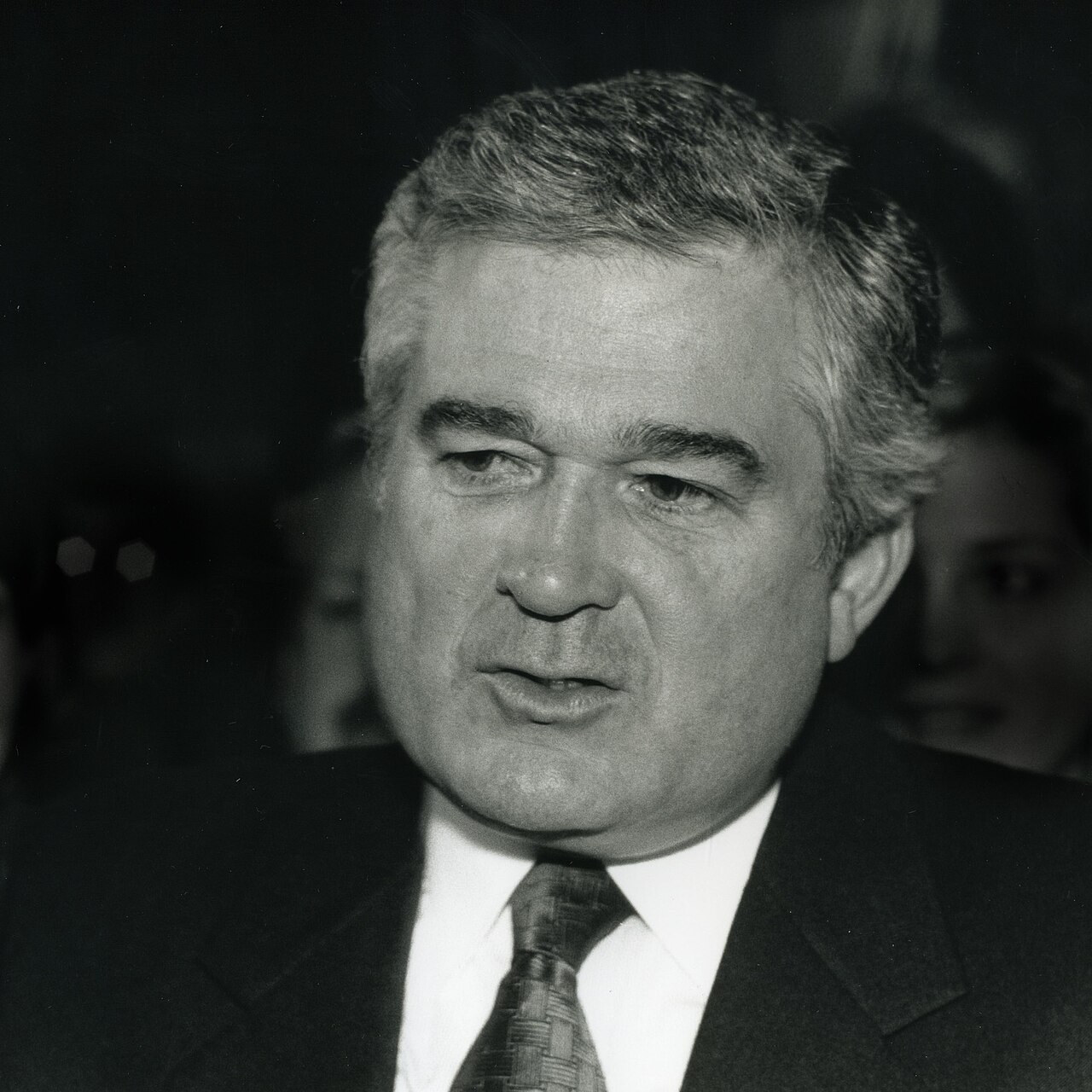
Lou Gerstner, who became IBM’s chief executive in 1993, later described OS/2 in his memoir Who Says Elephants Can’t Dance? as a “resounding defeat” that his colleagues were “unwilling or unable to accept”, one that was “draining tens of millions of dollars, absorbing huge chunks of senior management’s time, and making a mockery of our image.” By the end of 1994 IBM had stopped developing new consumer software for OS/2. IBM’s planned successor, Workplace OS, a microkernel system meant to run OS/2 and other personalities on PowerPC processors, consumed about $2 billion over four years and was cancelled in March 1996, two months after its only preview release.
Survival in Niches
OS/2 did not disappear from the places where it had been installed. Banks used it in cash machines and branch systems, retailers in checkout terminals, and transport systems in control and ticketing: it ran parts of the London Underground’s Jubilee Line and Vancouver’s SkyTrain, and New York’s MetroCard vending machines. IBM ended sales on 23 December 2005 and support on 31 December 2006; the last version was OS/2 Warp 4.52 (December 2001).
Other companies kept it going under license. Serenity Systems sold it as eComStation from 2001, and Arca Noae has sold ArcaOS since 2017, with support for modern hardware.
The rivalry also ended in court. In the US antitrust case against Microsoft, the trial court’s findings identified IBM as a company harmed by Microsoft’s practices. On 1 July 2005 Microsoft agreed to pay IBM $775 million, plus a $75 million credit for software, to settle IBM’s antitrust claims, including those related to OS/2 and IBM’s SmartSuite office software.
Why It Failed
OS/2 had better technology and lost on everything else. IBM tied it at first to the 286 and to its own PS/2 hardware, at a time when clone makers were taking over the PC market. It needed more memory than most customers had. Its best feature, running DOS and Windows programs safely, made developers’ choice of Windows easier. Microsoft controlled both DOS and Windows, the products OS/2 had to be compatible with, and it chose to put its weight behind Windows. And Windows 95 arrived with every PC maker’s support at the moment OS/2 Warp was trying to reach consumers.
Much of OS/2’s technical direction survived inside its rival: Windows NT began as OS/2’s successor, and the protected, preemptive, 32-bit design that OS/2 offered in 1992 reached consumer Windows with Windows XP in 2001.
📚 Sources
- Wikipedia: OS/2: JDA August 1985, CP/DOS, release history, prices, NT OS/2, OS/2 2.0 slogan, Warp name and launch hosts, Workplace OS, Windows 95 license timing, end of sales and support, niche uses, eComStation, ArcaOS
- OS/2 Museum: OS/2 Warp: BonusPak, internet slogan, market share estimate, Warp Connect
- OS/2 Museum: OS/2 history (Mark Shavlik’s account)
- Computer History Museum: IBM OS/2
- Lou Gerstner: Who Says Elephants Can’t Dance? (2002), Internet Archive and Wikipedia: Lou Gerstner
- Microsoft, “Microsoft and IBM Resolve Antitrust Issues” (1 July 2005) and InfoWorld, “Microsoft settles antitrust case with IBM for $775 million”
- Wikipedia: Workplace OS: preview January 1996, cancellation March 1996, cost
- Wikipedia: Dave Cutler
- ArcaOS: modern OS/2 distribution
- Image: IBM PS2 model 50.jpg by Göran Källvik (CC BY 3.0), via Wikimedia Commons
- Image: Lou Gerstner IBM CEO 1995.jpg by Kenneth C. Zirkel (CC BY-SA 3.0), via Wikimedia Commons