Dead End: The Mac Clones
Abstract
From 1995 to 1997, Apple licensed Mac OS to other computer makers. Bill Gates had urged it to do so in a memo in 1985, and by 1994 the case looked unanswerable: Windows PCs from dozens of makers were taking the market while the Macintosh’s share fell. The practice was that clone makers paid Apple about $50 per machine, concentrated on Apple’s most profitable customers and took sales on which Apple would have earned hundreds of dollars. By 1997 clones were about 15 percent of Mac OS computers sold while Apple’s own unit sales fell. Steve Jobs ended the program within months of his return, paying $100 million in stock for the largest licensee, Power Computing, and refusing to license Mac OS 8 on acceptable terms. Apple never licensed its desktop operating system again, and in 2009 it won a court ruling against an unlicensed clone maker, Psystar.
The Argument for Licensing
The idea was as old as the Macintosh. On 25 June 1985 Bill Gates, whose company wrote much of the Mac’s application software, sent a memo to Apple’s chief executive John Sculley and Jean-Louis Gassée, who had taken over the Macintosh division from Steve Jobs. Gates argued that Apple should license Mac technology to three to five significant manufacturers, naming companies such as AT&T, Digital Equipment, Hewlett-Packard and Motorola, so that the Mac could become a standard the way the IBM PC had. Sculley was tempted; Gassée, convinced that the Mac was superior to anything it would compete against, opposed it, and Apple kept its hardware and software together.
Through the following decade Microsoft licensed MS-DOS and then Windows to every PC maker that wanted them, and the “IBM-compatible” market grew to dwarf Apple’s. By the early 1990s many inside and outside Apple considered the refusal to license a historic mistake (Bill Gates and Microsoft). Windows 95 was approaching, and the Macintosh’s share of the world market was sliding toward single digits.
Apple’s chief executive from 1993, Michael Spindler, decided to license. In late 1994 Apple signed its first agreements, and Spindler predicted that a million clones would be sold by the end of 1995. Apple, IBM and Motorola were at the same time defining a common hardware design for PowerPC computers, the Common Hardware Reference Platform (CHRP), published in November 1995, which was meant to let any manufacturer build machines that could run Mac OS, IBM’s AIX, Windows NT or OS/2.
The Licensees
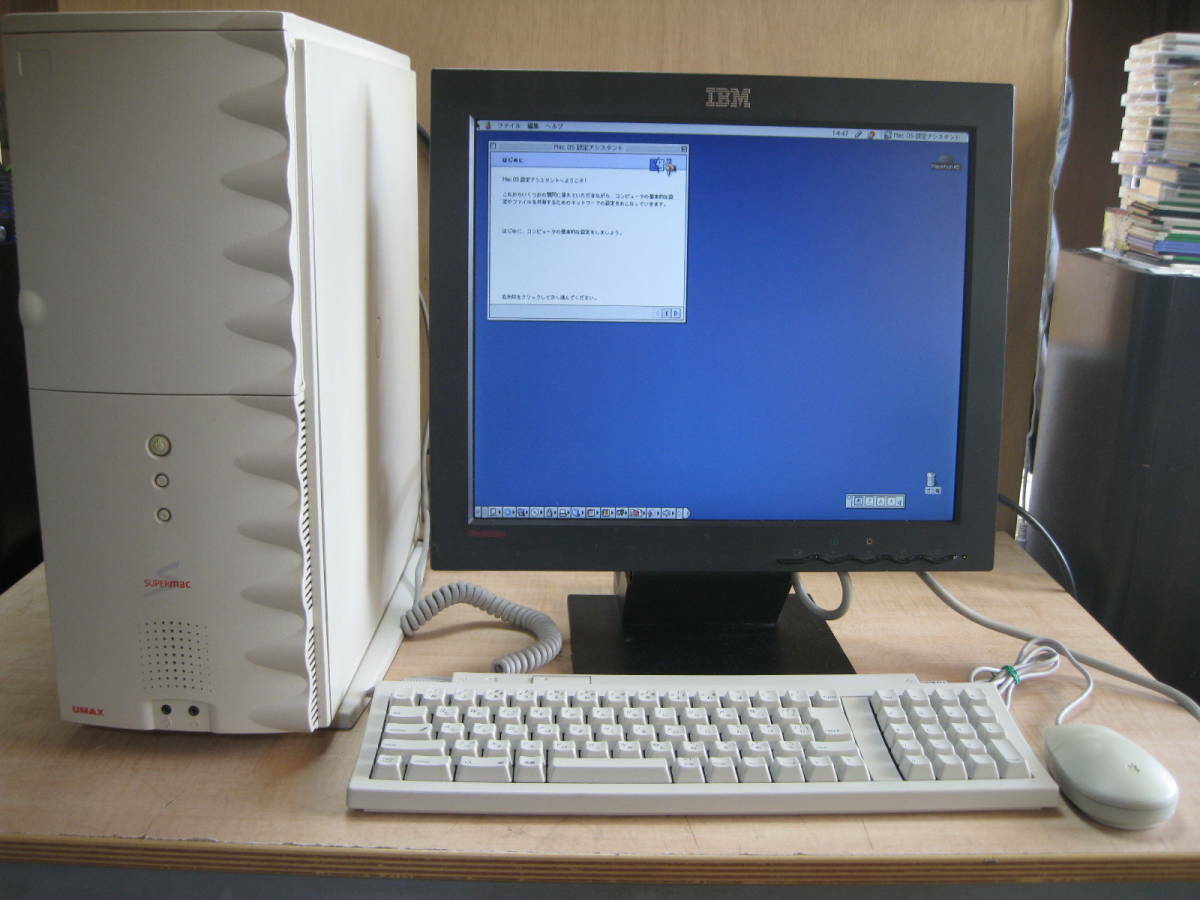
The first licensed clone, the Radius System 100, launched on 27 March 1995. Radius, founded by former Macintosh engineers, aimed it at graphic designers. The most aggressive licensee was Power Computing, founded by Stephen Kahng in Austin, Texas, which sold machines built to order directly by phone and mail, in the style of Dell, and advertised them against Apple’s own: faster PowerPC processors, lower prices, quicker delivery. Power Computing said it sold 100,000 clones in its first year; reported revenue figures for that year vary. UMAX, the Taiwanese scanner maker, sold clones under the SuperMac name; DayStar Digital built multiprocessor machines; Pioneer sold clones in Japan; and Motorola made the StarMax line. In all, the licensees shipped some 75 clone models.
Why It Failed
The arithmetic never worked for Apple. It collected a royalty of about $50 per clone. Selling an equivalent Macintosh itself would have earned several hundred dollars of gross margin. Licensing would have paid only if the clones brought in buyers who would otherwise have bought Windows PCs, enlarging the platform so that Apple sold more software and its own machines benefited. Mostly they did not. Clone makers went after the high end of the market, publishers, designers and other professionals who were already Mac users, where margins were largest and where Apple’s own machines were weakest on price and speed. Clones accounted for about 15 percent of all Mac OS computers sold in 1997, the last year with several clone makers, while Apple’s own Macintosh sales fell from 4.5 million units in 1995 to 2.8 million in 1997. Apple was paying to compete against itself.
The Microsoft comparison was misleading. Windows volumes grew every year, so each additional licensee added to an expanding market. Apple was licensing a premium niche platform with declining volume, so most clone sales came out of Apple’s own sales. CHRP did not help: it reached the market too late and found no buyers for its multi-operating-system promise, and the only CHRP-based machines sold in significant numbers were IBM servers running AIX.
Jobs Ends the Program
Apple bought NeXT at the end of 1996, and Steve Jobs returned, becoming interim chief executive in 1997 (Steve Jobs and Apple). He regarded the clone makers as living off Apple’s research and development. The contracts gave him an exit: Apple’s lawyers concluded that the licenses covered System 7 and did not extend to the new Mac OS 8, released in July 1997. Apple declined to license Mac OS 8 on terms clone makers could accept.
On 2 September 1997 Apple agreed to buy Power Computing’s Mac OS license, its customer database and some of its engineers for $100 million in Apple stock, and Power Computing stopped making Macs soon afterwards. Motorola dropped the StarMax line amid a broader cooling between the two companies. UMAX was the only maker to obtain a Mac OS 8 license, and when it stopped selling Macs in mid-1998 the clone era ended after a little over three years. The BeOS operating system, which had been ported to Power Computing and UMAX hardware, lost its cheapest machines in the shutdown (see Dead End: BeOS).
The decision was ruthless, and it fitted the strategy that followed. Apple’s recovery under Jobs depended on integrated products with high margins, beginning with the iMac of 1998; a clone market would have undercut every one of them.
After the Clones
Apple never licensed its desktop operating system again. When it moved the Mac to Intel processors in 2006, enthusiasts quickly found that Mac OS X could be made to run on ordinary PCs, and these “Hackintoshes” became a hobby. In April 2008 a small Florida company, Psystar, began selling PCs with Mac OS X preinstalled. Apple sued. In late 2009 a federal court in California ruled for Apple on all counts, finding that Psystar had infringed Apple’s copyrights and violated the Digital Millennium Copyright Act by circumventing its protection; Psystar agreed to pay $2.7 million in damages and was permanently barred from selling such machines. On 28 September 2011 the Ninth Circuit affirmed, holding that Apple’s license restricting Mac OS X to Apple hardware was not copyright misuse. Apple’s move to its own processors from 2020 made Hackintoshes increasingly impractical.
📚 Sources
- Wikipedia: Macintosh clone
- Cult of Mac, “Bill Gates’ memo to Apple: License Mac OS” (25 June 1985) and text of the Gates memo
- Cult of Mac, “Radius System 100 kicks off clone Mac era” and TidBITS, “Radius System 100 Debuts” (3 April 1995)
- Cult of Mac, “Apple signs ‘clone Mac’ deal”: $50 per machine, Spindler’s one million forecast
- Low End Mac, “Apple Squeezes Mac Clones Out of the Market” (2014): clones about 15 percent of Mac OS sales in 1997, Apple unit sales 4.5 million (1995) and 2.8 million (1997), UMAX as sole Mac OS 8 licensee
- Wikipedia: Power Computing Corporation and Deseret News, “Apple Computer gobbling up maker of Macintosh clones” (2 September 1997)
- Wikipedia: Psystar Corporation: 2009 summary judgment, $2.7 million damages agreement
- Wikipedia: Common Hardware Reference Platform and Tech Insider archive: “Apple, IBM and Motorola Publish Specifications for the PowerPC Platform” (13 November 1995)
- Wikipedia: History of Apple Inc.
- Apple Inc. v. Psystar Corp., No. 10-15113 (9th Cir. 2011), Justia and The Register, “Apple victorious: Courts deny hackintosher’s final plea” (29 September 2011)
- Image: UMAX SuperMac S900.jpg by Angelgreat (CC BY-SA 3.0), via Wikimedia Commons