Japan's Digital Culture: Walkman, Tamagotchi, and the Galapagos Problem
Abstract
Japan did not merely adopt digital technology; it folded it into cultural identity in ways no other country matched. The Sony Walkman privatized sound in 1979 and changed how humans moved through public space. Tamagotchi made digital life emotionally compelling in 1996. Pokémon turned a Game Boy link cable into a social ritual. i-mode gave Japan a functioning mobile internet in 1999, six years before the iPhone. 2channel invented the anonymous imageboard. Nico Nico Douga built a video platform where comments floated across the screen like a collective hallucination. Hatsune Miku became a pop star with no body. Each of these was distinctly, untranslatably Japanese, and several of them never escaped Japan at all. The country that led the world in consumer electronics and digital culture repeatedly produced innovations so perfectly adapted to Japanese conditions that they could not survive outside them. The Japanese term for this phenomenon (Galapagos) became one of the most instructive concepts in technology history.
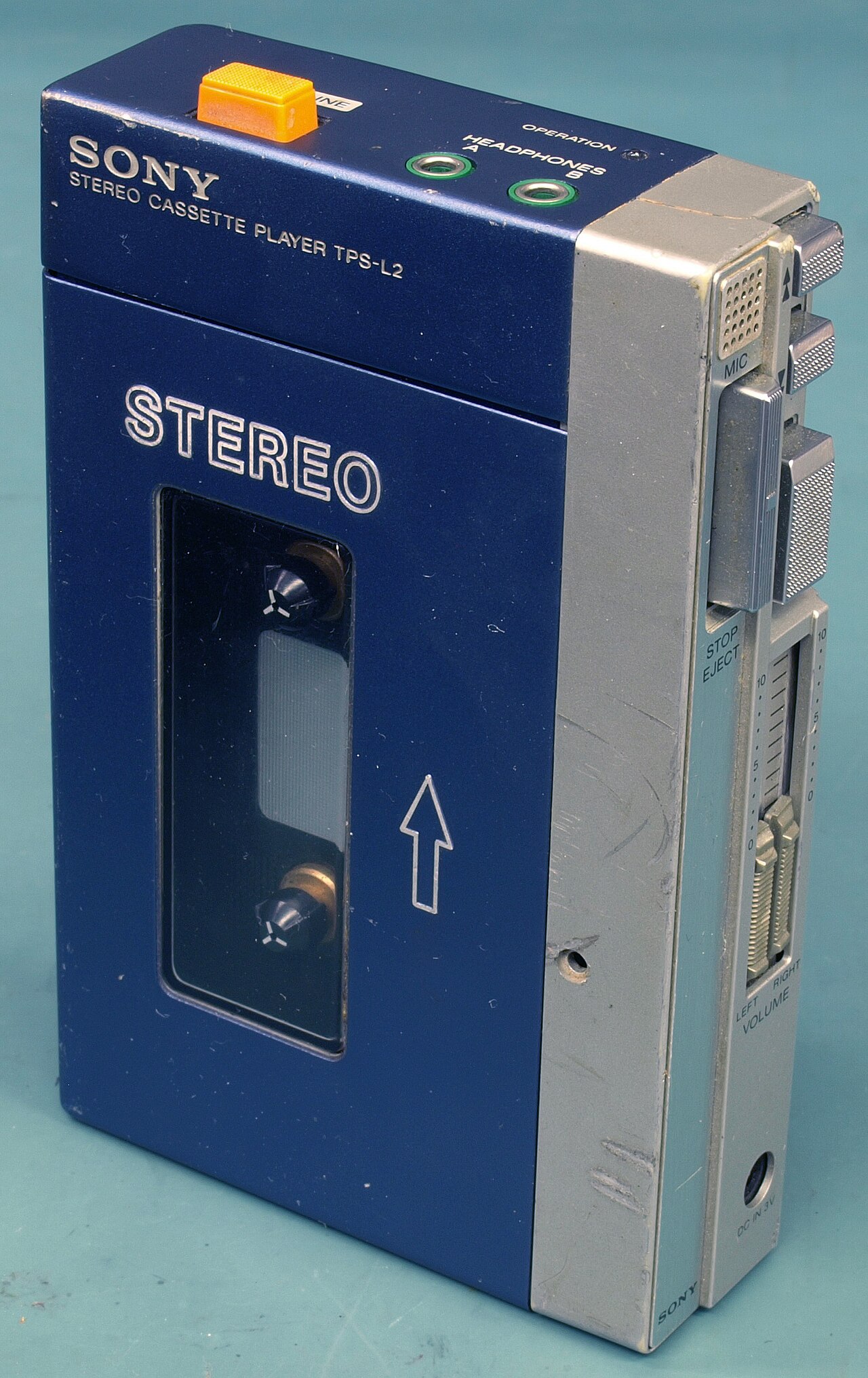
The Walkman and the Privatization of Sound
The cultural history of Japan’s digital technology begins with an analog device.
Masaru Ibuka, Sony’s co-founder, was seventy-one years old and disliked traveling without music. He asked Sony’s engineers to modify a portable tape recorder so it could play music through headphones without recording capability. The engineers were skeptical: a device that only played back, with no speaker and no recording function, seemed commercially pointless. Ibuka’s co-founder, Akio Morita, overruled the skepticism. The product launched on July 1, 1979, as the Sony Walkman TPS-L2, priced at ¥33,000, roughly equivalent to $150 at the time.
Sony’s marketing team predicted it would sell 5,000 units per month. It sold 50,000 in the first two months. By 1981, Sony was selling 100,000 Walkmans per month globally. By 1986, the word “Walkman” had entered the Oxford English Dictionary as a common noun, a rare distinction for a proprietary brand name.
The cultural effect was more significant than the sales figures. Before the Walkman, public space was acoustically shared. Music in a street, a train car, a park came from speakers, audible to everyone present. The Walkman made music private, personal, and portable: a soundtrack that could follow you through your life rather than waiting for you at home. It invented the concept of the personal listening device and with it a new relationship between the individual and public space.
Japan’s train culture amplified this effect. Tokyo’s train system (the world’s most extensive urban rail network) moves over eight million passengers daily. Commutes of forty-five minutes each way are routine. The Walkman transformed those commutes from passive endurance into active personal experience. Japan was the first country in which the Walkman made cultural sense: a society where public silence was a norm, commutes were long, and personal space was tightly bounded even in crowds. The product was designed for one man’s airplane journeys; it was perfected for everyone’s train.
The Walkman’s lineage runs directly to the iPod, the iPhone, and the streaming era. Steve Jobs explicitly cited the Walkman when he introduced the iPod in 2001: “a thousand songs in your pocket” was a deliberate echo of Morita’s original concept. The Walkman was not just a product; it was a proof of concept for an entire category of personal technology that would define the twenty-first century.
Akihabara: Electric Town to Otaku Capital

Akihabara (a district in Tokyo that takes its name from a Shinto shrine to the deity of fire) became in the postwar period the center of Japan’s electronics retail ecosystem. After World War II, surplus electronic components flooded into the area through black market trade; radio enthusiasts converged to buy parts, and the district accumulated the critical mass of vendors and expertise that begat more vendors and more expertise.
Through the 1960s and 1970s, Akihabara was “Electric Town” (電気街, Denki-gai): the place where Japanese consumers bought televisions, washing machines, and refrigerators. The electronics manufacturers whose products were reshaping Japanese domestic life (Panasonic, Sony, Toshiba, Sharp) had flagship showrooms there. It was the physical node through which Japan’s postwar consumer electronics boom flowed into households.
The district’s transformation began in the 1980s and accelerated in the 1990s. Personal computers, video games, and then anime and manga merchandise displaced white goods as the dominant commodities. The customer base shifted from householders buying appliances to enthusiasts (predominantly young men) seeking hardware, software, and eventually the densely cross-referenced products of Japan’s animation and gaming industries.
Otaku (a term meaning roughly “geek” or “enthusiast,” originally pejorative) had by the 1990s become an identity category. Otaku culture was deeply interpenetrated with technology: the content (anime series, games, visual novels) existed because of digital production tools; the community organized around technology platforms; the consumption often involved the acquisition of technological artifacts (figures, merchandise, limited editions) as well as the content itself.
Akihabara became the physical center of this culture. Multi-story shops stacked anime merchandise, doujinshi (fan-published manga), imported electronics, computer components, and the maid cafés that became internationally associated with Akihabara’s peculiar economy. The district was simultaneously a real commercial zone, a tourist attraction, and a cultural symbol, the place where Japan’s technological enthusiasm and pop cultural production intersected in physical space.
Tamagotchi and the Digital Pet
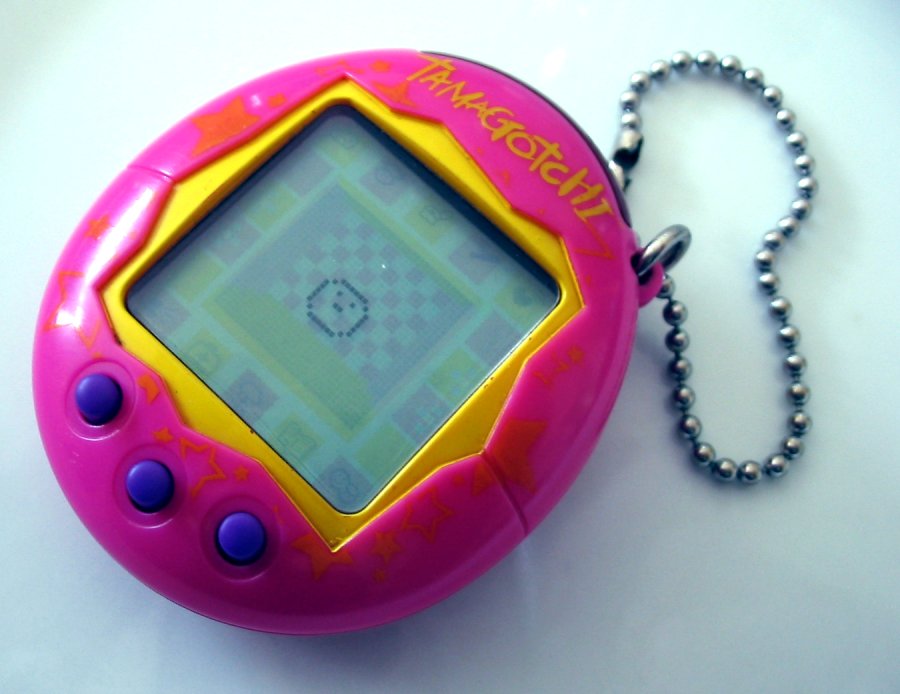
On November 23, 1996, Bandai released a plastic egg-shaped keychain device with a black-and-white LCD screen approximately one centimeter across. The Tamagotchi (a portmanteau of the Japanese words for “egg” and “watch”) contained a virtual creature that needed to be fed, cleaned, and played with at regular intervals throughout the day. Neglect it and it died. The device cost ¥1,980, less than $20.
The Tamagotchi was the creation of Aki Maita, a Bandai product developer who pitched the concept as a toy that would give young women the experience of caring for a pet in the cramped apartments of Japanese cities, where pets were frequently prohibited. The timing hit a cultural nerve: Japan’s low birth rate, extended adolescence, and small living spaces had produced a generation with limited outlets for caregiving instincts. A digital creature that fit in a pocket and demanded nothing but small daily gestures of attention was a precise fit for that social context.
The demand was immediate and extraordinary. Bandai produced ten million units for the Japanese market in 1996; queues formed outside stores before dawn on release day. The phenomenon spread globally: by the end of 1997, forty million Tamagotchis had been sold worldwide. Schools banned them because children fed their virtual pets during class. Offices in Japan reported productivity losses. There were documented cases of users grieving when their Tamagotchi died.
The Tamagotchi established several principles that would govern digital culture for decades. It demonstrated that attachment to virtual entities could be emotionally genuine: that the absence of biological life did not prevent real grief, affection, or investment. It pioneered the concept of the always-on device that demanded real-time attention: not a product you used when you chose, but a relationship that made claims on your schedule. And it proved that a digital product could be simultaneously a toy, a fashion accessory, and a social object, something you showed others and discussed, whose state was a topic of conversation.
Pokémon: Connectivity as Game Mechanic

Satoshi Tajiri grew up collecting insects in the rice paddies and wooded areas outside Tokyo, and watched those natural environments disappear as urbanization replaced them with concrete. When he discovered the Game Boy, he saw in its link cable (the peripheral that allowed two Game Boys to communicate) the possibility of recreating the childhood experience of collection and exchange in a world where the original habitats no longer existed.
Tajiri spent six years developing Pocket Monsters (abbreviated Pokémon) with his partner Ken Sugimori, financing the development through commissioned work and persistence against industry skepticism. Nintendo almost cancelled the project repeatedly. When Pokémon Red and Green launched on February 27, 1996, on the original Game Boy, the initial reception was modest. The games required patience, and their central mechanic (trading Pokémon between cartridges using the link cable) required two players, two Game Boys, and a cable.
What Tajiri had understood, and what took the industry time to recognize, was that the link cable made Pokémon inherently social. You could not complete either version of the game (certain Pokémon were version-exclusive and obtainable only by trading) without another player. The game mechanically required community. Children gathered in schools, parks, and shops to trade. The link cable was not an accessory; it was the point.
Pokémon became one of the best-selling video game franchises in history, with over 480 million games sold across all titles by 2024 (440 million as of March 2022). The animated series, trading cards, films, and merchandise multiplied its cultural reach far beyond gaming. But the insight that drove the original design (that digital connectivity could recreate social behaviors that urban life had destroyed) was specifically Japanese, specifically of its moment, and specifically the product of one man watching his childhood landscape be paved over.
i-mode: Japan’s First Mobile Internet
On February 22, 1999, NTT DoCoMo launched i-mode, a mobile internet service that allowed subscribers to browse websites, send email, and access content services directly from their mobile phones. Japan had mobile internet in 1999. The iPhone launched in 2007.
The architect of i-mode was Takeshi Natsuno, a DoCoMo manager who had studied American internet business models and understood that the key to mobile internet was not technology but the economic structure of content. Natsuno designed a billing system in which DoCoMo collected micro-payments from subscribers and distributed revenue to content providers, replicating, on mobile phones, the economic logic of the App Store before the App Store existed. Content providers received 91 cents of every dollar subscribers paid; DoCoMo took 9%. The incentive to create content for i-mode was immediate and substantial.
By 2001, i-mode had 30 million subscribers. By 2004, it had 44 million. Japanese consumers were reading news, checking stock prices, playing games, sending messages, and booking restaurants on their phones half a decade before Western consumers had smartphones. Japanese feature phones (equipped with cameras, GPS, high-resolution color screens, mobile payments, and full internet browsers) were technically more sophisticated than the first generation iPhone in almost every measurable respect.
The mobile internet created in Japan was dense, fast, and creatively rich. Social networks, video services, and complex games developed on DoCoMo’s platform before their Western equivalents existed. Japanese teenagers were composing novels on their phones: “keitai shōsetsu” (mobile novels) became a genuine literary genre, with several topping Japan’s bestseller lists in the mid-2000s. The novelist Rin wrote Koizora (Love Sky) on her phone, published it on a mobile fiction platform, and saw it sell 1.2 million copies in print.
2channel and the Anonymous Imageboard
On May 30, 1999 (three months after i-mode launched) a twenty-two-year-old Japanese student studying in Arkansas named Hiroyuki Nishimura launched 2channel (2ちゃんねる), a text-based bulletin board system for Japanese internet users. The defining feature of 2channel was anonymity: users posted without usernames, identities, or accountability. Every post appeared under the default label “Anonymous” (名無し).
The anonymity was not an accident but a design philosophy. Nishimura believed that attribution created hierarchies and inhibited honesty: that users would say what they actually thought only if they could not be identified. 2channel became one of the largest online communities in the world, eventually hosting over 600 active boards covering every conceivable topic. Its influence on Japanese internet culture was as formative as Reddit’s influence on American internet culture, and preceded it by years.
2channel’s culture was chaotic, often offensive, and genuinely creative. It developed its own aesthetics, humor, and social norms. The “AA art” (ASCII art using Japanese characters) produced on 2channel was a distinctive art form. Memes, running jokes, and cultural references circulated within the community for years before occasionally breaking into mainstream Japanese culture. The concept of anonymous, ephemeral image boards, which would eventually produce 4chan (founded in 2003 by Christopher Poole, explicitly modeled on 2channel’s image boards) and its global descendants, originated in Nishimura’s design choices.
Nico Nico Douga: Comments as Collective Experience
In December 2006, a Japanese video hosting service called Nico Nico Douga (ニコニコ動画, literally “Smiling Smiling Video”) launched with a feature that Western video platforms had not attempted: comments that floated across the screen as you watched, synchronized to the playback position at which they were submitted.
The effect was unlike anything YouTube or its contemporaries offered. A funny moment in a video triggered a flood of identical comments from hundreds of viewers who had felt the same way at the same moment; the screen filled with text as the audience responded collectively and visibly. Watching a video on Nico Nico was communal in a way that watching it alone could not replicate, the traces of every previous viewer’s reaction were layered into the experience.
Nico Nico became the primary platform for Japan’s amateur creative culture. Fan-made music videos set to Vocaloid music, hand-drawn animation, game commentary, and the dense remixing culture of doujin (fan-created) content flourished on the platform. At its peak in the early 2010s, Nico Nico had 50 million registered users and 2.5 million paid premium subscribers, a business model in which loyal users paid for faster streaming at peak times.
Hatsune Miku: The Crowd-Sourced Pop Star
On August 31, 2007, Crypton Future Media, a small Sapporo-based software company, released Hatsune Miku, a voice synthesis software package using Yamaha’s Vocaloid 2 engine. The package included a singing voice (sampled from voice actress Saki Fujita), a software interface, and a visual character: a sixteen-year-old girl with teal twin-tails, designed by the illustrator KEI.
Crypton sold Hatsune Miku as a tool for music production. What happened instead was something without precedent in popular culture. Thousands of amateur musicians used the software to produce songs and posted them on Nico Nico Douga. Other users created animated videos for those songs. Others wrote fan fiction, drew illustrations, and developed the character’s personality and backstory through a distributed creative process with no central author.
Hatsune Miku became a pop star through collective authorship. By 2010, she had over 100,000 fan-created songs and had performed in sold-out concerts, as a holographic projection singing songs the audience had collectively written. No individual or corporation owned her artistic output; the fans were the creative industry. She headlined festivals, appeared in television commercials, and was the subject of academic papers on participatory culture before she had performed a single concert with a human artist on the bill.
The Miku phenomenon was only possible in Japan’s specific cultural context: the doujin tradition of fan creative production, the Nico Nico platform that connected creators with audiences, and a pop culture industry that had normalized the idea of characters as intellectual properties independent of any specific story or medium. Hatsune Miku was the logical endpoint of decades of Japanese media mix strategy (the extension of a character across as many creative formats as possible) executed entirely by unpaid fans.
Hikikomori and the Digital Cocoon
Not every dimension of Japan’s digital culture was celebratory.
The term hikikomori (coined by psychiatrist Tamaki Saitō in his 1998 book of the same name) described a pattern of acute social withdrawal in which individuals (predominantly young men) retreated from society almost entirely, confining themselves to their rooms for months or years. Saitō estimated in 1998 that approximately 1.2 million Japanese met the clinical definition. A 2019 Japanese government survey estimated roughly 613,000 people between the ages of 40 and 64 met the criteria, many of whom had been hikikomori since adolescence (an earlier 2016 survey had counted about 541,000 in the 15–39 age group).
Technology did not cause hikikomori: Saitō’s analysis situated the phenomenon in Japanese social pressures around academic performance, corporate employment pathways, and family expectations. But technology shaped how it was lived. Hikikomori individuals typically had internet access, game consoles, and deliverable food. The digital infrastructure that allowed someone to remain connected to information, entertainment, and limited social contact without leaving their room made sustained withdrawal more sustainable than it would have been in earlier eras. Whether technology was a symptom, a facilitator, or a partial treatment (some hikikomori formed online communities) remained debated.
Japan’s gaming industry had long explored social withdrawal as a theme in ways Western gaming had not. The genre of “dating simulation” games, in which players develop relationships with virtual characters, and the “visual novel” format (interactive fiction with high emotional investment) addressed users for whom virtual relationships were more manageable than real ones. The question of whether these products served as outlets or as reinforcements of isolation was, and remains, unresolved.
Dead End: The Galapagos Problem
Japan invented mobile internet, built the world’s most sophisticated feature phones, and developed a dense, creative digital culture, and then watched it become irrelevant almost overnight.
When Apple launched the iPhone in 2007, it introduced a platform designed for global deployment: one operating system, one developer ecosystem, one app store accessible from any country. Japanese feature phones, called “Garakei” (ガラケー), a contraction of Galapagos keitai (Galapagos mobile phones), were technically impressive but completely isolated. Their operating systems were proprietary and incompatible. Their applications were written in NTT DoCoMo’s proprietary i-mode format, not for any open standard. Their payment systems, calendars, and social features worked only within Japan’s carrier ecosystem.
The iPhone’s ecosystem was inferior to Japan’s feature phones on many individual dimensions in 2007. Japanese phones had better cameras, better GPS integration, mobile payment chips (FeliCa), and a richer content ecosystem. But the iPhone had an open development platform that attracted global software development at a scale no Japanese carrier could match. The App Store launched in 2008 with 500 apps; within a year it had 65,000. Japanese feature phone developers were writing for a market of 100 million people. iOS developers were writing for a market of hundreds of millions and growing.
The Galapagos Lesson
Japan’s technology industry had optimized so thoroughly for Japanese users (their social norms, their commuting habits, their aesthetic preferences, their carrier billing systems) that its products could not survive outside Japan, and could not evolve fast enough inside Japan once a globally-optimized alternative arrived. The Galapagos metaphor was precise: Japan’s mobile ecosystem had evolved in isolation into something extraordinarily sophisticated and entirely unable to compete once connected to the global ecology. The lesson extended beyond mobile phones: a technology optimized exclusively for one market, however large, is vulnerable to a less-optimized global alternative that achieves critical mass.
The transition was rapid and brutal. Japan’s smartphone adoption accelerated after 2010. By 2015, feature phone sales had collapsed. NTT DoCoMo (which had built the world’s first successful mobile internet business) was reduced to reselling iPhones and Android devices it did not design, on an operating system it did not control, under terms set by Apple and Google. The i-mode ecosystem, which had generated billions in content revenue for Japanese creators, was replaced by the App Store.
Japan’s gaming companies fared better. Nintendo, which had always built global products, survived the smartphone transition, though not without disruption. Sony’s PlayStation remained the world’s leading dedicated gaming console through the 2010s. But the Japanese companies that had built their businesses on proprietary platforms (Sharp, Panasonic, NEC, Fujitsu) retreated or exited consumer electronics almost entirely. The consumer electronics industry that had defined Japan’s global economic identity from the 1960s through the 1990s had largely ceased to exist as a global competitive force by 2015.
The Legacy
Japan’s contributions to digital culture are not diminished by the Galapagos outcome. The Walkman concept outlasted the Walkman. Pokémon’s social design principles influenced every mobile game that followed. Tamagotchi’s emotional logic of attachment to virtual entities prefigured the debates around AI companions in the 2020s. 2channel’s anonymity principles spread globally through 4chan and its descendants. Hatsune Miku demonstrated that crowd-sourced creativity could produce genuine cultural value and influenced every subsequent discussion of user-generated content, AI music, and the rights of virtual performers.
The more troubling legacy is structural. Japan showed that a country can lead in technology adoption, build sophisticated digital culture, and produce genuinely original innovations, and still lose the technology competition if it builds in isolation rather than for the world. The Galapagos problem was not a failure of talent or creativity. It was a failure of architecture: systems designed to serve one market, however well, cannot accumulate the network effects that global platforms require. Every subsequent technology company that has built proprietary ecosystems without global scalability has had the opportunity to learn this lesson from Japan’s example.
Most have ignored it.
📚 Sources
- Natsuno, Takeshi: i-mode Strategy (2003), Wiley — the architect of i-mode describes the business model
- Hjorth, Larissa: Mobile Media in the Asia-Pacific: Gender and the Art of Being Mobile (2009), Routledge
- Saitō, Tamaki: Hikikomori: Adolescence Without End (1998/English trans. 2013), University of Minnesota Press
- Consalvo, Mia: “Zelda 64 and Video Game Fans: A Walkthrough of Games, Intertextuality, and Narrative” — Television & New Media 4(3): 321–334 (2003)
- Ito, Mizuko et al.: Hanging Out, Messing Around, and Geeking Out: Kids Living and Learning with New Media (2010), MIT Press
- Kohler, Chris: Power-Up: How Japanese Video Games Gave the World an Extra Life (2004), Brady Games
- Okabe, Daisuke & Ito, Mizuko: “Keitai in Public Transportation” — in Personal, Portable, Pedestrian: Mobile Phones in Japanese Life, Ito/Okabe/Matsuda eds. (2005), MIT Press
- Hatsune Miku: Crypton Future Media corporate history
- Du Gay, Paul et al.: Doing Cultural Studies: The Story of the Sony Walkman (1997), Sage/Open University Press
- Hikikomori — Wikipedia
- Steinberg, Marc: The Platform Economy: How Japan Transformed the Consumer Internet (2019), University of Minnesota Press
- Kelts, Roland: Japanamerica: How Japanese Pop Culture Has Invaded the US (2006), Palgrave Macmillan
- Image: Original Sony Walkman TPS-L2.JPG by Binarysequence (CC BY-SA 4.0), via Wikimedia Commons
- Image: Akihabara Electric Town, Tokyo, 20240823 1617 5580.jpg by Jakub Hałun (CC BY 4.0), via Wikimedia Commons
- Image: Tamagotchi 0124 ubt.jpeg by Tomasz Sienicki (CC BY-SA 3.0), via Wikimedia Commons