Morris Chang and TSMC: The Man Who Made Chips a Service
Abstract
Morris Chang spent twenty-five years mastering the art of making semiconductors at Texas Instruments before being passed over for the top job. When Taiwan came calling in 1985, he arrived with an idea that nobody in the industry took seriously: a chip company that only made chips, building them for anyone, competing with no one. Founded on February 21, 1987, TSMC became the quiet infrastructure of the entire digital world. By the 2020s, one company on one island was producing roughly ninety percent of the world’s most advanced semiconductors, and its founder had reshaped the economics of technology as completely as anyone since Henry Ford.
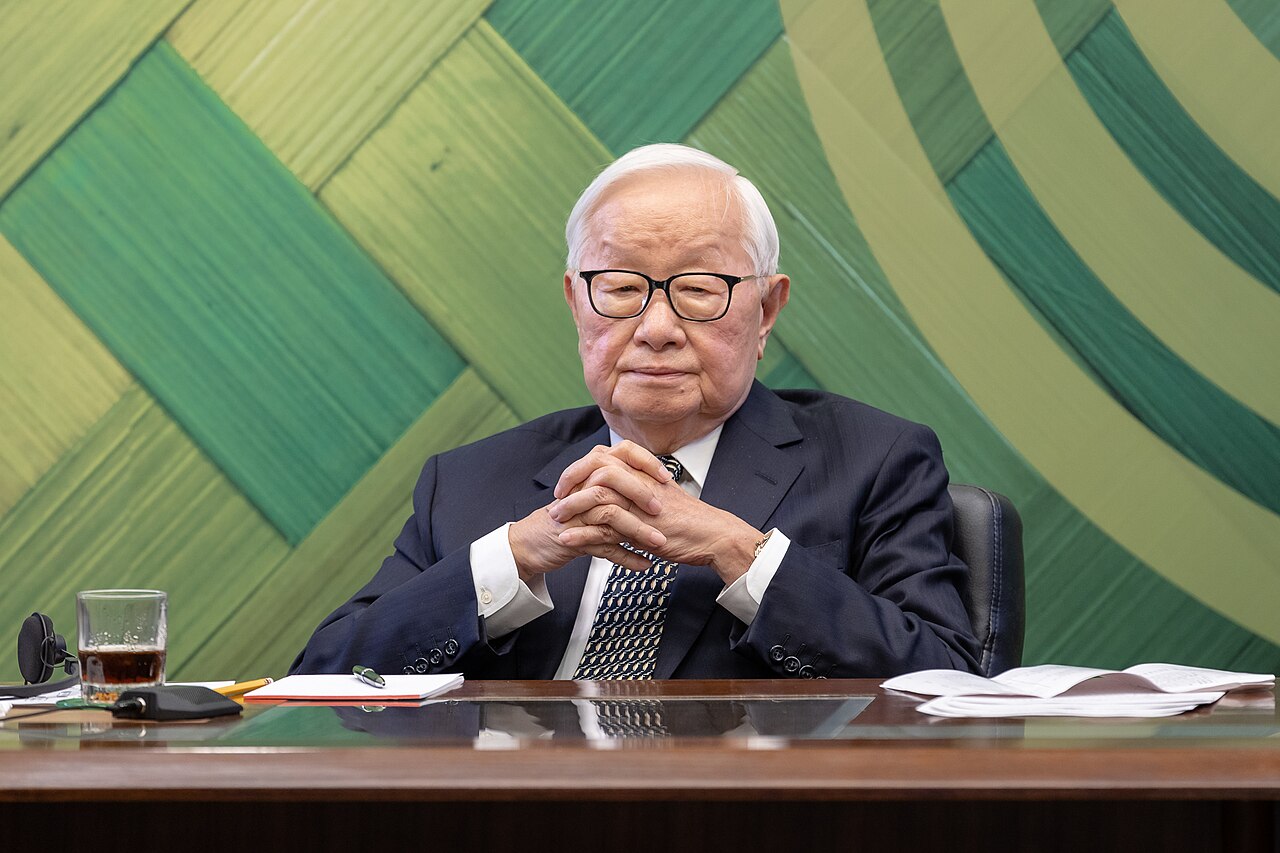
A Childhood on the Run
Morris Chang was born on July 10, 1931, in Ningbo, a port city on China’s eastern coast. His father was a government official, and the family’s circumstances were comfortable, briefly. Japanese forces had already seized Manchuria and were pressing deeper into China, and the Changs spent much of Morris’s childhood moving: Guangzhou, Hong Kong, Chongqing, Shanghai, each city a temporary refuge from a war that never fully receded. He was an alert, serious student who taught himself to read newspapers in classical Chinese before adolescence and developed the habit of systematic self-education that would define the rest of his life.
In 1949, with Mao’s forces advancing on Shanghai, eighteen-year-old Morris Chang left China for the United States, entering Harvard University as a pre-med student. Pre-medicine lasted one year. He disliked it, switched to mechanical engineering, transferred to MIT, and earned both a bachelor’s degree in 1952 and a master’s degree in 1953. A degree of mechanical engineer followed in 1955, but the doctorate did not: he failed MIT’s doctoral qualifying examination twice and left without it. The failure stung. He would not forget how precarious the distance between success and failure could be.
In 1955 Chang joined Sylvania’s semiconductor division in Massachusetts, where his job was raising transistor yields. In 1958, he moved to Texas Instruments in Dallas. That same summer, his new colleague Jack Kilby was building the world’s first integrated circuit in an almost empty laboratory, the invention described in Jack Kilby and the Integrated Circuit. Chang had arrived at the center of the most important technological development of the twentieth century. He would stay for twenty-five years.
Twenty-Five Years at Texas Instruments
Chang’s career at TI followed an unusual path. While most semiconductor engineers fixed their attention on design (the intellectual glamour of the industry) Chang was drawn to manufacturing yield: the percentage of functional chips produced per silicon wafer. In a fabrication process full of variables, yield was the invisible lever that determined whether a company made money or lost it. A process that produced eighty working chips per hundred wafer sites was worth far more than a process producing sixty. Chang understood this with unusual clarity, and he had the analytical temperament to do something about it.
He became one of TI’s most effective manufacturing executives, running increasingly large portions of the company’s global semiconductor operations. He worked under Patrick Haggerty, the visionary leader who had pushed TI into consumer electronics, and alongside the engineers who were defining what transistors could become at industrial scale. By the late 1970s, Chang was running semiconductor operations for the entire company, a business that employed tens of thousands of people and produced chips for everything from military guidance systems to the handheld calculators that TI was then mass-marketing.
TI also sent him back to finish the degree MIT had denied him: on company sponsorship he studied at Stanford and took a PhD in electrical engineering in 1964, in about two years. His doctoral work sharpened his understanding of the physics underlying the yield problems he was solving on the factory floor.
In 1983, Chang was passed over for TI’s top job; his boss, president Fred Bucy, had no semiconductor background, and Chang felt the snub keenly. He was fifty-two years old, at the height of his capabilities, with deeper knowledge of semiconductor manufacturing than almost anyone in the world. Reassigned to a quality-and-productivity post he later described as “being put out to pasture,” he resigned that year. (He spent 1984–85 as president of General Instrument before Taiwan called.) He would not be without purpose for long.
The Call from Taiwan
K.T. Li was perhaps the most consequential economic policymaker Asia produced in the twentieth century. As Taiwan’s finance minister and later economic adviser, Li had guided the island from agricultural poverty to industrial competitiveness with a combination of strategic investment, engineering education, and institutional patience that economists still study. By the mid-1980s, Li understood that Taiwan’s next step required moving from low-cost assembly into advanced technology. He needed someone who could build a semiconductor industry.
Li recruited Chang to Taiwan in 1985 to lead the Industrial Technology Research Institute (ITRI), a government-funded R&D body that had been incubating technology companies for a decade. Chang accepted, relocating to an island he had never visited before, and began assessing what was possible.
What he found was a pool of trained engineers, a government willing to invest, and an opening in the global semiconductor market that nobody else had noticed. It would lead to the most important business insight of the semiconductor era.
The Pure-Play Foundry
In 1987, every significant semiconductor company in the world was vertically integrated. Intel designed chips and built them. Motorola designed chips and built them. NEC, Hitachi, Fujitsu, the same model. The logic seemed ironclad: semiconductor fabrication required such extraordinary capital expenditure and such exacting process knowledge that it was inseparable from the design function. You could not design a chip without understanding how it would be made, and you could not make chips efficiently without designing your own.
Chang’s insight was that this logic was wrong, or at least not inevitable. What if the fabrication function were separated entirely from design, run as a service, like a contract manufacturer, but held to the highest process standards in the world? A pure-play foundry would have several properties that no integrated manufacturer possessed. It would serve every customer, compete with none of them. Its business success would depend entirely on manufacturing excellence, not on any particular product. Its customers could share in the most advanced process technology without the capital expenditure of building their own fabs, which by the late 1980s required hundreds of millions of dollars and by the 2020s would require tens of billions.
Info
Chang articulated the foundry principle precisely: TSMC would never design chips. It would never have products of its own that competed with its customers’ products. The promise of customer confidentiality (that your chip designs would never be shared with, leaked to, or used to inform a competing design) was not just a policy. It was the foundation of the business model, because without it no rational chip designer would share their most valuable intellectual property with a manufacturer.
TSMC was incorporated on February 21, 1987, with $220 million in startup capital: the Taiwan government contributed forty-eight percent, Philips contributed 27.5 percent, and the remainder came from private Taiwanese investors. The structure was deliberate: Philips brought process technology licensing and immediate credibility, while the government stake ensured stability. Among TSMC’s first major customers was Altera, then a small California company designing programmable logic chips. Altera had no fab and no prospect of building one. TSMC would be Altera’s fab.
Manufacturing Excellence as Strategy
Chang’s management philosophy at TSMC borrowed from his TI years and pushed further. The cleanroom (the controlled environment in which wafers are processed) operates at standards of purity that dwarf any other manufacturing environment on earth. A single dust particle that lands on a wafer at the wrong moment destroys the transistors beneath it. Managing yield in such an environment requires not just good processes but a culture of relentless precision: every procedure documented, every deviation investigated, every improvement measured.
Chang invested in R&D at a rate that competitors found difficult to match: consistently eight percent or more of revenue, even in years when the industry contracted. He understood, from his TI experience, that process leadership was cumulative. A company that was one generation ahead of its competitors at a given moment had typically made better decisions for the previous decade, and maintaining that lead required continuous investment regardless of short-term financial pressure. This paralleled the logic Gordon Moore had observed about transistor density: the cadence of improvement was itself a competitive weapon, because it set the pace that others had to match.
The result was that TSMC’s process nodes consistently kept pace with the theoretical limits of what lithography equipment could achieve:
| Node | Volume production |
|---|---|
| 250nm | 1997 |
| 130nm | 2001 |
| 65nm | 2006 |
| 28nm | 2011 |
| 16nm | 2015 |
| 7nm | 2018 |
| 5nm | 2020 |
| 3nm | 2022 |
| 2nm | 2025 |
Density rose with each step, though the published figures depend on which cell library is measured: roughly 29 million transistors per square millimetre at 16nm, 91 million at 7nm, and about 171 million at 5nm for high-density logic.
The transition to Extreme Ultraviolet (EUV) lithography at 7nm and below required machines built only by ASML (Netherlands), costing over $150 million each, using 13.5nm wavelength light generated by firing high-powered lasers at tin droplets. No other company builds EUV lithography equipment. When chipmakers moved from micrometers to nanometers, TSMC moved with them, while rivals Intel and Samsung struggled to maintain parity. The companies that had once regarded foundry customers with condescension found themselves, by the 2010s, falling behind a company that had been founded as a service provider.
TSMC’s founding enabled an entire ecosystem of fabless semiconductor companies that would have been impossible under the IDM model. Over the following decade, a cluster of fabless companies grew up around TSMC’s guarantee of neutral, high-quality manufacturing: Qualcomm (CDMA chips and mobile processors), Xilinx (FPGAs), Marvell, MediaTek, HiSilicon, and (eventually) Nvidia (GPUs, initially for gaming, later for AI).
ARM Holdings (founded 1990) extended the model further: a company that designed processor instruction set architectures and IP blocks but neither manufactured nor fully designed end chips. ARM licenses its cores to fabless companies who integrate them into SoCs (System-on-Chip), which TSMC then fabricates. The iPhone’s A-series processors are designed by Apple’s silicon team, based on ARM-licensed architecture, manufactured at TSMC.
The Semiconductor Value Chain
The modern chip industry is vertically disintegrated: EDA software (Cadence, Synopsys) → IP blocks (ARM, RISC-V) → chip design (Apple Silicon, Qualcomm, Nvidia) → masks and lithography (ASML) → fabrication (TSMC, Samsung Foundry) → packaging and test (ASE, Amkor). TSMC operates at one link but its decisions determine what every other link can do.
Companies like NVIDIA, Qualcomm, and Apple (which launched its own silicon program with the M1 chip in 2020) exist in their current form because they could access world-class fabrication without owning a single fab. See the GPU revolution and the microprocessor’s evolution for how fabless access to TSMC reshaped those fields.
Dead End: Intel’s Foundry Pivot
Intel spent thirty years as the world’s most advanced IDM, consistently ahead of TSMC on process nodes. Its failure to maintain that lead (falling behind at 10nm in 2016–2019, losing Apple’s Mac chip business to TSMC’s 5nm in 2020) led CEO Pat Gelsinger to launch Intel Foundry Services (IFS) in 2021, attempting to become a contract manufacturer for external customers.
The pivot faced structural obstacles: Intel’s culture, IP protection concerns, customer trust, and the decades-long head start of TSMC’s manufacturing ecosystem. By 2024, Intel was cutting costs, delaying nodes, and receiving US government CHIPS Act subsidies to stay viable. Whether an IDM can successfully transform into a pure-play foundry (against the world’s most experienced practitioner) remains unresolved.
Intel’s struggle illustrated Chang’s original insight in reverse: manufacturing excellence, treated as an intellectual discipline rather than a commodity, compounds over decades into a moat that no rival had successfully crossed.
The Geopolitical Island
The success Chang built created a geopolitical problem he did not seek. By the early 2020s, TSMC was producing approximately ninety percent of the world’s chips at the most advanced process nodes, below seven nanometers, where the transistors in a smartphone processor are smaller than a virus. No other company on earth had mastered the combination of process chemistry, equipment, software, and human expertise required to manufacture at these densities at scale.
Taiwan sits approximately 180 kilometers from mainland China, across a strait that the People’s Liberation Army has been tasked, as a matter of official policy, with crossing under certain conditions. The strategic calculus that followed from TSMC’s dominance gave rise to the “Silicon Shield” theory: that Taiwan’s indispensability to global technology supply chains would deter any military action, because the cost of destroying or seizing TSMC would be borne by every economy on earth that depended on advanced chips, which is to say, every economy on earth.
Chang’s own version of the theory, given to 60 Minutes in October 2022, was conditional rather than reassuring. The shield works, he said, only against an attacker who cares about economics: “because our company provides a lot of chips to the world, I think maybe somebody will refrain from attacking it. If that person’s priority is for economic well-being, they will refrain from attacking.” Asked what an invasion would leave of TSMC, he answered: “If there’s a war, I mean, it would be destroyed. Everything will be destroyed.”
The United States responded to its own dependence on Taiwan with the CHIPS and Science Act of 2022, which provided $52 billion in subsidies and incentives for domestic semiconductor manufacturing. TSMC broke ground on a fabrication plant in Phoenix, Arizona, in June 2021 and marked the arrival of the first production equipment there on 6 December 2022, at a ceremony attended by Chang, President Biden, and Tim Cook. He noted, with his characteristic frankness, that manufacturing chips in the United States would cost approximately fifty percent more than manufacturing them in Taiwan, partly due to labor costs, partly due to the shallower ecosystem of suppliers and specialized workers that had accumulated in Taiwan over decades. He did not pretend the economics were simple.
TSMC also opened a fab in Kumamoto, Japan, in 2024 and announced a facility in Dresden, Germany. The geographic diversification was partly commercial and partly a response to the explicit pressure of client governments that no longer accepted the concentration of advanced chip production on a single island. Chang had built the world’s most important manufacturing company, and the world was now negotiating with that fact.
The Man Behind the Company
Chang married Sophie Chang (a cousin of Foxconn founder Terry Gou) in 2001; it was his second marriage, his first (to Christine Chen, from 1952) having ended in divorce in 1991. Sophie became a visible presence in Taiwanese civic life, and their partnership endured through the later decades of TSMC’s growth. Chang was known in industry circles for intellectual rigor and a willingness to engage directly with difficult questions that other executives deflected into corporate language. He was an avid reader of classical Chinese literature, a devotee of Western classical music, and a man who gave speeches with the precision of prepared arguments rather than the warmth of spontaneous expression, attributes that made him formidable in negotiations and somewhat austere in public.
He retired as TSMC’s chairman in June 2018, at eighty-six, succeeded under a dual-leadership structure by Mark Liu as chairman and C.C. Wei as chief executive. His retirement speech acknowledged directly what he had seen coming: the escalating technology competition between the United States and China would define TSMC’s next chapter in ways that no amount of manufacturing excellence alone could resolve. He had built the company through the relative stability of a unipolar world. He was leaving it at the beginning of something harder.
The suggestion, occasionally made in technology policy circles, that Chang deserved a Nobel Peace Prize (on the theory that TSMC’s economic centrality had made conflict too costly for rational actors) was received by Chang with the skepticism it probably deserved. He had spent his career solving problems that could be measured. The problem of great-power competition was not, in his estimation, that kind of problem.
📚 Sources
- Chris Miller: Chip War: The Fight for the World’s Most Critical Technology (2022), Scribner · Open Library
- Morris Chang, interview with TSMC: Morris Chang’s Founding of TSMC · TSMC — Wikipedia
- Morris Chang — Stanford Engineering Heroes, Stanford School of Engineering
- Morris Chang — Wikipedia, education, Sylvania and TI years, TI-sponsored Stanford PhD, marriages
- “As tensions with China rise, life goes on in Taiwan” — 60 Minutes, CBS News, 9 October 2022, Chang on the silicon shield
- TSMC: “TSMC Announces Updates for TSMC Arizona” — press release, 6 December 2022, the first tool-in ceremony and the second Arizona fab
- TSMC N5 and N3 process density — WikiChip Fuse, published transistor-density figures per node
- The Economist: “TSMC is making the whole world more vulnerable” (March 6, 2021) · economist.com/briefing/2021/03/06/tsmc-is-making-the-whole-world-more-vulnerable
- Andrew Lu: “The Silicon Shield: Taiwan’s Protection Against Chinese Attack?” (Pacific Forum CSIS, 2003) pacforum.org
- TSMC Annual Report 2023 · TSMC — Wikipedia
- U.S. CHIPS and Science Act, Public Law 117-167 (August 9, 2022) · congress.gov/bill/117th-congress/house-bill/4346
- “TSMC’s founder retires amid ‘challenges from various fronts’” — Nikkei Asia (June 5, 2018) · Chang stepped down at the shareholders meeting in Hsinchu, cautioning about the trade war
- TSMC: “Dr. Morris Chang Announces Retirement in June 2018” — press release (October 2, 2017) · the dual-leadership succession, Mark Liu as chairman and C.C. Wei as CEO
- Morris Chang Oral History — Computer History Museum
- Interview with Morris Chang, 2007 August 24 — Silicon Genesis, Stanford University Libraries · his career from Sylvania and Texas Instruments to a Stanford PhD, ITRI, and founding TSMC
- Extreme ultraviolet lithography — Wikipedia
- TechInsights Semiconductor Process Benchmarking
- Image: Morris Chang 2021APEC.jpg by 總統府 (CC BY 2.0), via Wikimedia Commons