Copyright and IP in the Digital Age
Abstract
Copyright law was written for a world in which copying needed a printing press, a record-pressing plant or a film lab. Computers made copies free, perfect and instant, and the law has been renegotiated ever since. Courts first had to decide whether software itself could be copyrighted (yes, from 1983). The Supreme Court’s Betamax decision of 1984 set the rule for copying machines that still governs internet providers. The Digital Millennium Copyright Act of 1998 built the notice-and-takedown system that made YouTube possible and made it a crime to break copy protection. The music industry sued about 30,000 of its own customers, lost the argument to iTunes and streaming, and saw its digital locks broken one after another. Lawrence Lessig’s Creative Commons turned copyright into a tool for sharing, while Congress extended copyright terms to life plus 70 years. Since 2023 the conflict has moved to the training of generative AI, where courts in the United States, Britain and Germany have reached different answers. The account of those AI cases reflects the state of play when this article was last reviewed, in October 2026.
The Perfect Copy Problem
Copyright grants authors a temporary monopoly on making copies, in exchange for which the work eventually passes to the public. The bargain worked because copying was expensive. A pirate edition of a book needed a press, paper and a distribution network, and a bootleg record needed a pressing plant. The law could concentrate on the few people who owned the equipment.
Digital technology removed every one of those constraints. A file can be copied any number of times at no cost and with no loss of quality, and after the mid-1990s the internet let anyone distribute those copies worldwide. The equipment for mass copying was now in every home. Each wave of conflict described below is a version of the same question: who is responsible when the copying machine is a general-purpose computer owned by millions of people.
Software Becomes a Literary Work
The first question was whether software could be copyrighted at all. Copyright protects expression, not function, and a program is mostly function. Through the 1970s the industry protected code with trade secrets and contracts. On 31 July 1978 the US Commission on New Technological Uses of Copyrighted Works (CONTU) recommended that programs be explicitly protected by copyright, and Congress amended the Copyright Act accordingly in the Computer Software Copyright Act of December 1980, which added a definition of “computer program” and a right for owners to make backup copies.
The test case was a clone. In 1982 Franklin Computer launched its Ace computers, Apple II compatibles whose ROM contained a direct copy of Apple’s firmware, down to embedded strings with the names of Apple’s programmers. Franklin argued that machine-readable object code, burned into a chip, was a machine part rather than a text, and that copying was needed for compatibility. The district court agreed with Franklin. On 30 August 1983 the Third Circuit reversed in Apple Computer, Inc. v. Franklin Computer Corp.: object code was protected, ROMs were protected, and operating systems were protected. Compatibility was not a defense. The ruling is why PC clone makers had to write their BIOS firmware from scratch in clean rooms rather than copy IBM’s.
The harder question was what else besides the literal code was protected. In 1992 the Second Circuit, in Computer Associates v. Altai, set out the “abstraction-filtration-comparison” test: break the program into levels of abstraction, filter out elements dictated by efficiency, external constraints or the public domain, and compare only what remains. Most American courts adopted it, and it narrowed protection for a program’s structure. Menu hierarchies were fought over in Lotus v. Borland (see The Spreadsheet Revolution), and the most expensive version of the question, whether Java’s API declarations could be copyrighted, ran from 2010 to a Supreme Court decision for Google in 2021 (see Android). The Court decided that case on fair use and left the copyrightability of APIs open.
Europe took a parallel route. The 1991 Software Directive (91/250/EEC) required all member states to protect programs as literary works, and its Article 6 explicitly allowed decompilation where it was “indispensable” to achieve interoperability with an independently created program. American law reached a similar result only through case law on fair use.
The Betamax Rule
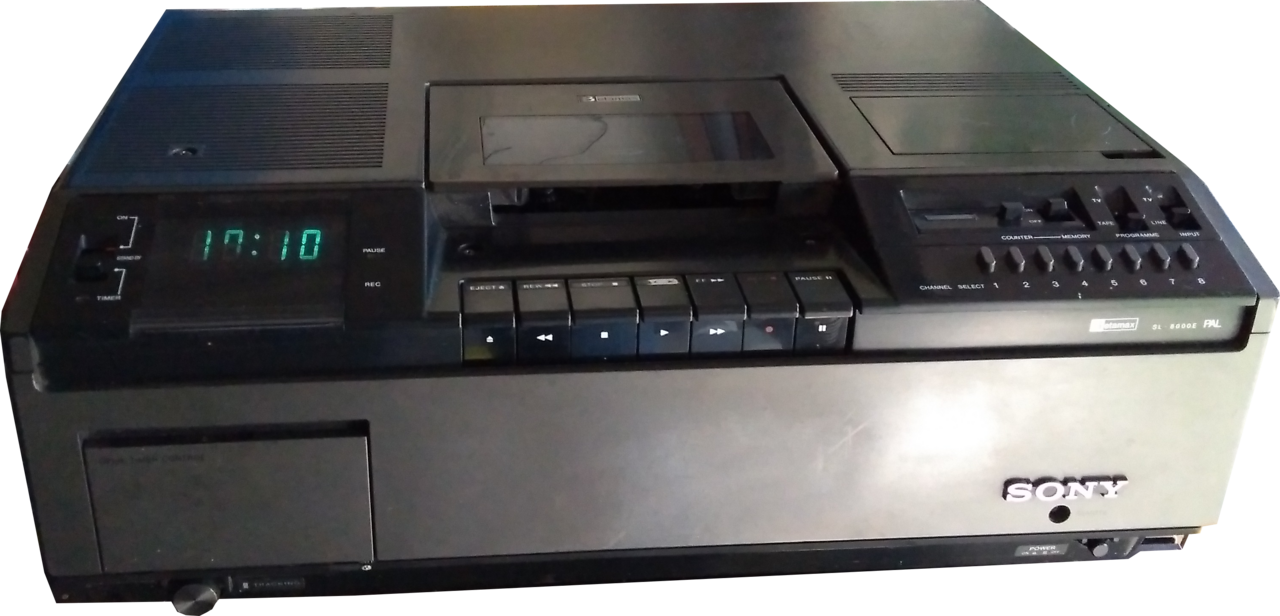
The legal framework for copying machines was set before the internet, in a fight over the video recorder. Universal and Disney sued Sony on 11 November 1976, arguing that a machine whose main purpose was recording television made Sony liable for every copy its customers made. The film industry’s lobbyist Jack Valenti told a House committee in 1982: “I say to you that the VCR is to the American film producer and the American public as the Boston strangler is to the woman home alone.”
On 17 January 1984 the Supreme Court decided Sony Corp. of America v. Universal City Studios for Sony, 5 to 4. Recording a broadcast to watch later (“time-shifting”) was fair use. And the maker of a copying device was not liable for its customers’ infringement if the device was “capable of commercially significant noninfringing uses.” Within a few years the studios earned more from selling cassettes than from cinema tickets.
The Betamax rule protected every later copying technology with legitimate uses, including the personal computer, the CD burner and the peer-to-peer network. In 2005 the Supreme Court added an exception in MGM Studios v. Grokster: a company that distributes a technology “with the object of promoting its use to infringe copyright” is liable for what its users do, regardless of the technology’s other uses. Grokster, which had courted former Napster users, shut down in November 2005 and paid $50 million. In March 2026 the Court applied both rules in Cox Communications v. Sony Music, throwing out a $1 billion jury verdict against an internet provider that had not cut off subscribers accused of repeat piracy. The Court was unanimous in the result. Justice Thomas wrote for the majority that a provider is contributorily liable only if it intended its service to be used for infringement, by inducing it or by offering a service tailored to it, and that “Cox simply provided Internet access, which is used for many purposes other than copyright infringement.”
The DMCA
By the mid-1990s rights holders wanted two things from legislators: legal protection for the technical locks they were putting on digital media, and clarity about who was liable for material on the new online services. The World Intellectual Property Organization’s Copyright Treaty of 1996 required signatories to protect “technological measures”. The United States implemented it, and much more, in the Digital Millennium Copyright Act, signed in October 1998. Two provisions shaped the internet.
Section 512, the safe harbor. An online service is not liable for infringing material its users upload if it does not know about it and removes it promptly when a rights holder sends a notice. Users whose material is removed can file a counter-notice. Without this “notice-and-takedown” rule, every video site, blog host and social network would have been liable for each user’s upload, and YouTube could not have operated in its existing form.
Section 1201, anti-circumvention. It became illegal to break a technical protection measure (the encryption on a DVD, an e-book or a game console), or to distribute a tool that does so, even when the purpose of the access is itself lawful, such as making a backup or watching a film on an unsupported operating system. Breaking the lock became an offence separate from any copyright infringement.
The first criminal case under Section 1201 showed how far it reached. On 16 July 2001 the FBI arrested Dmitry Sklyarov, a 26-year-old Russian programmer, after he spoke at the DEF CON conference in Las Vegas about weaknesses in Adobe’s e-book encryption. His employer, ElcomSoft, sold a program that removed the protection; it was legal in Russia. Protests followed in several American cities, Adobe withdrew its support for the prosecution, and Sklyarov was allowed to return home in December 2001 in exchange for testifying. On 17 December 2002 a San Jose jury acquitted ElcomSoft of all charges.
Section 1201 lets the Librarian of Congress grant temporary exemptions every three years, and these became a running battle. In 2010 the Copyright Office exempted jailbreaking smartphones to install lawfully obtained apps. When the exemption for unlocking phones to switch carriers was allowed to lapse in 2012, a public petition followed, and Congress passed the Unlocking Consumer Choice and Wireless Competition Act, signed on 1 August 2014. The right-to-repair movement has used the same process for tractors, cars and medical devices.
Notice and Takedown in Practice
The safe harbor was tested in the largest case of the YouTube era. On 13 March 2007 Viacom sued YouTube and Google for $1 billion, alleging that more than 150,000 unauthorized clips of its programs had been viewed 1.5 billion times. Judge Louis Stanton ruled in 2010 that YouTube was protected: it had general knowledge that infringement happened on the site but not specific knowledge of which videos infringed. The Second Circuit sent the case back in 2012, Stanton ruled for YouTube again in 2013, and the parties settled in 2014.
Meanwhile YouTube built Content ID, first tested in June 2007 as “Video Identification”, which compares every upload against reference files supplied by rights holders and lets them block, track or take the advertising revenue from a match. Content ID went beyond anything the DMCA required, and it became the model that European legislators later tried to make compulsory.
The takedown system also produced its own abuses. In 2007 Stephanie Lenz posted a 29-second video of her toddler dancing to Prince’s “Let’s Go Crazy”, audible in the background. Universal Music had it removed. Lenz, backed by the Electronic Frontier Foundation, sued. In September 2015 the Ninth Circuit held in Lenz v. Universal that rights holders must consider fair use before sending a takedown notice, but that a “subjective good faith belief” was enough, which left the practical balance where it had been: platforms remove first, because the safe harbor depends on it.
The War on File Sharing
The music industry’s crisis began with Napster in 1999 and continued through Kazaa, LimeWire, BitTorrent and The Pirate Bay (see The Warez and Filesharing Era). When suing the services proved slow, the Recording Industry Association of America turned to their users. From September 2003 it filed, settled or threatened lawsuits against at least 30,000 individuals, according to the Electronic Frontier Foundation’s count five years later, among them students, parents of teenagers and people who did not own a computer. Most settled for a few thousand dollars.
Only one case went to a jury repeatedly. In October 2007 a Minnesota jury ordered Jammie Thomas-Rasset, a single mother, to pay $222,000 for sharing 24 songs on Kazaa. A retrial in 2009 raised the award to $1.92 million and a third trial set it at $1.5 million; after appeals the $222,000 award was reinstated, and in March 2013 the Supreme Court declined to hear the case. The verdicts were a public-relations disaster. In the autumn of 2008 the RIAA stopped filing mass lawsuits, having pursued about 35,000 people, and turned instead to “graduated response” agreements under which internet providers warned and eventually disconnected repeat infringers.
The fight was settled by products rather than courts. Apple’s iTunes Store (2003) sold songs for 99 cents, initially with copy protection that the record labels required. In February 2007 Steve Jobs published “Thoughts on Music”, arguing that DRM did not stop piracy because CDs, still the bulk of music sales, carried none. At Macworld on 6 January 2009 Apple announced that 8 million of its 10 million songs were available without DRM, and the rest followed by the end of March. Streaming services then made the question of owning files irrelevant for most listeners (see The Digital Music Revolution).
Term Extension and the Public Domain
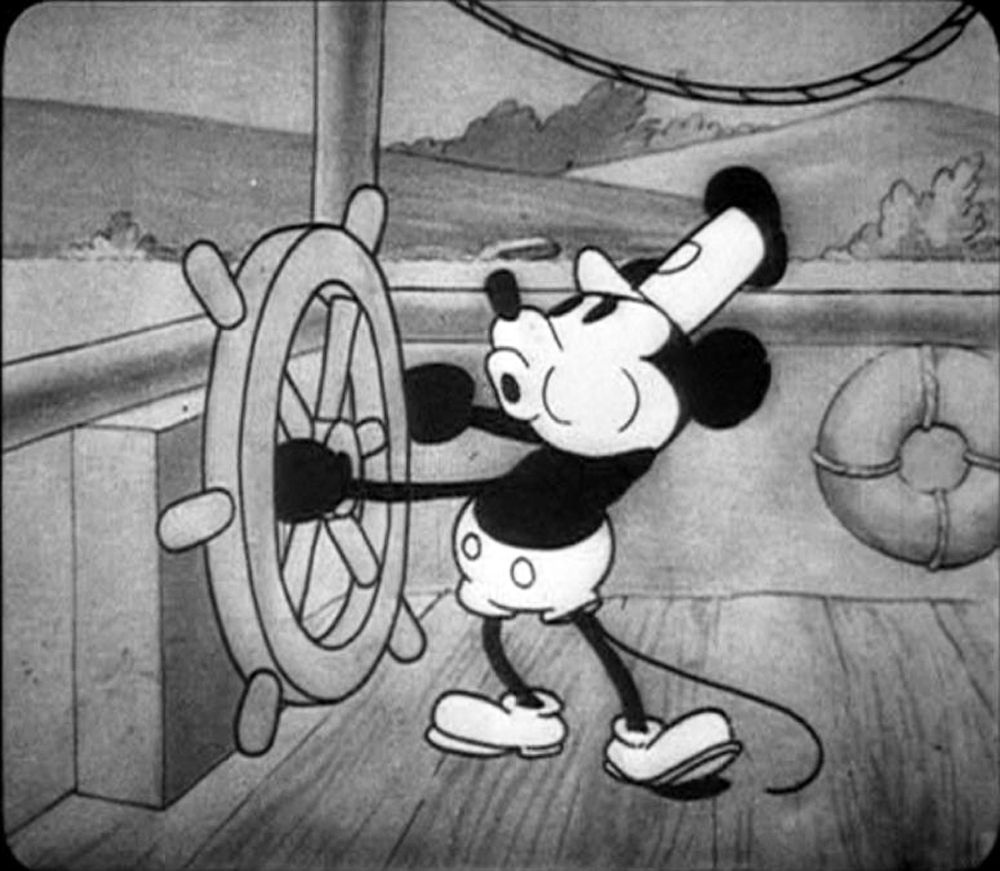
While the internet made copying easier, Congress made copyright longer. The 1976 Copyright Act had already moved the United States to a term of the author’s life plus 50 years (75 years for corporate works). In 1998 the Sonny Bono Copyright Term Extension Act added 20 years to both, retroactively, for works already published. Disney, whose earliest Mickey Mouse films were due to enter the public domain in 2004, lobbied for it, and critics called the law the “Mickey Mouse Protection Act”. The effect was that no published American work entered the public domain by expiry for 20 years.
Eric Eldred, who published public-domain books online, challenged the law with Lawrence Lessig as his lawyer, arguing that endlessly extending existing terms violated the Constitution’s grant of copyright for “limited times.” On 15 January 2003 the Supreme Court upheld the extension 7 to 2 in Eldred v. Ashcroft. The freeze ended on 1 January 2019, when works published in 1923 became free, and on 1 January 2024 the 1928 Steamboat Willie, with the first published version of Mickey Mouse, followed.
Copyleft and Creative Commons
The counter-movement used copyright’s own machinery. Richard Stallman’s GNU General Public License (1989) is a copyright license with a condition: anyone may copy, modify and redistribute the software, but derivative versions must be released under the same terms. Stallman called the principle copyleft. It made the free-software commons legally durable and became the basis of Linux (see The Open Source Movement).

Lessig, the MIT computer scientist Hal Abelson and Eldred founded Creative Commons on 15 January 2001 to do the same for culture. Its licenses, first released in December 2002, let an author choose in advance which uses to allow (attribution only, share-alike, non-commercial, no derivatives) in a standard form that people, and search engines, can read. Wikipedia moved its text to CC BY-SA on 15 June 2009, and Flickr, open educational resources and open-access science publishing adopted the licenses at scale. This encyclopedia’s images come from the same commons. Lessig set out the wider argument in Free Culture (2004): that copyright had grown from a narrow incentive into a permission system covering almost every use of culture, and that it was choking the remix culture the internet made possible. Aaron Swartz, still a teenager, helped build the licenses’ technical architecture.
Software Patents
Copyright protects code; patents protect inventions, and from the 1980s American courts gradually allowed them for software. The Supreme Court’s Diamond v. Diehr (1981) allowed a patent on a rubber-curing process that used a computer; the Federal Circuit’s State Street Bank decision (1998) accepted patents on business methods implemented in software. Tens of thousands of software patents followed, many broad and vague, and they fed the patent-assertion industry described in The Patent Wars. In Alice Corp. v. CLS Bank (2014) the Supreme Court held that an abstract idea does not become patentable by being carried out on a computer, and lower courts invalidated many software patents under that test. In Europe, the European Patent Convention excludes programs “as such” from patentability, though patents on software with a “technical effect” are granted.
Europe’s Upload Filters
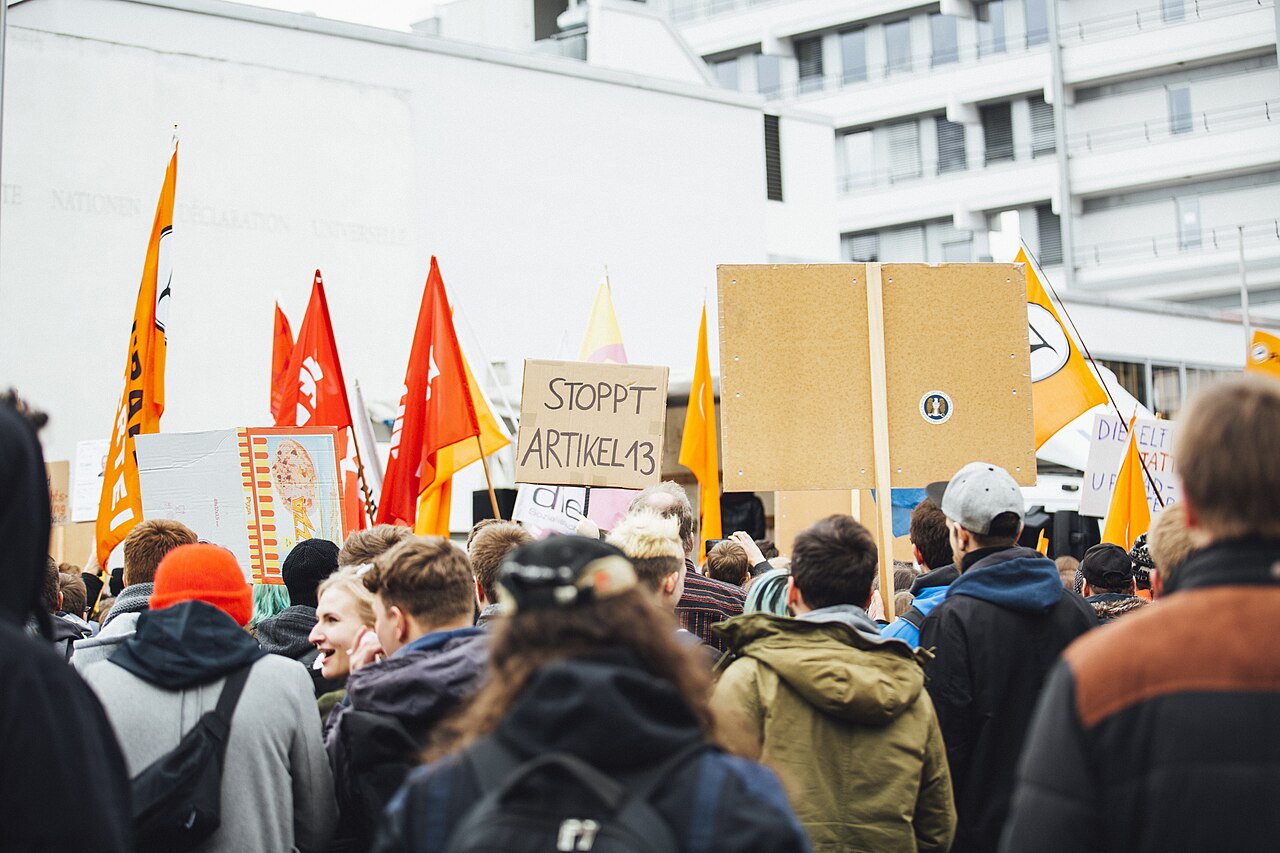
The European Union’s answer to the safe harbor came with the Directive on Copyright in the Digital Single Market, proposed by the Commission on 14 September 2016. Its draft Article 13 (Article 17 in the final text) made large platforms directly liable for infringing uploads unless they had made “best efforts” to obtain licenses and to prevent infringing material from appearing. Critics argued that only automatic filtering could achieve that at scale, so the directive would make Content ID-style filters compulsory, with their false positives. Draft Article 11 (Article 15) gave news publishers a new right over online use of their articles, which opponents called a “link tax”.
The campaign against it was strongest in Germany. The German-language Wikipedia shut itself down for 24 hours on 21 March 2019, and on 23 March about 100,000 people marched in European cities, more than 40,000 of them in Munich. The European Parliament approved the directive on 26 March 2019 by 348 votes to 274, and the Council followed on 15 April. Member states had until 7 June 2021 to implement it. Poland challenged Article 17 before the Court of Justice, arguing it violated freedom of expression; on 26 April 2022 the Court dismissed the challenge but stressed that filters must not block lawful content. The same directive created exceptions for text and data mining, including a commercial one with an opt-out for rights holders, which became central to the AI debate in Europe.
AI Training Data
Large language models and image generators are trained on billions of documents and images, most of them copyrighted, copied without permission. Whether that copying is lawful became the largest copyright question since Napster. Dozens of lawsuits were filed in the United States from 2023 onward, among them The New York Times v. Microsoft and OpenAI (filed 27 December 2023).
The nearest precedent was Google Books. Google scanned tens of millions of library books from 2004 and made them searchable, showing only short snippets. On 16 October 2015 the Second Circuit held in Authors Guild v. Google that the copying was a highly transformative fair use because it produced a search tool rather than a substitute for the books; the Supreme Court declined review in April 2016. AI companies argued that training was the same kind of use.
The first rulings split along the facts.
- Thomson Reuters v. Ross Intelligence. Ross, a legal-research startup, had trained a search tool on headnotes from Thomson Reuters’ Westlaw service, obtained through a third party, to build a competing product. In February 2025 Judge Stephanos Bibas held that this was not fair use, because the purpose was to compete with the original. On 29 September 2026 the Third Circuit affirmed, the first federal appellate decision on fair use in AI training, though Ross’s system was not a generative model.
- Bartz v. Anthropic. Authors sued Anthropic over books used to train Claude. On 23 June 2025 Judge William Alsup held that training on lawfully purchased books was “quintessentially transformative” and fair use, but that building a central library from more than seven million books downloaded from pirate sites was not covered and had to go to trial. Facing statutory damages of up to $150,000 per work, Anthropic settled for $1.5 billion, about $3,000 for each of 482,460 books, the largest copyright settlement in American history. The settlement received final approval on 20 July 2026.
- Kadrey v. Meta. Two days after Alsup’s ruling, Judge Vince Chhabria granted Meta summary judgment on training its Llama models, also on books from pirate libraries. He was explicit that the ruling “does not stand for the proposition that Meta’s use of copyrighted materials to train its language models is lawful,” only that the plaintiffs had failed to show harm to the market for their books.
The US Copyright Office published a pre-publication report on AI training on 9 May 2025, concluding that some training uses would not qualify as fair use, particularly where models produce output that competes with the works they were trained on. The next day the administration dismissed the Register of Copyrights, Shira Perlmutter. The courts reinstated her while her challenge proceeded, and on 30 June 2026 the Supreme Court declined to let the dismissal take effect in the meantime. On the output side, the D.C. Circuit held in Thaler v. Perlmutter (18 March 2025) that a work generated autonomously by a machine cannot be registered because the Copyright Act requires a human author; the Supreme Court declined to review the case on 2 March 2026.
Outside the United States the first results went in both directions. In London, Getty Images dropped its main training claim against Stability AI during the trial, conceding there was no evidence that Stable Diffusion had been trained in Britain (copyright is territorial), and on 4 November 2025 the High Court rejected its remaining copyright claim, upholding only a narrow trademark claim over generated images that showed Getty’s watermark. A week later, on 11 November 2025, the Munich Regional Court ruled for the German music-rights society GEMA against OpenAI: because ChatGPT could reproduce song lyrics recognizably, the lyrics were stored in the model, and the court held it irrelevant that they existed only as probability values distributed across parameters. It ordered OpenAI to stop reproducing the works and to pay damages.
In The New York Times v. Microsoft and OpenAI, Judge Sidney Stein dismissed some DMCA claims in March 2025 and let the core infringement claims proceed. Both sides filed motions for summary judgment on fair use in September 2026; no decision had been issued when this article was last reviewed.
Dead End
The longest-running dead end in this history is Digital Rights Management as a defense against piracy: the idea that a file can be technically prevented from being copied while still being playable by the person who bought it.
The flaw is structural. To play a film or a song, the customer’s device must decrypt it, so the device must contain the key. Every DRM scheme therefore gives the user the locked content and, hidden somewhere in their own hardware, the means to unlock it, and relies on nobody finding it. Someone always did.
- DVD. The Content Scramble System was broken in 1999. A Norwegian teenager, Jon Lech Johansen, announced the decryption program DeCSS on 6 October 1999 so that DVDs could be played on Linux, for which no licensed player existed. He was prosecuted in Norway and acquitted twice, in January and December 2003. In the United States, posting or even linking to DeCSS was held to violate Section 1201, and the code spread as T-shirts, poems and prime numbers.
- HD DVD and Blu-ray. A processing key for their AACS encryption, the 16-byte number beginning “09 F9”, was extracted in early 2007. When the licensing body sent takedown notices in May, users of the news site Digg posted it so many times that the site gave up deleting it (see HD DVD).
- Sony BMG’s rootkit. In 2005 Sony BMG shipped about 22 million CDs with copy-protection software, two million of them with First 4 Internet’s XCP, which installed itself on Windows PCs and hid from the user like malware. Mark Russinovich exposed it on 31 October 2005. Sony BMG’s global digital business president, Thomas Hesse, told NPR: “Most people, I think, don’t even know what a rootkit is, so why should they care about it?” Texas sued under its anti-spyware law, the discs were recalled, and an FTC settlement in 2007 required compensation. The XCP software itself was found to contain open-source code used in violation of its license.
DRM rarely stopped a determined copier, and it mainly constrained paying customers: region codes, players that could not play legally bought discs, and purchases that stopped working when a store closed. Music abandoned it in 2009 because it made the legal product worse than the pirated one. Video, games and e-books kept it, and the law protecting it, Section 1201, is still in force.
📚 Sources
- Wikipedia: Apple Computer, Inc. v. Franklin Computer Corp. (Third Circuit, 30 August 1983)
- Computer Associates International, Inc. v. Altai, Inc., 982 F.2d 693 (2d Cir. 1992), Justia
- WIPO Lex: Council Directive 91/250/EEC of 14 May 1991 on the legal protection of computer programs
- Wikipedia: CONTU: final report 31 July 1978, Computer Software Copyright Act 1980
- Michigan Law repository: “The Story of Sony v. Universal Studios”: suit filed 11 November 1976
- Las Vegas Sun, “Russian software developer arrested in Vegas” (18 July 2001) and Publishers Weekly, “Russian Busted for E-book Hack” (August 2001)
- TechCrunch, “Viacom Drops a $1 Billion Nuke on Google” (13 March 2007) and Wikipedia: Content ID
- Hollywood Reporter, “RIAA stops suing individuals over file-sharing” (December 2008)
- Creative Commons, “Wikipedia + CC BY-SA = Free Culture Win!” (22 June 2009) and Wikipedia: Aaron Swartz
- Bird & Bird, “Stability AI defeats Getty Images copyright claims” (November 2025)
- Betanews, “Sony President: Rootkit of No Concern” (8 November 2005)
- Wikipedia: Illegal number
- Wikipedia: Sony Corp. of America v. Universal City Studios, Inc. (17 January 1984, 5–4)
- Josh Barro, “Thirty Years Before SOPA, MPAA Feared the VCR”, Forbes (18 January 2012) and Wikiquote: Jack Valenti: the “Boston strangler” testimony
- Wikipedia: MGM Studios, Inc. v. Grokster, Ltd. (27 June 2005)
- Cox Communications, Inc. v. Sony Music Entertainment, 607 U.S. (2026), Justia and Authors Alliance on the decision (26 March 2026)
- Wikipedia: Cox Communications, Inc. v. Sony Music Entertainment: Thomas opinion, Sotomayor concurrence joined by Jackson
- U.S. Copyright Office: Section 512 study
- EFF: US v. ElcomSoft & Sklyarov FAQ and The Register, “Elcomsoft not guilty” (17 December 2002)
- EFF: Jailbreaking Is Not a Crime and GovTrack: Unlocking Consumer Choice and Wireless Competition Act (S. 517)
- Wikipedia: Viacom International Inc. v. YouTube, Inc.
- EFF: Lenz v. Universal and IPWatchdog on the Ninth Circuit ruling (21 September 2015)
- EFF: “RIAA v. The People: Five Years Later” (2008)
- NPR, “Supreme Court Lets $222,000 Verdict In File-Sharing Case Stand” (18 March 2013) and EFF: Capitol v. Thomas
- Steve Jobs, “Thoughts on Music” (February 2007, archived)
- MacRumors, “Apple Announces Changes to iTunes Stores: DRM Free, Variable Pricing” (6 January 2009)
- Eldred v. Ashcroft (2003), Oyez and Reporters Committee, “Court upholds copyright extension act”
- Duke Center for the Study of the Public Domain: Public Domain Day 2019 and CNN, “Steamboat Willie: An early version of Mickey Mouse is now in the public domain” (1 January 2024)
- Wikipedia: Creative Commons and Creative Commons
- Lawrence Lessig, Free Culture (2004)
- Wikipedia: Directive on Copyright in the Digital Single Market: proposal, vote 348–274, Council approval, transposition deadline, Poland’s challenge
- The Local, “Why German Wikipedia is down for 24 hours” (21 March 2019) and Wikimedia Deutschland: Wikipedia blackout
- Wikipedia: Felix Reda: 23 March 2019 demonstrations
- Authors Guild v. Google, Inc., No. 13-4829 (2d Cir. 16 October 2015), Justia
- Davis Wright Tremaine, “Thomson Reuters v. Ross Intelligence: Copyright, Fair Use, and AI (Round One)” (February 2025) and LawNext, “3rd Circuit Rules For Thomson Reuters” (September 2026)
- Copyright Alliance, “AI Copyright Lawsuit Developments in 2025: A Year in Review”: Bartz ruling, settlement, damages exposure
- Authors Guild, “Court Grants Final Approval of $1.5 Billion Anthropic Copyright Settlement” and JURIST (July 2026)
- Perkins Coie, “Court Sides With Meta on Fair Use and DMCA Questions” (June 2025) and FisherBroyles on Kadrey v. Meta
- U.S. Copyright Office, Copyright and Artificial Intelligence, Part 3: Generative AI Training (pre-publication version, May 2025)
- Publishers Weekly, “Copyright Chief Fired Amid AI Debate” (May 2025) and Munger Tolles & Olson: Supreme Court leaves injunction preserving Perlmutter’s position in place
- Thaler v. Perlmutter, No. 23-5233 (D.C. Cir. 18 March 2025), Justia and Mayer Brown, “Supreme Court Denies Review in AI Authorship Case” (March 2026)
- Cleary Gottlieb, “UK High Court Issues Landmark Ruling in Getty Images v. Stability AI” (November 2025)
- CMS, “GEMA vs. OpenAI: Munich Regional Court I issues landmark copyright decision” (November 2025)
- Wikipedia: The New York Times v. Microsoft and OpenAI and Axios on the summary-judgment phase (8 September 2026)
- EFF on DRM
- Wikipedia: Jon Lech Johansen and Wikipedia: AACS encryption key controversy
- Wikipedia: Sony BMG copy protection rootkit scandal
- Image: Lawrence Lessig May 2017.jpg by Joi Ito (CC BY 2.0), via Wikimedia Commons
- Image: Save Your Internet – Demo gegen Uploadfilter – Article 13 -CensorshipMachine (46718219164).jpg by Markus Spiske (CC BY 2.0), via Wikimedia Commons