Taiwan's Tech Ecosystem: OEM, ODM, and the Smiling Curve
Abstract
Taiwan’s technology story is one of the most consequential in computing history and one of the least understood outside the industry. The island of 23 million people became the world’s dominant manufacturer of personal computers, motherboards, networking equipment, and (through TSMC) advanced semiconductors, without building a single globally recognized consumer brand for most of its history. The mechanism was the OEM/ODM model: Taiwanese companies built the products that other companies branded and sold, capturing manufacturing profit while their customers captured the brand value. Acer’s Stan Shih described this as the “smiling curve”, a U-shape in which the high-value activities (components at one end, brand and services at the other) were owned by others, while manufacturing in the middle was left to Taiwan. For decades, this was Taiwan’s assigned position. What happened next (the attempt by companies like Acer, ASUS, and HTC to move up the curve) is a story about the limits of manufacturing excellence as a path to brand power.
The KMT Retreat and the Technology Foundation
When the Nationalist government of Chiang Kai-shek retreated to Taiwan in 1949 following its defeat by Mao’s Communist forces, it brought with it mainland China’s gold reserves, a significant portion of its educated elite, and the institutional infrastructure of a functioning government. This gave Taiwan a developmental foundation that distinguished it from other post-colonial economies: trained administrators, capital, and a state capacity for industrial planning.
Taiwan’s government, advised by American economists through the Joint Commission on Rural Reconstruction, pursued export-oriented industrialization from the 1960s onward. The Hsinchu Science Park, established in 1980 modeled on Silicon Valley, was the physical center of Taiwan’s technology ambitions: a planned industrial zone offering land, tax incentives, and proximity to National Tsing Hua University and National Chiao Tung University, which had been rebuilt from mainland institutions after 1949.
The critical policy instrument was ITRI, the Industrial Technology Research Institute, established in 1973 to bridge academic research and industrial application. ITRI’s most consequential project was the transfer of CMOS semiconductor technology from RCA in the United States in 1976, which gave Taiwan the technical foundation for its chip industry and eventually produced both TSMC and UMC as spinoffs.
Acer and the Smiling Curve
Stan Shih (施振榮) co-founded Acer in 1976 with five colleagues in a small office in Jhonghe, Taipei County, with NT$1 million in capital (roughly $25,000). Acer’s early business was importing and distributing microprocessors and training engineers to use them, positioning the company at the intersection of the American semiconductor industry and Taiwan’s engineering community.
Acer’s design of the Micro-Professor MPF-I in 1981, one of the world’s first educational computers built around a Z80 processor, established it as a genuine product company. When IBM introduced the PC standard in 1981, Acer was positioned to build compatible machines. By the mid-1980s, Acer was manufacturing PCs for American brands, the business that would define Taiwan’s role in computing for the next two decades.
In 1992, Shih articulated the “smiling curve” concept that became the most influential framework for understanding Taiwan’s economic position. Shih drew a U-shaped curve with value on the vertical axis and the production chain on the horizontal. At the left end of the curve (high value) sat components: semiconductors, displays, key intellectual property. At the right end (also high value) sat branding, marketing, and customer relationships. In the middle (the bottom of the U, lowest value) sat manufacturing and assembly.
Taiwan, Shih observed, was largely trapped at the bottom of the curve. Its companies were excellent at manufacturing but captured little of the value that flowed to component makers (mostly Japanese and American) and brand owners (mostly American). The smiling curve was a diagnosis and an implicit strategy: Taiwan needed to move toward the ends, not remain in the middle.
ASUS: From Motherboards to the World
ASUS (華碩, Huáshuò) was founded in 1989 by Ted Hsu, Wayne Hsieh, M.T. Liao, and T.H. Tung, four engineers who had left Acer. The company’s founding business was manufacturing motherboards: the circuit boards that are the backbone of every personal computer.
ASUS’s motherboards were technically superior to competitors from the start. The company developed a reputation for reliability and performance that made it the preferred choice for enthusiasts building their own computers. As the PC industry commoditized, the ability to design and manufacture high-quality motherboards became the foundation for expansion: ASUS moved into graphics cards, laptops, desktop computers, and eventually smartphones.
ASUS’s most significant product innovation came in 2007 with the Eee PC, a small, inexpensive laptop sold for $299 that inaugurated the netbook category. The Eee PC was designed around a simple insight: most consumers needed basic internet access, document editing, and email, not the full capability of a $1,000 laptop. The Eee PC sold 5 million units in its first year, prompted Intel to develop the Atom processor specifically for the category, and forced every major PC manufacturer to produce competing products. The netbook category was eventually killed by the iPad (2010), which performed the same functions more elegantly, but ASUS had defined the market.
MediaTek: Chips for the Rest of the World
MediaTek (聯發科技, Liánfā Kējì), founded in 1997 as a spinoff from UMC, took a different approach to the smiling curve: it moved toward the high-value components end by designing fabless semiconductors targeted specifically at emerging markets.
MediaTek’s initial focus was optical storage controllers, chips for CD-ROM and DVD drives. It then moved into wireless networking chips, digital television, and eventually smartphone application processors. The key insight was that Qualcomm and other Western chipmakers priced their application processors for the high-end smartphone market. MediaTek designed chips for the affordable smartphone market, devices sold for $50 to $200 in China, India, Africa, and Southeast Asia.
The strategy produced the “white box” smartphone market: MediaTek sold complete reference designs (chip plus software plus reference PCB layout) to small manufacturers who could assemble and sell smartphones with minimal engineering overhead. This democratized smartphone manufacturing in a way that reshaped the global mobile market. By 2021, MediaTek had surpassed Qualcomm as the world’s largest smartphone chipset vendor by volume, not by selling to Apple and Samsung, but by enabling billions of low-cost Android devices.
HTC: The Brand Attempt
HTC (宏達國際電子, Hóngdá Guójì Diànzǐ) represented Taiwan’s most ambitious attempt to escape the smiling curve’s middle and build a genuine global consumer brand.
Founded in 1997 by Cher Wang (daughter of Formosa Plastics founder Wang Yung-ching, one of Taiwan’s wealthiest industrialists), HTC began as an ODM manufacturer, building Windows CE and later Windows Mobile devices for Compaq, HP, and other brands. It was the world’s largest Windows Mobile manufacturer by the mid-2000s, producing devices sold under American and European brand names.
When Google launched Android in 2008, HTC built the first commercially available Android phone: the HTC Dream (sold as the T-Mobile G1 in the United States). HTC was the world’s largest Android manufacturer by 2011. It launched the HTC One series with premium aluminum unibody construction (a genuine design achievement in a market dominated by plastic) and positioned itself as a premium brand competing with Samsung and Apple.
The attempt failed. Samsung’s Galaxy S and Note lines (backed by Samsung’s vertical integration, massive marketing budgets, and retail relationships) displaced HTC in the Android premium segment. Apple held the premium end HTC could not reach. HTC’s market share in smartphones fell from over 10% in 2011 to under 2% by 2015.
The Brand Trap
HTC’s failure illuminated a structural problem for Taiwanese technology companies attempting brand transitions. ODM companies build relationships with corporate buyers (carriers, distributors), not with consumers. The capabilities required (consumer marketing, retail experience design, brand storytelling) are entirely different from the capabilities required for ODM excellence. HTC had world-class hardware engineering and no consumer brand equity. Acquiring brand equity requires sustained investment that produces no short-term return, which is structurally difficult for companies whose investors expect ODM-level margins.
HTC sold the majority of its smartphone business to Google in 2017 for $1.1 billion. The remaining HTC pivoted to virtual reality (Vive) and later to blockchain devices, neither of which restored its position.
Foxconn: The Factory Behind the Brands
No account of Taiwan’s technology ecosystem is complete without Foxconn (Hon Hai Precision Industry, 鴻海精密工業), founded in 1974 by Terry Gou (郭台銘) in Tucheng, Taipei.
Foxconn is the world’s largest contract electronics manufacturer, employing over one million people at peak, primarily at enormous factory campuses in mainland China. Its Zhengzhou facility, which assembles iPhones, employs up to 300,000 workers and has its own dormitories, hospitals, supermarkets, and security apparatus. It is, by some measures, the world’s largest single factory complex.
Foxconn manufactures iPhones, iPads, Mac computers, Xbox consoles, PlayStation consoles, and the circuit boards inside an enormous range of electronics. It is the physical instantiation of the smiling curve’s middle: a company that captures assembly value for products whose design and branding belong entirely to its customers. Apple’s gross margins on the iPhone historically exceed 50%; Foxconn’s assembly margin is typically 2-4%.
The arrangement works for both parties. Apple captures most of the value and none of the operational complexity of managing hundreds of thousands of factory workers. Foxconn captures scale that no competitor can match. The geopolitical risk (concentrated assembly of the world’s most important consumer device in a single country) became visible when COVID-19 restrictions at Zhengzhou in 2022 caused iPhone shortages and contributed to Apple’s stated intention to diversify assembly to India and Vietnam.
The Ecosystem’s Depth
Taiwan’s technology ecosystem extends far beyond its famous names. The island produces a disproportionate share of the world’s critical technology components:
- Gigabyte, MSI, and ASRock (alongside ASUS) supply the overwhelming majority of the world’s PC motherboards
- AU Optronics and Innolux, among the world’s largest LCD panel manufacturers
- Delta Electronics, the world’s largest power supply manufacturer
- Largan Precision, the dominant supplier of smartphone camera lenses (used in iPhones and Samsung flagships)
- TSMC, the world’s most advanced semiconductor foundry, covered in detail in Morris Chang and TSMC
This density of component suppliers (all within a few hours’ drive of each other, connected by deep supply chain relationships built over decades) is what economists call an industrial cluster, and what practitioners call an ecosystem. A new electronic product can be prototyped in Taiwan in days because every component, every process, every specialist is nearby. This concentration is simultaneously Taiwan’s greatest industrial strength and its greatest geopolitical vulnerability.
📚 Sources
- Shih, Stan: Millennium Transformation: Change Management for New Acer (2004), Aspire Academy
- Fuller, Douglas B.: Paper Tigers, Hidden Dragons: Firms and the Political Economy of China’s Technological Development (2016), Oxford University Press
- Breznitz, Dan: Innovation and the State (2007), Yale University Press — chapter on Taiwan
- Ernst, Dieter: “Catching-Up and Post-Crisis Industrial Upgrading” — East-West Center Working Papers (2000)
- Dedrick, Jason & Kraemer, Kenneth L.: Asia’s Computer Challenge (1998), Oxford University Press
- MediaTek Inc.: Corporate History and Annual Reports
- ITRI: Industrial Technology Research Institute, Corporate History
- Hsinchu Science Park — Wikipedia
- IDC: Smartphone Market Share Reports (2011–2023)
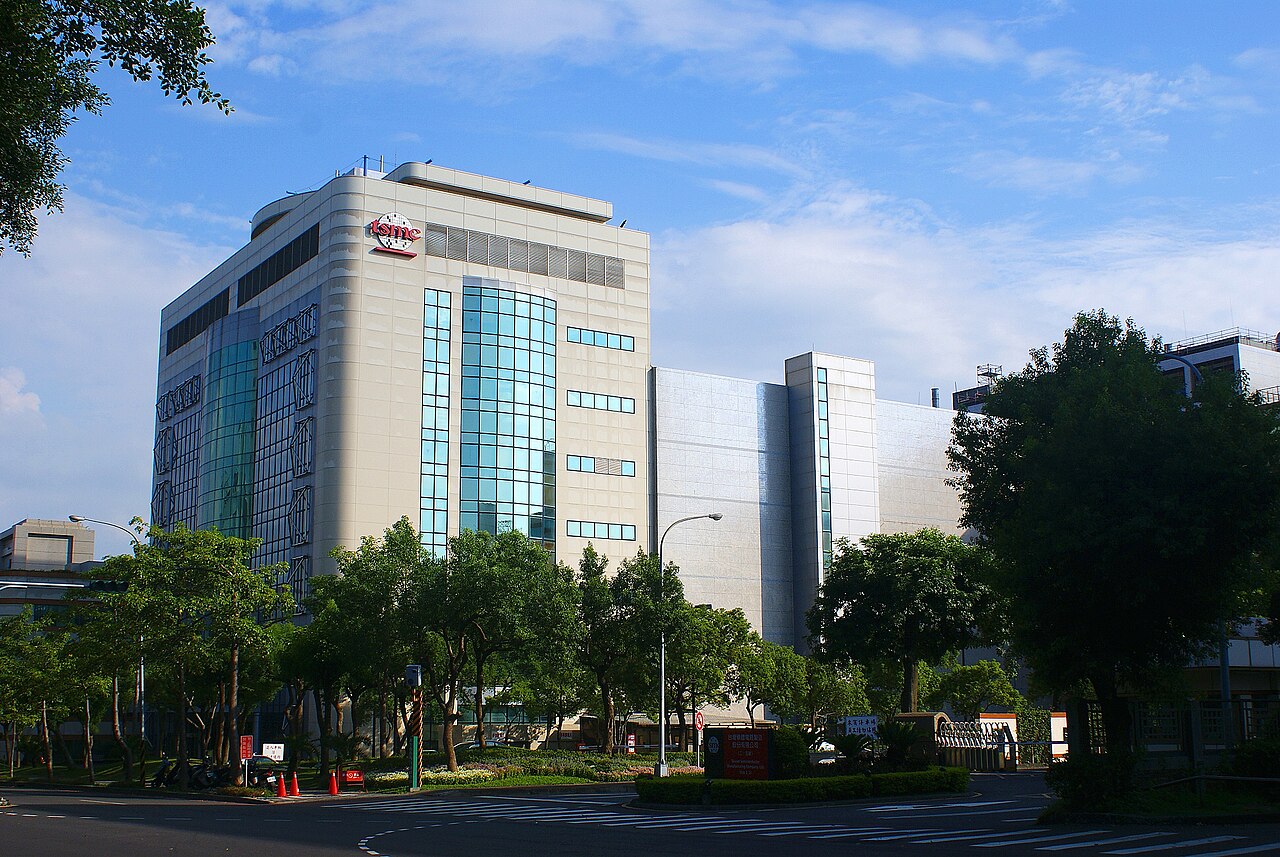
- Image: TSMC Fab5.JPG by Peellden (CC BY-SA 3.0), via Wikimedia Commons