Arkady Volozh and Yandex: The Russian Internet
Abstract
Arkady Volozh built Yandex into Russia’s dominant internet company, the search engine that beat Google on its home turf, and the platform that grew into Russia’s equivalent of Google, Uber, and Amazon combined. He launched it in 1997 (more than a year before Google was even incorporated) built a search engine specifically engineered for the grammatical complexity of the Russian language, and took the company public on NASDAQ in 2011. Then Vladimir Putin ordered the invasion of Ukraine, and Volozh found himself unable to remain both a Russian technology leader and a moral human being. His story is, among other things, one of the most painful exits in technology history.
CompTek and the Late Soviet Period
Arkady Volozh was born on February 11, 1964, in Guryev, Kazakhstan (then part of the Soviet Union) to a family with Jewish heritage. His father was a musician; his mother worked in oil and gas. He studied applied mathematics at the Institute of Oil and Gas Industry in Moscow, graduating in 1986, and spent several years working in a research institute.
The late Soviet period was an unusual moment for technology entrepreneurship: the planned economy was loosening, cooperatives were being permitted, and technically skilled people could create small businesses in ways that had been impossible a decade earlier. Volozh and a partner founded CompTek in 1989, an import and distribution business for computing equipment, initially bringing in foreign hardware for Soviet institutions that were beginning to acquire personal computers. It was the kind of business that the early post-Soviet chaos allowed: arbitrage between Western and Soviet prices, conducted by people with technical knowledge and tolerance for the institutional uncertainty of a collapsing planned economy.
CompTek survived the Soviet collapse, the hyperinflation of the early 1990s, and the financial crisis of 1998, partly because technology imports had genuine demand, and partly because Volozh proved adept at operating in environments where the rules were unclear. The experience of running a technology business through the Soviet collapse and its aftermath gave him a tolerance for uncertainty that would serve him well.
The Search Problem and the Russian Language
The search engine idea emerged from a specific technical problem that English-language search engines systematically failed to solve: Russian morphology.
Russian is an inflected language with six grammatical cases. A single noun can appear in a dozen or more forms depending on its syntactic role. The word for “city” (gorod) appears as gorod, goroda, gorodu, gorodom, gorode, and gorody depending on how it is used. A search engine that indexed only exact word forms would miss most relevant documents for any given query, if you searched for gorod, you would miss documents containing gorode or gorodu.
Volozh and his team developed a morphological search engine that understood Russian word forms and their relationships: a query for any form of a root word would return documents containing all related forms. This was not simple engineering; it required building a computational model of Russian grammar detailed enough to recognize related forms across irregular conjugations and declensions.
The technology was developed through CompTek and its software division, with Ilya Segalovich (a childhood friend of Volozh’s) as the lead technical architect. Yandex, the name combining “Yet ANother inDEXer” with the first letter of ya (the Russian word for “I,” also Cyrillic “Я”), was launched as a public search engine on September 23, 1997. Google was incorporated as a California company on September 4, 1998; Yandex predated it by over a year.
The morphological approach gave Yandex an immediate advantage over any Russian-language deployment of English-language search engines, which treated Russian text as bags of characters rather than as language. When Google entered the Russian market, it gradually improved its Russian-language handling, but Yandex had years of data and development investment in the problem.
Building the Russian Internet Platform
Yandex launched in what would become a pattern familiar to observers of Chinese internet companies: a Western model, adapted with deep local knowledge, outperforming the original in its home market.
In 2000, Yandex launched Yandex.Mail, an email service that competed with Russian versions of Western email products. Yandex.Maps followed, with detailed coverage of Russian cities that Google Maps took years to match. Yandex.News aggregated Russian-language media. Yandex.Market was a price-comparison and e-commerce platform. Each product was built with the kind of local linguistic and cultural knowledge that a foreign competitor could not easily replicate.
By 2010, Yandex held approximately 60% of Russian search queries against Google’s roughly 25–30%. This was exceptional by the standards of any non-English-speaking market; in most countries outside China, Google dominated. Russia was the clearest exception, and the exception was built on the morphological search advantage and years of product investment.
The company went public on NASDAQ on May 24, 2011, raising $1.3 billion at a valuation of approximately $8 billion, the largest technology IPO in the US since Google’s 2004 offering. The listing reflected both Yandex’s commercial success and Volozh’s strategic preference for operating in Western capital markets rather than Russian ones. The Russian government was a notable minority shareholder through a “golden share” that gave it veto power over certain ownership changes, a compromise that kept the state from blocking the listing while giving Moscow limited but real influence.
Yandex’s Google: Taxi, Food, Self-Driving Cars
The 2010s saw Yandex expand from search into every adjacent market that its data and infrastructure could reach.
Yandex.Taxi launched in 2011 and rapidly became the dominant ride-hailing platform in Russia. In 2018, Yandex merged its taxi operations with Uber’s Russian business, creating a joint venture in which Yandex held majority control. The partnership was a recognition by Uber that it had lost the Russian market to a better-capitalized and better-connected local competitor, the same dynamic that had defeated eBay in China. By 2020, Yandex.Taxi had been rebranded simply as Yandex and operated across Russia and several neighboring countries.
Yandex.Food and Yandex.Lavka (a rapid grocery delivery service) built a logistics infrastructure for food delivery. Yandex.Music and Kinopoisk (a film database and streaming service) built a media presence. Alice, Yandex’s voice assistant, launched in 2017 and was integrated into Yandex’s hardware devices, competing with Amazon’s Alexa and Google Assistant in Russian-speaking markets.
The self-driving car program (Yandex Self-Driving Group) was among the more serious non-American self-driving efforts, deploying test vehicles in Moscow and several US cities including Las Vegas, and collaborating with academic institutions. It was a statement about Yandex’s ambitions: the company was not content to be Russia’s Google; it wanted to compete in frontier technology globally.
By 2021, Yandex was Russia’s most valuable technology company, with revenues of approximately $4 billion and operations in fifteen countries.
February 24, 2022
On February 24, 2022, Russia launched its full-scale invasion of Ukraine. For Volozh, who had built a company on the premise that Russian technology could compete globally and on European capital markets, the invasion created an impossible situation.
The immediate business impact was severe. Western sanctions restricted Yandex’s ability to access financial markets. Advertisers (a significant portion of Yandex’s revenue) began pulling spending. The company’s Dutch holding structure, which had allowed it to list in New York and operate internationally, became a liability as Russian-Dutch financial flows became subject to restrictions.
But the moral dimension was more direct. Yandex controlled significant portions of Russian information infrastructure. Its news aggregator surfaced what its algorithms ranked; its maps showed the war; its search results shaped what Russians found when they looked for information about what was happening. Staying at the head of Yandex meant being responsible for that infrastructure’s role in an information environment that the Russian government was tightly controlling.
On June 3, 2022, after the European Union added him to its sanctions list, Volozh resigned as Yandex’s CEO and executive director. He had left Russia before the invasion; he did not return. In a statement issued in August 2023, he explicitly denounced the war, calling it “barbaric”, the strongest language that a prominent Russian businessperson had used publicly and a statement that made any return to Russia functionally impossible.
Warning
Volozh’s denunciation of the war was not without cost. His assets in Russia were effectively inaccessible; his relationships with Russian business and government contacts were severed; and he was personally sanctioned by the European Union in June 2022, a decision based on his former role as head of Yandex and Yandex’s perceived role in the Russian media landscape, which Volozh disputed. He requested removal from the sanctions list, arguing that he had resigned and denounced the war. The EU declined to renew his designation, lifting the sanctions in 2024.
Nebius: The International Remainder
The restructuring of Yandex became the defining business challenge of Volozh’s post-invasion period. The Dutch holding company that owned Yandex’s international and Russian assets needed to be separated: the Russian assets, which included the core search business, e-commerce, and ride-hailing operations, could not be owned by a Dutch entity under Russian regulatory pressure; the international assets, which included the self-driving car division and various international services, could not be operated from Russia.
In 2023–2024, a complex transaction was negotiated: Yandex’s Russian operations were sold to a consortium of Russian buyers for approximately $5.4 billion. The Dutch holding company retained the international technology assets (self-driving, cloud infrastructure, AI, and certain data assets) and was renamed Nebius Group. Nebius listed on NASDAQ in late 2024, with Volozh as its principal figure, attempting to build an AI infrastructure company from the assets of what had been one of Russia’s most successful technology businesses.
The irony was substantial: Volozh had spent twenty-five years building Russia’s internet. He now found himself rebuilding, in Amsterdam and on Western exchanges, using the fragments of what he had created, separated from the market and the language and the users that had made Yandex’s success possible.
The Language of Search and What It Measured
Yandex’s technical contribution to search was underappreciated outside Russia precisely because the problem it solved (morphological search for inflected languages) was invisible to English speakers, who never needed it. But the same challenge exists in Arabic, Turkish, Finnish, Hungarian, and many other languages. Yandex’s approach to Russian morphology was a practical demonstration that search engines needed to be linguistic systems, not just indexers.
The broader lesson of Yandex’s market dominance was about local knowledge as a competitive advantage. Google was, by any objective measure, a better-resourced and more technically sophisticated company than Yandex for most of the period in which Yandex held the Russian market. Yandex held the market because it understood Russian deeply (the language, the commercial culture, the behavior of Russian internet users) in ways that could not be replicated quickly from a headquarters in Mountain View.
For the related story of China’s local champions defeating global platforms in their home market, see China’s Tech Industry and Jack Ma and Alibaba.
📚 Sources
- Yandex N.V.: IPO Prospectus (Form F-1), May 2011, US Securities and Exchange Commission
- Nocetti, Julien: “Russia’s ‘Dictatorship-of-the-Law’ Approach to Internet Policy,” Internet Policy Review 4:4 (2015)
- Volozh, Arkady: Statement denouncing the war in Ukraine, August 10, 2023 (via CNN Business)
- Segal, Adam: The Hacked World Order: How Nations Fight, Trade, Maneuver, and Manipulate in the Digital Age (2016), PublicAffairs
- Guriev, Sergei & Rachinsky, Andrei: “The Role of Oligarchs in Russian Capitalism,” Journal of Economic Perspectives 19:1 (2005)
- Nebius Group — Wikipedia
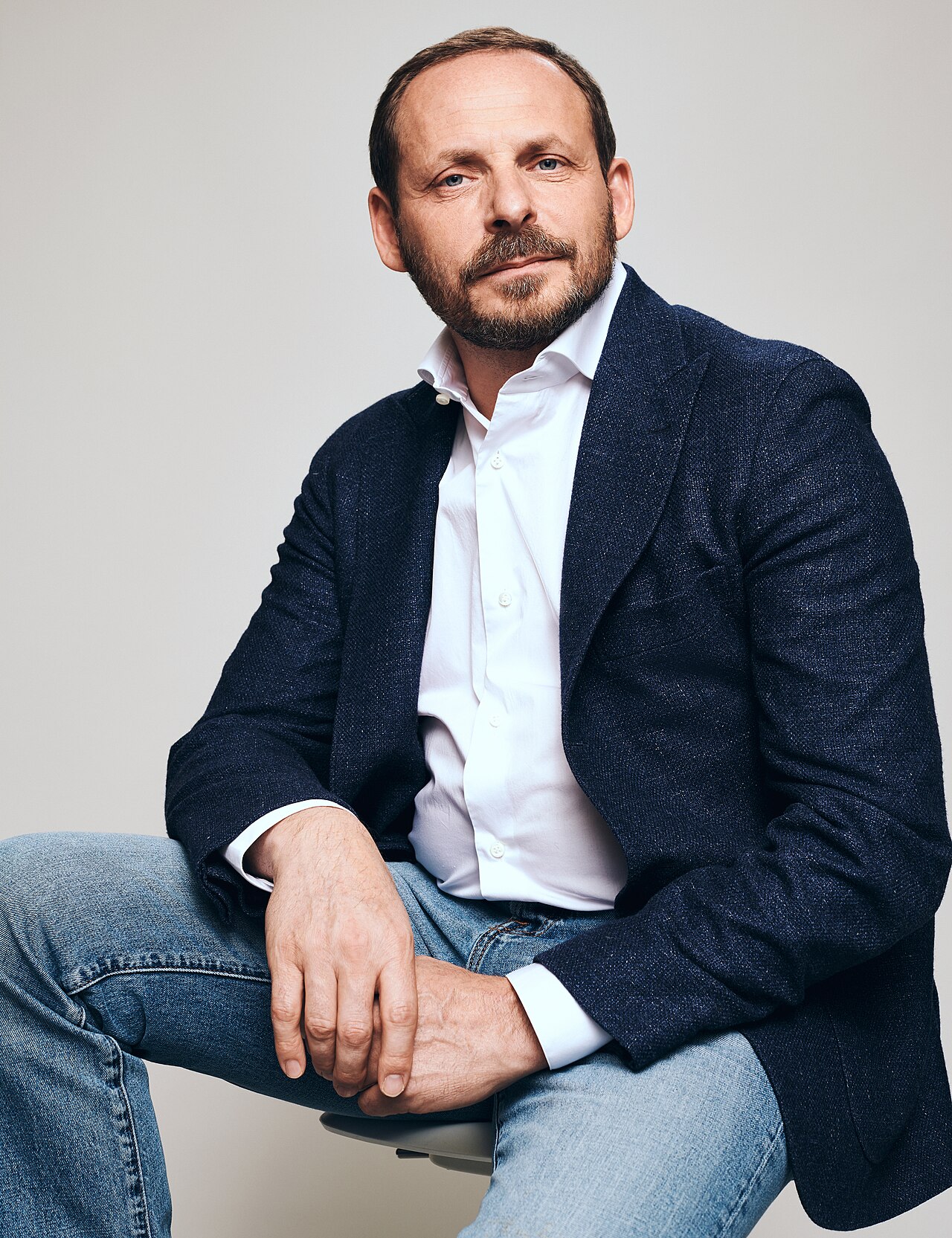
- Image: Arkady Volozh 2018.jpg by Семён Кац for Forbes (CC BY-SA 4.0), via Wikimedia Commons