Adobe: The Creative Software Empire
Abstract
Adobe was founded in December 1982 to sell one thing, a language for describing printed pages, and ended up owning the standard tools of graphic design, photography, publishing and video. Illustrator (1987), Photoshop (licensed in 1988), Acrobat (1993), the Aldus purchase that brought PageMaker and After Effects (1994), InDesign (1999) and the $3.4 billion takeover of Macromedia (2005) gave it a portfolio that professionals could hardly avoid. In 2013 it stopped selling software outright and moved everything to Creative Cloud subscriptions; revenue dipped for a year and then grew from $4.4 billion in fiscal 2012 to $23.8 billion in fiscal 2025. Regulators blocked its $20 billion bid for Figma in 2023, the FTC sued over its cancellation fees in 2024, and generative AI turned its customers’ worries into a question about its future. Shantanu Narayen, chief executive since 2007, hands over to Anil Chakravarthy on 1 December 2026. The founders’ page-description work is covered under John Warnock and PostScript; this article is about the company it built.
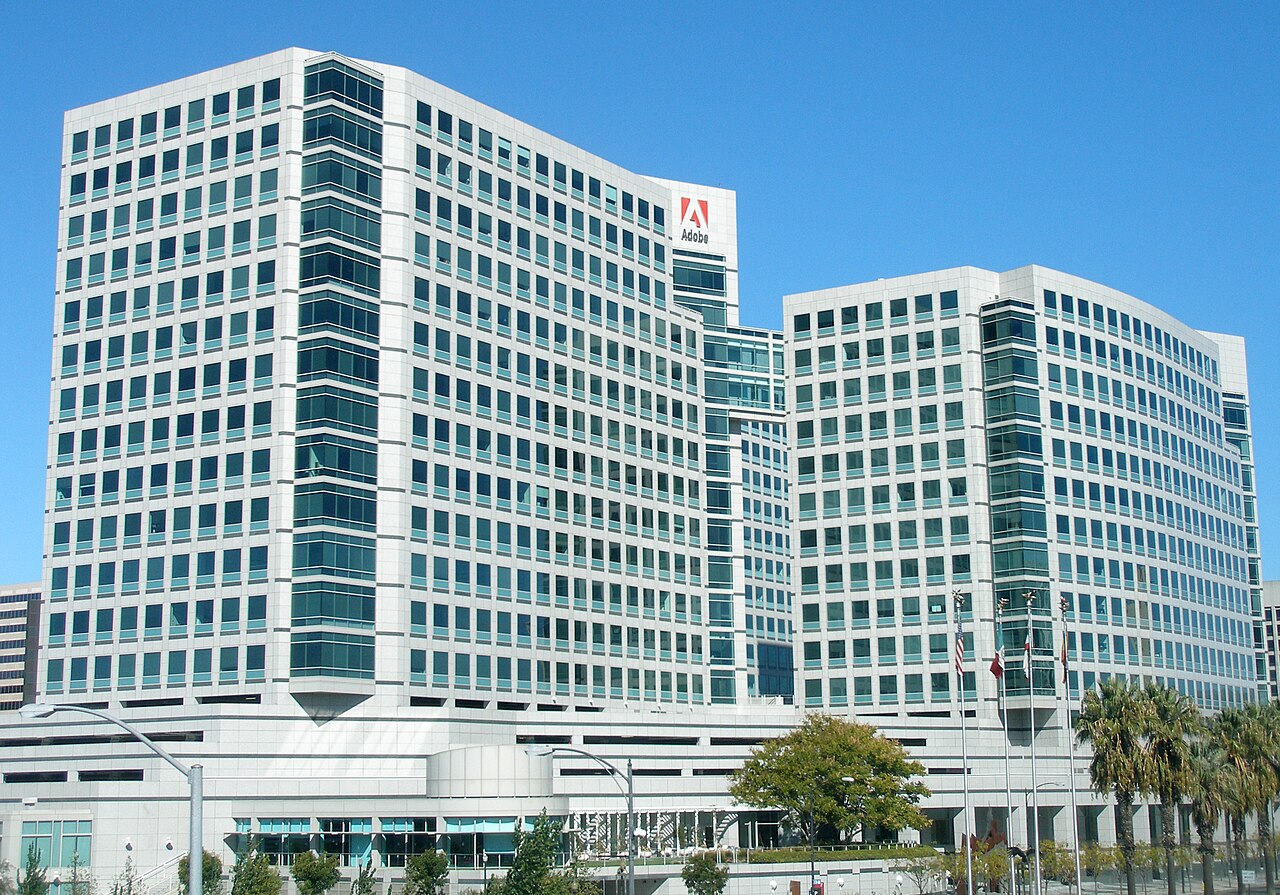
Two Researchers Leave Xerox
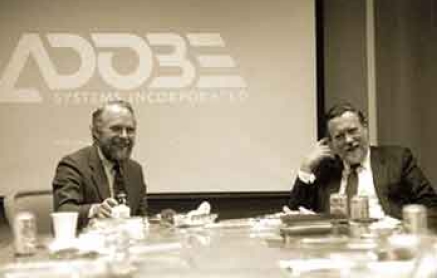
John Warnock and Charles “Chuck” Geschke worked together at Xerox PARC, where Warnock had developed a device-independent way of describing a printed page and Geschke was his manager. Xerox declined to commercialize their language, Interpress. In December 1982 the two left and founded Adobe Systems in Mountain View. The name came from Adobe Creek, which ran behind Warnock’s house in Los Altos.
Steve Jobs saw the work early. He offered to buy the company for $5 million, was turned down, and instead took a 19 percent stake in Adobe at five times its valuation, paying in advance for a five-year license for the company’s new language, PostScript, to put into Apple’s LaserWriter printer. That money made Adobe profitable in its first year. The LaserWriter shipped in 1985, and with Aldus PageMaker it started desktop publishing. Adobe went public in August 1986.
For its first years Adobe was a licensing business. Printer makers paid a royalty for every PostScript interpreter, and type foundries and designers paid for Adobe’s Type 1 outline fonts, whose format Adobe kept partly secret. That secrecy provoked the “font wars”: Apple and Microsoft developed the rival TrueType format and shipped it free with their operating systems, Apple in System 7 in 1991 and Microsoft in Windows 3.1 in 1992. Adobe published the Type 1 specification, released Adobe Type Manager to render its fonts smoothly on screen, and in 1996 agreed with Microsoft on OpenType, which merged the two approaches. The episode showed the limits of a business built on owning a format.
Illustrator and Photoshop

Adobe’s move from licenses to applications began with Warnock’s wife. Marva Warnock was a graphic designer, and Warnock wrote a drawing program in late 1986 to automate tasks she did by hand. Adobe Illustrator shipped on 19 March 1987 for the Macintosh. It let designers draw with Bézier curves, the same mathematical paths PostScript used, so that a logo stayed sharp at any size and printed exactly as drawn. Illustrator came with a videotape in which Warnock demonstrated it, because few designers had seen anything like it, and its packaging carried the face of Botticelli’s Venus, licensed from the Bettmann Archive. Marva Warnock also designed Adobe’s logo.
The second application came from outside. In 1987 Thomas Knoll, a PhD student at the University of Michigan, wrote a program called Display to show grayscale images on his Macintosh Plus’s black-and-white screen. His brother John Knoll, who worked on visual effects at Industrial Light & Magic, saw that it could become an image editor. Thomas added tools; the name ImagePro was taken, so they called it Photoshop. A scanner maker, Barneyscan, shipped about 200 copies with its hardware. John showed the program to Apple and to Adobe’s art director Russell Brown, and in September 1988 Adobe licensed it. Adobe previewed it at a designers’ conference in San Antonio in September 1989, with Mark Hamburg as second developer from 1990. Photoshop 1.0 shipped on 19 February 1990 for the Macintosh at $895, at a time when retouching on dedicated systems cost around $300 an hour. A Windows version (2.5) followed in 1992, layers arrived with version 3.0 in 1994, and in 1995 Adobe bought the program outright for $34.5 million, ending the Knolls’ royalties. John Knoll went on to win an Academy Award for visual effects.
Illustrator covered vector graphics and Photoshop covered pixels, the two halves of digital imaging. “To photoshop” became a verb for any manipulated picture, a usage Adobe discourages because it threatens the trademark.
Acrobat and PDF
In 1991 Warnock wrote a memo describing “The Camelot Project” (the Heinz Nixdorf MuseumsForum dates its start to 1990, with the programmer Bob Wulff as project lead): a way to send a document to any computer and have it look and print exactly as the author intended. The format was first called Interchange PostScript and the viewer Carousel; Warnock demonstrated it in early October 1991 by showing the same newspaper page identically on a DOS PC, a Windows PC, a Macintosh and a NeXT, and at COMDEX in November 1992 it was announced as PDF and won an award. The Portable Document Format and Acrobat 1.0 were released on 15 June 1993. Adobe sold the tools for making PDFs and, from 1994, gave away the Reader. Governments, courts, publishers and journals standardized on the format, and in 2008 Adobe handed it over as the ISO 32000 standard. PDF became the most durable thing the company made; the story is told in John Warnock and PostScript.
The Kidnapping
On the morning of 26 May 1992 two men abducted Chuck Geschke at gunpoint in the Adobe parking lot in Mountain View as he arrived for work. They demanded a ransom of $650,000. The FBI arrested one of them after he collected the money, and he led agents to a house in Hollister, where Geschke was freed; he had been held for four days. Both kidnappers were sentenced to life in prison. Geschke went back to work and remained co-chairman with Warnock until 2017. He died on 16 April 2021, and Warnock on 19 August 2023.
Buying the Rivals
Adobe grew in the 1990s and 2000s as much by acquisition as by invention.
- Aldus (31 August 1994, about $440 million). Adobe bought the maker of PageMaker, its old desktop-publishing partner. Aldus had itself acquired CoSA the year before, so the deal also brought After Effects, which became the standard tool for motion graphics. Frame Technology, maker of the long-document program FrameMaker, followed in October 1995 for $566 million.
- InDesign (1999). PageMaker had lost the professional layout market to QuarkXPress. Adobe built a new program, code-named K2, which analysts called the “Quark killer” before it shipped. InDesign read Photoshop and Illustrator files natively and had stronger typography, and over the following decade it displaced QuarkXPress as the layout standard.
- Creative Suite (2003). Adobe bundled its applications into one package, which made switching away from any single program harder.
- Macromedia (2005, $3.4 billion). Adobe bought its main competitor in web and multimedia tools, gaining Dreamweaver, Flash, Director, Fireworks, ColdFusion and the illustration program FreeHand.
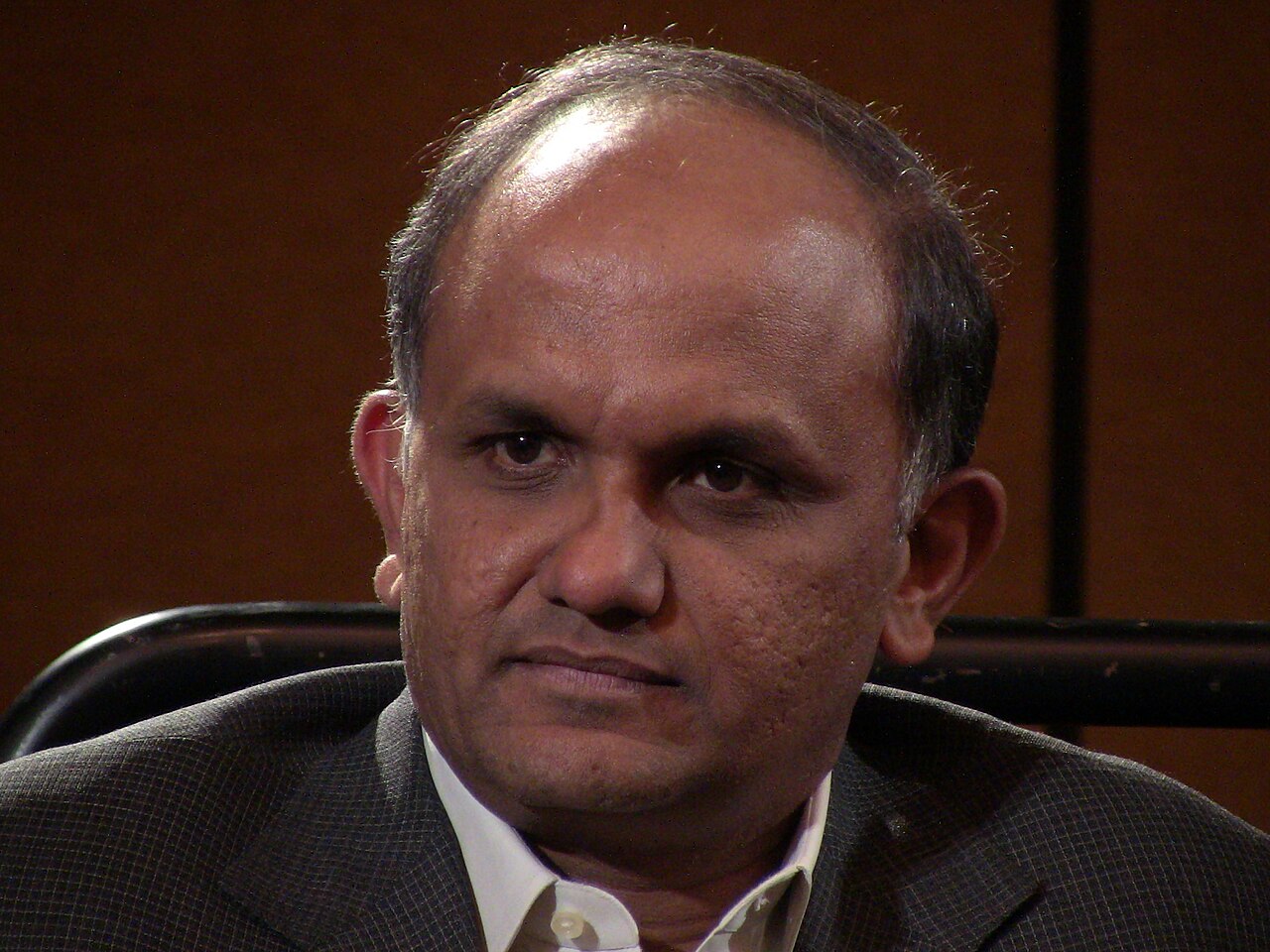
Under Bruce Chizen, chief executive from 2000, and Shantanu Narayen, who succeeded him on 1 December 2007, Adobe also moved into marketing software. It bought the web-analytics company Omniture in 2009 for $1.8 billion and in 2018 the e-commerce platform Magento ($1.68 billion) and the marketing-automation firm Marketo ($4.75 billion). These became Adobe Experience Cloud, a second business selling to marketing departments rather than designers.
Video and Photography
Adobe entered video before most personal computers could play it. In August 1991 it acquired a Macintosh editing project and released it in December 1991 as Adobe Premiere, built on Apple’s new QuickTime. It let a desktop computer do cut-and-splice editing that had required dedicated systems costing several times as much. Through the 1990s Premiere was a tool for amateurs and small studios; the professional market belonged to Avid and, from 1999, to Apple’s Final Cut Pro. Adobe rewrote the program as Premiere Pro, released on 21 August 2003, at first for Windows only.
The opening came from Apple. In June 2011 Apple replaced Final Cut Pro 7 with Final Cut Pro X, a complete rewrite that lacked features professional editors relied on, such as multicamera editing and support for older projects. Editors protested, and Adobe used the moment to court them, pointing to 2.3 million Premiere Pro seats in 2010 and a 45 percent year-on-year rise in its professional video sales on the Mac. Over the following decade Premiere Pro, together with After Effects and the audio editor Audition, became a standard in television and online video. In August 2021 Adobe added Frame.io, a cloud service for sharing and reviewing video cuts, for $1.275 billion.
In photography Adobe took the same route against the same rival. Apple released Aperture, a program for managing and developing large numbers of raw camera files, in 2005. Adobe answered with Photoshop Lightroom, previewed as a public beta in January 2006 and released on 19 February 2007. Lightroom never altered the original file; it stored a list of adjustments, so that photographers could process thousands of images and change their minds later. Apple stopped developing Aperture in 2014 and removed it from sale in April 2015, leaving Lightroom as the default for professional photographers.
Documents and Communities
Acrobat turned into a business of its own. In July 2011 Adobe bought EchoSign, a web service for signing contracts electronically, and in 2015 it combined Acrobat, the free Reader and the signing service into Document Cloud, sold by subscription like the creative tools. Electronic signatures made Adobe a competitor of DocuSign, with the free Reader as its way into offices that never bought a creative tool.
The company also bought its way into the places where creative people met. In December 2012 it paid more than $150 million in cash and stock for Behance, a portfolio network with about a million members, which became Creative Cloud’s showcase and recruiting site. In January 2019 it bought Allegorithmic, maker of the Substance tools for 3D textures used in games and film effects, and in 2020 the work-management service Workfront for $1.5 billion. In November 2025 it agreed to buy Semrush, a search-marketing platform, for $1.9 billion in cash, betting that companies would pay to measure how they appeared in AI-generated answers as well as in search results.
The Subscription Switch
Boxed software sold in waves. Customers bought a Creative Suite license (about $2,500 for the full Master Collection) and then skipped upgrades until a new version offered enough to justify the price, so Adobe’s revenue rose and fell with its release cycle. Piracy was widespread. Adobe announced Creative Cloud in October 2011 and launched it on 11 May 2012 as a subscription alternative alongside Creative Suite 6.
On 6 May 2013, at its MAX conference in Los Angeles, Adobe announced that there would be no Creative Suite 7. Future versions of Photoshop, Illustrator, InDesign and the rest would be available only by subscription, at $49.99 a month for the full set, and would stop working if the subscription lapsed. A Change.org petition against the decision passed 30,000 signatures within weeks. Critics objected that they would no longer own their tools and that their own files would become hard to open without paying.
Adobe had told investors to expect a revenue gap of about $200 million during the transition, and it came. Revenue fell from a record $4.40 billion in fiscal 2012 to $4.06 billion in fiscal 2013. Creative Cloud passed one million paid subscribers in September 2013, and a survey that year found most subscribers intended to renew. Revenue then grew every year: $5.85 billion in fiscal 2016, $11.17 billion in 2019, $17.61 billion in 2022 and $23.77 billion in fiscal 2025, with operating income of $8.71 billion. Much of the software industry later moved to subscriptions the same way.
The new model brought new risks. In October 2013 attackers broke into Adobe’s systems, stole source code for Acrobat and other products and copied data on 38 million active users, with passwords that had been encrypted rather than properly hashed; a file of 152 million records later circulated online. In May 2014 a login failure locked subscribers out of their software for more than a day. On 17 June 2024 the US Department of Justice, on behalf of the Federal Trade Commission, sued Adobe and two executives, alleging that it hid an early-termination fee of 50 percent of the remaining annual contract in fine print and made cancellation deliberately difficult. Adobe settled in March 2026, agreeing to pay $75 million, to provide $75 million in free services and to disclose the fee clearly and offer simple cancellation.
The Figma Bid
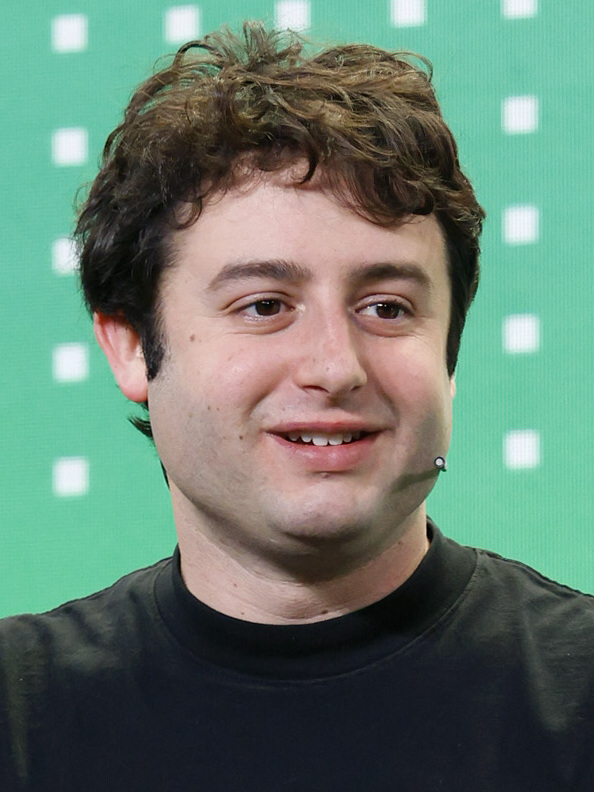
Adobe’s first real competitor in a generation ran in a web browser. Figma, founded by Dylan Field and Evan Wallace, built an interface-design tool in which several people could edit the same file at once, and product designers adopted it in place of Sketch and Adobe’s own XD. In September 2022 Adobe agreed to buy Figma for about $20 billion.
The UK Competition and Markets Authority and the European Commission both opened in-depth investigations and provisionally found that the deal would remove Figma as Adobe’s main competitive constraint in design tools. On 18 December 2023 the companies abandoned the merger, and Adobe paid Figma a $1 billion termination fee. Adobe had already put XD into maintenance mode in 2023 and stopped selling it as a standalone application. Figma went public on the New York Stock Exchange on 31 July 2025; its shares, sold at $33, closed the first day at $115.50, valuing the company at more than $65 billion on a fully diluted basis.
Firefly and the AI Question
Image generators such as Midjourney and Stable Diffusion appeared in 2022 and could produce in seconds what had taken a Photoshop artist hours. On 21 March 2023 Adobe introduced Firefly, its own family of generative models. Its selling point was legal: Adobe said the first model had been trained on Adobe Stock images, openly licensed work and public-domain material, so businesses could use the results without fear of copyright claims (see Copyright and IP in the Digital Age). In May 2023 Photoshop gained Generative Fill, which adds, extends or removes parts of an image from a text prompt. Some Adobe Stock contributors complained that their work had trained a system that competed with them, and reports later showed that the stock library contained images made with Midjourney.
Trust was strained again in June 2024, when updated terms of use said Adobe “may access your content through both automated and manual methods”. Designers read it as permission to train AI on confidential client work; Adobe said it did not train generative AI on customer content and rewrote the terms.
Investors worried that AI would shrink demand for professional tools while Canva, Figma and the AI companies competed for casual users. In March 2026 Narayen announced that he would step down after eighteen years as chief executive. On 3 September 2026 the board named Anil Chakravarthy, the former chief executive of Informatica who ran Adobe’s marketing-software business, as his successor from 1 December 2026, with Narayen becoming executive chair.
Dead End
Adobe’s clearest dead end came with the Macromedia purchase. Flash was for a decade how the web did animation, games and video, installed on nearly every desktop browser. It was also proprietary, a constant source of security holes and a drain on batteries. In April 2010 Steve Jobs published “Thoughts on Flash”, explaining why the iPhone and iPad would never run it and arguing that open standards (HTML5) would replace it. As the mobile web grew they did. Adobe announced Flash’s end in 2017 and stopped supporting Flash Player on 31 December 2020, urging users to uninstall it. Adobe had paid $3.4 billion for the company whose best-known product it then had to retire. The rise and fall of the plugin web is covered in Dead End: Flash and the Plugin Web.
📚 Sources
-
Heinz Nixdorf MuseumsForum blog, “Happy Birthday, PDF!” (15 June 2018) (Camelot, Wulff, the 1991 demonstration and the 1992 COMDEX announcement)
-
Heinz Nixdorf MuseumsForum blog, “30 Jahre Photoshop” (18 February 2020) (the 1989 preview, Mark Hamburg)
-
Wikipedia: Adobe Inc.: name, founding, Jobs’s offer and 19% stake, IPO, acquisitions, 2013 breach, FY2025 figures, CEO succession, FTC suit
-
Wikipedia: Adobe Photoshop: Display, ImagePro, Barneyscan, licensing September 1988, 1.0 on 19 February 1990, $895, versions, $34.5 million purchase
-
History of Information: Thomas & John Knoll Create Adobe Photoshop
-
Wikipedia: Adobe Illustrator and 80.lv, “1987: Adobe Unveils Illustrator With a Videotape”: release 19 March 1987, Marva Warnock, Venus image
-
Wikipedia: Charles Geschke: kidnapping 26 May 1992, ransom, Hollister, sentences, death 16 April 2021
-
Carnegie Mellon University, “CMU Remembers Adobe Founder and Alum Charles Geschke” (April 2021)
-
The Silicon Underground, “Adobe’s August 1994 acquisition of Aldus” and Wikipedia: List of acquisitions by Adobe: Aldus $446 million, Frame $566 million, CoSA
-
Seattle Times, “Adobe Set To Release ‘Quark Killer’ Software” (2 March 1999)
-
Museums Victoria: Adobe Premiere v1.0, 1991 and Wikipedia: Adobe Premiere Pro: acquisition August 1991, release December 1991, Premiere Pro 21 August 2003
-
Deadline, “Adobe Pays $1.275 Billion To Acquire Cloud Video Specialist Frame.io” (August 2021)
-
MacRumors, “Adobe Shipping Lightroom 1.0” (19 February 2007) and Wikipedia: Aperture (software)
-
TechCrunch, “Adobe Acquires Electronic Signature Startup EchoSign” (18 July 2011) and Wikipedia: Adobe Sign
-
TechCrunch, “Adobe Acquired Portfolio Service Behance For More Than $150 Million” (21 December 2012)
-
fxguide, “Adobe acquires Allegorithmic: Substance joins Creative Cloud” (January 2019)
-
CNBC, “Adobe to buy Semrush for $1.9 billion” (19 November 2025)
-
Stratrix, “Adobe Shifts to Creative Cloud (2013)”: Creative Suite at about $2,500, $49.99 a month, $200 million revenue gap
-
Wikipedia: Adobe Creative Cloud: announcement 2011, launch 11 May 2012, 6 May 2013 decision, petition, subscriber numbers, 2014 outage, 2024 terms
-
CG Channel, “Adobe kills Creative Suite, moves to Creative Cloud” (May 2013)
-
Adobe, “Adobe Reports Record Quarterly and Annual Revenue” (Q4 fiscal 2012) and Fstoppers, “Adobe’s Fiscal Year 2013 Numbers Have Been Released”
-
StockAnalysis: Adobe revenue 2005–2026: annual revenue by fiscal year
-
Newsshooter, “Adobe has agreed to a $150M Settlement” (13 March 2026) and CG Channel, “Adobe to pay $75 million to settle US subscription terms lawsuit” (March 2026)
-
TechCrunch: Adobe and Figma end $20B acquisition (18 December 2023) and CNBC: Adobe and Figma call off $20 billion merger
-
The Register, “Adobe: ‘No plans’ to invest in XD despite its Figma failure” (31 January 2024)
-
CNBC, “Figma (FIG) starts trading on NYSE after IPO” (31 July 2025)
-
Adobe, “Adobe Unveils Firefly, a Family of new Creative Generative AI” (21 March 2023)
-
Adobe Blog, “The future of Photoshop is here with Generative AI” (23 May 2023)
-
VentureBeat, “Adobe Stock creators aren’t happy with Firefly” and Yahoo Finance / Bloomberg, “Adobe’s ‘Ethical’ Firefly AI Was Trained on Midjourney Images”
-
CMSWire, “Adobe CEO Shantanu Narayen to Step Down After 18 Years” (March 2026) and CNBC, “Adobe names Anil Chakravarthy as CEO” (3 September 2026)
-
VentureBeat, “Adobe’s path from $200 million to $5 billion in recurring revenue”: the predicted $200 million revenue gap
-
Wikipedia: TrueType: System 7 (1991), Windows 3.1 (1992), OpenType (1996)
-
Knowledge at Wharton, “Adobe Acrobat at 20: Successes, Second Guesses and a Few Miscues”: free Reader with Acrobat 2.0 in 1994
-
Wikipedia: Company of Science and Art: Aldus acquired CoSA and After Effects in July 1993
-
Wikipedia: John Warnock and Computer History Museum, “In Memoriam: John Warnock (1940–2023)”: Marva Warnock’s Adobe logo, death 19 August 2023
-
Macworld, “Apple Final Cut FAQ: FCP7 import isn’t coming, multicam support is” (2011)
-
CG Channel, “Adobe updates its Terms of Use following artist backlash” (June 2024)
-
Image: Adobe World Headquarters.jpg by Coolcaesar (CC BY-SA 4.0), via Wikimedia Commons
-
Image: Warnock-Geschke-Adobe-1982.jpg by Adobe (CC BY-SA 3.0), via Wikimedia Commons
-
Image: John Knoll (2) (cropped).jpg by Bonnie Burton / Star Wars (CC BY 2.0), via Wikimedia Commons
-
Image: Adobe CEO Shantanu Narayen.jpg by Jolie O’Dell (CC BY 2.0), via Wikimedia Commons
-
Image: Dylan Field TechCrunch Disrupt 2022 1435088567 (cropped).jpg by TechCrunch (CC BY 2.0), via Wikimedia Commons