Southeast Asia's Tech Industry: Grab, Gojek, and the Super-App Archipelago
Abstract
Southeast Asia’s computing history before the super-apps is short and mostly governmental: an IBM 1401 hoisted through a third-floor window in Singapore in the early 1960s, a statutory board that computerised a civil service in the 1980s, and a Malaysian corridor that promised a Silicon Valley by decree in 1996. Southeast Asia’s technology industry solved problems that Silicon Valley had not noticed, using infrastructure Silicon Valley did not have, for users Silicon Valley did not understand. In a region of 680 million people spread across eleven countries and thousands of islands, where traffic made taxis unreliable and roads made addresses ambiguous, the motorcycle became the unit of economic organization. Gojek in Indonesia turned motorcycle taxis into a platform. Grab in Singapore turned the same insight into a regional empire. Sea Limited built gaming, e-commerce, and payments into a single company that became Southeast Asia’s most valuable. Singapore became a city-state that bet its future on being the financial and technological hub for a region it was too small to dominate economically. Vietnam became a software development center. The Philippines built the world’s largest business process outsourcing industry. The story of Southeast Asian tech is not one story but an archipelago of them, connected by the Association of Southeast Asian Nations, by shared capital flows, and by the same fundamental insight: that the billion people in this region were underserved by every existing platform.
Before the Super-Apps: The State as First User
The region’s early computing was done by governments, and Singapore’s is the best documented. IBM’s first data-processing equipment in the colony, a punched-card machine, went to the Lee Rubber Company in 1956. The first computer, an IBM 1401, went to the Central Provident Fund Board, the state pension scheme, in 1962 or 1963 (the ministry’s account says 1962, the National Library’s says September 1963). It did not fit through the front door of the CPF building on Anson Road, so the crates went in through a third-storey window.
The state stayed the main customer for two decades. A Committee on National Computerisation reported in 1980, and on 1 September 1981 the National Computer Board (NCB) was set up under Act No. 14 of 1981 with three statutory jobs: computerise the civil service, coordinate computer education and training, and build a computer-services industry. The Civil Service Computerisation Programme started at once with ten ministries. The Institute of Systems Science followed as a partnership of the NCB, IBM and the National University of Singapore, and TradeNet, the electronic customs-clearance system, went live in 1989. In 1999 the NCB merged with the Telecommunication Authority into the Infocomm Development Authority, which in turn merged into today’s IMDA on 30 September 2016. Every later Singapore initiative described below, including Smart Nation, is a descendant of the 1981 board.
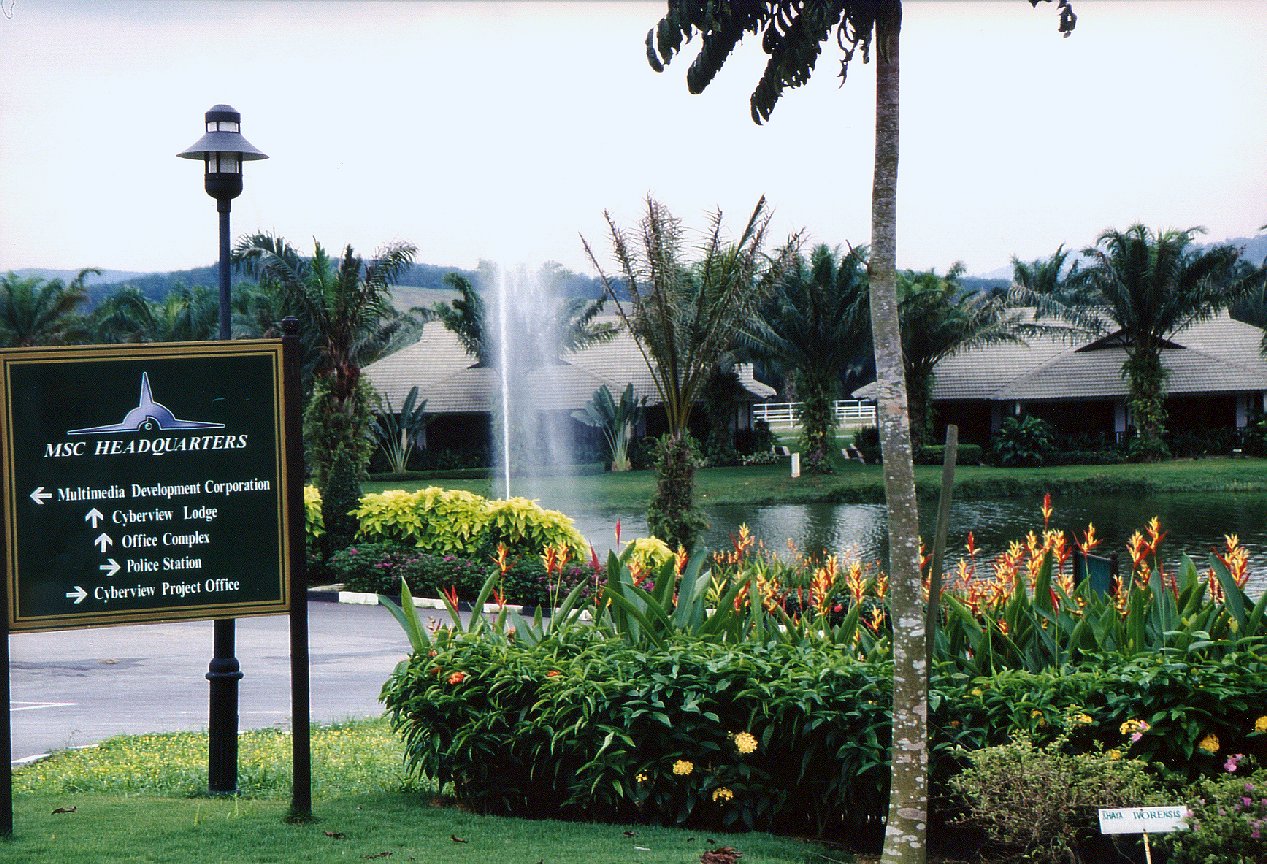
Malaysia’s version was a place. On 12 February 1996 Prime Minister Mahathir Mohamad inaugurated the Multimedia Super Corridor, a strip 15 by 50 kilometres from the Petronas Towers to the new airport, with the planned city of Cyberjaya at its centre and Vision 2020 as its justification. Companies with MSC status got ten-year tax holidays and unrestricted hiring of foreign knowledge workers; by 2017 more than 3,000 held it. The corridor’s Bill of Guarantees promised no censorship of the internet, a promise that let Steven Gan launch the news site Malaysiakini in November 1999 in a country where print licences were political. Cyberjaya itself filled slowly with back offices rather than founders, which is the story the rest of this article tells for the region as a whole: the companies that mattered were built on top of the infrastructure, not inside the districts planned for them.
Singapore: The Engineered Hub
Singapore is a city-state of 5.9 million people with no natural resources, no agricultural land, and no strategic depth. Its existence as a prosperous, stable nation is entirely the product of deliberate policy, primarily under Lee Kuan Yew, Prime Minister from 1959 to 1990, then Senior Minister and, from 2004 to 2011, Minister Mentor.
Lee Kuan Yew’s government pursued a strategy of making Singapore an attractive location for multinational corporations by providing stability, rule of law, educated English-speaking workers, and infrastructure that functioned reliably. The strategy worked for manufacturing in the 1970s and for financial services in the 1980s. In the 2000s, Singapore deliberately repositioned as a technology and innovation hub.
The Economic Development Board (EDB), Singapore’s investment promotion agency, recruited technology companies with tax incentives, streamlined incorporation processes, and access to Southeast Asian markets that Singapore’s political stability and English-language environment made easier to navigate. Google, Facebook, Amazon, Microsoft, and Alibaba all established their Southeast Asian headquarters in Singapore. The resulting concentration of technology companies, venture capital, and engineering talent created the cluster effects that self-reinforced.
Singapore’s smart nation initiative (launched 2014) represented a domestic application of the technology hub strategy: building Singapore itself as a demonstration of what digital infrastructure could achieve. The initiative included contactless payments infrastructure, digital identity systems, sensor networks for traffic management, and government data APIs that allowed third parties to build on public data. PayNow (2017), Singapore’s real-time payment system, let anyone transfer money between banks using only a phone number or national ID and became standard for everyday payments.
Singapore’s sovereign wealth funds (Temasek and GIC) became major investors in Southeast Asian technology companies, providing patient capital that private venture funds, with shorter time horizons, could not replicate. Temasek’s investments in Grab, Sea Limited, and regional fintech companies reflected both commercial and strategic motivations: a small city-state sustaining its relevance by owning stakes in the regional platforms that might otherwise be owned entirely by American or Chinese capital.
Gojek: The Motorcycle Economy
Nadiem Makarim co-founded Gojek in Jakarta in 2010 as a call center. Customers called to request an ojek (a motorcycle taxi) and Gojek dispatched the nearest available driver. The service addressed a specific problem of Jakarta life: the city’s catastrophic traffic made four-wheeled taxis unreliable, but motorcycle taxis operated informally and without coordination infrastructure.
The company started with twenty drivers. When Makarim launched a smartphone app in January 2015 (following the model of Uber and Grab but localized for Indonesian conditions) with four services, the app passed thirty million downloads in under two years, and by 2018 the driver fleet had grown past a million. The motorcycle was faster than a car in Jakarta traffic; the app made it bookable; the supply of drivers was effectively unlimited in a country where motorcycle ownership was near-universal and formal employment was scarce.
Gojek’s subsequent expansion was the defining illustration of the Southeast Asian super-app concept. Makarim observed that he had millions of users opening the app multiple times per day and a network of drivers already moving through the city. Adding services, food delivery (GoFood, 2015), package delivery (GoSend), grocery delivery (GoMart), mobile payments (GoPay, 2016), cleaning services, massage, car maintenance, required no additional customer acquisition. Each service added to the app’s daily usage; each driver in the network could provide multiple service categories.
GoPay became transformative. Indonesia had a large unbanked population and a cash-dependent economy. GoPay allowed users to load money into the app via convenience stores, ATMs, or bank transfers, and spend it on any Gojek service without a bank card. Merchants who accepted GoPay could receive payments without card terminals. The payment network replicated in the digital domain the informal cash economy it was replacing, immediate, low-friction, without bureaucratic requirements.
Gojek merged with Tokopedia (Indonesia’s largest e-commerce platform) in 2021 to form GoTo Group, creating a company that combined ride-hailing, food delivery, payments, and e-commerce. The GoTo IPO on the Indonesia Stock Exchange in April 2022 raised approximately $1.1 billion.
Grab: The Regional Empire
Anthony Tan co-founded Grab in Malaysia in 2012 as MyTeksi, a taxi booking app that addressed Malaysia’s specific problem: taxis were unreliable, unmetered, and frequently refused to use routes that the driver considered inconvenient. The app provided GPS tracking, fixed prices, and driver ratings, addressing the trust deficit that made Malaysian taxis frustrating.
The conceptual similarity to Gojek was strong, but Grab’s strategic approach was different: where Gojek concentrated on Indonesia (the world’s fourth most populous country), Grab pursued regional expansion from the start, eventually operating across Malaysia, Singapore, the Philippines, Indonesia, Thailand, Vietnam, Myanmar, Cambodia, and Laos, covering virtually all of mainland Southeast Asia.
Grab’s expansion required adapting to each market’s specific conditions: different regulatory environments, different payment infrastructure, different dominant modes of transport (motorcycle taxis in Indonesia and Vietnam, traditional taxis in Singapore, tuk-tuks in Cambodia). The operational complexity was enormous. The reward was a regional network that competitors entering any single market would struggle to dislodge.
SoftBank’s Vision Fund invested $2 billion in Grab in 2017, the largest single investment in a Southeast Asian startup at the time. The capital funded expansion, driver subsidies (a tactic borrowed from Uber’s playbook to build supply-side density), and the development of GrabPay.
Grab acquired Uber’s Southeast Asian operations in March 2018 in exchange for giving Uber a 27.5% stake in Grab, the formal recognition that Uber had lost the Southeast Asian market to a locally adapted competitor. Grab went public in the United States via SPAC merger in December 2021, raising approximately $4 billion in the largest-ever SPAC transaction.
Sea Limited: Gaming, Commerce, and Finance
Forrest Li (Li Xiaodong) founded Sea Limited in Singapore in 2009 as Garena, a gaming platform that licensed and distributed popular titles including League of Legends and Free Fire for Southeast Asian markets. Gaming was the entry point because Southeast Asia had high mobile internet penetration, young demographics, and intense gaming culture, but limited access to Western gaming titles.
Sea Limited added Shopee (e-commerce, 2015) and a payments arm that began as AirPay in 2014 and was rebranded SeaMoney in 2019, creating a three-part platform: gaming generated cash flow and user acquisition; Shopee captured e-commerce spending; SeaMoney captured the financial services needs of the resulting user base. The model was explicitly similar to Tencent’s in China (where gaming profits funded ecosystem expansion) but adapted for Southeast Asia’s more fragmented regulatory environment.
Free Fire, Sea’s internally developed mobile battle royale game (2017), became the most downloaded mobile game globally in 2019 and the most popular game in Southeast Asia, India, and Latin America. Its distribution through Garena’s network, its optimization for low-end Android devices, and its free-to-play monetization through cosmetic items made it accessible to users with modest smartphone hardware, a critical differentiator in markets where $200 Android phones were the norm.
Shopee’s growth in Southeast Asian e-commerce was remarkable. Launched in 2015, it surpassed Lazada (an earlier e-commerce leader backed by Rocket Internet and later Alibaba) across most Southeast Asian markets within three years. Sea Limited’s market capitalization peaked at approximately $200 billion in late 2021, briefly making it more valuable than many Western technology companies.
Vietnam: The Software Factory
Vietnam did not produce regional platforms, but it built one of Southeast Asia’s largest software development industries, a destination for technology outsourcing similar to India’s position in the 1990s, with lower costs and comparable technical quality.
Vietnam’s advantages were specific: a young population (median age 31), strong mathematics education from the Vietnamese education system’s emphasis on STEM, and wages significantly below India’s by the 2010s as Indian IT salaries rose. FPT Software, the IT services division of FPT Corporation (Vietnam’s largest technology company), had over 35,000 employees and clients across Japan, the US, and Europe.
Japan’s relationship with Vietnamese software development was particularly deep: Japanese companies, facing domestic talent shortages and high salaries, nearshored substantial development work to Vietnam. Ho Chi Minh City and Hanoi accumulated large Japanese-oriented software development centers.
The Philippines: BPO at Scale
The Philippines built a different kind of technology industry: not software development but business process outsourcing (BPO), call centers, back-office processing, and customer support for American and Australian companies.
The Philippines’ BPO industry grew from near-zero in 2000 to about 1.7 million full-time employees and $35.4 billion in revenue in 2023, surpassing India as the world’s largest destination for voice-based BPO. The competitive advantage was specific: Filipinos speak accented but highly intelligible English, are culturally familiar with American consumer expectations from over a century of American cultural presence, and work for wages that make their services economically attractive even accounting for time zone differences.
The BPO industry produced genuine economic development, creating a large, stable middle class in Metro Manila and secondary cities like Cebu, Davao, and Clark. But it was a services industry dependent on cost arbitrage rather than technology innovation, and it remained vulnerable to automation. By the early 2020s, AI customer service tools were beginning to threaten the most routine categories of BPO work.
See also: Australia’s Tech Industry: Atlassian, WiFi, and the Tyranny of Distance.
📚 Sources
- Speech by SMS Tan Kiat How at IBM Singapore 70th Anniversary Preview Day — Ministry of Digital Development and Information (punched-card machine 1956, first computer at CPF Board 1962, ISS)
- National Computer Board is formed — Singapore National Library Board, HistorySG (1 September 1981, Act No. 14 of 1981, the 1980 committee, ten ministries)
- Stories of Yesteryear: Voices of Innovation — National Archives of Singapore (IBM 1401 at CPF, September 1963, the third-storey window)
- “S’pore went through Smart Nation-like drive in 1980s” — Mothership (Civil Service Computerisation Programme, TradeNet 1989)
- Infocomm Media Development Authority — Wikipedia (IDA formed 1999 from TAS and NCB; IMDA from 30 September 2016)
- MSC Malaysia — Wikipedia
- Gojek — Wikipedia (Nadiem Makarim, the call-centre origin, and the merger with Tokopedia into GoTo)
- Grab — Wikipedia (Anthony Tan and Tan Hooi Ling, the MyTeksi launch, and the Uber Southeast Asia acquisition)
- Sea Ltd — Wikipedia
- GSMA: “The Mobile Economy: Asia Pacific 2023”
- e-Conomy SEA 2023 — Google, Temasek, Bain & Company
- IBPAP (IT and Business Process Association of the Philippines): Annual Report 2023 · 2023 figures of 1.7 million full-time employees and about $35.4 billion in revenue, as reported at the 15th International IT-BPM Summit
- Kasetsiri, Phakamas: “Southeast Asia’s Super App Economy” — Journal of Southeast Asian Economies 38(2) (2021)
- Singapore EDB: Investment Statistics and Key Sectors 2023
- Hill, Hal & Menon, Jayant: “ASEAN Economic Integration” — Asian Economic Journal 24(2): 107–115 (2010)