Steve Wozniak: The Engineer's Apple
Abstract
The personal computer might have happened without Steve Jobs. It would not have happened the way it did without Steve Wozniak. Wozniak designed the Apple I and Apple II almost entirely alone, working through a problem the way an engineer does, not to build a company or make a fortune, but because the elegance of a solution that does more with fewer chips was its own reward. He was perhaps the last great hardware hacker in the tradition of the hobbyist movement: a man who gave away schematics, shared his designs with the Homebrew Computer Club before Apple asked him to keep them proprietary, and who, after becoming fabulously wealthy, funded rock concerts and gave Apple stock to his employees because he thought it was the right thing to do.
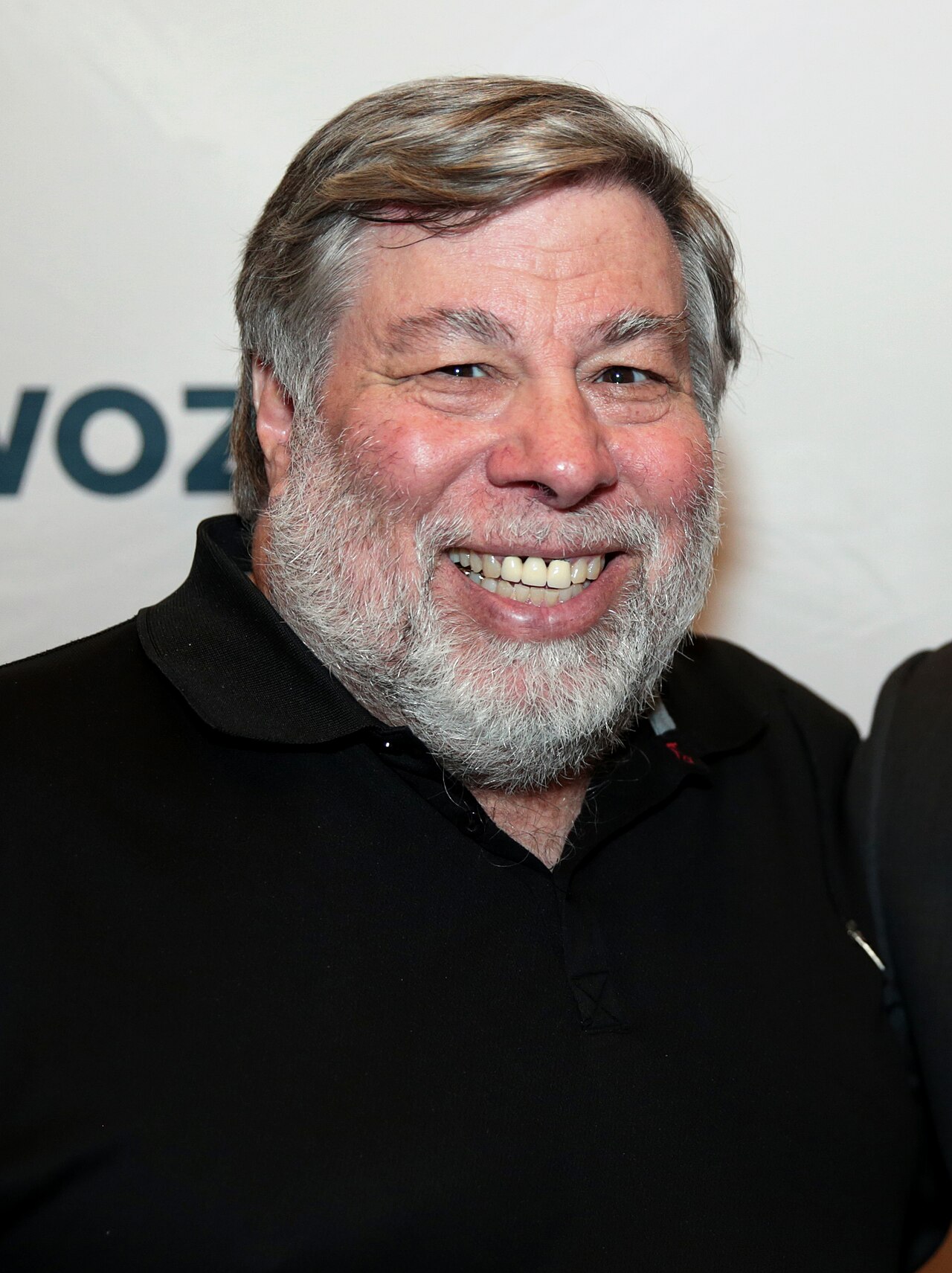
The Engineer’s Childhood
Stephen Gary Wozniak was born on August 11, 1950, in San Jose, California. His father, Jerry Wozniak, was an engineer at Lockheed, working on satellite systems. Jerry Wozniak brought home technical manuals and electronic components; he taught his son Boolean logic before the boy was ten, explaining the principles of transistors and circuit design at the kitchen table.
Wozniak later credited his father as the most important influence on his engineering approach: do more with less. Every extra component was a failure of design. The goal was not to build a machine that worked; the goal was to build a machine that worked with the minimum possible number of parts.
By middle school, Wozniak was designing ham radio systems and had built a transistor-based tic-tac-toe machine. At Homestead High School, he met Steve Jobs through a mutual friend; Jobs was five years younger, a scrappy, intense kid who immediately recognized that Wozniak was different. Where most people showed Wozniak their projects, Jobs wanted to know how to sell his.
Blue Boxes and Berkeley
In 1971, Wozniak read a Esquire article about “phone phreaks”, people who had discovered that AT&T’s long-distance switching network could be manipulated with a 2,600-hertz tone, granting free access to the network. Wozniak was fascinated by the technical challenge. He built a blue box from scratch, first an analog version, then a digital one that was more reliable.
Jobs saw the blue box and immediately thought: product. They manufactured and sold them to students at UC Berkeley for $150 each. Wozniak has estimated they sold between forty and two hundred units. Jobs later said the blue box taught him that “Woz and I could build something and sell it. That was the start of Apple.”
Wozniak studied at UC Berkeley’s College of Engineering, taking a leave of absence to work at Hewlett-Packard in 1972. He remained a HP employee (working on calculators) while he designed the machine that became the Apple I. He showed it first to HP, which declined several times: a personal computer was not HP’s business.
The Apple I: Design Without Purpose
In 1975, Wozniak began attending the Homebrew Computer Club, a group that met in a garage in Menlo Park to discuss the newly available microcomputer kits. The Altair 8800 was the club’s obsession. Wozniak studied the Altair and concluded he could design something better, a machine with a real keyboard, a video output, and a BASIC interpreter that ran automatically on startup, without requiring the user to manually toggle switches to enter programs.
He designed the Apple I around the MOS Technology 6502 processor, which he had bought at a computer faire for $25, a fraction of the cost of the competing Intel 8080. The 6502 required fewer support chips, which meant Wozniak could build a complete, working computer on a single board with far fewer components than anyone else had managed.
He shared the design freely at the Homebrew Computer Club, distributing schematics and encouraging others to build their own. Jobs persuaded him to stop giving it away. On April 1, 1976, they co-founded Apple with Ronald Wayne.
The Apple I was a board, not a finished product. It had no case, no power supply, no keyboard beyond the circuit traces. The Byte Shop, a local computer store, ordered fifty assembled units at $500 each and sold them for $666.66. Wozniak chose that price because he liked repeating digits.
The Apple II: A Machine for Everyone
The Apple II was in a different category from the Apple I. It was not a hobbyist board; it was a finished product, and it was intended to be used by people who were not engineers.
Wozniak’s key technical achievements in the Apple II:
Color graphics. Wozniak exploited a quirk in how the NTSC television standard encoded color to produce graphics with 16 colors, a feat considered impossible at the time on a machine with so little hardware. The trick worked because of a precise timing relationship between the processor’s clock and the television’s color burst signal. It required no additional chips.
The disk controller. In 1978, Apple needed a floppy disk drive. Wozniak designed the controller in two weeks while sick with a cold. The standard disk controller of the era used 50 or more chips. Wozniak’s used eight. The secret was a self-synchronizing algorithm: rather than relying on a separate clock signal to tell the drive head where each bit began, Wozniak encoded the sync information directly into the data stream using specific patterns of flux transitions. This meant the drive could read disks reliably without the additional hardware that every other designer assumed was required. The controller did as little as possible in hardware (the disk spun at a constant 300 RPM) and offloaded the hard work to software, which is why it needed so few chips. Engineers at other companies studied his disk controller circuit for years trying to understand how it worked; some concluded it was simply impossible.
Eight expansion slots. Wozniak fought Jobs over the slots. Jobs wanted a sealed machine with no expansion; Wozniak insisted that engineers should be able to adapt the machine. The slots won. One of them took the Disk II controller card in 1978, which gave the machine the floppy drive on which VisiCalc, the killer application that made the Apple II commercially essential, ran from October 1979.
The Design Philosophy
Wozniak’s design approach was the inverse of the industry norm: start with the minimum number of components required and add only what was functionally necessary. This produced machines that were cheaper to manufacture, more reliable, and (because they required fewer chips with fewer points of failure) often faster than competing designs built with more hardware. It was an aesthetic as much as an engineering discipline.
Myth: Wozniak designed the Apple II single-handedly.
Wozniak was the genius behind the digital logic, the color graphics, the disk controller, the whole architecture were his. But turning that brilliant board into a mass-market product took others: Rod Holt designed the Apple II’s innovative switching power supply (light, cool-running, fanless, itself a hard engineering feat), and Jerry Manock designed the moulded plastic case that made it look like an appliance rather than a hobbyist kit. The machine that sold millions was Wozniak’s logic inside a product other people helped make shippable. See Myths and Misconceptions.
Pranks and Side Ventures
The same person who counted chips to the minimum ran an elaborate parallel life as a prankster. Wozniak had been building gag devices since school: a fake bomb (a metronome wired to batteries) that got him sent to the principal’s office and, briefly, juvenile detention, and a pocket TV jammer he used to torment dorm-mates watching television.
At the first West Coast Computer Faire in April 1977, the same show where the Apple II debuted, Wozniak printed 20,000 brochures for a nonexistent computer called the Zaltair, a parody of the Altair 8800 and its BASIC. The brochure advertised a “BAZIC” language with “a feature we call perZonality” and carried forged MITS trademarks. He hid an acrostic inside a fake endorsement quote so the joke could not be traced to him. Steve Jobs fell for it and, according to Wozniak, began comparing the fictional machine’s specs to the Apple II. Wozniak did not admit authorship for years; he gave Jobs a framed copy as a birthday present in 1985.
Around the same time he set up Dial-A-Joke, a home answering-line that played a recorded joke to anyone who called. Wozniak claimed it became the busiest such line in the San Francisco Bay Area, fielding on the order of two thousand calls a day, and he answered many himself in a Polish accent under the name “Stanley Zeber Zenskanitsky.” One repeat caller was Alice Robertson, who became his first wife.
The Plane Crash and the Withdrawal
On February 7, 1981, Wozniak took off from the Sky Park Airport in Scotts Valley, California, in a single-engine Beechcraft Bonanza piloted by himself. The plane crashed shortly after takeoff. He and his fiancée, Candi Clark, and two passengers survived; Wozniak suffered a fractured skull and severe memory loss, anterograde amnesia that prevented him from forming new long-term memories for weeks.
He eventually recovered, but the crash changed him. He had already been growing distant from the day-to-day work of Apple, the company had become a corporate entity, and corporate life did not interest him. He took a leave of absence and enrolled at Berkeley under the pseudonym “Rocky Raccoon Clark,” completing his bachelor’s degree in electrical engineering and computer science in 1986.
He returned to Apple briefly, but effectively stepped back from the company’s direction. His last significant contribution was the Apple IIgs, an advanced version of the Apple II architecture, in 1986.
The Rock Concerts and Later Life
With his Apple stock, Wozniak funded the US Festival in 1982 and again in 1983, multi-day rock concerts in the California desert that drew up to 700,000 attendees. The concerts featured headliners including The Police, Fleetwood Mac, Tom Petty, and David Bowie. The festivals lost an estimated $12.5 million combined. Wozniak did not mind.
When Apple’s 1985 reorganization left many early employees without the stock options that Jobs and others had received, Wozniak sold large blocks of his own Apple stock below market value to give those employees a stake in the company they had helped build. He received no credit from Apple for this.
Wozniak officially resigned from Apple in 1985, though he maintained a nominal employee status (and received a small paycheck) for decades because Jobs thought it mattered that he still technically worked there.
He co-founded several companies, most of which were modest. He taught fifth-grade computer classes in the Los Gatos school district for several years, paying for much of the equipment out of his own pocket. He later said this was the most satisfying professional work of his life.
The Engineer and the Salesman: A Philosophical Contrast
The difference between Wozniak and Jobs is the difference between engineering culture and product culture, and the tension between those cultures runs through the entire history of Silicon Valley.
Wozniak’s instinct, at every stage, was to share. He showed his Apple I designs to the Homebrew Computer Club before Apple had asked him to keep them proprietary. He wanted to give the Apple I schematic away for free; Jobs was the one who suggested they sell boards instead. When Wozniak received a stock bonus from Apple’s 1980 IPO, he gave portions of his own shares (“Woz Plan” grants) to early employees who had been left out of the official distribution, including secretaries and support staff who had worked alongside the engineers building the company. He took no credit for this and told no one outside Apple.
His view of intellectual property was characteristically direct: knowledge that improves people’s lives should be freely available. The hobbyist ethic (the same ethic Bill Gates attacked in his open letter to the Homebrew Computer Club) was, for Wozniak, the natural condition of the engineer. You build something clever, you explain how it works, someone else builds something cleverer on top of it. The system improves.
Jobs’s view was the opposite. Information was leverage. Design was proprietary. The Apple II disk controller was a competitive advantage precisely because competitors could not figure out how it worked; publishing the algorithm would have destroyed that advantage. Jobs was building a company, not a library.
Neither view was wrong in its own terms. Wozniak’s philosophy produced the Homebrew Computer Club, the open-source movement, and Linux. Jobs’s produced the Macintosh, the iPod, and the iPhone. The personal computer revolution required both: the open sharing of ideas that produced the technical foundations, and the ruthless product discipline that turned those ideas into objects people would actually pay for.
Info
Wozniak’s relationship with the open-source movement is complicated by timing. He worked before the term existed, and his instincts were those of the hacker tradition (technical knowledge as a shared commons) rather than the explicitly political framework that Richard Stallman and later Linus Torvalds would articulate. But the values were continuous: the belief that software and hardware knowledge should not be hoarded for commercial advantage. See The Open Source Revolution for the movement that most directly descended from this tradition.
📚 Sources
- Wozniak, Steve, with Gina Smith: iWoz: Computer Geek to Cult Icon: How I Invented the Personal Computer, Co-Founded Apple, and Had Fun Doing It (2006), Norton
- Isaacson, Walter: Steve Jobs (2011), Simon & Schuster
- Freiberger, Paul, and Michael Swaine: Fire in the Valley: The Making of the Personal Computer (2000), McGraw-Hill
- Levy, Steven: Hackers: Heroes of the Computer Revolution (1984), Anchor Press/Doubleday
- Apple I and Apple II technical documentation — Computer History Museum, Mountain View, CA
- Borchers, Detlef: “Die Menschheit auf eine neue Stufe bringen – zum 60. Geburtstag von Steve Wozniak” — heise online, 11.08.2010
- Disk II — Wikipedia (on sale June 1978, later $595, controller card in a bus slot)
- VisiCalc — Wikipedia (Apple II release 17 October 1979, files saved to cassette or Disk II)
- Image: Steve Wozniak by Gage Skidmore.jpg by Gage Skidmore (CC BY-SA 3.0), via Wikimedia Commons