Canada's AI Cluster: How Three Universities Produced the Deep Learning Revolution
Abstract
In the late 1980s, neural networks were an unfashionable research program that most of the computer science establishment considered a dead end. The major American universities had largely defunded the area after two AI winters. Three Canadian universities had not. At the University of Toronto, Geoffrey Hinton kept working on backpropagation. At the Université de Montréal, Yoshua Bengio worked on language and recurrent networks. At the University of Alberta, Rich Sutton developed the mathematical foundations of reinforcement learning. All three were supported by the Canadian Institute for Advanced Research (CIFAR), which provided modest, long-horizon funding for speculative research precisely because it was unfashionable. When the deep learning revolution arrived in 2012, its intellectual architects were Canadian, not because Canada had a grand AI strategy, but because Canada had been patient enough to fund people that America had given up on.
The AI Winters and the Canadian Exception
The history of artificial intelligence before 2012 is largely a history of oversold promises followed by funding catastrophes. The first AI winter (1974–1980) came when symbolic AI systems failed to generalize beyond the narrow domains they were designed for. The second AI winter (1987–1993) followed the collapse of the expert systems market and the failure of the Lisp machine industry.
In both winters, funding agencies (primarily DARPA in the United States) cut off support for approaches that hadn’t delivered. Neural networks were a particular casualty: after Marvin Minsky and Seymour Papert’s 1969 book Perceptrons demonstrated the limitations of single-layer networks, institutional support for neural network research in the US essentially dried up. The dominant approach in the 1980s and early 1990s was symbolic AI: logic-based systems, expert system shells, knowledge engineering.
Canada made a different bet. The Natural Sciences and Engineering Research Council (NSERC) provided baseline funding for academic research without the project-specific deliverable requirements that DARPA imposed. More importantly, in 1982 the Canadian Institute for Advanced Research was founded with an explicit mission: fund groups of researchers working on long-horizon, high-risk problems that wouldn’t qualify for conventional project-based grants.
CIFAR’s Neural Computation and Adaptive Perception (NCAP) program, which Hinton proposed and launched in 2004 (today renamed Learning in Machines & Brains), brought together Hinton, Bengio, LeCun, and a small network of researchers under a shared intellectual umbrella with multi-year funding and no requirement to produce commercially relevant results. Hinton would lead the program for a decade. The funding was modest (CIFAR was not wealthy by American standards) but it was stable and it was unconditional. This turned out to matter enormously.
Why Canada Specifically?
The concentration of deep learning pioneers in Canada is not explained by Canadian government foresight about AI. It is explained by a specific moment in the 1980s when Geoffrey Hinton, unable to secure tenure at institutions closer to the center of the American AI establishment (Carnegie Mellon, MIT, Stanford), took a position at the University of Toronto. Bengio’s presence in Montreal reflects French-language Quebec’s tendency to recruit from French academic networks rather than American ones. Sutton’s Edmonton position reflects the University of Alberta’s decision to hire a reinforcement learning researcher when nobody else was. The cluster was assembled from academic career contingencies, not from strategic intent. What Canada did do was provide stable funding that allowed the careers to continue.
Geoffrey Hinton and the University of Toronto
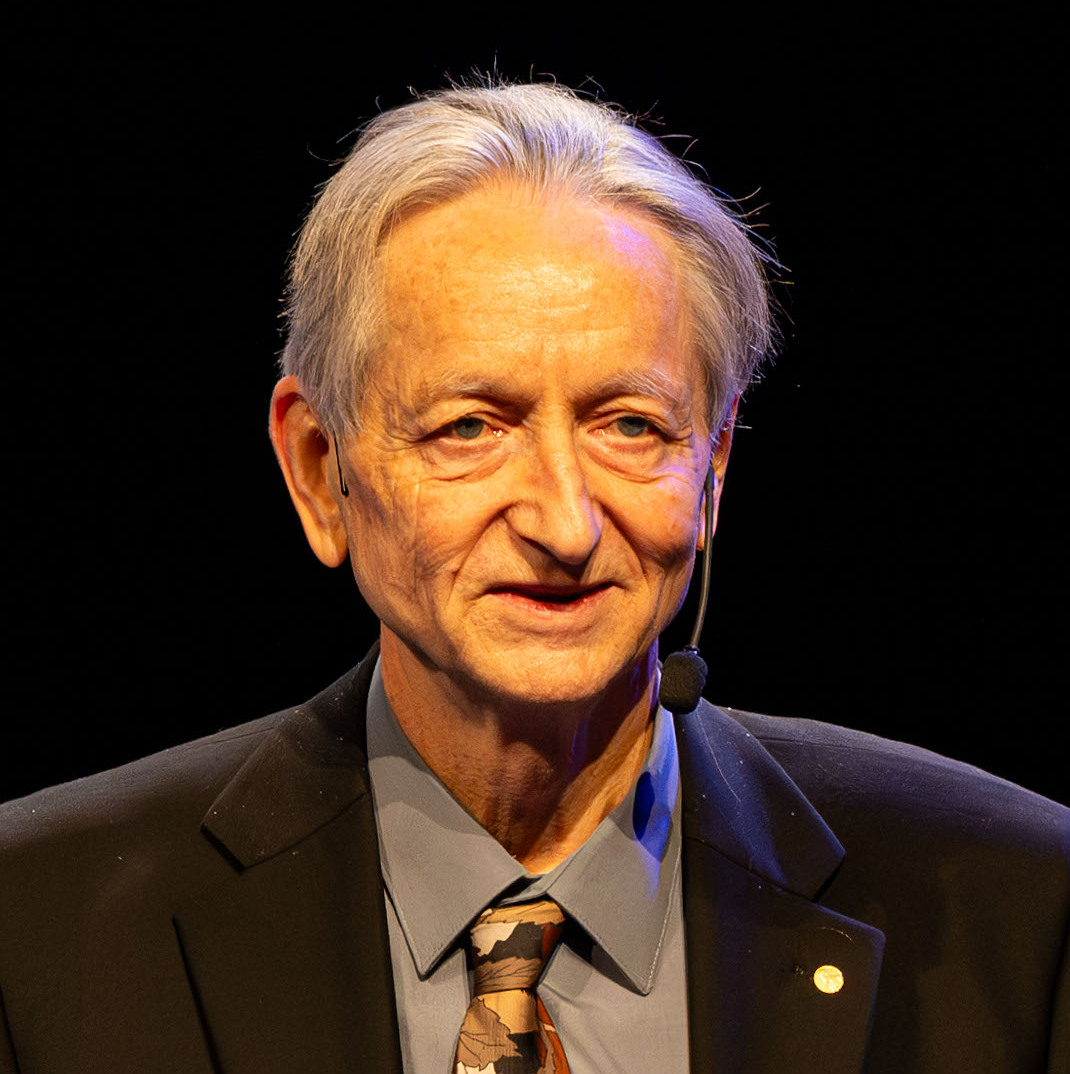
Geoffrey Hinton arrived at the University of Toronto in 1987 after positions at Carnegie Mellon and UC San Diego. He had been working on neural networks since the mid-1970s, convinced (against the prevailing view) that distributed representations and gradient descent through layered networks were the right path to machine intelligence.
The 1986 backpropagation paper (Rumelhart, Hinton, and Williams, published in Nature) was the foundational technical contribution: a practical algorithm for training multi-layer neural networks by propagating error gradients backward through the network. The paper had been preceded by independent discoveries of the same algorithm, but Hinton’s version, with its clear theoretical framing and demonstration on practical problems, was the one that reached the field. Geoffrey Hinton and Deep Learning covers this in detail; for present purposes the point is that the paper was written while Hinton was in Canada, was pursued because CIFAR was funding the work, and eventually led to everything that followed.
Toronto’s computer science department, under Hinton’s influence, became a pipeline for the future leaders of deep learning research. His students in the 1990s and 2000s included:
- Yann LeCun (postdoc with Hinton before heading to Bell Labs, then NYU, then Facebook AI Research)
- Radford Neal, whose work on Bayesian neural networks and MCMC methods became foundational for probabilistic machine learning
- Brendan Frey, who worked on graphical models and belief propagation
- Ilya Sutskever, who did his PhD with Hinton, co-authored the AlexNet paper, co-founded OpenAI, and eventually started Safe Superintelligence Inc.
- Alex Krizhevsky, who built the AlexNet system that won ImageNet in 2012
The AlexNet victory at the 2012 ImageNet Large Scale Visual Recognition Challenge was the moment the field changed. AlexNet (built by Krizhevsky with Sutskever and Hinton) achieved a top-5 error rate of 15.3%, compared to 26.2% for the second-place entry using traditional computer vision methods. The gap was so large that it wasn’t incremental improvement; it was a different kind of system. Every computer vision researcher in the world understood immediately that the decade of work on hand-engineered features was over.
Hinton, Krizhevsky, and Sutskever formed a company (DNNresearch) immediately after the ImageNet competition. In January 2013, Google, Microsoft, DeepMind, and Baidu all bid for it in a blind auction. Google won, acquiring DNNresearch for approximately $44 million. Hinton joined Google Brain, split his time between Toronto and Mountain View, and continued working on neural network research until 2023, when he resigned from Google and began speaking publicly about his concerns about AI safety.
Yoshua Bengio and the Université de Montréal
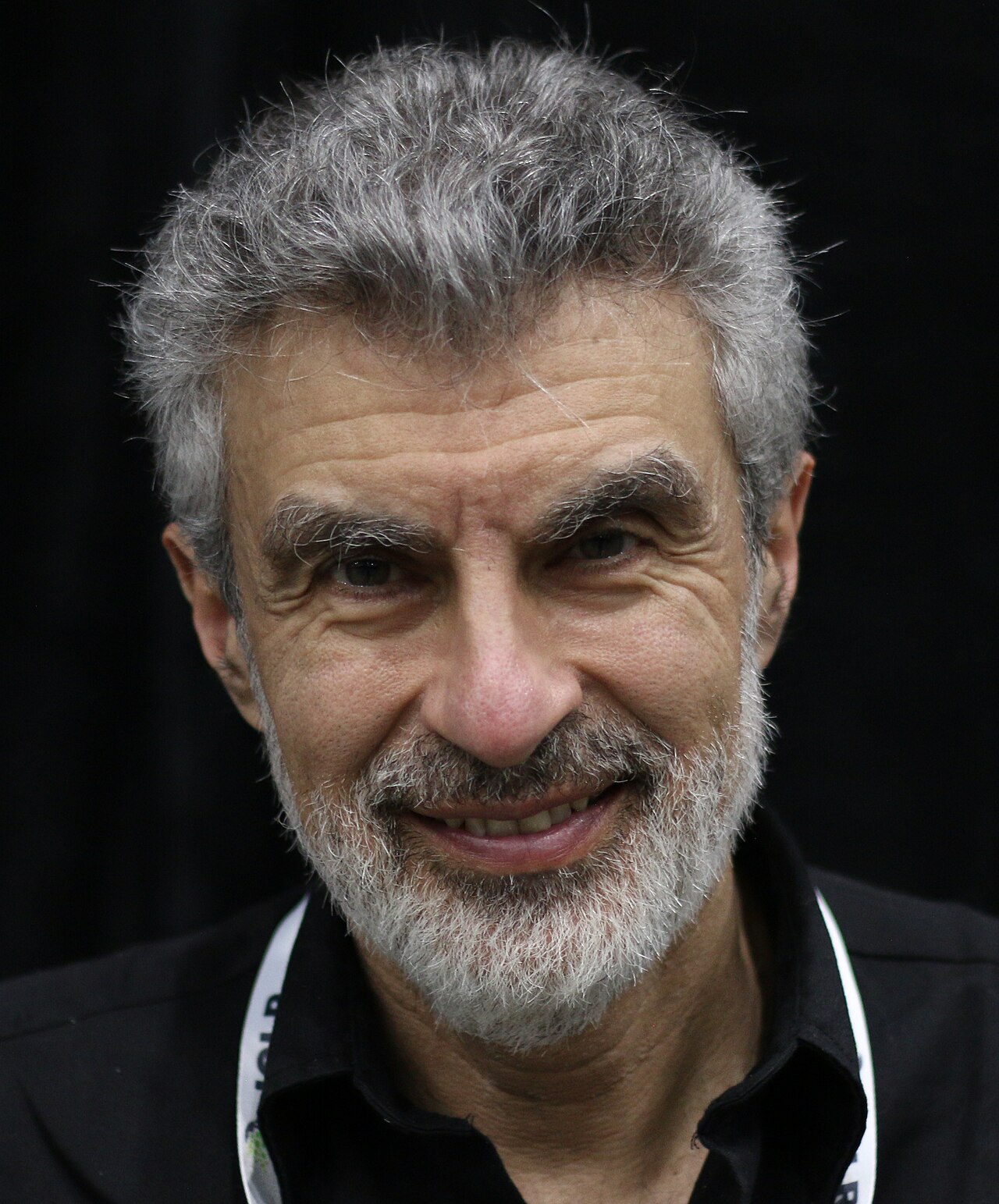
Yoshua Bengio arrived at the Université de Montréal in 1993. His research trajectory over the following two decades produced several of the conceptual foundations of modern AI.
In the late 1990s and early 2000s, when most of the field believed language was best handled by n-gram statistical models or symbolic grammars, Bengio was working on neural language models, using neural networks to learn probability distributions over word sequences. His 2003 paper A Neural Probabilistic Language Model (Bengio, Ducharme, Vincent, Janvin) demonstrated that a neural network could learn word representations that captured semantic relationships: words with similar meanings appeared in similar regions of the learned embedding space. This was the precursor to word2vec (Mikolov et al., 2013) and ultimately to the large language models of the 2020s.
Bengio’s group also made foundational contributions to:
- Autoencoders and representation learning, techniques for learning compressed representations of data without labels
- Attention mechanisms, the 2015 paper by Bahdanau, Cho, and Bengio introduced the attention mechanism for neural machine translation, the technique that became the core of the Transformer architecture in 2017
- Generative Adversarial Networks, while GANs were developed by Ian Goodfellow (then a Bengio PhD student, working at the Université de Montréal), Bengio’s lab created the intellectual environment in which Goodfellow had the idea and tested it
MILA (Montréal Institute for Learning Algorithms), which Bengio founded in 2017 from the existing Montréal machine learning research community, became one of the world’s largest academic AI research institutes. With several hundred researchers, MILA occupied a position unusual in academia: large enough to pursue ambitious long-term projects, institutionally committed to publishing research rather than keeping it proprietary, and deeply embedded in a Francophone cultural context that made it attractive to researchers who wanted to work in French.
Bengio shared the 2018 Turing Award with Hinton and LeCun (the ACM’s highest honor, equivalent to computing’s Nobel) for their foundational work on deep learning. He subsequently became increasingly prominent in AI safety advocacy, arguing that the same capabilities making AI systems useful were also making them potentially dangerous, and that the research community was not taking the risks seriously enough.
The Attention Mechanism’s Canadian Origin
The attention mechanism (the key innovation that made Transformers work) has a specifically Montréal origin. Dzmitry Bahdanau did his Master’s thesis in Bengio’s lab. The 2015 paper introducing attention was written at the Université de Montréal. When the Google Brain team published Attention Is All You Need in 2017, introducing the Transformer, they were building directly on the Montréal group’s work. The Transformer architecture underlies GPT, BERT, Claude, Gemini, and essentially every major language model. The conceptual ancestry traces to a Master’s student in Montréal who was supervised by Yoshua Bengio.
Rich Sutton and the University of Alberta
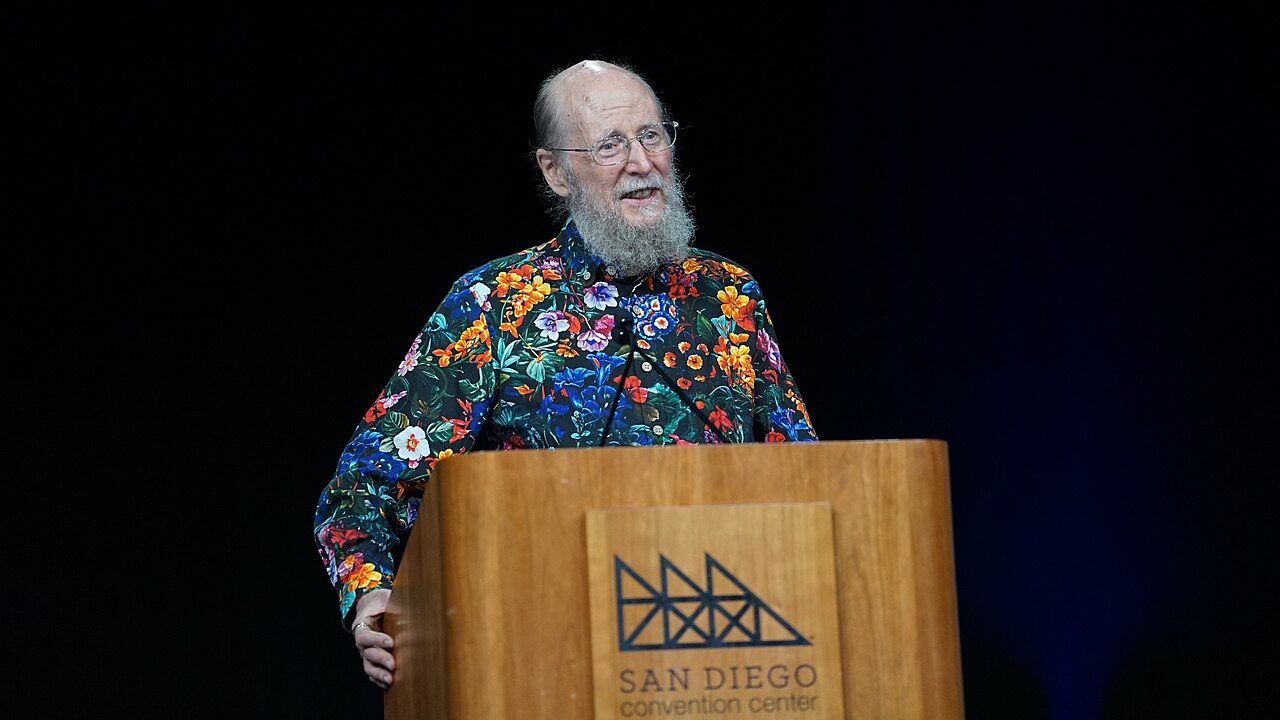
Richard Sutton is less famous outside the AI field than Hinton or Bengio, but within it his influence is comparable. Where Hinton and Bengio built the foundations of supervised and unsupervised deep learning, Sutton built the foundations of reinforcement learning, the framework in which an agent learns to act in an environment by receiving rewards and punishments.
Sutton’s 1988 paper introducing TD-learning (temporal difference learning) provided a mathematical framework for an agent to learn value functions (estimates of how good it is to be in a given state) from experience, without a model of the environment. His 1998 textbook Reinforcement Learning: An Introduction (with Andrew Barto), still in print and still the standard graduate textbook, codified the field.
Sutton joined the University of Alberta in 2003. Alberta was not an obvious choice for a leading AI researcher (Edmonton is not Toronto or Montreal) but Alberta had built a genuine reinforcement learning research community, and Sutton found there the graduate students and intellectual environment he needed. His group produced research on function approximation, policy gradient methods, and the theory of RL that became essential for modern applications.
The relevance became undeniable when DeepMind published DQN (Deep Q-Network) in 2015, the paper demonstrating that an agent could learn to play Atari games at superhuman level from raw pixel input. DQN combined Sutton’s RL framework with Hinton’s deep neural networks. AlphaGo extended this. AlphaStar (StarCraft II) extended it further. The reinforcement learning techniques that made DeepMind famous were directly descended from Sutton’s mathematical framework.
The Alberta Machine Intelligence Institute (Amii), co-founded with Sutton’s intellectual backing, became Alberta’s answer to MILA and the Vector Institute, a research and talent development organization designed to translate academic RL expertise into commercial applications.
The Pan-Canadian AI Strategy: Formalizing the Cluster
By 2017, the deep learning revolution was well underway, and Canada suddenly found itself sitting on the intellectual origin point of the most important technology development in decades. The federal government’s response was the Pan-Canadian Artificial Intelligence Strategy, announced in the 2017 federal budget with an initial investment of $125 million.
The strategy created or expanded three national AI institutes:
- The Vector Institute in Toronto (Hinton’s domain, focused on deep learning and its applications)
- MILA in Montréal (Bengio’s institute, focused on fundamental research)
- Amii in Edmonton (Sutton’s territory, focused on reinforcement learning and industrial applications)
The strategy also funded the CIFAR Pan-Canadian AI Chairs, a program that provided supplemental salaries to AI researchers at Canadian universities to make Canadian academic positions competitive with offers from Google, DeepMind, OpenAI, and Microsoft that were routinely 3–5× higher than university salaries.
The brain drain problem was acute. Between 2004 and 2016, a significant fraction of the graduate students trained by Hinton, Bengio, and Sutton had left Canada for American technology companies. Krizhevsky and Sutskever (both from Hinton’s Toronto lab) were at Google and then OpenAI. Ian Goodfellow was at Google Brain and then Apple. The people who had learned the techniques in Canadian universities were building AI products in California.
The Pan-Canadian strategy could not match American technology company salaries, the institutes were academic institutions, not companies. What they could offer was research freedom, the ability to publish openly, and the culture of a serious academic environment. For researchers who genuinely preferred open publication to proprietary development, the Canadian institutes became competitive.
The Language Dimension: Montreal’s Bilingual Advantage
A detail that is rarely discussed in histories of the Canadian AI cluster: Montréal’s position as a bilingual French-English city gave MILA a distinctive recruiting advantage in the European academic market.
European AI researchers (particularly from France, Belgium, Switzerland, and other Francophone countries) found Montréal culturally and linguistically accessible in a way that Toronto or Stanford were not. Several significant French researchers joined MILA or collaborated with it regularly, including researchers from INRIA (France’s national computer science research institute). The cross-pollination between French and Canadian academic traditions contributed to MILA’s intellectual range.
This geographic and linguistic accident meant that the Montréal AI cluster drew from a different talent pool than Silicon Valley, not competing directly for the same researchers but recruiting from a complementary network. The result was a concentration of research perspectives that was genuinely different from what assembled at Google Brain or OpenAI.
Dead End: The Brain Drain Problem
Canada’s central structural problem with its AI cluster was not technical but economic. The universities that trained the world’s best AI researchers could not keep them.
The pattern was consistent: a student trained by Hinton, Bengio, or Sutton graduates, publishes significant work, and receives an offer from Google Brain, OpenAI, Meta AI, or DeepMind for a salary of $400,000–$800,000, with access to compute clusters containing tens of thousands of GPUs. The corresponding Canadian university position pays $120,000–$180,000 with a teaching load, grant-writing responsibilities, and a compute allocation measured in weeks rather than months.
The Canada CIFAR AI Chairs added approximately $100,000 per year to some academic salaries. This narrowed but did not close the gap. The researchers who stayed in Canada did so for reasons that were not purely financial (love of the academic environment, commitment to open research, personal ties to Canada) but the selection effect meant that the Canadian universities trained researchers who overwhelmingly worked elsewhere.
There is a structural critique of the entire Canadian AI cluster in this fact: the value of the deep learning revolution was captured almost entirely by American companies. The intellectual labor was Canadian; the products were American. Google, OpenAI, Meta, and Microsoft built the profitable systems; Canadian taxpayers had funded the research that made those systems possible.
The response (that basic research is a public good that justifies public funding regardless of where commercial value accrues) is correct but incomplete. Canada’s AI institutes have begun taking this problem seriously, actively partnering with Canadian industry and advising Canadian companies on AI adoption. The jury remains out on whether Canada can capture more of the value from its intellectual investment.
📚 Sources
- Hinton, Geoffrey; Rumelhart, David; Williams, Ronald: “Learning Representations by Back-propagating Errors” — Nature 323 (1986): 533–536
- Bengio, Yoshua et al.: “A Neural Probabilistic Language Model” — Journal of Machine Learning Research 3 (2003): 1137–1155
- Sutton, Richard S. & Barto, Andrew G.: Reinforcement Learning: An Introduction (2nd ed., 2018), MIT Press
- Krizhevsky, Alex; Sutskever, Ilya; Hinton, Geoffrey: “ImageNet Classification with Deep Convolutional Neural Networks” — NIPS 2012
- Bahdanau, Dzmitry; Cho, Kyunghyun; Bengio, Yoshua: “Neural Machine Translation by Jointly Learning to Align and Translate” — ICLR 2015
- Government of Canada: Pan-Canadian Artificial Intelligence Strategy — Budget 2017
- Pan-Canadian AI Strategy — CIFAR
- Marcus, Gary & Davis, Ernest: Rebooting AI (2019), Pantheon — includes historical context on AI winters
- Geoffrey Hinton and Deep Learning, detailed biography of Hinton’s career
- Yoshua Bengio and the Montreal School, detailed account of MILA and Bengio’s contributions
- Yann LeCun and Convolutional Networks, the third member of the deep learning triumvirate, based in New York
- ImageNet and the Deep Learning Revolution, the 2012 AlexNet result that validated the Canadian research program
- Reinforcement Learning · Richard Sutton (University of Alberta) co-created the theoretical foundations of RL in Canada
- Image: [Geoffrey E. Hinton, 2024 Nobel Prize Laureate in Physics (cropped1](https://commons.wikimedia.org/wiki/File:Geoffrey_E._Hinton,_2024_Nobel_Prize_Laureate_in_Physics_(cropped1) by Arthur Petron (CC BY-SA 4.0), via Wikimedia Commons
- Image: ICLR 2025 - Yoshua Bengio 02.jpg by Xuthoria (CC BY-SA 4.0), via Wikimedia Commons
- Image: SD 2025 - Richard Sutton 01.jpg by Xuthoria (CC BY-SA 4.0), via Wikimedia Commons