Donald Knuth and the Art of Computer Programming
Abstract
Donald Knuth set out in 1962 to write a single book on compiler design. More than sixty years later, The Art of Computer Programming remains unfinished, and that incompleteness is perhaps the most honest description of the discipline it documents. In the course of not finishing his book, Knuth standardized algorithmic analysis and Big-O notation, invented TeX (the typesetting system that became the universal standard for scientific publishing), pioneered literate programming, and won the 1974 Turing Award. He is the closest thing computer science has to a universal scholar: a man who approaches programming as a branch of mathematics and has spent a lifetime arguing, persuasively and by example, that beauty and rigor are the same thing.
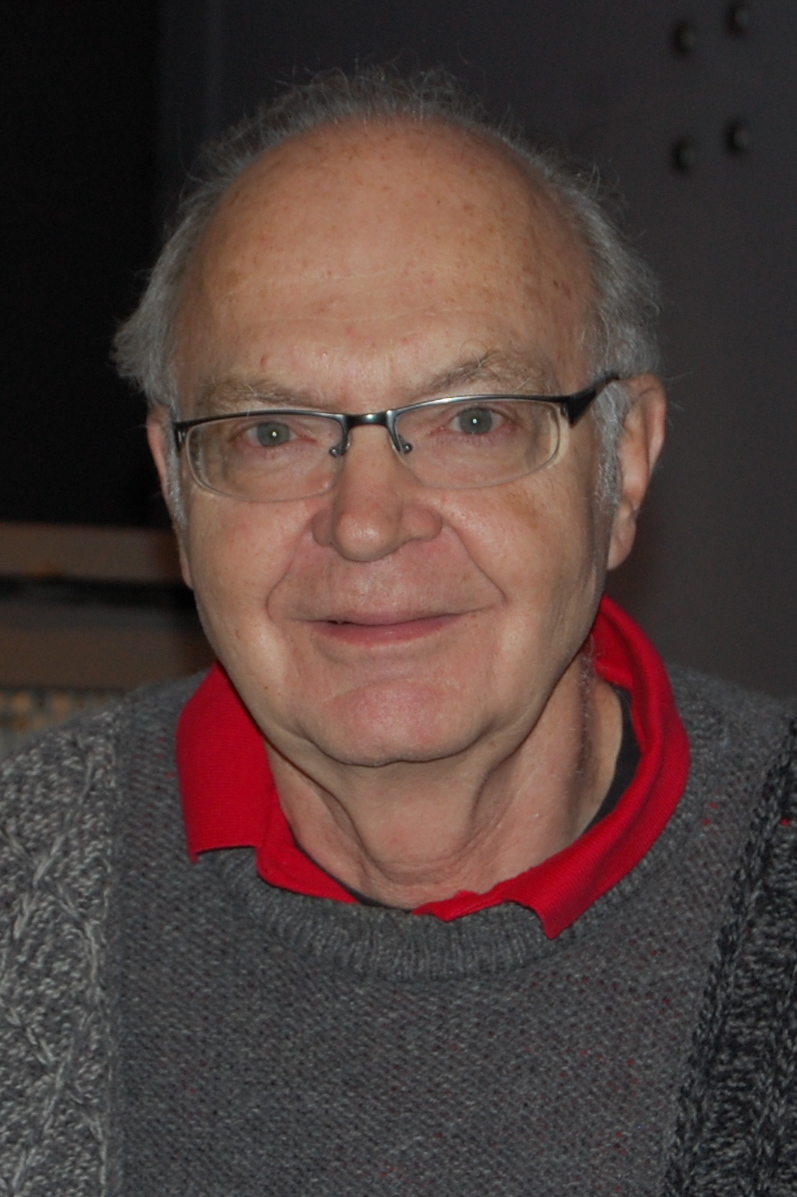
The Machine in the Basement
Donald Ervin Knuth was born on January 10, 1938, in Milwaukee, Wisconsin. His father was a bookkeeper and high school teacher; his mother managed a small business. Knuth was the sort of child who counts the letters in words to find the longest possible answer to a trivial question. (Aged twelve, he entered a contest to see who could make the most words out of the letters in “Ziegler’s Giant Bar.” He submitted 4,500 words and won a television set for his school and an abundance of candy for himself.) He was, in short, a counter, a cataloguer, a person who found deep satisfaction in systematic enumeration.
He enrolled at Case Institute of Technology in Cleveland as a physics major in 1956, but within months of arriving he had discovered the IBM 650 in the university’s computing center and taught himself to program from the manual. The machine fascinated him in a way that physics did not. Programming was simultaneously mathematical and constructive; you could prove things about programs, and then the programs ran. He changed his major to mathematics. By the time he graduated in 1960, the faculty voted to award him a master’s degree as well as a bachelor’s, an unusual recognition of his demonstrated mastery.
He went to Caltech for graduate work in mathematics. In 1962, Addison-Wesley approached him about writing a book on compiler design. Knuth agreed and estimated the project would take twelve months.
A Book That Would Not Stop Growing
The compiler book became something else immediately. To explain compilers, Knuth needed to explain the data structures they operated on. To explain data structures, he needed to explain the algorithms that built and searched them. To explain algorithms, he needed a mathematical framework for measuring their efficiency. To give concrete implementations, he needed a specific machine architecture to program against.
By 1962 the single planned volume had become a planned seven-volume series. Knuth drafted a table of contents over 3,000 pages long, which his editor at Addison-Wesley returned with the observation that it appeared to be an outline of the entire field of computer science. Knuth agreed and proceeded anyway.
Volume 1, Fundamental Algorithms, was published in 1968. Volume 2, Seminumerical Algorithms, appeared in 1969. Volume 3, Sorting and Searching, in 1973. The three volumes were immediately recognized as extraordinary: mathematically precise, historically thorough, beautifully written, and pedagogically complete in a way that no previous computer science text had been. Bill Gates would later say that if you could read the whole thing, you should send him your résumé, not because the books were difficult (though they are) but because a person who had actually worked through them had demonstrated unusual intellectual seriousness.
Info
Knuth’s theoretical computer in TAOCP is the MIX architecture, a fictional but realistic assembly-language machine that allowed concrete, exact implementations of every algorithm in the books. For Volume 4, he updated MIX to MMIX, a modern RISC architecture designed to reflect contemporary hardware realities. Working through TAOCP in MIX/MMIX assembly is optional but illuminating: it forces precision about what “the algorithm” means at the machine level.
Big-O and the Analysis of Algorithms
Knuth did not invent asymptotic notation. The “O” notation was introduced by the German mathematician Paul Bachmann in 1894 and developed by Edmund Landau in 1909. The related Omega and Theta notations came later from various sources. What Knuth did (and what made an enormous practical difference) was standardize and systematize these notations as tools for the working computer scientist.
Before TAOCP, algorithm comparison was largely qualitative and informal. An algorithm might be described as “faster for large inputs” without precise meaning. Knuth’s contribution was to make Big-O analysis a standard part of the algorithm designer’s toolkit: you state the problem formally, prove the algorithm correct, derive its time and space complexity in O-notation, and compare against theoretical lower bounds. This four-step discipline became the template for algorithm education that most computer science curricula still follow.
More importantly, Knuth’s analysis went beyond mere Big-O. He was interested in exact counts of operations, not just the order of growth but the constant factors, the lower-order terms, the expected-case behavior as well as the worst case. His analysis of sorting algorithms, for instance, includes exact average-case results for Quicksort and Heapsort that required serious mathematical work, including generating functions, harmonic numbers, and probabilistic analysis. The mathematics in TAOCP is real mathematics, not simplified for pedagogical convenience.
This approach established what Knuth called “the analysis of algorithms” as a subdiscipline, the rigorous mathematical study of algorithmic performance. The field has since produced a rich body of results, from the analysis of randomized algorithms to the theory of average-case complexity. Knuth’s insistence that programming was amenable to mathematical analysis was not self-evident in 1968; it is now orthodoxy.
The Typesetting Emergency
In 1977, Knuth received the galley proofs for the second edition of Volume 2 of TAOCP. He was disturbed by what he found. The first editions had been typeset by hand in hot metal, a skilled craft that produced beautiful mathematical typography. The new proofs had been produced by phototypesetting equipment, and the mathematical formulas (delicate, symbol-dense, dependent on precise spacing) looked, to his eye, terrible.
Knuth decided to write a typesetting system. He estimated the project would take six months.
It took ten years.
TeX (pronounced “tech,” from the Greek τέχ, meaning art or craft, the root of “technology”) is a typesetting system of unusual mathematical elegance. Its central innovation is the paragraph-breaking algorithm, developed by Knuth and Michael Plass, which uses dynamic programming to break an entire paragraph into lines simultaneously, minimizing a global badness metric rather than making line-break decisions one at a time. This global optimization produces typography that professional typographers consistently rate as superior to competing systems, smoother color, more balanced spacing, fewer egregious breaks. Knuth published the algorithm as a paper in Software: Practice and Experience in 1981; it remains the gold standard for paragraph breaking.
TeX was accompanied by METAFONT, a system for defining typefaces using mathematical curves, pen strokes, spline interpolations, algebraic parameters. Knuth used METAFONT to create the Computer Modern family of typefaces that shipped with TeX, and Computer Modern became the characteristic typeface of mathematical publishing for two decades. METAFONT was technically remarkable but difficult to use; few people outside the TeX community ever designed fonts with it.
LaTeX, the document preparation system built on top of TeX by Leslie Lamport in 1985, made TeX’s capabilities accessible to scientists who did not want to manage TeX’s low-level primitives. LaTeX provided a structured document model (sections, theorems, bibliographies, cross-references) while handling the typographic details automatically. LaTeX became, and remains, the universal standard for publication in mathematics, physics, computer science, economics, and most natural sciences. Every paper submitted to arXiv, the preprint server that has become essential to scientific communication since 1991, arrives almost certainly written in LaTeX.
Info
TeX is notable for being, at version 3.14159265…, intentionally frozen: Knuth declared that TeX’s version number converges to pi, and that after his death, any remaining bugs will be declared features. This decision reflects Knuth’s conviction that stability is more valuable than improvement for a system that must produce identical output across decades. TeX documents typeset in 1985 produce bit-identical output today.
Literate Programming
In 1984, Knuth proposed literate programming as a methodology: programs should be written primarily for human readers, with machine-executable code extracted as a secondary artifact. A literate program interweaves documentation and code in the order that best explains the programmer’s intentions, not the order imposed by the compiler’s requirements for declaration before use, or the module system’s requirements for separate files.
Knuth’s implementation was the WEB system (for Pascal) and later CWEB (for C). A WEB program is a sequence of named sections, each containing prose explanation and code. A “tangle” program extracts the code in compilation order; a “weave” program produces typeset documentation. TeX itself is written as a literate program; it was published as a book, TeX: The Program, and can be read from beginning to end like a novel, if an unusual one.
Literate programming was widely praised and narrowly adopted. The methodology requires discipline that few commercial development environments reward. Its influence was diffuse rather than direct: Jupyter notebooks, which interweave code and prose in scientific computing, are arguably its most successful descendant. The observation that code is read far more often than it is written (and should therefore be optimized for readers rather than compilers) has been absorbed into software culture under other names.
The Checks and the Rewards
Knuth offers a reward of $2.56 (two dollars and fifty-six cents, one hexadecimal dollar, 0x100 cents) for any substantive error found in his books or TeX system. He has issued thousands of these checks; most recipients frame them and never cash them, treating them as memorabilia. Knuth tracks the recipients in a published list.
The practice embodies something central to his approach: precision has value, errors have real cost, and the incentive structure should reflect this. It is also, characteristically, slightly playful, a dollar amount that encodes a programmer’s joke while remaining economically trivial for Knuth but symbolically significant for recipients.
Faith, Mathematics, and the Long View
Knuth is a Lutheran Christian who has written and lectured on the relationship between faith and science. In 2001 he published Things a Computer Scientist Rarely Talks About, a series of lectures on the relationship between computing and theology, discussing how precise measurement and formal analysis might be applied to religious texts. The book is sincere rather than polemical: Knuth genuinely finds beauty in both domains and is curious about their intersection.
He retired from Stanford University in 1993 to concentrate on completing TAOCP. He has since continued to refuse email; he announced in 1990 that he was “happily disconnected” and that anyone who needed to reach him should use postal mail or phone. He is not being curmudgeonly; he has explained carefully that the kind of deep, sustained attention that TAOCP requires is incompatible with the interrupt-driven attention model of email. He reads his postal mail in batches once every three months.
Volume 4A appeared in 2011. Volume 4B in 2022. Volumes 4C, 5, 6, and 7 remain to be written. Knuth was born in 1938.
The ACM Turing Award citation, given in 1974, described him as having “contributed to the creation of a new discipline: the mathematical analysis of algorithms.” In 1999, American Scientist listed TAOCP among the twelve best physical-science monographs of the twentieth century, alongside books by Einstein, Feynman, and Dirac. The company the books keep is appropriate. Like Feynman’s Lectures on Physics, they are works of synthesis and exposition so thorough that they define a field rather than merely describing it.
Dead End: TeX as Universal Document System
TeX was designed for mathematical and scientific typesetting, and for that purpose it remains, half a century later, unsurpassed. But advocates in the 1980s and 1990s sometimes imagined it would become the universal standard for all documents. This did not happen.
Warning
Microsoft Word’s dominance in business and office environments is essentially total, and it has been since the mid-1990s. The reasons are practical: Word requires no programming knowledge, produces acceptable output for most purposes, and integrates with the office environments that most people actually use. TeX’s learning curve is real and steep. Its model (in which the author handles all formatting decisions explicitly) is the opposite of a WYSIWYG editor’s model. For users who need a document produced quickly rather than beautifully, TeX is simply the wrong tool. The community that developed ConTeXt, LuaTeX, XeTeX, and other TeX derivatives made genuine improvements, but none reached beyond the scientific publishing niche. The effort to render mathematics in web browsers via MathJax and KaTeX has been more successful, and millions of web pages now display TeX-quality mathematics, but complete TeX documents on the open web remain rare.
The connection between Knuth’s algorithmic analysis and broader developments in computer science is explored in The Rise of High-Level Languages and The Evolution of Language.
📚 Sources
- Donald E. Knuth: The Art of Computer Programming, Volumes 1–4B (1968–2022), Addison-Wesley
- Donald E. Knuth: TeX: The Program (1986), Addison-Wesley
- Donald E. Knuth: Literate Programming (1992), CSLI Publications
- Donald E. Knuth & Michael F. Plass: Breaking Paragraphs into Lines (1981), Software: Practice and Experience
- Donald E. Knuth: Selected Papers on Analysis of Algorithms (2000), CSLI Publications
- Donald E. Knuth: Things a Computer Scientist Rarely Talks About (2001), CSLI Publications
- Donald Knuth — Wikipedia
- Image: Donald Ervin Knuth (cropped).jpg by Alex Handy (CC BY-SA 2.0), via Wikimedia Commons