Bob Metcalfe and Ethernet
Abstract
In 1973, a freshly minted Harvard PhD working at Xerox PARC needed to connect a room full of Alto workstations. He drew on a radio networking protocol from Hawaii, added collision detection, and invented Ethernet, the local area networking standard that still connects virtually every wired device in the world. He then left PARC to commercialize his invention, founded 3Com, and watched Ethernet grow from 10 megabits per second to 400 gigabits per second over fifty years without ever being replaced. He also formulated Metcalfe’s Law (the network effect in equation form) and famously predicted the internet would collapse in 1996. It did not. He ate the column.
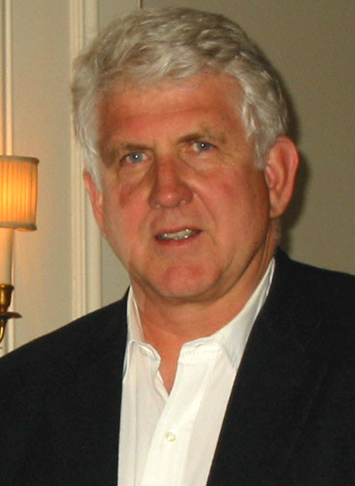
From Brooklyn to PARC
Robert Melancton Metcalfe was born in Brooklyn, New York on April 7, 1946, the son of a technician at a defense electronics company. He grew up in Bay Shore, Long Island, and went to MIT in 1964, eventually earning bachelor’s degrees in both electrical engineering and industrial management in 1969, the dual degree reflecting an ambition to build things and also to build companies.
His path to a PhD was not smooth. Metcalfe went to Harvard for graduate work in applied mathematics, simultaneously working as a research assistant at MIT’s Project MAC, one of the early centers of time-sharing computer research, and one of the sites connected to the ARPANET from its earliest days. Through Project MAC, Metcalfe became deeply familiar with ARPANET’s packet-switching protocols and the engineering challenges of moving data reliably over shared networks.
He submitted his first PhD dissertation to Harvard’s committee in 1972. The committee rejected it, finding the theoretical contribution insufficient, particularly a section addressing ALOHAnet’s packet collision protocol. Metcalfe spent the summer revising and strengthening the theoretical analysis of ALOHAnet’s behavior under varying loads. The revised dissertation was accepted in 1973. The theoretical work Metcalfe had been forced to develop in order to satisfy his committee turned out to be foundational to everything that followed.
Metcalfe joined Xerox PARC in 1972, while still completing his dissertation, as a researcher tasked with networking. The context was specific: PARC’s computer science laboratory was developing the Alto, a personal workstation with a bitmapped display and a graphical user interface, years ahead of any commercial computer. Alan Kay’s team expected to deploy dozens of Altos in PARC’s facilities. Those Altos needed to communicate with each other and with shared printers, particularly the new laser printer that Gary Starkweather had developed. A room full of the most advanced personal computers in the world sitting in isolated silence was not acceptable.
Inventing Ethernet: ALOHA on a Wire
Metcalfe’s starting point was the ALOHANET protocol, developed by Norman Abramson at the University of Hawaii. ALOHAnet connected computers on the Hawaiian islands using radio: each station transmitted whenever it had data to send; if two stations transmitted simultaneously, their signals collided, both were corrupted, and both stations waited a random interval and tried again. The protocol worked at low traffic levels but became increasingly unstable at higher loads, beyond roughly 18% channel utilization, collisions became so frequent that throughput actually decreased as load increased.
Metcalfe’s dissertation had analyzed ALOHA’s stability problems mathematically. The solution he had worked out (and which had required the second dissertation submission) was an improved backoff algorithm: after each collision, a station should wait for a random number of time slots before retrying, where the range of the random number doubled with each successive collision. This exponential backoff prevented the feedback loop in which multiple stations, retrying at similar intervals after a collision, repeatedly collided again.
For a wired network, Metcalfe realized, the protocol could be improved further. On a wire, unlike radio, a transmitting station could monitor the voltage on the cable while it was transmitting. If another station was also transmitting, the voltages would add in a detectable way, the station would hear its own transmission distorted by the other signal. This detection could happen within microseconds, far faster than the transmission of a complete packet. A station that detected a collision could immediately stop transmitting, send a brief jamming signal to ensure all stations recognized the collision, and then back off, wasting only the few microseconds of the collision, not the entire packet.
This was Carrier Sense Multiple Access with Collision Detection (CSMA/CD):
- Carrier Sense: listen to the wire before transmitting; if someone else is transmitting, wait.
- Multiple Access: any station can transmit at any time the wire is idle; there is no central controller or permission grant.
- Collision Detection: if a collision occurs, detect it immediately, abort, back off, and retry.
Working with David Boggs, the hardware engineer who designed and built the physical layer, Metcalfe connected the PARC Altos at a data rate of 2.94 megabits per second in 1973. That odd number was not a design target: the interface’s signal clock was derived from the Alto’s own system clock, at half its rate. The network performed well enough to share the laser printer effectively, which was the immediate practical goal.
Info
The name “Ethernet” came from the nineteenth-century concept of the luminiferous ether, the hypothetical medium through which light was thought to propagate before Einstein’s special relativity demonstrated it was unnecessary. Metcalfe liked the metaphor: Ethernet was a shared medium through which data propagated, accessible to any station, not owned by any particular transmitter. He also noted, privately, that if the ether theory was wrong about light, the name would not be embarrassing, the physics of the ether had been disproved, but the name lived on.
The published version of the Ethernet design, co-authored by Metcalfe and Boggs and published in Communications of the ACM in 1976, described the experimental network running inside PARC at 3 megabits per second. The paper is one of the most-cited in networking research and is considered foundational.
Standardization: The DIX Consortium and IEEE 802.3
For Ethernet to become an industry standard rather than a Xerox proprietary network, it needed to be documented in a form that other manufacturers could implement without licensing from Xerox. In 1979, Metcalfe organized a collaboration between DEC (Digital Equipment Corporation), Intel, and Xerox (the “DIX” consortium) to produce a joint specification for 10 Mbps Ethernet over coaxial cable.
The DIX standard was submitted to the IEEE in 1980, and the resulting IEEE 802.3 standard was published in 1983. The standard defined the physical media (initially thick coaxial cable, then thin coaxial, then twisted pair, then fiber), the CSMA/CD protocol, the frame format, and (critically) the 48-bit MAC address system: a globally unique address burned into each network interface controller at manufacture, ensuring that any two Ethernet devices anywhere in the world would have different addresses and could communicate on the same network.
The 48-bit MAC address was an engineering decision with substantial long-term consequences. It provided approximately 280 trillion unique addresses (far more than could be needed in 1980) and was deliberately made large enough to accommodate a world in which many devices would be networked. The address space has lasted to the present, though the original geographic allocation scheme has required periodic revision as manufacturers have consumed their assigned blocks.
3Com and the Commercial Ethernet Industry
Metcalfe left Xerox PARC in 1979 to found 3Com (for Computer Communication Compatibility) out of his Palo Alto apartment. His goal was to build the Ethernet controller boards that would connect personal computers to networks.
The timing proved extraordinarily fortunate. IBM announced the PC in August 1981. The PC created enormous demand for local area networking, corporations were deploying personal computers in offices and needed to connect them to shared printers, file storage, and eventually each other. Ethernet, with its open IEEE standard, its reasonable cost, and its straightforward installation, was positioned perfectly for this demand.
3Com was among the first companies to ship Ethernet adapter cards for the IBM PC. The EtherLink card (1982) connected PCs to Ethernet networks and became one of 3Com’s initial product successes. The company also developed the 3Server (a network file server) addressing the corporate need for centralized storage accessible from multiple networked PCs.
3Com grew rapidly through the 1980s. Metcalfe wanted the top job; in 1990 the board gave it to Éric Benhamou instead, and Metcalfe left the company. He moved to writing, becoming publisher and columnist for IDG’s InfoWorld magazine, a position from which he became one of the technology industry’s most widely read commentators.
3Com continued without him, acquiring US Robotics (and its Palm Pilot personal organizer) in 1997, and was eventually acquired by Hewlett-Packard in 2010 and folded into HP’s networking business. The Ethernet business 3Com helped launch became a multi-hundred-billion-dollar market.
Metcalfe’s Law
In 1980, Metcalfe was using a viewgraph slide to explain to potential customers why they should build Ethernet networks rather than using existing alternatives. The slide made an argument about the economics of networking: each new device added to a network added value not just to its owner but to every existing member of the network, because any member could now communicate with the new addition.
If n is the number of devices on a network, then the number of possible point-to-point connections is n(n-1)/2, approximately n² for large n. A network’s value, Metcalfe argued, grows as the square of the number of connected devices.
Metcalfe's Law:  Value ∝ n²

  n = 2:   1 connection
  n = 5:   10 connections
  n = 10:  45 connections
  n = 100: 4,950 connections
  n = 1,000,000: ~500,000,000,000 connections
The formulation was not offered as a theorem. It was a sales argument, made precise enough to be quantitative. The idea it captured: that networks become more valuable faster than they grow, creating strong incentives for all parties to connect to the dominant network, was not original to Metcalfe. Theodore Vail at AT&T, and before him any telegrapher who had thought about the value of a telegraph network, had understood network effects qualitatively. Metcalfe’s contribution was to put a formula to it.
The formula became vastly more famous than its origins. During the dot-com boom of the late 1990s, investors invoking Metcalfe’s Law to justify internet company valuations were everywhere. If a company with one million users was worth a billion dollars, then a company with ten million users was worth not ten billion but a hundred billion, because n² grows as 10², meaning 100 times faster. The logic was used to justify essentially every internet company that relied on user growth for its investment case, regardless of whether it had any prospect of revenue.
The subsequent crash demonstrated the limits of taking a qualitative insight as a quantitative business model. Network effects were real and important; the n² scaling was not universal, did not translate directly to revenue, and did not account for the possibility that network effects might decline at scale, or that competing networks might fragment users, or that the connections that mattered were weighted very differently. Metcalfe himself later acknowledged that the original formulation was oversimplified.
The Internet Collapse That Wasn’t
In December 1995, Metcalfe published a column in InfoWorld predicting that the internet would suffer a “catastrophic collapse” in 1996 due to congestion. His argument was technical: the internet’s backbone was overwhelmed, the domain name system was failing under load, and several major network outages in 1995 were harbingers of a broader failure. He was sufficiently confident to offer to eat his words if he was wrong.
The internet did not collapse in 1996. Traffic grew. The infrastructure was expanded. The packet loss and congestion events of 1995 were solved by network engineering and additional capacity investment. At the Sixth International World Wide Web Conference in 1997, Metcalfe honored his bet: he printed out the column, blended it with water and some additional ingredients in a blender on stage, and drank the resulting slurry.
The episode became one of the technology industry’s most cited examples of expert prediction failure. Metcalfe, to his credit, accepted it with good grace and continued writing about the industry’s evolution with the same confidence that had produced the failed prediction in the first place. His broader instinct (that the internet’s growth would outpace infrastructure and create serious reliability problems) was not entirely wrong; it was premature and overconfident about the timing.
Metcalfe received the ACM Turing Award in 2022 “for the invention, standardization, and commercialization of Ethernet.” He was seventy-six. The award recognized not just the protocol but the fifty-year trajectory of a standard that had scaled from 3 megabits per second over coaxial cable in a single Xerox building to 400 gigabits per second over fiber in global data centers, without ever being supplanted by a fundamentally different approach.
Dead End: Token Ring and ATM
Ethernet’s victory was not inevitable. Through the 1980s and early 1990s, it faced serious competitors that had genuine technical advantages on specific metrics.
Warning
IBM Token Ring (1985) provided deterministic network access through a token-passing protocol: a station could only transmit when it held a circulating “token,” eliminating collisions entirely and providing predictable maximum latency. For industrial control applications and networks carrying time-sensitive traffic, this determinism was valuable. IBM promoted Token Ring aggressively and it achieved significant corporate market share. Asynchronous Transfer Mode (ATM) was developed in the late 1980s as a unified protocol for both local-area and wide-area networks, promising both high speed and quality-of-service guarantees for voice and video traffic, capabilities that Ethernet’s best-effort delivery explicitly did not provide. Both Token Ring and ATM were technically superior to Ethernet on their claimed dimensions. Both lost. The deciding factors were cost, simplicity, and the open IEEE standard: Ethernet hardware was cheaper to manufacture because the simpler CSMA/CD hardware required fewer components than Token Ring’s token management or ATM’s cell switching. Ethernet’s bandwidth improved fast enough (10, 100, 1,000, 10,000 megabits per second in roughly ten-year steps) that the performance gap with ATM closed before ATM achieved wide deployment. The story of the protocol wars is explored further in Early Networking Failures.
Ethernet’s origins at Xerox PARC and its context in the broader PARC revolution are covered in The Xerox PARC Revolution. The internet infrastructure it underlies is explored in The Rise of Artificial Intelligence and adjacent articles on networked computing.
See also: Radia Perlman and the Spanning Tree Protocol.
📚 Sources
- Robert M. Metcalfe and David R. Boggs: “Ethernet: Distributed Packet Switching for Local Computer Networks” · Communications of the ACM, Vol. 19, No. 7 (1976) · doi.org/10.1145/360248.360253
- Robert M. Metcalfe: Packet Communication (PhD dissertation, Harvard University, 1973) · Open Library
- Charles E. Spurgeon and Joann Zimmerman: Ethernet: The Definitive Guide (3rd ed., 2014), O’Reilly Media · Open Library
- IEEE 802.3 Ethernet Working Group: IEEE Standard for Ethernet (1983, continuously updated) · IEEE 802.3-2022, the current revision
- Norman Abramson: “The ALOHA System: Another Alternative for Computer Communications” · Proceedings of the Fall Joint Computer Conference (1970) · doi.org/10.1145/1478462.1478502
- George Gilder: “Metcalfe’s Law and Legacy” · Forbes ASAP (September 13, 1993). The article that named the law; Forbes ASAP has no online archive, so this is a print-only reference. The formula and its later critique are set out in Briscoe, Odlyzko & Tilly: “Metcalfe’s Law is Wrong” — IEEE Spectrum (July 2006)
- Image: With Bob Metcalfe (cropped).jpg by Andreu Veà, WiWiW.org (CC BY-SA 3.0), via Wikimedia Commons