Tony Hoare and the Science of Programming
Abstract
Tony Hoare invented quicksort in 1959, an algorithm so elegant and practical that it remains the default sort implementation in most standard libraries sixty years later. He then spent the rest of his career trying to place software on mathematical foundations: Hoare logic provided a rigorous method for proving programs correct; CSP provided a calculus for reasoning about concurrent systems. In 1965, he introduced null references into a programming language, creating a bug class that would cost the industry uncountable hours of debugging. At a conference in 2009, he described that decision as his “billion-dollar mistake.” His 1980 Turing Award lecture, “The Emperor’s Old Clothes,” was a sustained attack on the software complexity that his own field had helped create.
Oxford, Moscow, and Quicksort
Charles Antony Richard Hoare was born in Colombo, Ceylon (now Sri Lanka), on January 11, 1934. His father was a colonial civil servant; his upbringing was peripatetic in the way of British imperial families. He studied classics at Merton College, Oxford (not mathematics or science) and then served in the Royal Navy before returning to Oxford to study statistics and philosophy. It was a formation that gave him unusual combination: a classicist’s taste for elegance, a statistician’s respect for rigor, and a philosopher’s willingness to question foundations.
In 1959, a scholarship sent him to Moscow State University for a year, where he studied machine translation under the great probabilist Andrey Kolmogorov. The project was ambitious and ultimately unsuccessful (machine translation in 1959 was far beyond the state of the art) but the year in Moscow was formative in unexpected ways. Russian computers were unreliable and scheduling was chaotic; Hoare often had to wait hours for computer time. During one of those waits, he invented quicksort.
The insight that became quicksort was a technique called partitioning. Choose any element of an array as a pivot. Rearrange the array so that everything smaller than the pivot is on the left and everything larger is on the right, with the pivot in its final position. Then recursively sort the left portion and the right portion. The recursion terminates when the subarrays shrink to single elements. The average-case complexity is O(n log n), competitive with the best algorithms then known. In practice, quicksort outperformed alternatives with equivalent asymptotic complexity because of favorable memory access patterns and small constant factors.
Hoare implemented quicksort in Mercury Autocode and published it in 1961 and 1962 after returning from Moscow. The algorithm spread rapidly through the computing community and was reimplemented in assembler, FORTRAN, COBOL, and every subsequent language. The C standard library’s qsort function, Java’s Arrays.sort for primitive types, Python’s Timsort (which incorporates partition-based ideas), and nearly every other general-purpose sort implementation in use today traces its lineage to Hoare’s Moscow waiting room. In 2000, Computing in Science and Engineering listed quicksort among the ten algorithms with the greatest influence on twentieth-century science and engineering. Quicksort’s place in the longer arc from punched-card sorters to Timsort is traced in The History of Sorting.
Elliott Computers and the Null Reference
Back in England, Hoare joined Elliott Brothers, a British computer manufacturer that had been making electronic computers since 1951. He worked on compilers for the Elliott 803 and then on the design of ALGOL W, a dialect of ALGOL 60 that he and Niklaus Wirth were developing together. ALGOL W was a serious, carefully designed language with explicit typing, structured control flow, and clean semantics.
It was in ALGOL W, in 1965, that Hoare made the decision he would come to regret most. He introduced the null reference: a special value, storable in any reference variable, indicating the absence of an object. The design rationale was straightforward. Sometimes a variable genuinely had no value yet, a tree node might have no left child, a list might be empty. The null reference was a convenient, uniform way to represent this absence. Implementation was trivial. The idea was so natural that practically every language designer who encountered it adopted it.
Warning
The consequences were catastrophic in slow motion. Every reference variable in every language that inherited the null reference (C, C++, Java, C#, Python, JavaScript, and most others) could, at any time, hold null. Any operation that dereferenced a null (accessing a field, calling a method, following a pointer) produced an error at runtime. Null pointer exceptions became one of the most common classes of bugs in software history. Tony Hoare, speaking at a software conference in London in 2009, said: “I call it my billion-dollar mistake. It was the invention of the null reference in 1965. At that time, I was designing the first comprehensive type system for references in an object-oriented language. My goal was to ensure that all use of references should be absolutely safe, with checking performed automatically by the compiler. But I couldn’t resist the temptation to put in a null reference, simply because it was so easy to implement. This has led to innumerable errors, vulnerabilities, and system crashes, which have probably caused a billion dollars of pain and damage in the last forty years.” The estimate of a billion dollars is likely conservative. Modern languages have addressed the problem through Option types (Rust’s Option<T>, Haskell’s Maybe, Swift’s Optional, Kotlin’s nullable types) that make the possibility of absence explicit in the type system and require the programmer to handle it. These type systems are, in a precise sense, fixing Hoare’s 1965 mistake.
Axiomatic Semantics: Proving Programs Correct
In 1969, Hoare published a three-page paper in Communications of the ACM, “An Axiomatic Basis for Computer Programming,” that laid the foundation for formal program verification. The paper was concise enough to read in twenty minutes and influential enough to reshape the theory of programming languages.
The central concept was the Hoare triple: {P} C {Q}, which meant “if predicate P is true before executing command C, and C terminates, then predicate Q is true afterward.” Hoare provided axioms for the basic constructs of structured programs (assignment, sequence, conditionals, and loops) and inference rules that allowed proofs of complex programs to be built from proofs of their parts.
The assignment axiom said that {P[x/e]} x := e {P}, to prove that P holds after assigning expression e to variable x, prove that P with e substituted for x holds before the assignment. The loop rule said that if loop invariant I is maintained by each iteration of a loop body, and B is the loop condition, then {I} while B do S {I ∧ ¬B}, the invariant holds throughout the loop, and when the loop terminates, the negation of the condition also holds.
This framework had profound implications. It meant that program correctness was a mathematical property, provable from first principles. A program with a complete Hoare-logic proof was guaranteed to satisfy its specification, not because you had tested every case, but because the proof covered all cases. The annotation of programs with preconditions, postconditions, and loop invariants became standard practice in formal methods. It influenced the design of specification languages like Z and VDM, the development of industrial verification tools, and eventually the inclusion of contract-like constructs in mainstream languages: Java’s assertions, Eiffel’s design-by-contract methodology, Rust’s unsafe invariants.
Info
Hoare logic and Dijkstra’s predicate transformers (developed in the early 1970s) are closely related but approach program verification from different directions. Hoare triples reason forward and backward from specifications. Dijkstra’s weakest precondition calculus derives the weakest starting condition that guarantees a given postcondition. Both frameworks captured the same underlying semantics; Dijkstra and Hoare corresponded and acknowledged mutual influence throughout this period. For Dijkstra’s complementary work, see Edsger Dijkstra and Structured Programming.
The Oxford Years
Hoare joined the Programming Research Group at the University of Oxford in 1977, and the appointment was decisive for his career and for British computer science. Oxford’s PRG became one of the world’s leading centers for programming language theory and formal methods, and Hoare was its dominant figure for two decades.
His 1980 Turing Award lecture, “The Emperor’s Old Clothes,” was a remarkable address: not a celebration of the field’s achievements but an extended critique of its failures. Hoare argued that the software industry had prioritized feature richness, performance, and commercial appeal over correctness and simplicity. He criticized Ada (then being developed as a universal US military programming language) as an overcomplicated monstrosity that would be unreliable precisely because it was too large to understand completely. He argued that complex systems were not just harder to use but were structurally incapable of being made correct, and that the industry’s acceptance of this complexity as inevitable was a kind of intellectual surrender.
He had advised the Ada project since 1975 and watched his advice ignored, and he ended by asking the profession not to let the language be used where reliability was critical: nuclear power stations, cruise missiles, early warning systems. The lecture’s most quoted sentence states the whole argument: “There are two ways of constructing a software design: One way is to make it so simple that there are obviously no deficiencies, and the other way is to make it so complicated that there are no obvious deficiencies. The first method is far more difficult.” It was not well received by the people it criticized. It remains worth reading.
Communicating Sequential Processes
By the late 1970s, concurrent programming had become one of the central unsolved problems in computer science. Computers were increasingly powerful enough to run multiple processes simultaneously, but the theoretical tools for reasoning about concurrent systems were inadequate. Dijkstra’s semaphores prevented deadlock in specific cases but did not provide a general framework for specifying or verifying concurrent behavior.
Hoare’s 1978 paper “Communicating Sequential Processes” and the subsequent 1985 book of the same name introduced a process algebra that gave concurrent programming a mathematical foundation. In CSP, concurrent systems were described as collections of sequential processes that interacted only by synchronous message passing through named channels. There was no shared memory between processes; all interaction was explicit and visible in the program text.
CSP provided operators for sequential composition, parallel composition, non-deterministic choice, and recursion. It could express complex communication patterns (pipelines, client-server architectures, protocols) and reason about their properties: deadlock freedom, liveness, the absence of race conditions. The FDR model checker, developed at Oxford, allowed CSP specifications to be automatically checked against given properties.
The practical influence was significant. Occam, designed by Inmos for the Transputer parallel processor in 1983, was a direct implementation of CSP semantics. The Go programming language, developed at Google in 2007–2009, built its concurrency model (goroutines and channels) explicitly on CSP principles; Rob Pike, Go’s lead designer, had studied CSP directly. Erlang’s actor model, while independently derived, shares CSP’s core commitment to message passing over shared memory. Modern concurrent programming, from Go to Rust’s async model to Erlang/Elixir, is permeated by ideas traceable to Hoare’s 1978 paper.
Microsoft Research and Later Career
In 1999, Hoare joined Microsoft Research Cambridge, where he spent the final phase of his professional career. The move surprised some observers: Hoare had spent his career criticizing commercial software practices, and Microsoft was, in the late 1990s, a byword for bloated, unreliable software. But Microsoft Research Cambridge was an unusually free institution, and Hoare used the position to pursue long-term theoretical work on a project he called “Unifying Theories of Programming”, an attempt to build a single mathematical framework that encompassed sequential programs, concurrent programs, reactive systems, and hybrid systems.
He was knighted in 2000 for services to education and computer science.
The work on Hoare logic continued to bear practical fruit in his Microsoft years. The SLAM model checker, developed at Microsoft Research, used Hoare-logic-inspired techniques to automatically verify properties of Windows device drivers (finding bugs that had caused countless system crashes. The Spec# language extended C# with contract annotations) preconditions, postconditions, object invariants, in the Hoare logic tradition. Static analysis tools that ship with modern compilers and IDEs, flagging potential null dereferences, array overflows, and type errors before programs run, are all descendants of Hoare’s 1969 framework.
Tony Hoare’s career spans the full arc from foundational algorithm design to language theory to formal methods to practical verification tools. Quicksort still runs on billions of devices. Null references still crash billions of programs. Hoare logic still underlies the tools that help prevent those crashes. And CSP’s influence on how we think about concurrent systems grows as concurrency becomes unavoidable in modern hardware. The science of programming that Hoare spent fifty years building is unfinished, as he would be the first to acknowledge, but it is more built than it would have been without him.
📚 Sources
- C. A. R. Hoare: Algorithm 63: Partition; Algorithm 64: Quicksort; Algorithm 65: Find (1961), Communications of the ACM
- C. A. R. Hoare: An Axiomatic Basis for Computer Programming (1969), Communications of the ACM
- C. A. R. Hoare: Communicating Sequential Processes (1978), Communications of the ACM
- Communicating sequential processes — Wikipedia
- C. A. R. Hoare: The Emperor’s Old Clothes (1980 Turing Award Lecture), Communications of the ACM
- Tony Hoare: Null References: The Billion Dollar Mistake (2009), QCon London
- Abdallah, Ali E.; Jones, Cliff B. & Sanders, Jeff W. (eds.): Communicating Sequential Processes: The First 25 Years — LNCS 3525, Springer, 2005
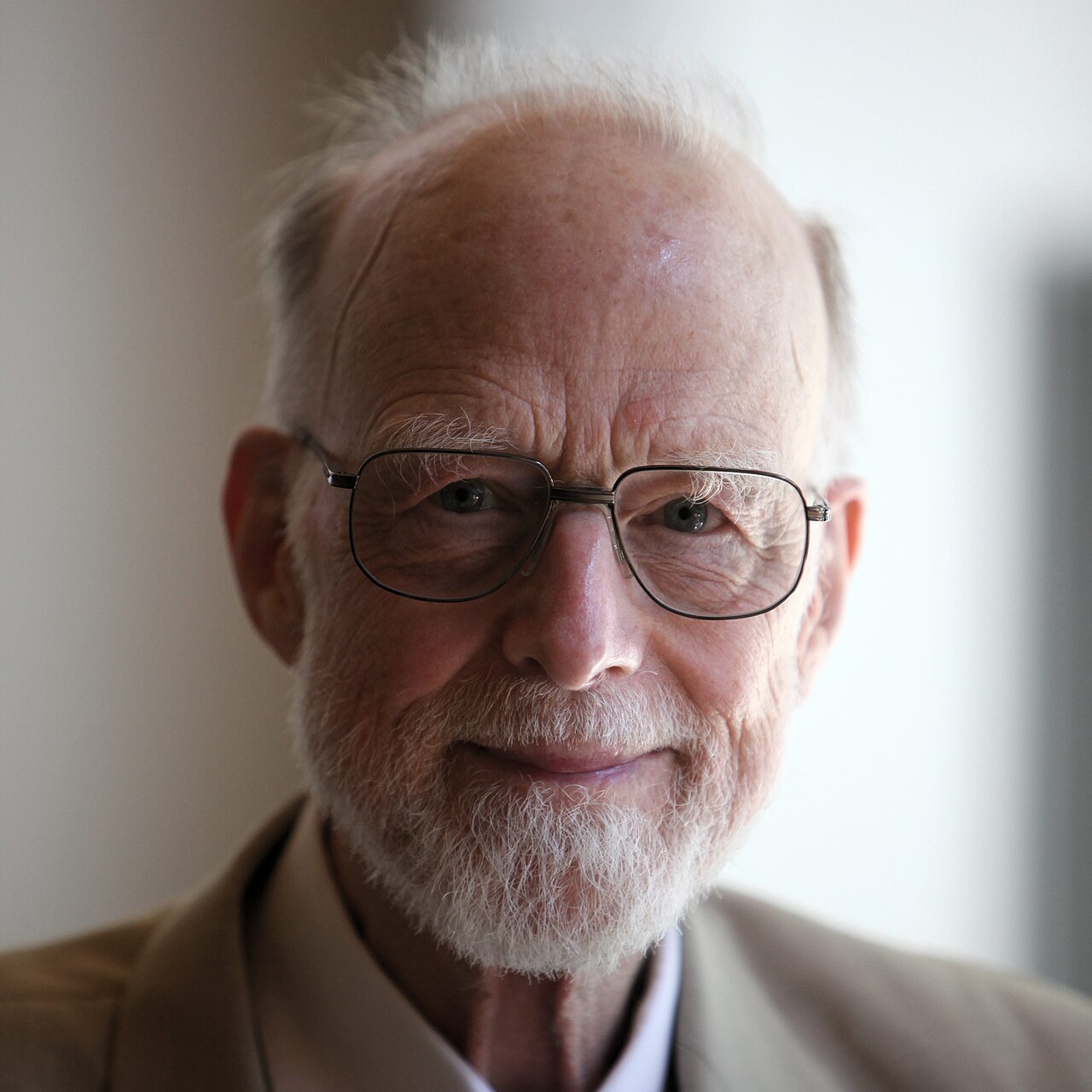
- Image: Sir Tony Hoare IMG 5125.jpg by Rama (CC BY-SA 2.0 FR), via Wikimedia Commons