Jack Ma and Alibaba: China's Internet Pioneer
Abstract
Jack Ma was an English teacher from Hangzhou who encountered the internet in 1995 and saw something most people in China could not yet see: a technology that would transform commerce on a continental scale. He founded Alibaba in 1999 with seventeen co-founders in his apartment, survived the dot-com crash, built the dominant e-commerce and payments platform in the world’s largest market, and executed the largest IPO in history in 2014. Then, in November 2020, he gave a speech criticizing Chinese banking regulators, and everything changed. His story is the story of Chinese tech entrepreneurship at its most ambitious, and of the limits the Chinese state ultimately places on private power.
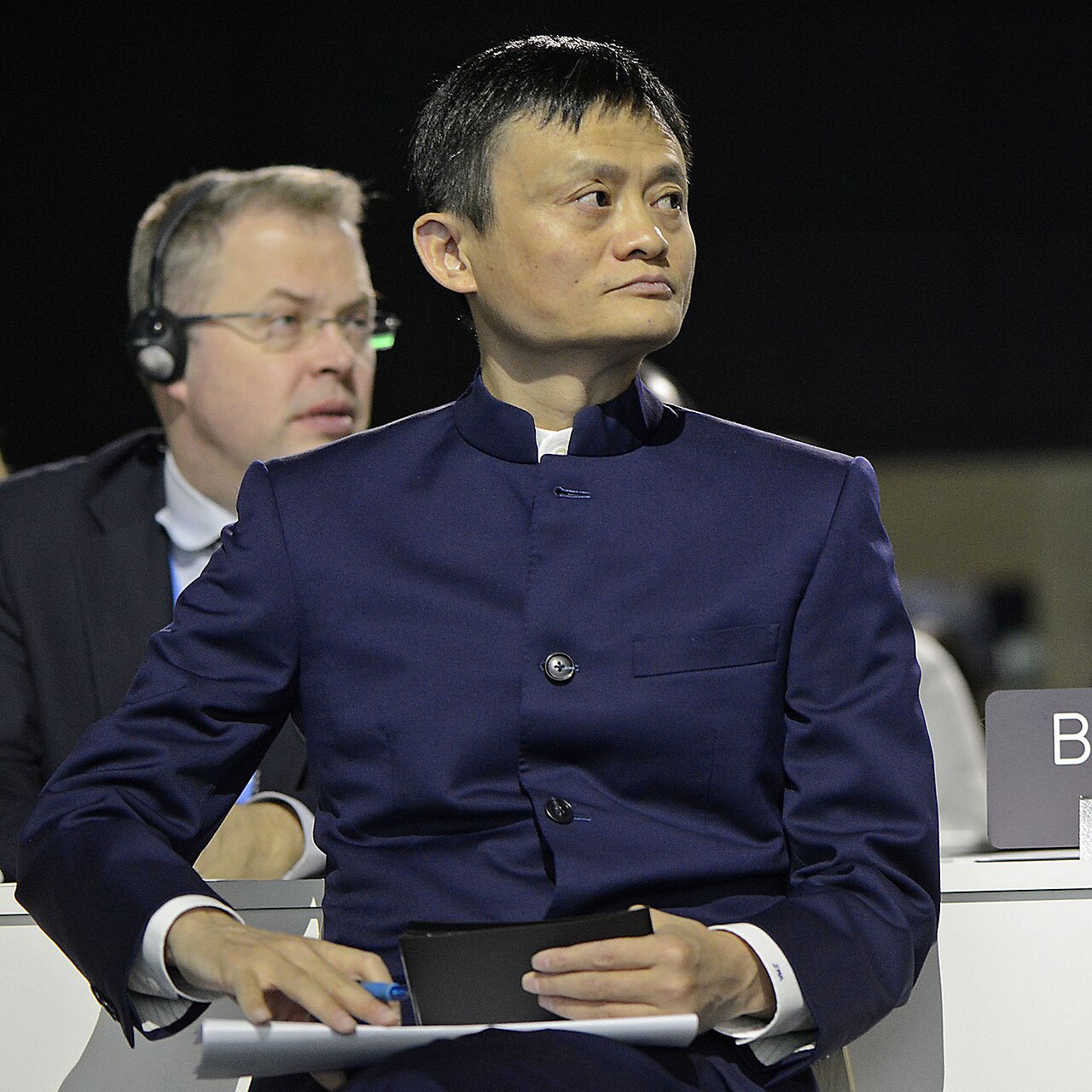
The English Teacher and the Internet
Ma Yun (known in the West as Jack Ma, the name given to him by an Australian tourist he befriended as a teenager) was born on September 10, 1964, in Hangzhou, Zhejiang Province. His family was not wealthy; his father was a traditional storyteller and musician. He was, by his own account, an indifferent student, failing the Chinese university entrance exam twice and being rejected from dozens of jobs after graduating from Hangzhou Teachers Institute with a degree in English in 1988. When KFC opened in Hangzhou, he applied with a group of friends; twenty-four of the twenty-five applicants were hired. He was the one who was not.
He became an English teacher, earning roughly $12 a month, and spent years finding his footing. The story of his transformation begins in 1995, when he accompanied a trade delegation to Seattle as a translator. There, for the first time, he used the internet. He searched for the word “beer” in Chinese and found nothing. He searched for “China” and found nothing. The network that Americans were already using contained no trace of China’s existence.
He borrowed time on a friend’s computer, built a rudimentary website for a Chinese translation company, and received emails from Chinese companies within hours asking who had made it. He returned to Hangzhou convinced that whatever this network was, it was going to be important, and that China was going to need companies to build its version.
China Pages and the First Attempt
Back in Hangzhou in 1995, Ma founded China Pages (what he later described as China’s first internet company) a directory of Chinese businesses for the global web. He built simple websites for local companies, charged them a fee, and tried to persuade Chinese businesses that the internet was real. Most did not believe him. He faced the problem that every internet pioneer in an underdeveloped market faces: a network is worthless without other users, and users will not join a worthless network.
China Pages attracted attention and eventually caught the interest of a state telecom company, which invested and then effectively took control. Ma left after finding himself unable to make decisions. His next stop was a brief stint with a Chinese government internet initiative in Beijing, an experience he described as bureaucratically stifling. He returned to Hangzhou in 1999, gathered seventeen friends, colleagues, and relatives in his apartment, and delivered the speech that Alibaba mythology has preserved: forty-five minutes of raw vision about what he intended to build and why. The recording, which circulated widely online years later, shows a man who is simultaneously certain and slightly mad, certain that the internet will transform Chinese commerce, certain that he can build the company to do it, and certain that no one in the room fully believes him yet.
The 18 Arhat: Founding Alibaba
The company was founded in February 1999 with eighteen people (Ma and seventeen co-founders) whom the company later called the “18 Arhat,” after the Buddhist disciples of the original Buddha. The founding team was not a collection of Stanford MBAs and ex-Googlers; it was teachers, friends, and relatives with limited technical credentials but intense personal loyalty to Ma.
The initial product was Alibaba.com: a business-to-business marketplace connecting Chinese manufacturers with international buyers. Ma had identified a real gap (Chinese factories had products that global buyers wanted but no efficient way to find each other) and built a simple directory to bridge it. Goldman Sachs invested $500,000 in 1999. SoftBank’s Masayoshi Son met Ma for six minutes and invested $20 million.
The timing was catastrophic and then retrospectively ideal. The dot-com crash of 2000–2001 destroyed most of Alibaba’s competitors and most of the venture capital that might have funded them. Alibaba survived partly because Ma had insisted on lean operations and partly because its model (connecting real manufacturers with real buyers, not selling eyeballs and vague future revenue) had genuine economic substance. When the crash came, real transactions continued.
Taobao vs. eBay: The Battle for China
In 2003, eBay acquired EachNet, the dominant Chinese consumer-to-consumer auction platform, for $180 million and announced its intention to integrate EachNet into the global eBay platform. eBay’s reasoning was logical: it had the dominant e-commerce model globally, China was a rapidly growing market, and EachNet had early-mover advantage. The math suggested eBay would own Chinese e-commerce.
Ma’s response was to launch Taobao (literally “digging for treasure”) in May 2003 (a direct competitor to EachNet/eBay) and to make it free. eBay charged listing fees and transaction fees. Taobao charged nothing. eBay’s China CEO declared that “free is not a business model.” Ma said he would keep Taobao free for three years.
He also understood something about Chinese commerce that eBay did not: Chinese buyers and sellers did not trust each other the way Western users, operating in a higher-trust commercial environment with credit card fraud protection, could be expected to. Transactions needed to be mediated. In 2004, Ma launched Alipay, an escrow service in which the buyer’s payment was held by Alipay until the buyer confirmed receipt of the goods, at which point funds were released to the seller. The model solved the trust problem that had limited Chinese e-commerce growth and was adopted almost universally on Taobao.
By 2005, Taobao had overtaken EachNet. By 2006, eBay had withdrawn from the Chinese consumer market entirely, selling its stake in a joint venture and effectively conceding the market. The reversal was one of the most decisive defeats a dominant global platform had suffered from a local competitor, and it established a pattern that would repeat: Chinese internet companies, with sufficient local knowledge and state goodwill, could defeat Western giants on their home turf.
In 2005, Yahoo invested $1 billion for a 40% stake in Alibaba, one of the best investments Yahoo ever made and, in retrospect, the investment that kept Yahoo nominally profitable for years after its core business declined. The relationship was complicated; Ma later maneuvered to reduce Yahoo’s influence over Alibaba’s governance, and the process generated significant legal tension. Yahoo’s remaining Alibaba stake was worth more than Yahoo’s entire market capitalization for several years.
Singles’ Day and the Scale of Chinese Commerce
In 2009, Alibaba designated November 11 (11/11, chosen because the date’s four ones resembled four single people) as Singles’ Day: a shopping festival targeted at Chinese single adults. The first event was small. The concept grew. By 2012, Singles’ Day was the largest online shopping day in the world by transaction volume, exceeding both Black Friday and Cyber Monday combined. By 2019, Singles’ Day generated $38.4 billion in gross merchandise value in 24 hours. The 2020 event reached $74 billion.
These numbers require context: Alibaba did not sell products itself in most cases. It was the platform (the marketplace infrastructure, the payment system, the logistics network) on which hundreds of thousands of merchants sold to hundreds of millions of consumers. Singles’ Day was not a statement about Alibaba’s inventory; it was a demonstration of the commercial infrastructure that Ma had built over two decades.
Tmall, launched in 2008 as a business-to-consumer offshoot of Taobao, became the dominant platform for branded goods in China. Alibaba Cloud (Aliyun, founded 2009) became China’s largest cloud computing provider. The Alibaba ecosystem by 2014 encompassed payments, cloud computing, logistics, media, entertainment, and financial services.
The IPO and the Peak
On September 19, 2014, Alibaba listed on the New York Stock Exchange. The IPO raised $25 billion, surpassing the previous record of $22.1 billion set by Agricultural Bank of China in 2010 and, at the time, the largest IPO in history. The opening-day market capitalization was approximately $231 billion. Ma, holding roughly 7% of the company, became one of the richest people in China.
The listing was a moment of extraordinary symbolic weight. A company founded by an English teacher in a Hangzhou apartment with borrowed money, operating in a country that Western investors had long regarded with skepticism, had produced the largest public offering in history. Ma rang the opening bell dressed in a traditional Chinese jacket, surrounded by customers rather than investors, a deliberate statement about what Alibaba was for.
Ant Group and the Interrupted IPO
The most ambitious project in Ma’s later career was Ant Group, spun out from Alipay in 2014 as a separate financial services company. Ant operated Alipay, by 2020, a digital payments platform with over one billion users and a market share in Chinese mobile payments exceeding 50%, along with wealth management products, micro-lending, insurance distribution, and credit scoring (the Sesame Credit system). Ant had become, in effect, a parallel financial system operating alongside China’s state banks.
In October 2020, Ant Group was on the verge of completing what would have been the largest IPO in history: a $37 billion dual listing in Shanghai and Hong Kong. Four days before the scheduled listing, on November 3, 2020, Chinese regulators suspended it. The suspension came within weeks of a speech Ma had given in October at the Bund Finance Summit in Shanghai, criticizing Chinese banking regulation as the work of “pawnbrokers” operating with a “risk-averse old man’s mentality” and arguing that Chinese regulators stifled innovation.
The speech was widely interpreted as a direct challenge to Chinese regulators and, implicitly, to the political leadership that set regulatory direction. In early November 2020, Ma disappeared from public view. He did not attend the recording of a television program he was scheduled to judge. His whereabouts for approximately three months were unknown to the general public.
Warning
Jack Ma’s disappearance and the Ant IPO suspension illustrate a fundamental constraint on private power in China. Ma had built a financial infrastructure that, at scale, rivaled or exceeded the reach of state banks, and he had been publicly critical of the regulatory framework that governed it. The Chinese Communist Party’s response was swift: the IPO was blocked, Ant Group was subjected to a regulatory restructuring that reduced its valuation dramatically, and Alibaba itself was fined 18.2 billion yuan ($2.8 billion) by the State Administration for Market Regulation in April 2021 for anti-competitive practices. The message was legible: private entrepreneurship is permitted, but private power that challenges state authority is not.
Retreat and Legacy
Ma resurfaced in January 2021, appearing briefly in a video address to a rural teacher program. Over the following years, he gradually reduced his public profile, stepping down from Alibaba’s board in 2023, reportedly spending time in Japan and traveling internationally. Alibaba itself underwent a restructuring in 2023, announcing it would split into six business units that could separately seek outside investment or public listings.
The legacy of Jack Ma and Alibaba is dual and not fully resolved. On one side: Ma built the commercial infrastructure that enabled a generation of Chinese small businesses to sell online, created the digital payments system that leapfrogged credit cards in China, and helped construct China’s internet economy from a position of genuine disadvantage relative to American competitors. His personal story (failed student, underpaid teacher, repeated rejected job applicant, eventual entrepreneur on a continental scale) became the founding myth of Chinese technology entrepreneurship.
On the other side: the concentration of economic power in Alibaba’s ecosystem raised genuine questions about competition and consumer welfare. Ant Group’s credit-scoring and financial activities raised questions about surveillance and data power. And the regulatory crackdown of 2020–2021 demonstrated that the Chinese state, having permitted private entrepreneurs to build significant economic infrastructure, retained the ability and willingness to intervene decisively when those entrepreneurs appeared to challenge its authority.
For the broader context of China’s technology industry and its relationship with the state, see China’s Tech Industry.
📚 Sources
- Clark, Duncan: Alibaba: The House That Jack Ma Built (2016), Ecco/HarperCollins
- Zeng, Ming & Williamson, Peter J.: Dragons at Your Door: How Chinese Cost Innovation Is Disrupting Global Competition (2007), Harvard Business Review Press
- Alibaba Group: “Alibaba Group Prices Initial Public Offering,” press release, September 18, 2014
- Jack Ma — Wikipedia
- Schuman, Michael: “How Jack Ma Made His Billions—and Why He Lost Them,” The Atlantic, February 2021
- Leng, Cheng & Carew, Rick: “China Fines Alibaba $2.8 Billion in Antitrust Crackdown on Jack Ma’s Empire,” Wall Street Journal, April 10, 2021
- Kroeber, Arthur: China’s Economy: What Everyone Needs to Know (2016), Oxford University Press
- Image: Jack Ma COP21 2015-12-05.jpg by UNclimatechange (CC BY 2.0), via Wikimedia Commons