Israel's Tech Industry: From Unit 8200 to Startup Nation
Abstract
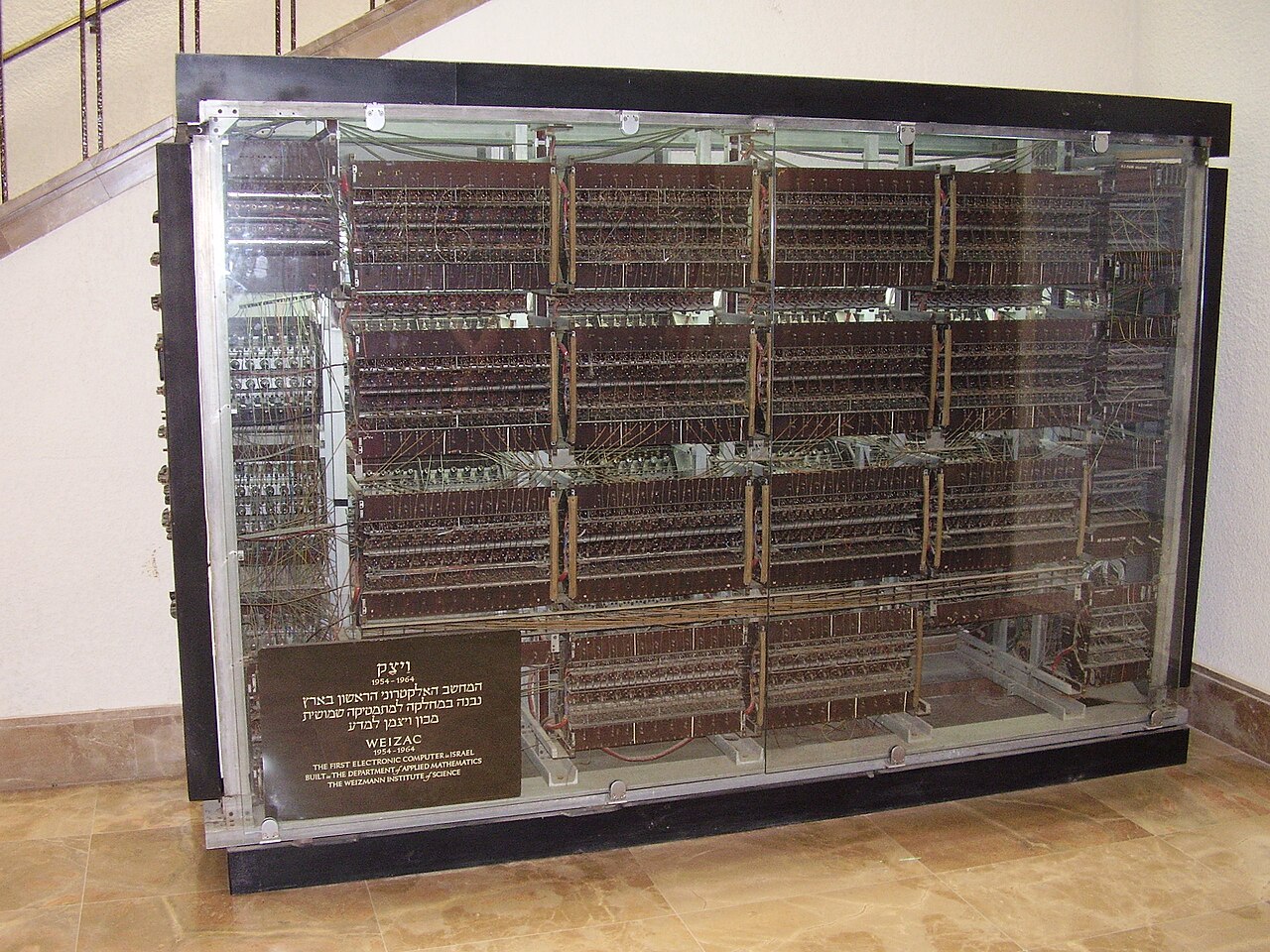
Israel has about ten million people, no oil, and a long history of war with its neighbours. It also has more startup companies per capita than any other country, the highest venture-capital investment relative to GDP, and a cybersecurity industry with customers worldwide. Its computing began in 1955 with WEIZAC, a copy of von Neumann’s IAS machine at the Weizmann Institute. Its modern tech industry draws heavily on military service, in particular on Unit 8200, the signals intelligence arm of the Israel Defense Forces, whose veterans founded Check Point and many other companies. Check Point’s firewall, ICQ’s messaging, Waze’s crowd-sourced maps and Mobileye’s driver-assistance chips all came out of this system, and so did NSO Group’s Pegasus spyware.
Military Service and Unit 8200
Israel was founded in 1948 by a population that had survived Europe’s catastrophe, surrounded by states that had declared its destruction as a policy objective. After the wars of 1948, 1967 and 1973 the IDF (Israel Defense Forces) invested heavily in signals intelligence, cryptography, and electronic warfare, staffed by drafting talented young people into those functions. Mandatory military service (about three years for men, two for women) means that most Jewish Israelis, though not most Arab or ultra-Orthodox citizens, serve between the ages of eighteen and twenty-one. The most mathematically talented are selected for technical units. The most exceptional are selected for Unit 8200.
Unit 8200 is Israel’s SIGINT (signals intelligence) unit, roughly equivalent to the American NSA or British GCHQ but staffed largely by conscripts. It intercepts communications, breaks encryption, develops offensive cyber capabilities, and, most importantly for Israel’s technology industry, trains thousands of young people in cryptography, software engineering and data analysis before they turn twenty-one.
The Alumni Network
Unit 8200 veterans include Check Point’s Gil Shwed, Palo Alto Networks founder Nir Zuk, and the founders of NSO Group, among many others. The 8200 Alumni Association runs a startup accelerator and a network that connects veterans with each other and with investors.
The First Computers
Israeli computing began in a chemistry institute. Chaim Weizmann, the chemist who became Israel’s first president in 1949, added an applied-mathematics department to his research institute in Rehovot and hired the geophysicist Chaim Pekeris, who had worked at the Institute for Advanced Study in Princeton. John von Neumann was handing out the plans of his IAS machine to anyone who asked, and Pekeris secured $50,000 to build a copy, about a fifth of the institute’s annual budget. The builder was Gerald Estrin, a member of von Neumann’s team since 1950, who arrived in December 1953 with his wife Thelma and assembled a local team that included the young mathematician Aviezri Fraenkel. Electronic parts came from the United States; a neighbourhood workshop run by Bulgarian immigrants made the metalwork. A press report of August 1954 described about 2,500 valves and a drum holding 1,024 words of 40 bits; core memory came later. Estrin went back to the US in spring 1955, the team finished the machine, and WEIZAC ran its first tests that autumn and was probably presented to the public on 23 October 1955. It worked around the clock for scientists and the military until the end of 1963, and the IEEE named it a Milestone in 2006. Its successors were a Control Data 1604A and, from 1965, the institute’s own transistorised Golem Aleph, modelled on concepts of the ILLIAC II; at its inauguration on 17 June 1965 the scholar Gershom Scholem compared it to the golem of Jewish legend.
Between the two Golems the defence ministry got its own machine. Meir Lehman, born in Germany in 1925 and raised in England, had worked for Ferranti from 1956 and from 1958 designed the transistorised SABRAC for the Israeli Ministry of Defence: 36-bit words, a drum and a small core store. Lehman later taught at Imperial College and is remembered for his laws of software evolution (see Eponymous Laws).
The first computer built in series came from Haifa. Elbit, founded in 1966 by the defence ministry and the electronics firm Elron, brought out the Elbit 100 minicomputer in 1967: 12-bit words, 1,024 to 4,096 words of memory, an addition in 7.2 microseconds, sold as “a $4,900 computer for people who thought they couldn’t afford a computer.” A 1973 US Commerce Department survey counted 293 computers in Israel and found that more than 86 percent of the $10 million of hardware installed in 1972 was imported, mostly IBM; it noted that Elbit’s minicomputers were popular with local users. Elbit later built 32-bit IBM-compatible machines, which Nixdorf sold in West Germany from 1980 as the Nixdorf 8890 models 30 and 50 (the model 70 followed in 1981), aimed at IBM’s 4331. Intel opened a small laboratory in Haifa in 1974 under Dov Frohman, the inventor of the EPROM; the 8088 processor of the IBM PC was developed there.
Check Point
In 1993, three Israeli engineers in their mid-twenties (Gil Shwed, Marius Nacht, and Shlomo Kramer) founded Check Point Software Technologies in Ramat Gan with $250,000 from the BRM Group. Shwed had served in Unit 8200, where he worked on securing classified networks.
Check Point’s founding product was FireWall-1 (1994), the first commercially successful stateful inspection firewall. Stateful inspection (tracking the state of network connections rather than filtering packets in isolation) was Shwed’s key idea, and it became the standard technique of network firewalls. FireWall-1 could allow established connections while blocking new unauthorized ones; previous packet filters couldn’t make this distinction.
Sun Microsystems became Check Point’s first major OEM partner in 1994, bundling FireWall-1 with its systems. By February 1996 the market researcher IDC named Check Point the world firewall market leader, with a 40% share, and in June 1996 the company went public on NASDAQ, raising $67 million. Israeli firms such as Scitex and Elscint had listed in New York since the 1970s and 1980s, but Check Point made the pattern common for software: develop technology in Israel, sell globally, list in New York, without Silicon Valley venture capital in the early stages.
The NASDAQ Israel Model
Check Point listed on NASDAQ while remaining operationally Israeli, an Israeli company with American investors rather than the subsidiary of an American holding company. By 2020 Israel had more companies listed on NASDAQ than any country except the United States and China.
ICQ
Mirabilis, founded in Tel Aviv in June 1996 by Yair Goldfinger, Sefi Vigiser, Amnon Amir, Arik Vardi and his father Yossi Vardi, released ICQ (“I seek you”) in November 1996, the first internet instant-messaging program to reach a mass audience. Chat already existed on IRC and in the rooms of online services such as AOL; ICQ made it personal: install software, get a number, add friends, see who is online, message in real time. It passed 100 million registered accounts around 2001.
AOL bought Mirabilis on 8 June 1998 for $287 million in cash plus up to $120 million in performance payments. The message to Israeli engineers was that you could build something in Tel Aviv, sell it to an American company, and become wealthy without leaving home. The “exit” (building a startup to acquisition rather than to IPO) became a common model for Israeli founders. ICQ’s contact list with online status, away messages and its “uh-oh” alert sound set conventions that later messengers, from Facebook Messenger to WhatsApp, took for granted.
The Cybersecurity Cluster
Check Point’s engineers later left to found companies of their own. Shlomo Kramer, one of its three founders, co-founded Imperva (web application security, 2002) and Cato Networks (cloud networking, 2015). The pattern repeated across the industry.
CyberArk (founded 1999) built privileged access management, securing the administrative accounts that, if compromised, give an attacker control of an organization’s infrastructure. It was founded by Alon Cohen and Udi Mokady, a veteran of military intelligence.
The industry clustered around Tel Aviv and Herzliya, and from the 2010s also in Beer Sheva, where the CyberSpark park sits next to Ben-Gurion University and the IDF is moving its technology units. The government encouraged this through tax incentives, the Yozma programme (1993), which created Israel’s venture-capital industry by co-investing with foreign funds, and grants from the Office of the Chief Scientist (since 2016 the Israel Innovation Authority) for early-stage R&D.
The Dual-Use Question
Israel’s cybersecurity industry operates in a domain where offensive and defensive technology are identical. A tool that finds vulnerabilities in an adversary’s network also finds them in a friend’s. NSO Group, founded in 2010 by veterans of Israeli military intelligence, built Pegasus, spyware that could take over iPhones and Android phones, in some versions without any action by the user. NSO sold Pegasus to governments, which used it against journalists, opposition politicians, and human rights activists in Saudi Arabia, Mexico, India, and elsewhere. Israel’s defence ministry licensed the exports. In November 2021 the US Commerce Department put NSO on its Entity List. The same training that produces Check Point’s defensive products also produces surveillance tools.
Waze
Ehud Shabtai started the crowd-sourced map project FreeMap Israel in 2006, and in 2008 he, Amir Shinar and Uri Levine turned it into the company behind Waze, a navigation application that used the GPS traces of its own drivers, instead of licensed map databases, to build and continuously update a real-time map.
Waze users were both consumers and contributors. Driving with Waze running collected data (speed, location, direction, traffic events) that was aggregated across all users into a live traffic picture. Users could also report accidents, police speed traps, road hazards, and road closures.
Google acquired Waze in 2013 for about $1.1 billion, after Facebook had also negotiated to buy it. Waze kept running as a separate app with its own community of map editors, Google Maps incorporated its traffic reports, and the engineering team stayed in Israel. In 2022 Google folded Waze into its Geo division alongside Google Maps.
Mobileye
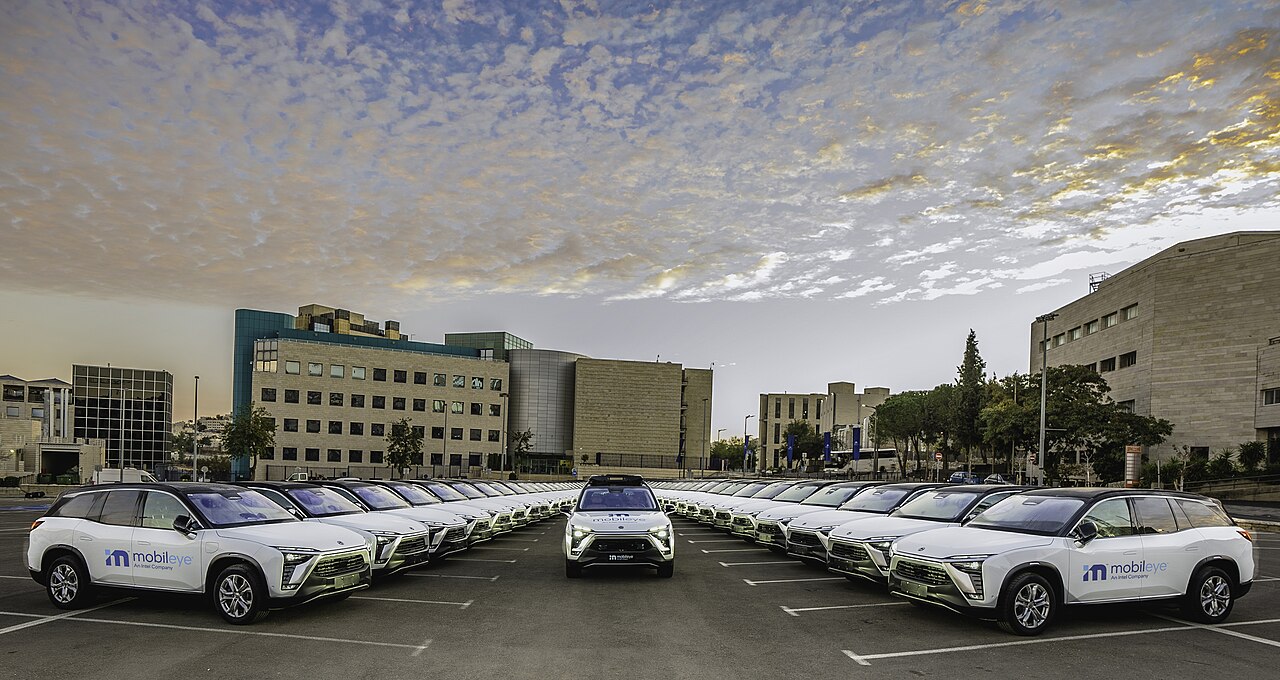
Mobileye was founded in Jerusalem in 1999 by Amnon Shashua, a computer vision researcher at Hebrew University, and Ziv Aviram. Shashua had been working on the problem of teaching computers to see, specifically, to see roads.
The founding insight was that a camera was cheaper and more information-rich than radar or LIDAR for understanding a driving environment, and that computer vision algorithms had reached the point where a camera-plus-algorithm system could reliably detect lane markings, vehicles, pedestrians, and traffic signs in real time. Mobileye built the EyeQ chip (a purpose-built processor for vision-based driver assistance) and sold it to automotive manufacturers as an ADAS (Advanced Driver Assistance System) component.
ADAS features (automatic emergency braking, lane departure warning, adaptive cruise control) became standard and then, in the EU and elsewhere, mandatory in new cars. By 2017 Mobileye’s chips were in vehicles from BMW, Volvo, General Motors, Ford, Nissan, and many other makers, and by the end of 2023 its chips were in about 170 million vehicles.
Intel acquired Mobileye in 2017 for $15.3 billion, then the largest acquisition of an Israeli tech company; Google’s $32 billion purchase of the Israeli-founded cloud-security firm Wiz, completed in March 2026, has since overtaken it. Intel’s CEO Brian Krzanich presented the deal as Intel’s way into the autonomous vehicle market. In October 2022 Intel floated Mobileye on NASDAQ again at a valuation of about $17 billion, keeping majority control.
Shashua’s bet that cameras and algorithms, rather than LIDAR-heavy systems like Waymo’s, would be the core of autonomous driving remained contested. Tesla’s first Autopilot (2014) ran on a Mobileye EyeQ3 chip until the two companies split in 2016; Tesla later went camera-only with its own chips, while Waymo kept its LIDAR arrays.
The University Connection: Weizmann and Hebrew University
Israel’s tech industry does not draw on a single university. The Technion in Haifa, founded in 1912, trains much of the country’s engineering workforce and sits next to the research centres of Intel and other multinationals. Two other institutions matter for computer science.
The Weizmann Institute of Science in Rehovot focuses exclusively on graduate research. Its computer science and mathematics departments are strong in cryptography, complexity theory, and algorithms. Adi Shamir (the S in RSA, developed at MIT in 1977) has been at Weizmann for most of his career. Oded Goldreich, whose work on zero-knowledge proofs and computational complexity is foundational to modern cryptography, was at Weizmann. The Institute’s output is theoretical; it reaches industry through its graduates.
Hebrew University of Jerusalem is Mobileye’s origin. It is also where much of Israel’s early AI and machine learning research developed. Its professors, Shashua among them, have co-founded several companies while keeping their chairs.
Dead End: The Peace Dividend That Never Arrived
In the mid-1990s, following the Oslo Accords, there was optimism that normalized relations between Israel and its Arab neighbors would allow Israeli technology companies to expand into regional markets, particularly Jordan, Egypt, and potentially the Gulf states. The “peace dividend” for Israeli tech would have opened markets of tens of millions of consumers and business customers who were geographically proximate but politically inaccessible.
The Oslo process collapsed. The Second Intifada (2000–2005) followed. Israeli technology companies did not expand into Arab markets; they expanded into American and European ones instead, accepting the structural overhead of building sales organizations far from their engineering base.
The Abraham Accords (2020) normalized relations between Israel and the UAE, Bahrain, Sudan, and Morocco and opened commercial relations. Israeli and Emirati technology companies began formal partnerships. But the potential of a coherent Middle Eastern technology ecosystem (Israeli engineering capability combined with Gulf capital and market access) remained substantially unrealized as of the mid-2020s, constrained by the ongoing conflict in Gaza and its diplomatic consequences.
For Israel’s cybersecurity industry in context, see Cybersecurity: The Invisible War and The History of Cyberwar. For the broader Middle Eastern tech landscape, see The Middle East’s Tech Industry. For cryptography foundations underlying Israel’s security sector, see Public Key Cryptography.
📚 Sources
- Senor, Dan & Singer, Saul: Start-Up Nation: The Story of Israel’s Economic Miracle (2009), Twelve
- Heinz Nixdorf MuseumsForum blog, “Computer im Heiligen Land” (16 October 2020) (WEIZAC: Pekeris, the $50,000 budget, Estrin’s team, the 1954 specifications, the October 1955 presentation, service until 1963)
- Heinz Nixdorf MuseumsForum blog, “Computer aus Israel” (12 May 2023) (SABRAC and Lehman, Golem Aleph and Scholem, the Elbit 100, the 1972 US market survey, the Nixdorf 8890, Intel Haifa)
- Check Point — Wikipedia
- Mobileye — Wikipedia
- Pegasus (spyware) — Wikipedia
- Waze — Wikipedia
- Breznitz, Dan: Innovation and the State: Political Choice and Strategies for Growth in Israel, Taiwan, and Ireland (2007), Yale University Press
- Silicon Wadi — Wikipedia
- Mobileye Global Inc., Form 10-K for fiscal 2023 (about 170 million vehicles)
- ICQ — Wikipedia (Mirabilis founders, the AOL terms)
- “Google completes $32 billion acquisition of Wiz”, ITdaily (March 2026)
- Image: Weizac (1954-1964) Front.jpg by Yuval Madar (CC BY 2.5), via Wikimedia Commons
- Image: Mobileye’s autonomous vehicle fleet in Jerusalem.jpg by Ilan Ben Oudiz (CC BY-SA 4.0), via Wikimedia Commons