Mark Zuckerberg and Facebook: The Social Network That Rewired Society
Abstract
Mark Zuckerberg launched Facebook from his Harvard dorm room in February 2004, at nineteen years old, and within twenty years had built the most extensive social graph in human history, connecting over three billion people across Facebook, Instagram, and WhatsApp. The company’s story is one of relentless growth, genuine innovation, repeated ethical failures, and a founder whose extraordinary technical instincts and authoritarian corporate control made Facebook simultaneously indispensable and dangerous. No technology company has faced more sustained public criticism about its social effects, and no technology company has survived that criticism more intact.
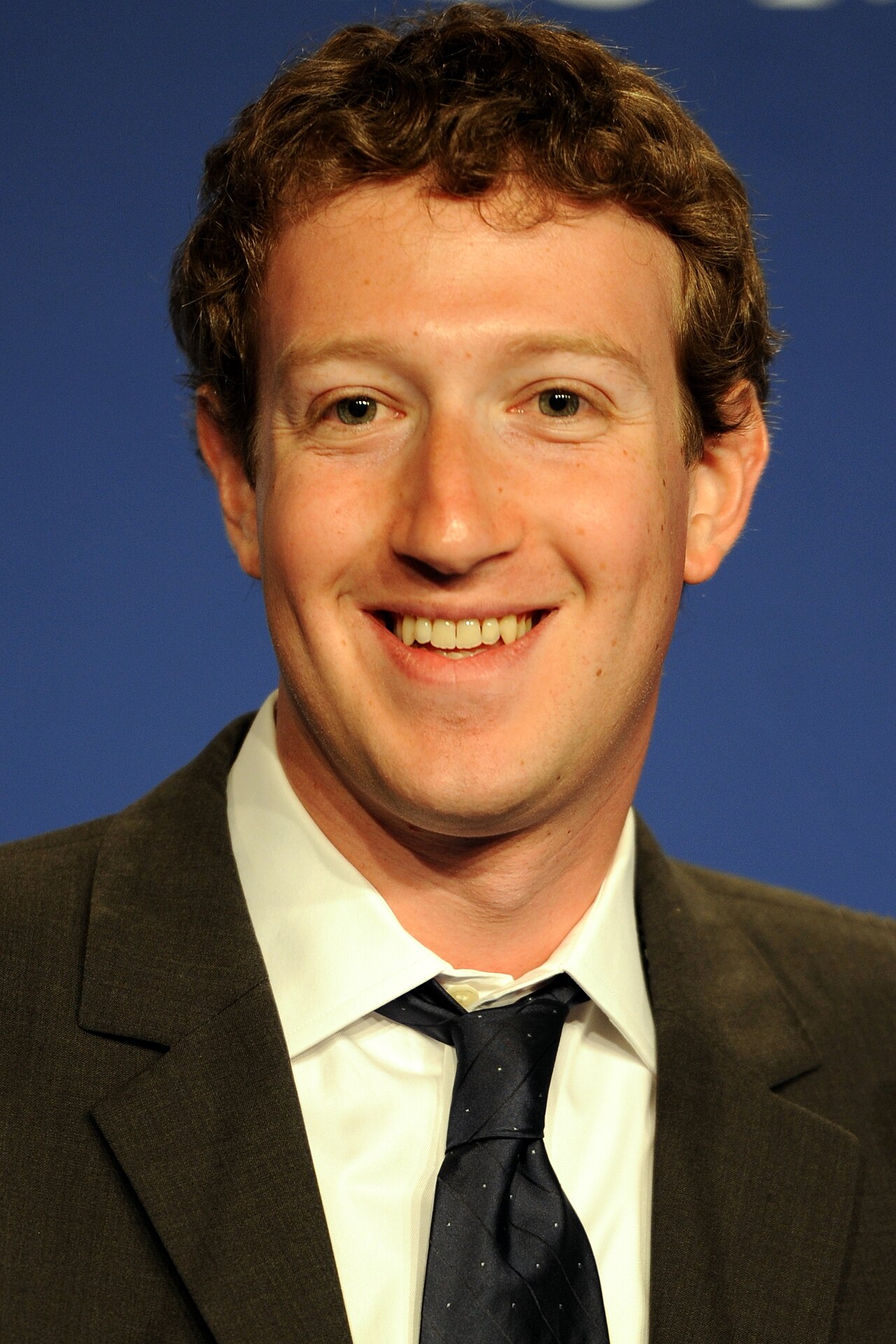
From Exeter to Harvard: The Making of a Builder
Mark Elliot Zuckerberg was born May 14, 1984, in White Plains, New York. His father, Edward Zuckerberg, was a dentist; his mother, Karen, a psychiatrist. He was coding by middle school (his father hired a software developer to tutor him privately) and by fourteen had built a messaging program called Zucknet that his father used to notify him when patients arrived.
At Phillips Exeter Academy, the elite New Hampshire boarding school, Zuckerberg built a music player called Synapse Media Player that learned users’ listening habits; both AOL and Microsoft offered to buy it, and offered him jobs. He declined both and enrolled at Harvard in 2002 to study computer science and psychology.
The psychology component was not incidental. Zuckerberg was interested in human social networks as systems to be understood and engineered. His roommates and friends at Harvard described him as intensely focused, socially awkward in person, but possessed of an unusual ability to translate social dynamics into system architecture, to see the graph beneath the surface of human relationships.
Facemash: The Provocation That Started Everything
In October 2003, Zuckerberg built and deployed Facemash, a site that pulled photos from Harvard’s residential house directories (accessed by exploiting security weaknesses in the house websites) and asked visitors to choose between two students: “Who’s hotter?” The site went viral within Harvard within hours. The university network slowed noticeably under the traffic. The administration shut it down within forty-eight hours. Zuckerberg was called before the Administrative Board on charges of violating privacy, violating computer security policies, and violating copyright. He received academic probation.
The episode established several patterns that would define Facebook’s next twenty years: building something technically impressive and socially provocative, deploying it before asking permission, generating enormous engagement, and facing institutional consequences that failed to significantly slow the trajectory.
TheFacebook: February 4, 2004
On February 4, 2004, Zuckerberg launched TheFacebook at thefacebook.com. The initial version was available only to Harvard students and required a harvard.edu email address. Users could create profiles, list their classes, and connect with other students.
Within two weeks, more than half of Harvard’s undergraduate population had registered.
His roommate Eduardo Saverin invested $19,000 as co-founder. Within months, Zuckerberg had expanded to Yale, Columbia, and Stanford. Dustin Moskovitz (a roommate) and Chris Hughes joined as co-founders. By summer 2004, TheFacebook had moved to Palo Alto, California, and abandoned any pretense of being a side project.
The Winklevoss twins (Cameron and Tyler Winklevoss, fellow Harvard students) had hired Zuckerberg in late 2003 to help build a social network called HarvardConnection (later ConnectU). They sued, alleging he had stolen their idea. The case was settled in 2008 for approximately $65 million in cash and stock. The Winklevosses later invested heavily in Bitcoin.
Eduardo Saverin’s story was more painful. As Zuckerberg aggressively courted Silicon Valley investors, Saverin’s equity stake was diluted through a series of stock issuances that reduced his share from approximately 30% to less than 10%. He sued; the case was settled confidentially. Saverin later renounced his US citizenship (saving an estimated $700 million in taxes), moved to Singapore, and became a venture capitalist. The movie The Social Network (2010, directed by David Fincher, written by Aaron Sorkin) dramatized both episodes; Zuckerberg called it “fictional” and said watching it felt like “reading a book about yourself that was written by someone else.”
Peter Thiel, Sean Parker, and the Network Effect
In June 2004, Peter Thiel (the PayPal co-founder and venture capitalist) invested $500,000 for approximately 10.2% of TheFacebook. The investment came with something more valuable than cash: Thiel’s network and his framework for thinking about technology monopolies. His concept of the network effect (a product becomes more valuable as more people use it, creating winner-take-all dynamics) shaped Zuckerberg’s strategic thinking. If Facebook could grow fast enough to capture the social graph, it would be effectively impossible for a competitor to displace it without simultaneously convincing all of a person’s connections to move.
Sean Parker, the Napster co-founder, became the company’s first president in 2004. He connected Facebook to Silicon Valley’s investor community, helped negotiate the Series A from Accel Partners ($12.7 million, 2005), and was eventually pushed out after a drug incident at a company-rented beach house in 2005. His influence on the company’s culture (fast growth above all, engagement as the primary metric, social manipulation as a feature) proved more durable than his tenure.
The company dropped the “The” from its name and relaunched as Facebook in 2005. By the end of that year it had 5.5 million users.
News Feed, the iPhone, and Scale
September 5, 2006: Facebook launched News Feed, a continuously updated stream of friends’ activity that replaced the static profile page as the default view. Users erupted in protest: the feature felt like stalking, a violation of the informal norms of semi-private profile browsing. Hundreds of thousands joined protest groups. Zuckerberg posted an apology that was also, characteristically, a defense: he acknowledged that the rollout had been “a big mistake” in not explaining the feature’s logic, while defending the feature itself.
Within weeks, the protests faded. News Feed became the product. The algorithmic feed (ranking content by predicted engagement rather than showing everything chronologically) became the template that Twitter, Instagram, TikTok, and eventually every social platform would copy. It also established the addictive engagement loop that would later attract criticism about social media’s effects on mental health, political discourse, and attention.
Facebook opened registration to anyone over thirteen in September 2006. The user base had been 12 million then; it reached 100 million by August 2008, 500 million by July 2010. An iPhone-compatible mobile website appeared in 2007, and the native iPhone app launched in July 2008 with Apple’s App Store; mobile ultimately became Facebook’s dominant access method and its primary advertising medium.
Instagram, WhatsApp, Oculus
Zuckerberg’s acquisition strategy was driven by a clear-eyed recognition of what could threaten Facebook. If a new social network established itself among younger users, or if a messaging platform captured conversations, Facebook could be stranded with an aging user base on a declining platform. The solution was to buy potential threats before they could mature.
Instagram was acquired in April 2012 for approximately $1 billion, an extraordinary sum for a company with thirteen employees and no revenue. The acquisition, approved by the FTC in record time, gave Facebook ownership of the dominant photo-sharing platform and access to a younger, more visually oriented user base. Instagram grew from 30 million users at acquisition to over a billion by 2018, largely under the leadership of its founders Kevin Systrom and Mike Krieger, who were eventually pushed out in 2018 after conflicts with Zuckerberg over autonomy.
WhatsApp was acquired in February 2014 for $19 billion, the largest acquisition of a venture-backed startup in history at the time. WhatsApp had 450 million users, mostly outside the United States, with a simple business model ($1/year after the first year) and a culture of privacy. Its co-founders Jan Koum and Brian Acton eventually left Facebook; Acton donated $50 million to the Signal Foundation, which builds WhatsApp’s direct privacy-respecting competitor.
Oculus VR was acquired in March 2014 for $2 billion. The acquisition of the virtual reality headset startup was Zuckerberg’s first public statement of what would later become the “metaverse” vision: that the next major computing platform would be immersive 3D environments rather than flat screens.
2016: The Year the Feed Went Wrong
The 2016 US presidential election exposed Facebook’s vulnerability to political manipulation at a scale no one inside the company had anticipated or prepared for.
Russian state-affiliated actors operating through the Internet Research Agency created hundreds of fake Facebook accounts and pages, spent approximately $100,000 on targeted political advertising, and organized real-world events, all aimed at amplifying division, suppressing Democratic turnout, and boosting Donald Trump. The operation was modest in direct spend but extraordinary in organic reach: the IRA-linked content reached an estimated 126 million Americans.
Simultaneously, fake news (fabricated political stories with no factual basis) spread virally on Facebook because it generated high engagement. The Macedonian fake-news industry produced dozens of sites with inflammatory pro-Trump content; several of their operators described deliberately targeting Facebook because its engagement algorithm consistently amplified emotional content over accurate content.
Zuckerberg initially dismissed the idea that Facebook had influenced the election: “The idea that fake news on Facebook, of which it’s a small amount of content, influenced the election in any way — I think is a pretty crazy idea.” He later said this was “dismissive” and wrong. Facebook committed $300 million to election integrity efforts and hired thousands of content moderators and policy staff. The architecture of News Feed was not changed.
Cambridge Analytica and the Reckoning
In March 2018, investigative reporting by The Guardian, The New York Times, and The Observer revealed that Cambridge Analytica (a political consulting firm with ties to the Trump campaign and Steve Bannon) had obtained personal data on approximately 87 million Facebook users without their knowledge or consent.
The mechanism was a personality quiz app, “This Is Your Digital Life,” created by academic researcher Aleksandr Kogan. Facebook’s 2014-era platform policies had allowed apps to collect data not only on users who installed them but on all of their friends. Kogan’s app was installed by roughly 270,000 people; through the friend-harvesting mechanism, it collected data on 87 million.
Zuckerberg testified before Congress in April 2018 in a two-day session watched by millions. One exchange became a cultural artifact: when Senator Orrin Hatch asked how Facebook made money if users didn’t pay for it, Zuckerberg replied, with visible effort to keep a straight face: “Senator, we run ads.”
The FTC fined Facebook $5 billion in 2019, the largest fine ever imposed on a technology company at the time, equivalent to approximately two weeks of Facebook’s annual revenue. The fine came with structural requirements around privacy governance. The FTC also filed an antitrust complaint in December 2020 alleging that the Instagram and WhatsApp acquisitions had illegally maintained a social networking monopoly; federal courts initially dismissed the complaint but later allowed it to proceed.
The Consent Problem
Facebook’s core business model requires users to not fully understand what they are consenting to. The company’s privacy settings are deliberately complex; the actual data collection extends far beyond what users believe they are sharing. The Cambridge Analytica scandal was distinctive not because it revealed Facebook doing something new, but because it revealed the consequences of what it was always doing. The data Kogan collected was obtained through mechanisms that Facebook’s own policies explicitly permitted in 2014. The problem was not a rogue actor exploiting a loophole; it was the loophole being the product.
Meta, the Metaverse, and the Year of Efficiency
In October 2021, Zuckerberg announced that Facebook Inc. would rebrand as Meta Platforms, signaling his conviction that the company’s future lay in building the metaverse, a network of immersive 3D social spaces accessible through virtual and augmented reality devices.
The pivot was simultaneously a genuine strategic vision and a reputational escape hatch. “Facebook” had become a liability word; associating the company’s future with a different name allowed Zuckerberg to talk about what it was building rather than what it had done.
The financial commitment was extraordinary: Meta’s Reality Labs division, which develops VR/AR hardware and software, spent approximately $13.7 billion in 2022 and $16.1 billion in 2023, accumulating operating losses of over $45 billion between 2020 and 2023, for a consumer user base that remained a fraction of what Facebook’s core apps reached. The Meta Quest headsets achieved modest adoption; the broader “metaverse” vision did not generate the social or commercial engagement Zuckerberg had projected.
In 2023, Zuckerberg announced a “year of efficiency”: 21,000 layoffs (approximately 25% of the workforce), elimination of middle management layers, and a refocusing on core products. The company’s stock, which had fallen 76% from its 2021 peak, recovered strongly. Zuckerberg also launched Threads in July 2023, a text-based social platform competing with Twitter/X, built on ActivityPub (open protocol), which acquired 100 million users in five days before settling at a smaller active base.
In personal life, Zuckerberg began training intensively in martial arts (Brazilian jiu-jitsu and MMA) competing in tournaments and publicly challenging Elon Musk to a cage fight in 2023. The spectacle was widely read as a deliberate act of personal rebranding, signaling aggression and physicality to counter a public image of robotic affect.
For the advertising architecture his company depends on, see Surveillance Capitalism: The Business Model That Monetized Human Behavior. For the broader context of platform power, see The Rise of the Tech Giants.
📚 Sources
- Kirkpatrick, David: The Facebook Effect: The Inside Story of the Company That Is Connecting the World (2010), Simon & Schuster
- Mezrich, Ben: The Accidental Billionaires (2009), Doubleday
- Vaidhyanathan, Siva: Antisocial Media: How Facebook Disconnects Us and Undermines Democracy (2018), Oxford University Press
- Haugen, Frances: Facebook whistleblower testimony to US Senate Commerce Committee (October 5, 2021)
- US Federal Trade Commission: In the Matter of Facebook, Inc., FTC File No. 1823109, $5 billion consent decree (July 2019)
- Cadwalladr, Carole & Graham-Harrison, Emma: “Revealed: 50 million Facebook profiles harvested for Cambridge Analytica,” The Guardian (March 17, 2018)
- Senate Judiciary & Commerce Committee: Transcript of Zuckerberg testimony (April 10–11, 2018)
- Meta Platforms Inc.: Annual Reports (Form 10-K), 2021–2023, SEC EDGAR
- Kramer, Adam D.I.; Guillory, Jamie E. & Hancock, Jeffrey T.: “Experimental evidence of massive-scale emotional contagion through social networks,” Proceedings of the National Academy of Sciences (June 2014)
- Image: Mark Zuckerberg at the 37th G8 Summit in Deauville 018 v1.jpg by Guillaume Paumier (CC BY 3.0), via Wikimedia Commons