The Netherlands' Tech Industry: Philips, ASML, and the Chokepoint
Abstract
The Netherlands, a country of about 18 million people, produced two technology companies of global weight, ninety years apart. Philips, founded in 1891, invented the compact cassette and co-developed the CD, the DVD and the Blu-ray disc, the optical formats of consumer media for four decades. ASML, founded as a Philips joint venture in 1984, became the only manufacturer of extreme ultraviolet (EUV) lithography machines, which every leading chipmaker uses for its most advanced process generations, from the chips in recent iPhones to data-centre AI accelerators. The country also produced Edsger Dijkstra, winner of the 1972 Turing Award, and the programming language Python.
Philips and the Century of Consumer Electronics
Gerard Philips and his father Frederik founded Philips & Co. in Eindhoven on 15 May 1891, with 75,000 guilders of capital, to manufacture incandescent light bulbs. The Netherlands had abolished patents in 1869 and did not reintroduce them until 1912, so the company needed no licence for Edison’s designs. Its physics laboratory, the NatLab, opened in 1914 and invented the pentode valve that went into the first Philips radio in 1927. The company grew into electrical equipment, then radio components, then consumer electronics, following the successive waves of electrification and broadcasting.
The compact cassette tape, introduced in 1963, was developed by a Philips team under Lou Ottens at the company’s plant in Hasselt, Belgium. Philips licensed the format to other manufacturers at no charge, choosing adoption over licence income. The cassette became the dominant portable music format for twenty years, enabling the Sony Walkman and the mixtape culture of the 1970s and 1980s.
The Compact Disc, developed jointly by Philips and Sony and released in 1982, replaced vinyl records and cassettes as the dominant music format. The physical specifications (12cm diameter, 1.2mm polycarbonate disc, 780nm laser wavelength) were settled in negotiations between Philips and Sony. Philips’s prototype was 11.5 cm across, the diagonal of a cassette; the final 12 cm was adopted in December 1979 and the 74-minute playing time followed. Philips’s own official history credits Sony’s Norio Ohga with sizing the disc to hold Beethoven’s Ninth Symphony, but Kees Immink, Philips’s chief engineer on the project, calls that story a myth (see Beethoven’s Ninth and the Birth of the CD). The CD turned recorded music into data, and the music industry spent the next thirty years dealing with the consequences.
DVD (Digital Versatile Disc, format agreed 1995, launched 1996) extended the optical disc to video; Philips was one of its developers. Not every format won: the CD-i multimedia player of 1991 was discontinued in 1998 after losses reported at nearly a billion dollars. Blu-ray (2006), again co-developed by Philips, extended it further.
Philips also developed or commercialized the V2000 home video format (which lost to VHS in the format war), the LaserDisc, and display technologies. Its research laboratories (Philips Research, the successor of the NatLab) produced fundamental work in semiconductor physics and materials science.
Philips also showed how a company could stage the computer age. At the Brussels World’s Fair of 1958 its pavilion, designed by Le Corbusier with his assistant Iannis Xenakis, played an eight-minute Poème électronique of projected images, coloured light and electronic sound to some two million visitors. In Eindhoven the company built computers for its own use (PETER, PASCAL and STEVIN), opened the flying-saucer-shaped Evoluon science centre on 24 September 1966, and set up Philips Computer Industry in Apeldoorn in 1963 (renamed Philips Data Systems in 1968); it took over the West German office-machine maker SIEMAG in 1969. Its consumer computing included the Videopac G7000 console of 1978 and the P2000, a Z80 microcomputer developed by Philips’s Austrian subsidiary and shown at the Hannover Messe on 16 April 1980 (another HNF post dates it to 1981), which became a fixture of Dutch schools; a portable P2000C followed in 1983 and the P3100 PC in 1984. In 1991 Philips sold most of its computer business to Digital Equipment (one HNF account says 1992).
By the 2010s, Philips had divested its consumer electronics division, its semiconductor division (which became NXP Semiconductors, a major automotive chip supplier), and its lighting division, to focus on healthcare technology. The Philips brand that had defined European consumer electronics for a century was reduced to a licensing arrangement on televisions built by others.
Electrologica and the X1
The Netherlands had a computer maker before Philips sold computers. The Mathematisch Centrum in Amsterdam, founded in 1946, built the relay-and-valve ARRA in 1952 (it failed right after its inauguration), a working ARRA II in 1954 and the ARMAC in 1956, with Edsger Dijkstra among the builders. In June 1956 the centre and the insurer Nillmij founded N.V. Electrologica to build its next design commercially. The X1, designed by Bram Loopstra and Carel Scholten with software by Dijkstra, was one of the first transistorised computers on the continent: 27-bit words, a basic memory of about 1,200 words expandable to 32,768, an addition in 67 microseconds, and a base price of 175,000 guilders. Nillmij received the first in 1958; the second went in 1959 to Dortmund, and eighteen of the 35 built were ordered from West Germany. The last X1 was installed in 1965, and Philips took Electrologica over in 1968.
Another Dutch design was all looks and little luck. Holborn Computers, founded in September 1979 by Hans Polak and Dick Gerdzen (the name came from “born in Holland”), sold Z80 systems from 1981 whose terminals, styled by Henk Vos, looked like props from Star Trek. About 200 were sold before the company went bankrupt on 27 April 1983.
Edsger Dijkstra
Edsger Wybe Dijkstra was born in Rotterdam in 1930. He won the Turing Award in 1972 and remained a deliberately provocative voice in computer science until his death in 2002.
Dijkstra’s technical contributions were fundamental. His shortest path algorithm (Dijkstra’s algorithm, published in 1959) solved the problem of finding the minimum-cost path between nodes in a weighted graph in polynomial time, and remains in daily use in GPS navigation, network routing protocols, and logistics optimization. His work on concurrent programming and the semaphore primitive (1965) provided the conceptual tools for managing shared resources in multi-process systems. His THE multiprogramming system at the Technische Hogeschool Eindhoven, described in 1968, introduced a strictly layered operating-system design whose correctness he argued level by level.
His most culturally influential contribution was a 1968 letter to Communications of the ACM: “Go To Statement Considered Harmful”, a concise argument that the unconditional jump (goto) was destructive to program clarity and correctness, and should be eliminated from high-level languages. The letter, which Dijkstra did not choose the title of (editor Niklaus Wirth wrote it), launched the structured programming movement and contributed to the eventual disappearance of goto from modern programming practice.
Dijkstra wrote his papers, notes, and lectures by hand (he never used a word processor) and distributed them as EWDs (Edsger W. Dijkstra documents), numbered sequentially from EWD001 (1959) to EWD1318 (2002). The EWD archive, digitized by the University of Texas at Austin, where Dijkstra taught from 1984 to 1999 before returning to Nuenen in the Netherlands, is precise, occasionally acerbic, and treats clarity as a moral as well as a technical virtue.
“Computer science is no more about computers than astronomy is about telescopes” is the aphorism most often hung on Dijkstra, and it does capture his view that computing was fundamentally mathematics, not engineering. The attribution is almost certainly wrong, however: the line has no source in Dijkstra’s own writings, and quotation researchers trace its popular form to Michael Fellows and Ian Parberry in the early 1990s. Dijkstra expressed the same conviction in his own words many times; this particular sentence just was not one of them.
Python at CWI
In the week around Christmas 1989, Guido van Rossum began writing a programming language as a holiday project. Van Rossum worked at CWI (Centrum Wiskunde & Informatica, the National Research Institute for Mathematics and Computer Science) in Amsterdam, where he had contributed to the ABC language, a teaching language designed to be simple and readable. ABC had good ideas but limited adoption; Van Rossum wanted to create something that combined ABC’s readability with Unix shell scripting’s practical utility and a richer standard library.
Python 0.9.0 was released in February 1991, with features that defined the language’s character: indentation-as-syntax (replacing explicit block delimiters), a clean object model, dynamic typing, and a “batteries included” standard library philosophy. Van Rossum published the source from the first release, and from 2000 the language evolved through Python Enhancement Proposals (PEPs), which let the community contribute in a structured way while he kept the final say.
Python’s trajectory from hobbyist creation to the most widely used programming language in the world took three decades and several pivots. Web development (Django, Flask) established it as a practical production tool. Scientific computing (NumPy, SciPy) established it in academia. The rise of machine learning, and specifically the adoption of Python by Google Brain, which built TensorFlow with Python bindings, and by the deep learning community broadly, made Python the de facto language of artificial intelligence. By 2023, Python was the most popular programming language in multiple indices, used by approximately 49% of developers worldwide.
ASML
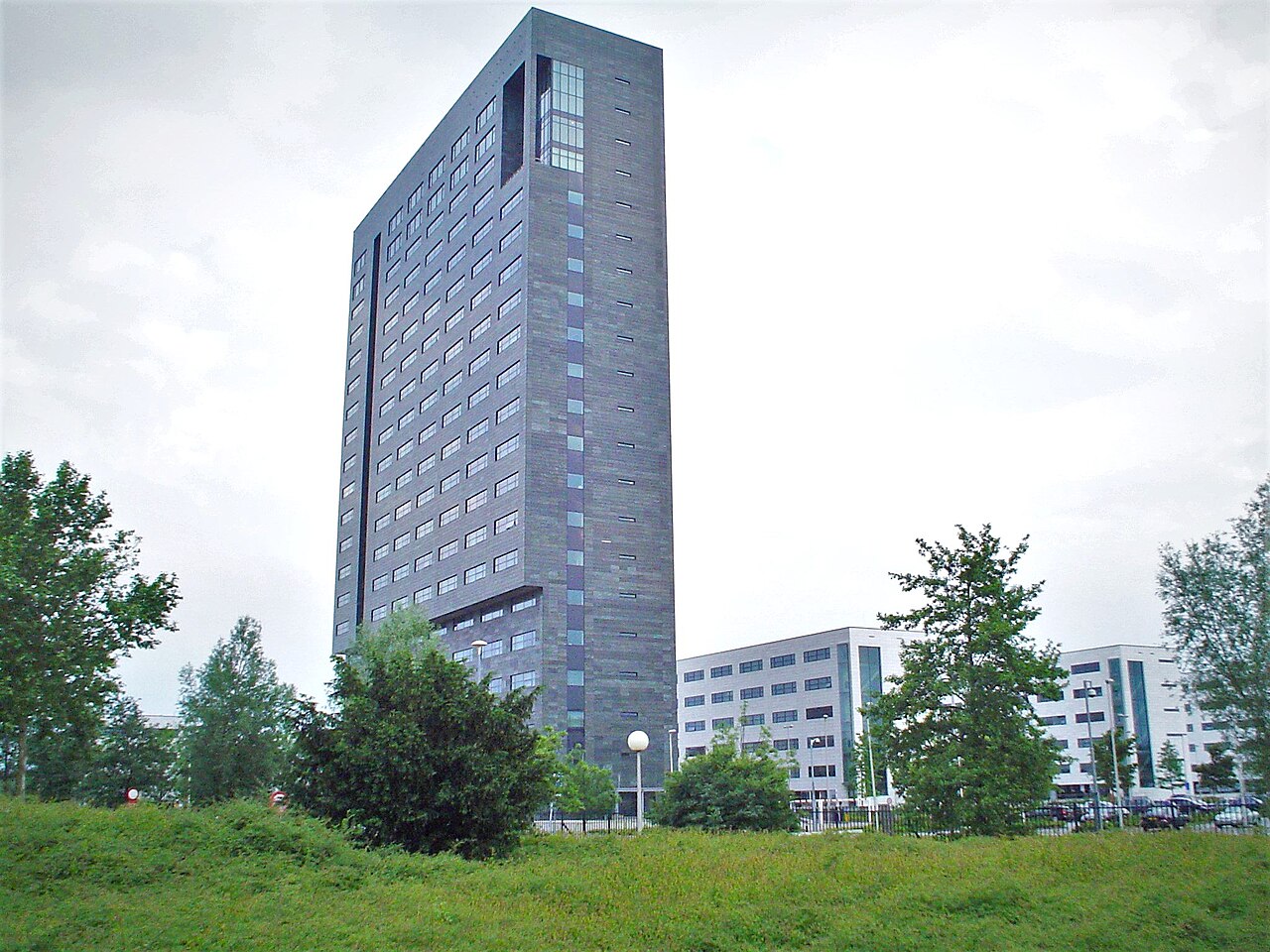
ASML was founded in 1984 as a joint venture between ASM International (a Dutch semiconductor equipment company) and Philips, and started in a temporary building next to a Philips office tower in Eindhoven. Its initial product was a step-and-repeat lithography machine, equipment that projected circuit patterns onto silicon wafers using ultraviolet light, enabling the manufacturing of integrated circuits.
Lithography is the fundamental process of semiconductor manufacturing: the feature size that a lithography machine can resolve determines the minimum size of transistors that can be printed on a wafer, which determines the density and performance of the resulting chips. Moore’s Law (the observed doubling of transistor density roughly every two years) was physically enabled by successive improvements in lithography equipment.
In the 1980s and 1990s, it competed with Nikon and Canon (Japan) for the lithography equipment market. It won through a combination of technical innovation, a more open partnership model with customers and suppliers, and the decision to invest in Extreme Ultraviolet (EUV) lithography when conventional UV lithography approached its physical limits.
EUV lithography uses light at 13.5nm wavelength, about fourteen times shorter than the 193nm of deep-UV systems, and is used for the 7nm process generation and below (7nm chips can also be made with deep UV and multiple patterning, at higher cost). The engineering problems were severe: 13.5nm photons are absorbed by virtually all materials, including air, so EUV machines must operate in near-vacuum. The light source requires firing high-powered carbon dioxide lasers at tin droplets at 50,000 droplets per second to produce a plasma that emits EUV light. The mirrors that direct the light must be polished to atomic-scale smoothness. An EUV machine contains over 100,000 components, requires dozens of specialized suppliers, and costs roughly $200 million; the high-NA version introduced in the mid-2020s costs well over $350 million.
No other company in the world manufactures EUV lithography machines. ASML invested in EUV development for twenty years before commercial deployment, a period in which competitors concluded the technology was not feasible and stopped investing. When TSMC, Intel, and Samsung needed EUV machines for their 7nm and below processes beginning around 2019, there was only one supplier.
ASML’s Strategic Position
ASML’s monopoly on EUV lithography makes it a chokepoint in global semiconductor manufacturing. Under US pressure the Dutch government has withheld EUV export licences for China since 2019; the US export controls of October 2022 restricted advanced chips and chipmaking equipment more broadly, and Dutch controls in force from September 2023 extended to the most advanced deep-UV systems. A company of about 42,000 employees, headquartered in Veldhoven next to Eindhoven, has become central to US-China technology competition.
ASML’s 2023 revenue was €27.6 billion, with a gross margin of about 51%. Its market capitalization passed €300 billion in 2024, making it one of Europe’s most valuable companies, though few people outside the industry know its name.
📚 Sources
- Heinz Nixdorf MuseumsForum blog, “PHILIPS @ 125” (15 May 2016)
- Heinz Nixdorf MuseumsForum blog, “Weltausstellung mit Computer” (17 April 2018)
- Heinz Nixdorf MuseumsForum blog, “Philips P 2000: der Holländer aus Österreich” (18 August 2026)
- Heinz Nixdorf MuseumsForum blog, “Ein Computer mit Transistoren” (5 February 2019)
- Heinz Nixdorf MuseumsForum blog, “Holborn – geboren in Holland” (21 July 2023)
- Philips — Wikipedia
- Dijkstra, Edsger W.: “Go To Statement Considered Harmful” — Communications of the ACM 11(3): 147–148 (March 1968)
- EWD Archive, University of Texas at Austin
- Van Rossum, Guido: “The History of Python” — Blog series (2009–2011)
- ASML: Annual Report 2023 and Corporate History
- Miller, Chris: Chip War (2022), Scribner — ASML chapters
- Compact Cassette — Wikipedia (Lou Ottens, Hasselt)
- Compact disc — Wikipedia (the 11.5 cm Philips prototype, Immink on the Beethoven story)
- Edsger W. Dijkstra — A.M. Turing Award laureate page, ACM
- “US lobbied hard to deny China EUV lithography”, eeNews Europe (2020)
- ASML Annual Report 2023 (Form 6-K) (42,416 FTEs)