The Windows Story
Abstract
Windows began as a late, slow graphical shell over MS-DOS. Microsoft announced it on 10 November 1983 and shipped version 1.0 two years later, on 20 November 1985, for about $100. It took until Windows 3.0 in 1990 to sell in large numbers, and Windows 95 turned an operating-system launch into a $300 million media event. Under the consumer line Microsoft built a second, unrelated system, Dave Cutler’s Windows NT, which replaced the DOS lineage with Windows XP in 2001. Its dominance brought antitrust cases in the United States and Europe, its ambition produced the collapse of the “Longhorn” project, and its slow response to the smartphone produced Windows 8. Since Windows 10 (2015) Microsoft has treated Windows as one business among several, while the system remains on roughly seven in ten desktop computers. In July 2024 a faulty security update from CrowdStrike crashed 8.5 million Windows machines and showed how much of the world’s infrastructure still runs on it.
The Long Road to 1.0
By 1983 Microsoft’s main product was MS-DOS, the text-based operating system of the IBM PC (see Bill Gates and Microsoft). Graphical interfaces from Xerox PARC were reaching personal computers: Apple’s Lisa appeared in January 1983, VisiCorp was demonstrating a windowing environment called VisiOn, and Microsoft itself was writing software for the coming Macintosh. Microsoft’s own graphical project was called Interface Manager. The marketing department renamed it Windows, and on 10 November 1983 Microsoft announced it, with a long list of supporting PC makers, promising delivery within months.
It took two years. Critics read the early announcement as a way to discourage customers from buying rival products. Windows 1.0 finally shipped on 20 November 1985 for about $100. It ran on top of MS-DOS, and its windows were tiled side by side rather than overlapping. Microsoft had signed an agreement with Apple in November 1985 licensing certain visual elements of the Macintosh interface for Windows 1.0. Reviewers found the product slow, it needed more memory than most PCs had, and there were few applications. It sold poorly.
Windows 2.0, released on 9 December 1987, allowed overlapping windows, and a separate edition, Windows/386, used the protected mode of Intel’s 80386 to run several DOS programs at once. Microsoft’s own Excel and Word for Windows gave people a reason to install it.
On 17 March 1988 Apple sued Microsoft and Hewlett-Packard, claiming that Windows 2.03 and HP’s NewWave infringed the copyrights in the Macintosh’s visual displays. The case lasted six years. Judge William Schwarzer dismissed most of Apple’s 189 claims, finding that the bulk of the similarities were either covered by the 1985 license or were basic ideas that copyright could not protect, and on 19 September 1994 the Ninth Circuit affirmed: infringement could exist only if the two interfaces as a whole were “virtually identical”. The ruling meant that the general ideas of a graphical interface (windows, icons, menus, a pointer) could not be owned through copyright.
Windows 3.0
Windows 3.0, released in May 1990, was the first version to succeed. It used the protected-mode memory of the 286 and 386 processors, so programs could use several megabytes of memory instead of DOS’s 640 kilobytes; it had a redesigned interface with the Program Manager and File Manager; and it ran acceptably on the cheap 386 PCs then flooding the market. It sold about 10 million copies in the two years before Windows 3.1 replaced it in April 1992. Version 3.1 added TrueType scalable fonts, and Windows for Workgroups 3.11 added built-in networking for offices. Windows 3.0 also shipped with Solitaire, intended in part to teach users how to drag with a mouse.
For most people in the early 1990s, Windows 3.x on an IBM-compatible PC was their first graphical computer. Its success also ended Microsoft’s partnership with IBM on the next-generation operating system OS/2. Microsoft put its effort into Windows and left IBM with the technically more advanced system that lost the market (see Dead End: OS/2).
Windows 95
Microsoft’s next consumer release, code-named Chicago, became Windows 95, released on 24 August 1995. It replaced the Program Manager with the Start button and the taskbar, introduced long file names and Plug and Play hardware detection, and ran 32-bit programs, though it still rested on DOS underneath for compatibility with old software and drivers.
The launch was a public event of a kind no software had had before. Microsoft spent about $300 million on promotion. It licensed the Rolling Stones’ “Start Me Up” for its advertising (Microsoft’s chief operating officer Bob Herbold later put the fee at about $3 million, well below the figures reported in the press); the comedian Jay Leno appeared with Bill Gates at the launch in Redmond; stores opened at midnight; and the Empire State Building was lit in the Windows colors. About one million copies sold at retail in the first four days. Windows 98 (June 1998) and Windows Me (September 2000) continued the DOS-based line; Me, the last of it, was widely regarded as unstable.
Windows NT
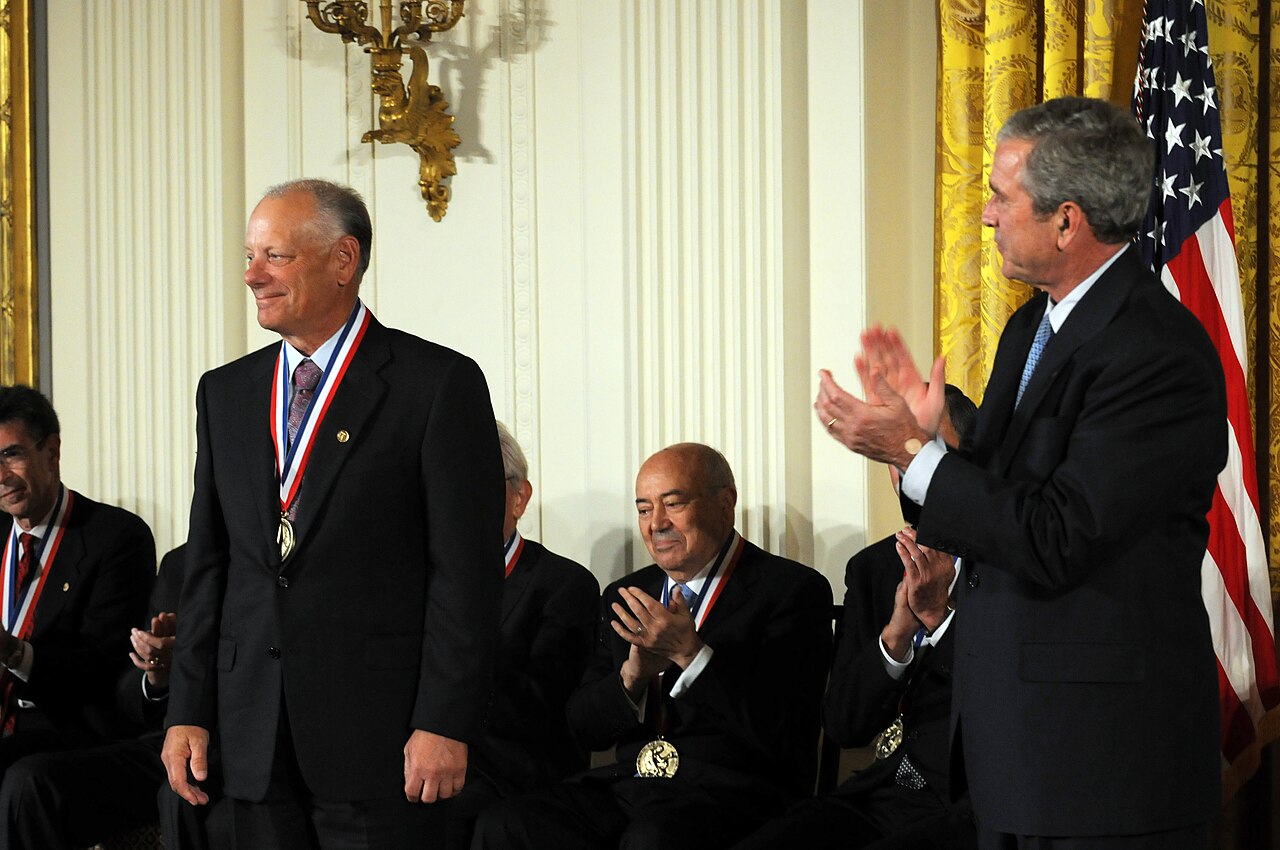
While the consumer line carried DOS forward, Microsoft built a second operating system from scratch. In 1988 it hired Dave Cutler, the architect of the VMS operating system at Digital Equipment Corporation, with several of his engineers. Their system, Windows NT (New Technology), was fully 32-bit, ran each program in protected memory so that one crash could not bring down the machine, was designed to be portable across processors (it ran on MIPS, Alpha and PowerPC as well as Intel), and was built for security and networking from the start. Its story is told in Dave Cutler and Windows NT and in G. Pascal Zachary’s book Showstopper!
Windows NT 3.1 shipped in 1993, numbered to match the consumer Windows, and was sold for workstations and servers. NT 4.0 (August 1996) took the Windows 95 interface, and Windows 2000 (February 2000) became the standard for corporate desktops and servers. NT needed more memory than home PCs had in the mid-1990s; within a few years the hardware caught up.
Windows XP, released on 25 October 2001, merged the two lines: the NT kernel under the consumer brand. It was the first version to require online product activation. After a wave of worms (Blaster in 2003 among them) Microsoft rebuilt much of its security for Service Pack 2 in 2004, part of the Trustworthy Computing effort described in Secure by Design. XP stayed in use for well over a decade; extended support ended on 8 April 2014, and many ATMs, hospitals and government offices were still running it.
Antitrust
Microsoft’s control of the PC operating system brought the largest antitrust case of its era. After Microsoft bundled Internet Explorer with Windows and pressured PC makers and internet providers to favor it over Netscape (see The Browser Wars), the US Department of Justice and twenty states sued on 18 May 1998. Judge Thomas Penfield Jackson found on 5 November 1999 that Microsoft held monopoly power, and in June 2000 he ordered the company split in two, separating Windows from the rest. On 28 June 2001 the appeals court in Washington upheld the finding that Microsoft had illegally maintained its monopoly but reversed the breakup, citing the judge’s comments about the company to reporters. Microsoft and the Justice Department settled in November 2001 with conduct remedies, which Judge Colleen Kollar-Kotelly approved in 2002.
Europe followed. In March 2004 the European Commission fined Microsoft €497 million for abusing its dominant position, by bundling Windows Media Player and by withholding interoperability information from rival server makers, and required a version of Windows without the media player, sold as Windows XP N. The broader story is in The Platform Antitrust Story.
Longhorn and Vista
After XP, Microsoft set out to build its most ambitious release. “Longhorn” was to include a new graphics system, a new programming model based on managed .NET code, and WinFS, a file system built on a relational database that would let users search and relate their documents, mail and contacts. The parts did not fit together, and the code base became unstable. In August 2004 Microsoft restarted development from the Windows Server 2003 code and announced that WinFS would not be in the release.
The result, Windows Vista, reached businesses on 30 November 2006 and consumers on 30 January 2007. It was late, demanding of hardware and incompatible with many drivers, and its User Account Control prompts annoyed users constantly. A “Vista Capable” sticker campaign on PCs that could barely run it led to a class-action lawsuit. Vista’s security architecture survived, however, and Windows 7, released on 22 October 2009, was largely Vista refined and was received as the version Vista should have been.
Two other Windows-era misfires are covered separately: the cartoon assistants of Microsoft Bob and Clippy, and the word processor Windows helped displace in WordPerfect.
Windows 8
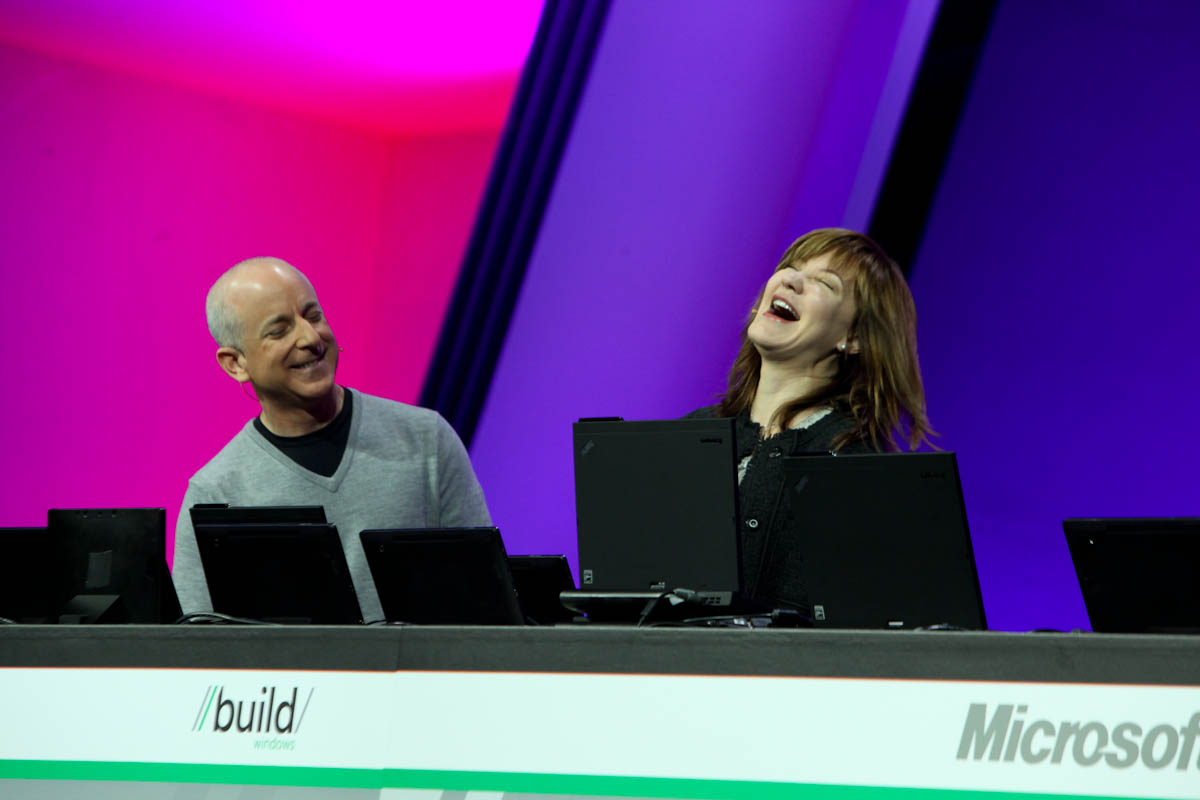
The iPhone (2007), Android and the iPad (2010) moved personal computing to touchscreens that Windows did not run on. Microsoft’s answer, led by the Windows chief Steven Sinofsky, was Windows 8, released on 26 October 2012. It replaced the Start menu with a full-screen Start screen of tiles in the “Metro” style, designed for fingers, and added a store for touch apps, while the old desktop remained underneath. A version for ARM tablets, Windows RT, could run only store apps. Mouse-and-keyboard users disliked the new interface, and tablet buyers stayed with the iPad and Android. Sinofsky left Microsoft weeks after the launch, and Windows 8.1 (2013) restored a Start button. Microsoft’s phone effort failed at the same time (Dead End: Microsoft’s Mobile Failures).
Windows 10 and 11
Under Satya Nadella, chief executive from 2014, Microsoft stopped treating Windows as the center of the company; the Azure cloud and Office 365 subscriptions became its growth businesses. Windows 10, released on 29 July 2015, was a free upgrade for users of Windows 7 and 8 for its first year, restored the Start menu and was delivered as “Windows as a service”, with major updates twice a year. A Microsoft developer evangelist, Jerry Nixon, called it “the last version of Windows”. In March 2020 Microsoft reported one billion monthly active Windows 10 devices.
Microsoft also made concessions that would once have been unthinkable. The Windows Subsystem for Linux (2016) let developers run Linux programs inside Windows, and in 2020 the Edge browser moved to Google’s open-source Chromium engine, ending Microsoft’s own browser engine.
Windows 11, released on 5 October 2021, broke Nixon’s promise. It required a recent processor and a TPM 2.0 security chip, which left many working PCs unable to upgrade; Microsoft called the requirement “non-negotiable”. Support for Windows 10 ended on 14 October 2025, with paid Extended Security Updates for businesses available until October 2028. In May 2024 Microsoft announced Recall, a feature for its new “Copilot+” AI PCs that took screenshots every few seconds so that users could search everything they had seen. Security researchers showed that the first version stored its data unencrypted; Microsoft delayed the feature, rebuilt it as opt-in with its data in an isolated enclave, and released it in April 2025.
The CrowdStrike Outage
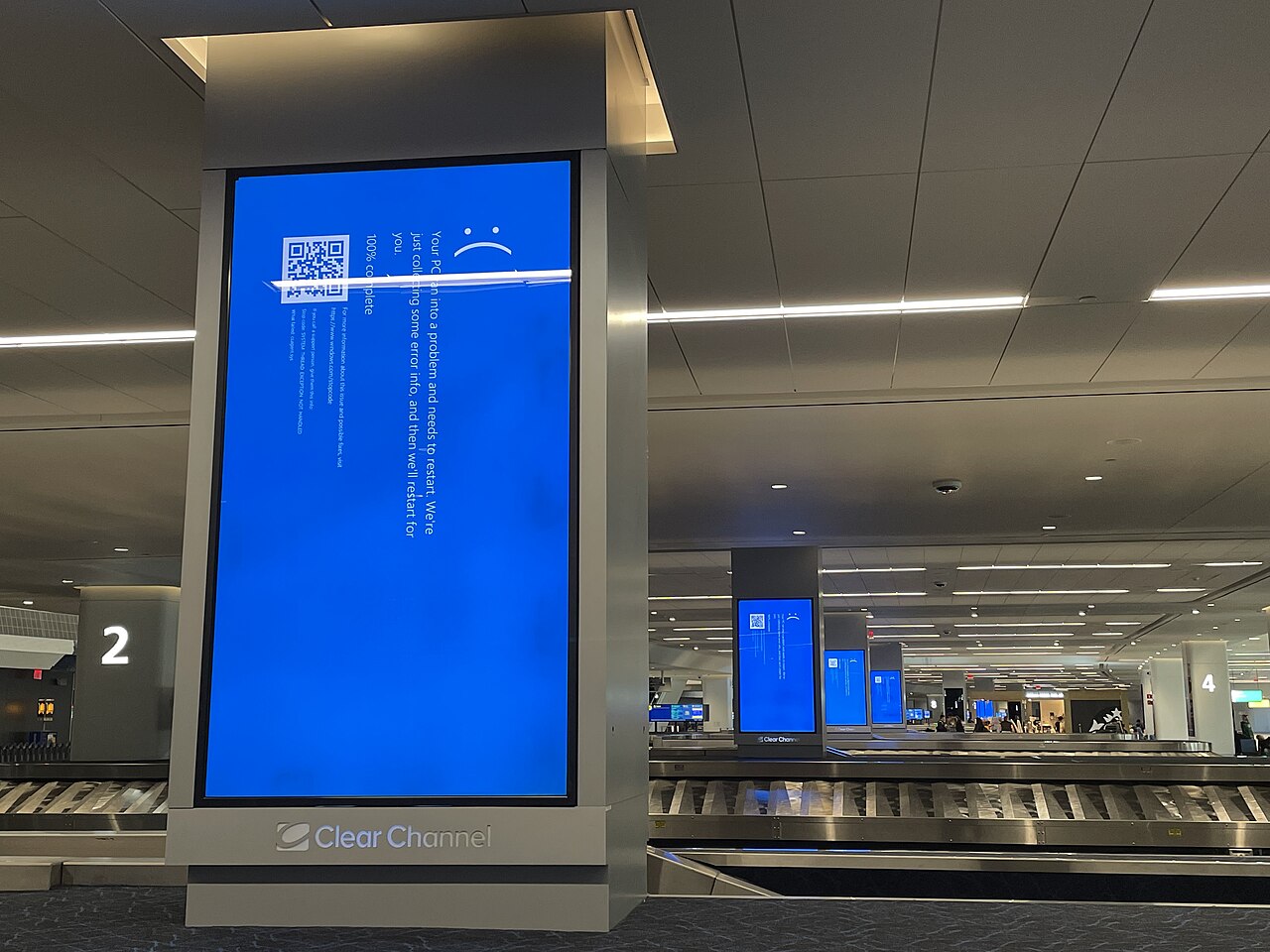
On 19 July 2024 the security company CrowdStrike pushed a faulty configuration update to its Falcon sensor, a program that runs inside the Windows kernel to detect attacks. Machines that received it crashed with the “blue screen of death” and could not boot without manual repair. Microsoft estimated that 8.5 million Windows devices were affected, less than one percent of all Windows machines, but they included the computers of airlines, banks, hospitals, broadcasters and emergency services. Flights were grounded around the world, and repairing the machines took days.
The outage was not caused by a Windows bug, but it revealed two things about Windows’s position. Critical infrastructure in much of the world still ran on it, and third-party security software ran with full kernel privileges, an arrangement Microsoft said it could not change on its own because of the 2009 interoperability commitments it had made to the European Commission. Afterwards Microsoft began work on letting security software run outside the kernel.
Dead End
The clearest abandoned bet in Windows history is WinFS. Its idea went back to the early 1990s, when Microsoft’s “Cairo” project promised an object file system in which documents could be searched and related by their contents and properties rather than by folder paths. Cairo never shipped as planned. The idea returned as the centerpiece of Longhorn: WinFS would store files, contacts, e-mail and calendar items in a relational database built on SQL Server technology, so that a user could ask for “all the documents I sent to this person last month.”
WinFS was removed from Longhorn in August 2004 and promised as a later add-on. On 23 June 2006 Quentin Clark announced on the WinFS team blog that it would not ship as a separate product; parts of the technology went into SQL Server and ADO.NET instead. The underlying problem was that a database file system had to be fast, compatible with every existing program that expected ordinary files, and reliable enough to hold all of a user’s data, at once. Desktop search tools that indexed ordinary files, including Microsoft’s own Windows Search, delivered much of the promised benefit without changing the file system. The same pattern runs through Windows’s other dead ends (OS/2, Windows RT, Windows Phone after the $7.2 billion Nokia purchase, and the Internet Explorer engine): the enormous base of existing applications and drivers protected Windows from failed experiments and also made it very hard for Windows to change.
📚 Sources
- Wikipedia: History of Microsoft Windows: Interface Manager, announcement 10 November 1983, release dates, Windows 3.0 sales, Apple lawsuit and Schwarzer’s ruling
- Wikipedia: Windows 1.0 and Computer Hope: Microsoft Windows history: release 20 November 1985, price
- Wikipedia: Apple Computer, Inc. v. Microsoft Corp. and 35 F.3d 1435 (9th Cir. 1994), Justia
- Spokesman-Review, “Windows 95 Sales Hit 1 Million” (30 August 1995) and Washington Post, “Windows 95’s Debut, Microsoft Scales Heights of Hype” (24 August 1995)
- Network World, “What Microsoft paid The Stones to help launch Windows 95”
- Wikipedia: Windows 95
- Wikipedia: Microsoft Solitaire
- G. Pascal Zachary: Showstopper! The Breakneck Race to Create Windows NT (1994)
- Official Microsoft Blog, “Support for Windows XP Set to End in April 2014” (8 April 2013)
- US DOJ: United States v. Microsoft Corp. case filings, HistoryLink: United States sues Microsoft on 18 May 1998 and Computerworld, “Appeals court reverses Microsoft breakup order” (June 2001)
- European Commission press release IP/04/382 (24 March 2004)
- Wikipedia: Development of Windows Vista: Longhorn reset, WinFS removal
- The Register, “Microsoft’s future file system dies, again” (26 June 2006) and Wikipedia: Cairo (operating system)
- Steven Sinofsky: Hardcore Software
- The Verge, “Windows 10 is the last version of Windows” (May 2015)
- Windows Experience Blog, “Windows 10: Powering the world with 1 billion monthly active devices” (16 March 2020)
- Computerworld, “Microsoft: TPM 2.0 is a ’non-negotiable’ requirement for Windows 11” and Microsoft Support: Windows 10 support has ended on October 14, 2025
- Engadget, “Windows 10 will receive its final security update in October 2028”: commercial ESU through October 2028
- Wikipedia: Windows Recall and Windows Central on Recall’s general availability (April 2025)
- Official Microsoft Blog, “Helping our customers through the CrowdStrike outage” (20 July 2024) and Wikipedia: 2024 CrowdStrike-related IT outages
- StatCounter: Desktop operating system market share
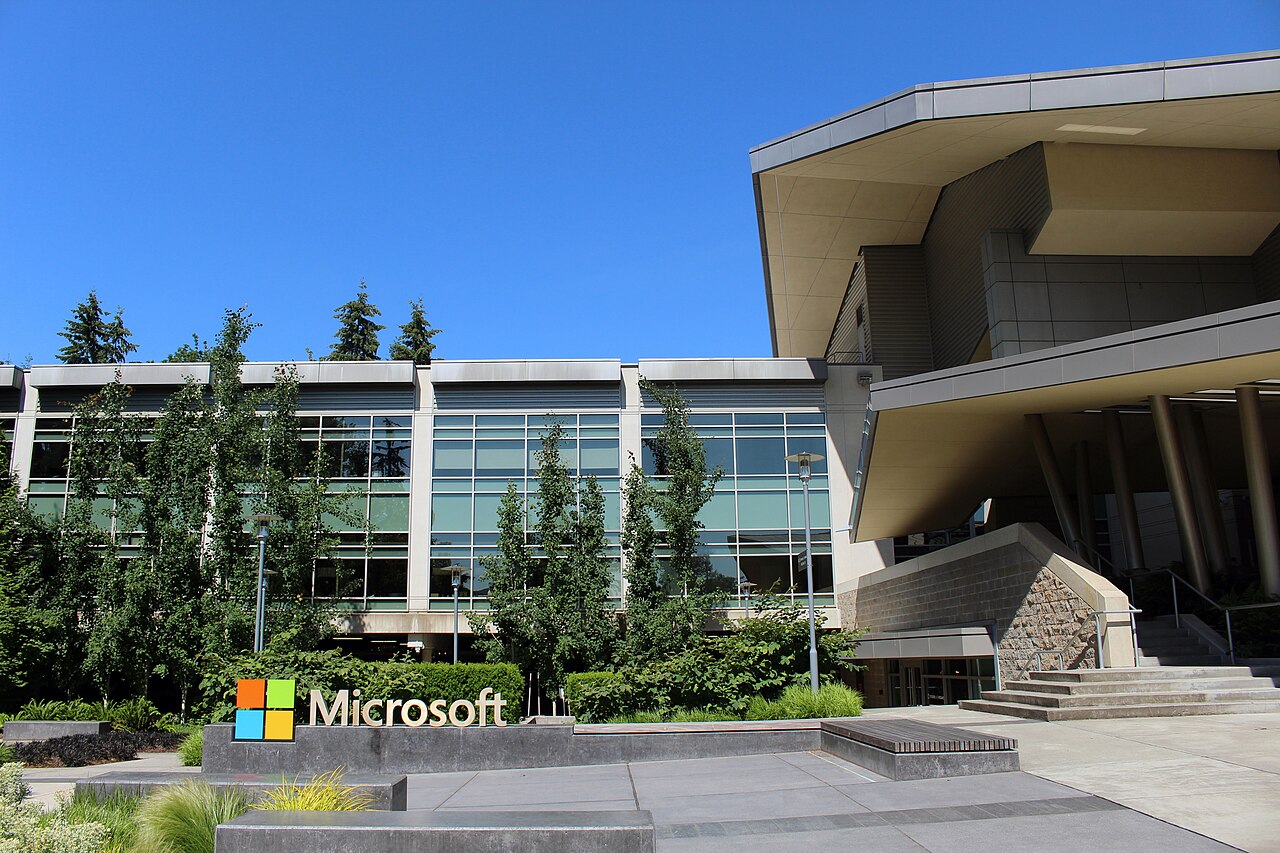
- Image: Building92microsoft.jpg by Coolcaesar (CC BY-SA 4.0), via Wikimedia Commons
- Image: Steven Sinofsky and Julie Larson-Green present at BUILD 2011 (6144070659).jpg by BUILDWindows (CC BY 2.0), via Wikimedia Commons
- Image: CrowdStrike BSOD at LGA.jpg by Smishra1 (CC BY-SA 4.0), via Wikimedia Commons